What a Heavy-Load Conveyor Pulley Does on a Bulk Line
A heavy-load conveyor pulley is the drum that transmits drive force to the belt and carries the highest tensions in the system. In a quarry, limestone mine, or crusher discharge line, the pulley at the head end often works under continuous shock load from large rock, while the tail drum sees abrasive dust and fines. The pulley is not a passive roller; it is a structural component that must resist bending, torsion, and surface wear at the same time.
The term covers several positions on one conveyor. A drive pulley is the powered drum, a tail pulley is the return-end drum, and a bend pulley changes belt direction without driving. These are separate jobs and are not interchangeable. A heavy-load conveyor pulley is usually specified for the head or drive position where torque and belt tension are greatest, but heavy-duty construction can also apply to a tail or take-up drum on a short, high-tension conveyor.
How the Drum Is Built
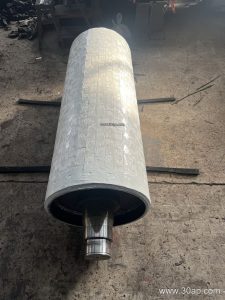
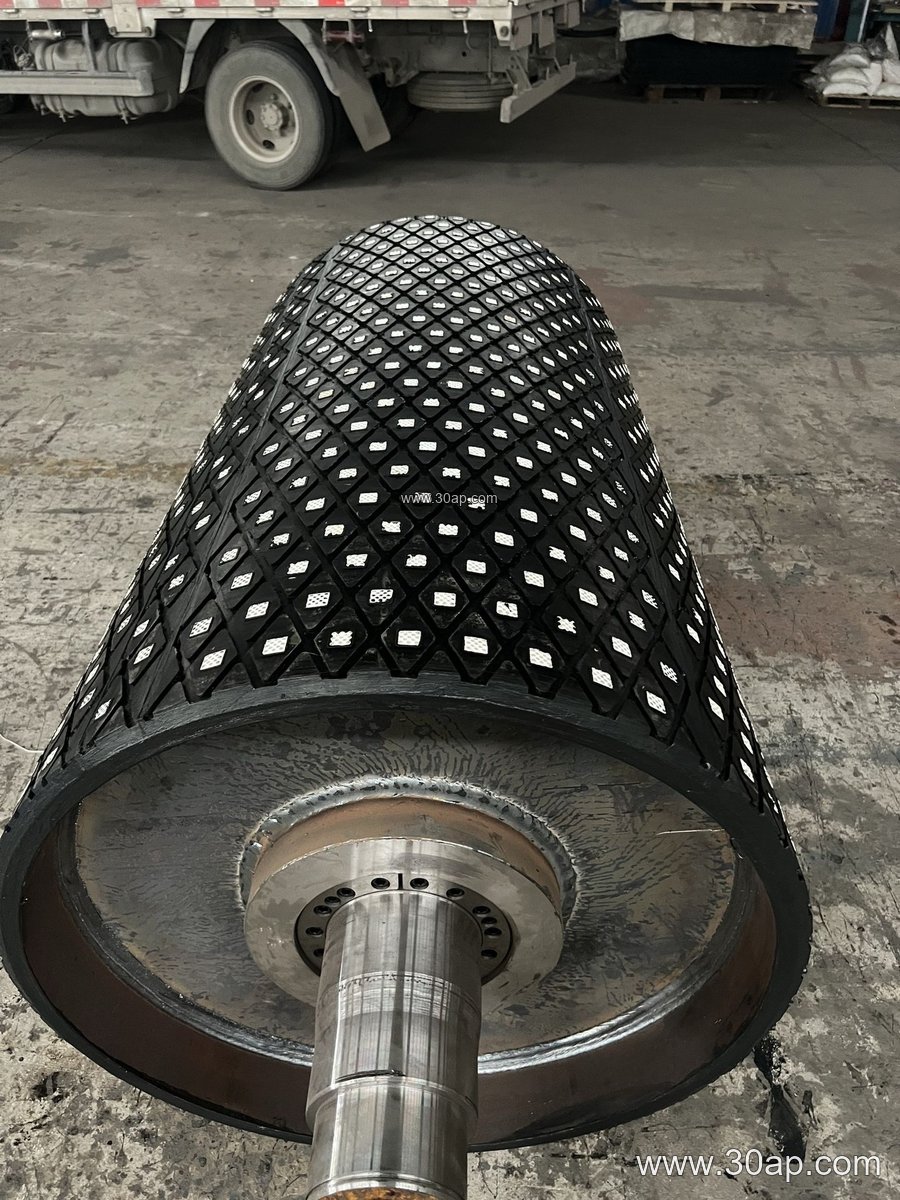
Most heavy-load pulleys use a welded steel shell with machined end discs and a shaft sized by torque and bearing load. The shell is often thicker than on a light-duty drum, and the weld procedure matters because fatigue cracks start at the shell-to-disc joint. Common surface forms include plain, cast rubber, cold-bonded rubber, hot-vulcanized rubber, diamond grooving, herringbone grooving, and ceramic lagging. Lagging thickness is commonly 8, 10, 12, 15, or 20 mm, chosen for grip and wear rather than appearance.
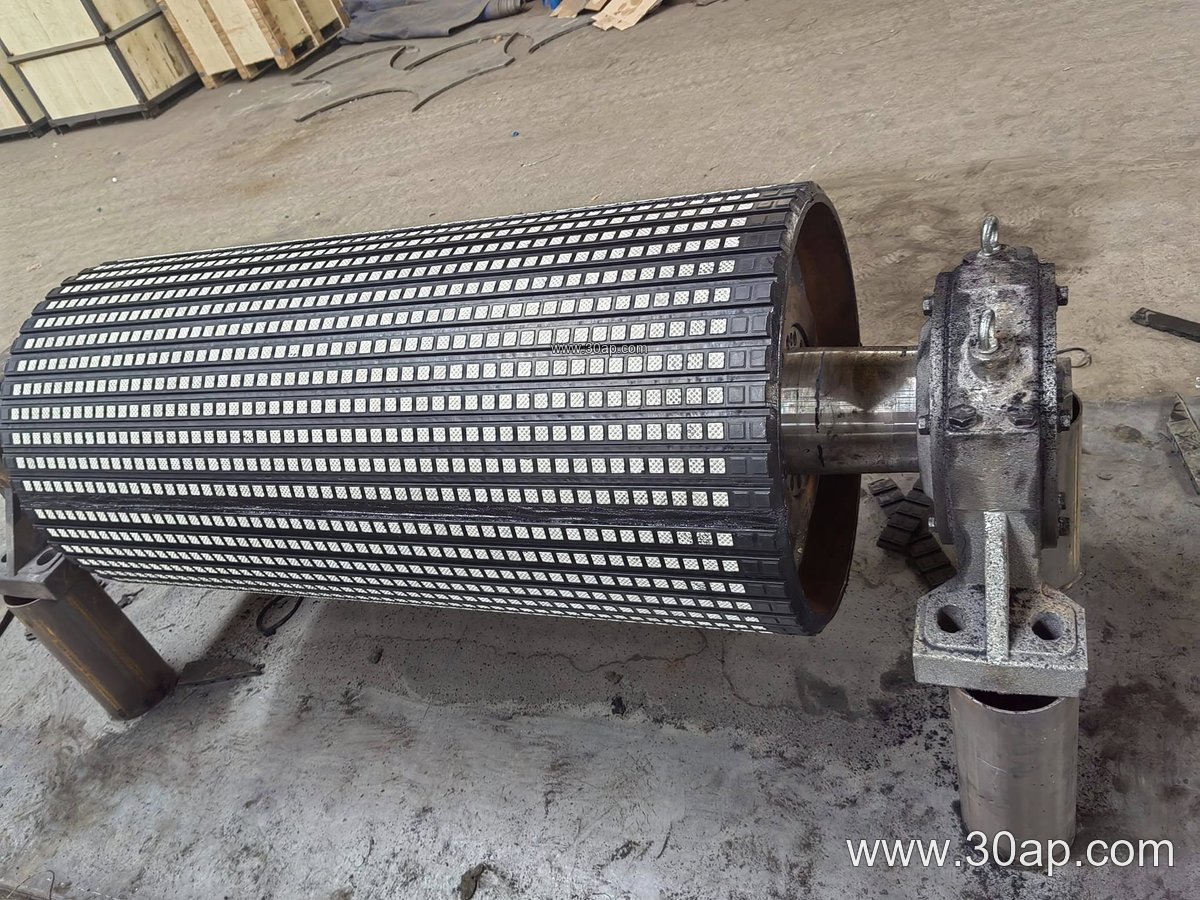
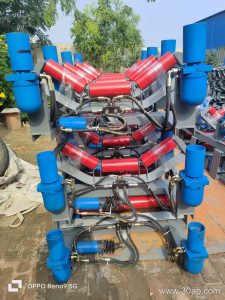
Bearings, housings, and the conveyor bracket that holds the pulley are part of the same load path. A weak bracket or a misaligned bearing housing can shorten pulley life even when the drum itself is well made. On a 1200mm or 1400mm belt line, the pulley face width is normally wider than the belt, for example about 1400 mm for B1200 and about 1600 mm for B1400. Face width and belt width should be checked together, but no single belt width dictates one pulley diameter.
Typical Sizes and Reference Data
The table below shows reference combinations, not fixed rules. Final diameter depends on belt tension, wrap angle, shaft torque, and the space available at the transfer point.
| Belt width | Typical pulley face width | Reference diameter | Typical shaft range |
|---|---|---|---|
| B800 | about 950 mm | Ø500 | Ø80–Ø120 |
| B1000 | about 1150 mm | Ø630 | Ø100–Ø140 |
| B1200 | about 1400 mm | Ø800–Ø1000 | Ø120–Ø160 |
| B1400 | about 1600 mm | Ø800–Ø1250 | Ø140–Ø180 |
| B1600 | about 1800 mm | Ø1000–Ø1400 | Ø160–Ø200 |
| B1800 | about 2000 mm | Ø1250–Ø1600 | Ø180–Ø200 |
Shaft diameter is determined by torque and bending load, not by belt width alone. A B1200 conveyor may use a Ø140 shaft on one drive and a larger shaft on another if the tension and wrap differ. Buyers should ask for the calculated shaft load and bearing life rather than a size copied from a catalog.
Where Heavy-Load Pulleys Are Used
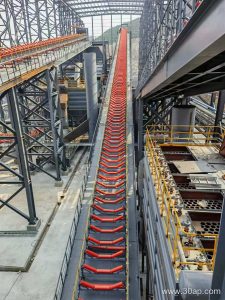
These drums appear in primary crushing circuits, aggregate plants, cement clinker lines, power plant coal handling, and port bulk terminals. In a sand and gravel operation, the head pulley must handle a continuous stream of abrasive material, so abrasion resistant lagging and a robust shell are common. In a coal preparation plant, flame retardant conveyor belt and anti-static properties may be required for the belt, and the pulley lagging should be compatible with that environment. A steel cord conveyor belt or a high-strength EP conveyor belt carries higher tension, which pushes the pulley toward a larger diameter and a heavier shaft.
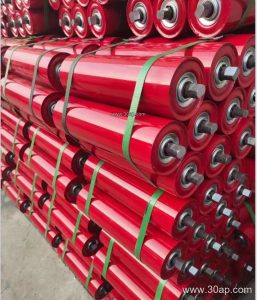
Elsewhere, a heavy-load drum may sit on a pipe conveyor belt or a corrugated sidewall line where the belt path is tight. In those cases the pulley face and the belt profile must match, and a bend pulley may need a different crown than a drive drum. For abrasive iron ore or copper ore, ceramic lagging is sometimes chosen, while a quarry conveyor belt handling wet stone may favor grooved rubber for water evacuation. The idler roller and conveyor pulley work as one system; uneven belt tracking often starts at the drum, not at the idlers.
What a Buyer Should Confirm
- Drum position: drive, tail, bend, take-up, or snub, because the duty differs.
- Belt width, belt type, and belt tension, including whether a steel cord conveyor belt or fabric core belt is used.
- Lagging form and thickness, matched to material, moisture, and slip risk.
- Shaft diameter, bearing type, and housing fit, based on torque calculation.
- Face width, crown, and balance class for the intended belt speed.
- Bracket and foundation dimensions, so the pulley fits the existing conveyor frame.
Maintenance checks should include lagging wear, shell cracks near the weld, bearing temperature, and shaft alignment. A heavy-load conveyor pulley that is inspected at shutdown intervals usually avoids the sudden failure that stops a whole crushing line. For more on matching drums with rubber conveyor belt, EP conveyor belt, and conveyor idler roller choices, the specification should be built around the actual load case rather than a single reference number.