What a Ceramic Lagged Bend Pulley Does
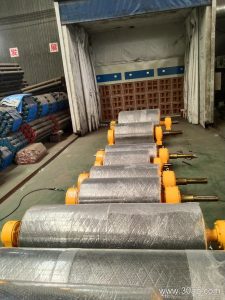
A ceramic lagged bend pulley is a direction-changing conveyor pulley whose shell is covered with ceramic tiles set in a rubber or adhesive matrix. It sits where the belt needs to change direction without driving the system — typically at the tail, take-up, or snub positions. Unlike a drive pulley that transmits torque, or a tail pulley that mainly supports the belt at the loading point, the bend pulley simply guides the belt and maintains wrap angle. The ceramic lagging is what sets it apart: hard, wear-resistant tiles give the pulley a long service life when the belt surface is abrasive, oily, or wet.
In a quarry or a cement plant, fines and grit work their way into ordinary rubber lagging and wear it smooth. Ceramic tiles resist that cutting action, so the pulley keeps its grip and shape far longer. This is why operators on abrasive duty often specify ceramic lagging for the bend pulley while leaving the drive pulley with a different surface pattern.
Construction and Surface Details
The pulley body is usually a welded steel shell with end discs and a shaft, machined for balance. Lagging is applied in one of two common ways: ceramic tiles vulcanized into a rubber sheet that is bonded to the shell, or tiles set directly into a cold-bonded compound. Tile shapes vary — square, rectangular, or interlocking — and many designs leave small gaps between tiles to shed water and fines.
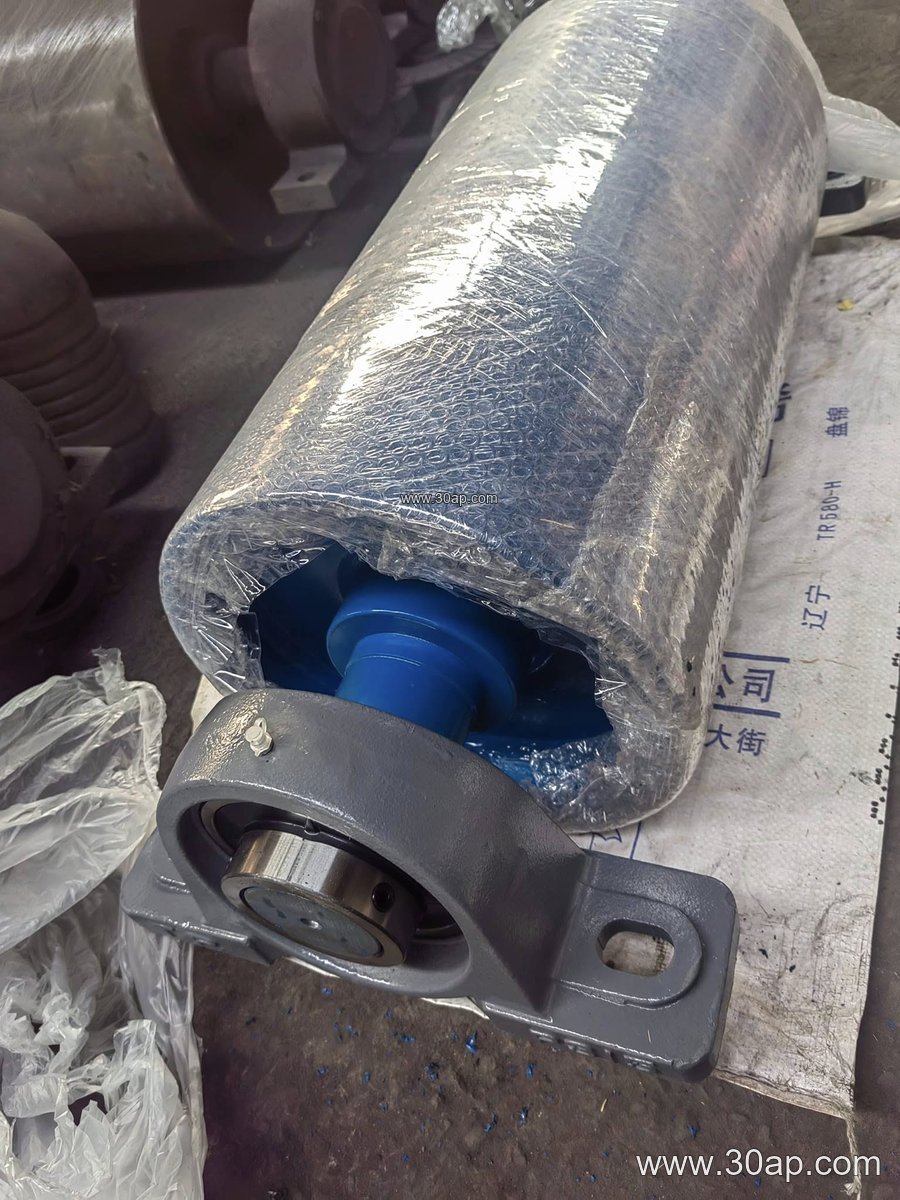
Thickness is often 8, 10, 12, 15, or 20 mm depending on belt tension and abrasion level. Face width normally exceeds belt width so the belt is fully supported: a B800 belt might run on a pulley with roughly 950 mm face, while a B1200 system could use about 1400 mm face. Diameter is selected from shaft torque, bearing load, and the required wrap angle, not from belt width alone. Common bend pulley diameters include Ø250, Ø315, Ø400, Ø500, Ø630, and Ø800; larger sizes such as Ø1000 or Ø1250 appear on high-tension systems. Shaft diameter is determined by torque and load — typical values run from Ø60 to Ø160, but the final size belongs to the design calculation, not to a belt-width rule.
Where It Fits in the Conveyor
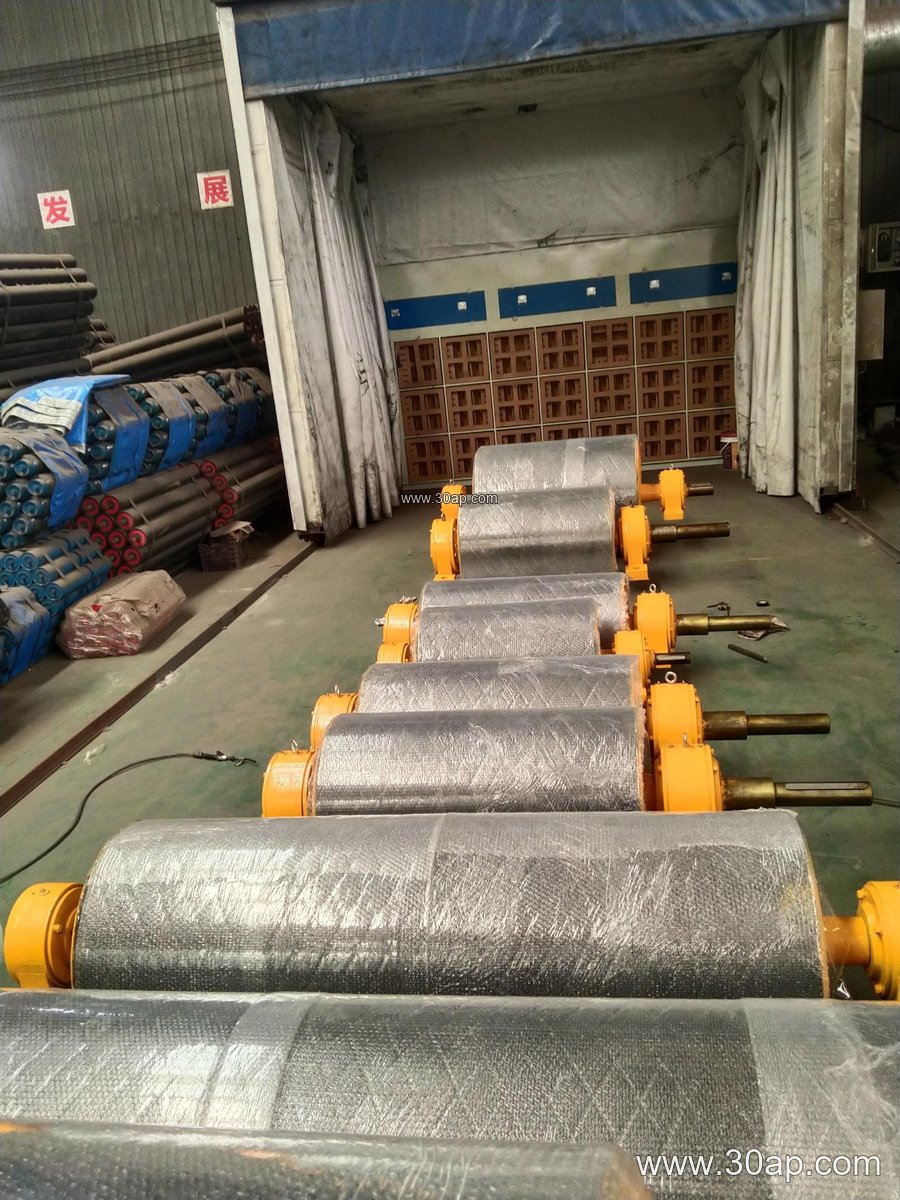
Bend pulleys are found at the tail of long overland conveyors, at take-up towers, and at snub points where the belt must wrap around a small angle before entering the drive. In an underground coal mine, a ceramic lagged bend pulley may guide a flame retardant conveyor belt through a tight transfer; in a power plant coal yard, it may redirect an EP conveyor belt on the return run. The ceramic surface is also useful where oil mist or dust reduces friction, because the tiles stay sharp while rubber would glaze over.
When specifying, match the pulley to the belt construction. A heavy-duty mining conveyor belt with high tension needs a robust shell and bearing assembly; a lighter aggregate conveyor belt on a short stacker may use a smaller Ø315 pulley. A ceramic lagged bend pulley is not a substitute for a drive pulley or a tail pulley — each has its own role, and mixing them up leads to belt slip or tracking problems.
Buyer Checklist
- Confirm the belt width and the required face width; allow for belt wander and edge clearance.
- State the belt type — for example, an abrasion resistant conveyor belt or an oil resistant conveyor belt — so the lagging compound suits the environment.
- Provide the actual belt tension and wrap angle so the shaft and bearings can be sized correctly.
- Choose ceramic lagging only where its hardness helps; for very high grip on a drive pulley, diamond or herringbone rubber may be more appropriate.
- Check that the pulley bracket and conveyor bracket mounting dimensions match the existing structure.
- Ask for the tile bond method and tile thickness in writing, since these affect service life.
For spare parts planning, keep one ceramic lagged bend pulley in stock for the most critical conveyor. It is often the pulley that fails quietly from abrasive wear, and replacing it before the tiles are worn through protects the belt and the idler roller set downstream.