What the Idler Frame Does on a Conveying Line
A belt conveyor idler frame is the steel structure that holds the idler rollers in the right position under or above the conveyor belt. It is not a rotating part. Its job is to keep every roller at the correct height, angle and spacing so the belt keeps a stable trough shape and tracks straight along the whole run. In a quarry, a coal handling plant or a cement kiln line, a weak or badly aligned frame shows up quickly as belt wander, spilled material and uneven roller wear.
The frame is usually a separate item from the roller and from the conveyor bracket that ties the assembly to the stringer. Together they form the support station that carries the belt between the tail pulley and the drive pulley. That is why the frame is often ordered together with the idler roller set, and why its hole spacing must match the roller shaft ends.
How the Frame Is Built
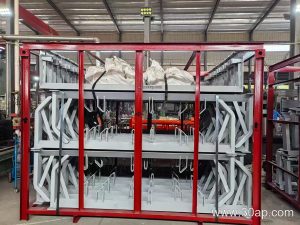
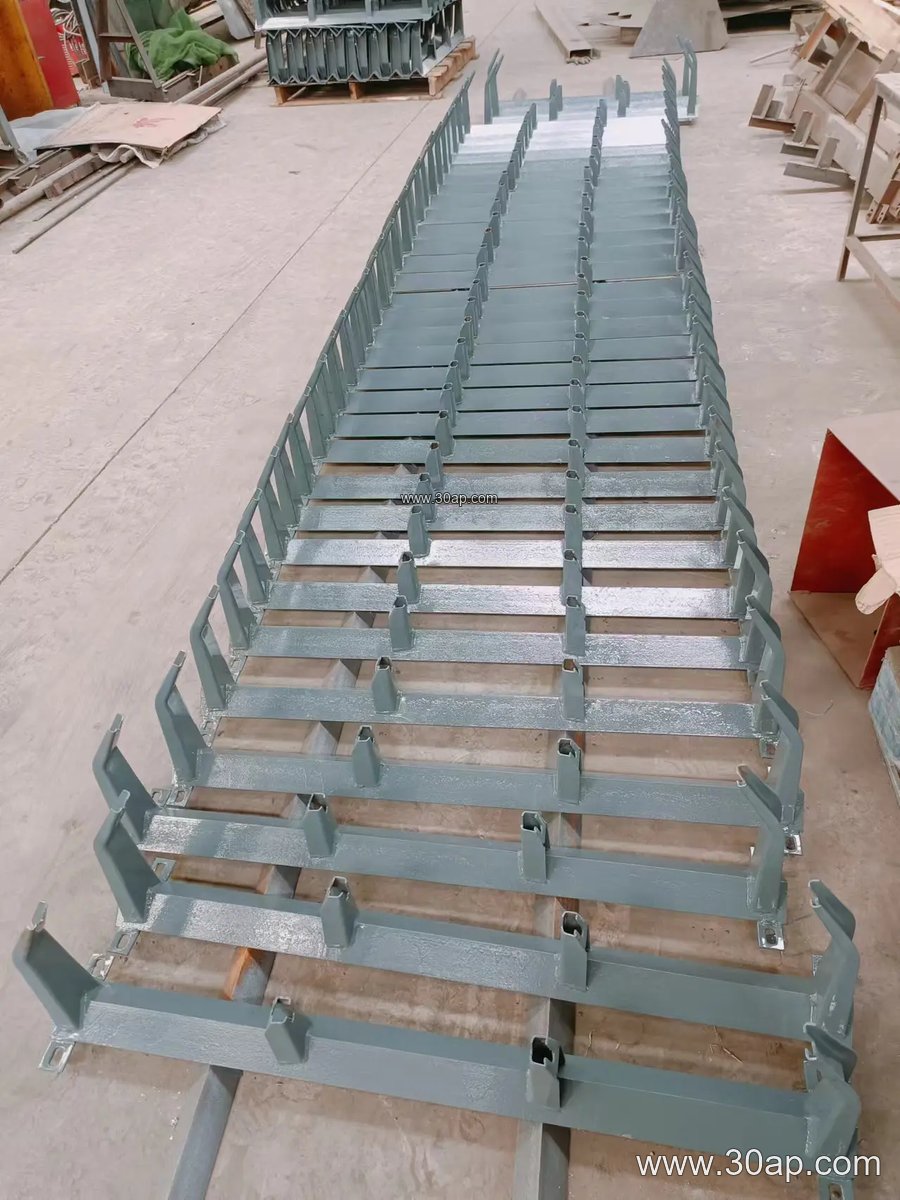
Most frames are fabricated from angle steel, channel steel or folded steel plate, then drilled and welded into a rigid unit. A troughing frame carries two or three rollers set at a fixed trough angle. A return frame holds a single flat roller or a pair of V-return rollers under the loaded belt.
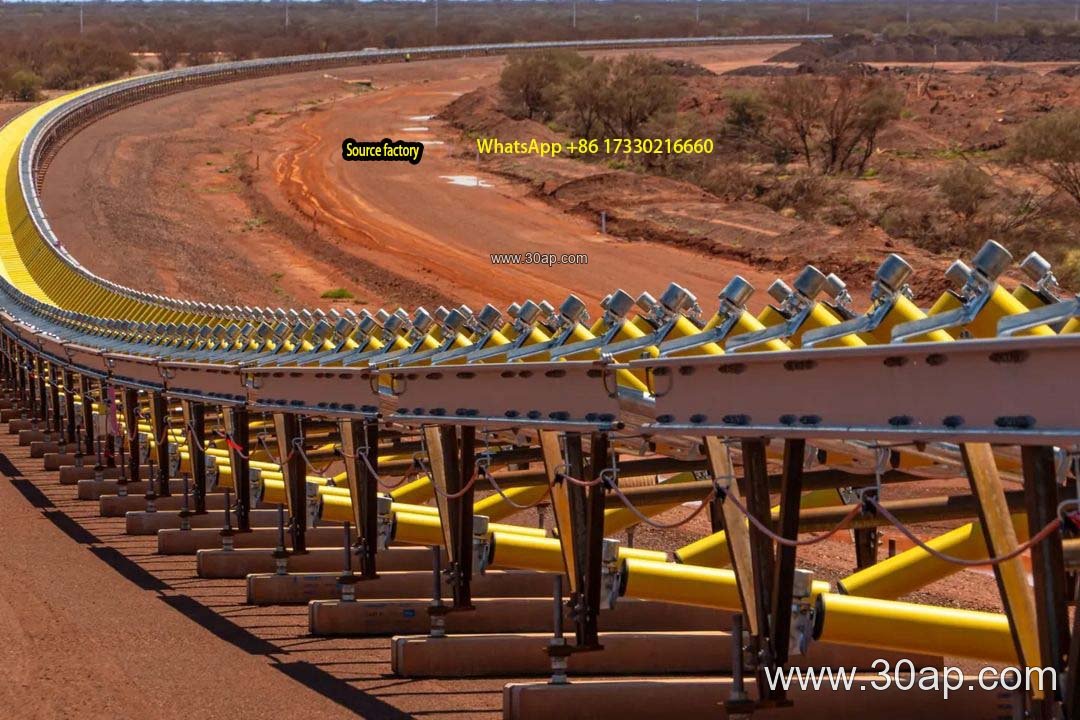
Common forms include:
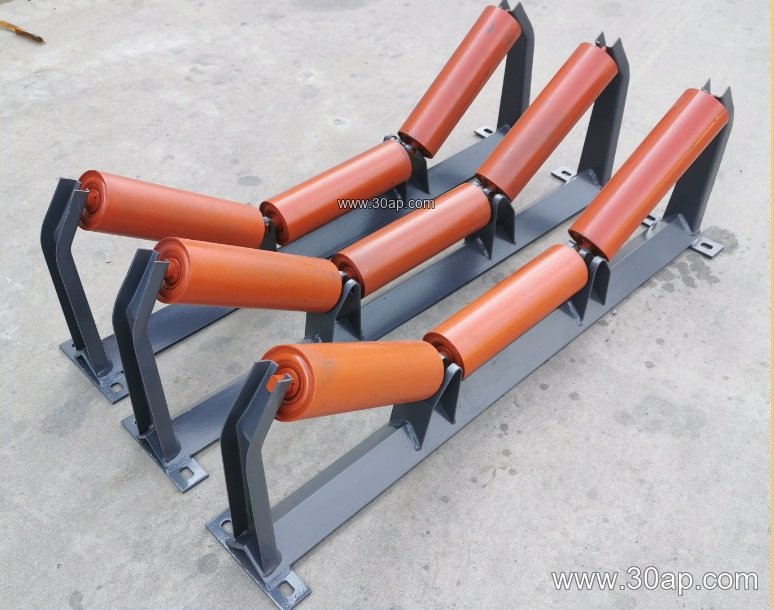
- Troughing and top trough frames for the carrying side
- Transition frames near pulleys, where the belt changes from flat to troughed
- Return and V-return frames for the empty side
- Impact frames under loading points, fitted with impact rollers
- Self-aligning frames that correct belt drift
- Adjustable frames that allow the trough angle to be changed on site
- Suspended frames hung from a cross beam instead of bolted to a stringer
An adjustable frame usually covers 20, 30, 35 and 45 degree settings, so one frame type can serve several belt sections. Forward-leaning frames are set at about 1.5 to 2 degrees to help centre the belt. The frame does not set belt tension; that is the work of the take-up and the conveyor pulley arrangement.
Where It Fits in Real Installations
In a limestone mine or a crusher discharge line, impact frames sit directly below the chute so falling rock does not hammer the belt. Along the main incline, troughing frames at 35 degrees are common for 800mm and 1000mm belts carrying aggregate. In a coal washing plant, flame retardant and anti-static belt grades are normal, and the frames must be spaced so the belt does not sag between stations.
Power plant coal yards, iron ore terminals and port ship loaders use heavier frames with wider belts, often 1200mm to 1800mm, matched to rollers of Ø133 or Ø159. In grain silos and fertiliser plants, smaller frames at 650mm or 800mm with Ø89 rollers are typical. The same frame logic applies whether the belt is a multi-ply fabric core or a steel cord type; only the load and the roller diameter change.
Sizes and Reference Data
The table below shows reference combinations. They are examples, not fixed rules, and mounting hole distance and cross beam length should always be confirmed against the drawing for the actual belt width and trough angle.
| Belt width | Trough angle | Roller diameter | Typical duty |
|---|---|---|---|
| B650 | 30 degrees | Ø89 | Light aggregate, grain |
| B800 | 35 degrees | Ø108 | Sand and gravel line |
| B1000 | 35 degrees | Ø108 / Ø133 | Cement plant, coal yard |
| B1200 | 45 degrees | Ø133 | Iron ore, heavy bulk |
| B1400 – B1600 | 35 – 45 degrees | Ø159 | Port and mine main line |
| B1800 – B2000 | 35 – 45 degrees | Ø159 / Ø194 | Large tonnage terminals |
No belt width is tied to a single roller diameter or a single trough angle. A B1200 line may run Ø133 or Ø159 rollers depending on load and speed, and a B800 frame may be built at 30 or 35 degrees. Always read the frame drawing together with the roller drawing.
Buying Checklist
- Confirm belt width, trough angle and roller diameter before ordering.
- Check hole pitch and beam length against the existing stringer.
- State the environment: wet, dusty, corrosive or high temperature.
- Ask whether the frame is fixed or adjustable, and whether it is top, return or impact duty.
- Match frame steel thickness to the load; light angle steel is not suitable under a primary crusher.
- Keep a small spare set of frames for the loading zone, where damage is most likely.
A well chosen frame keeps the conveyor belt, the idler roller set and the conveyor pulley working as one system. Buyers who check dimensions and duty first usually avoid the most common field problem: a frame that fits the bolt holes but not the load.