What the Take-Up Pulley Does on a Conveyor
A belt conveyor take-up pulley is the drum that maintains working tension in the conveyor belt. Mounted in a take-up station, usually at the tail end or in a vertical gravity tower, it moves along a guided frame so the belt stays snug as it stretches, contracts, and settles during operation. Without this tensioning drum, a loaded belt can slip on the drive pulley, wander off the idlers, and spill material along the transfer points.
It is a distinct component from the drive pulley that transmits power and from the tail pulley that redirects the belt at the loading end. On some layouts one drum performs both duties, but in a long overland or underground conveyor the take-up pulley is normally a separate, purpose-built unit. Buyers searching for a tension pulley, a take-up drum, or a gravity take-up pulley are generally looking at the same piece of equipment.
How the Drum Is Built
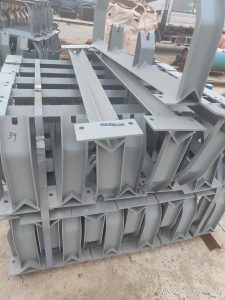
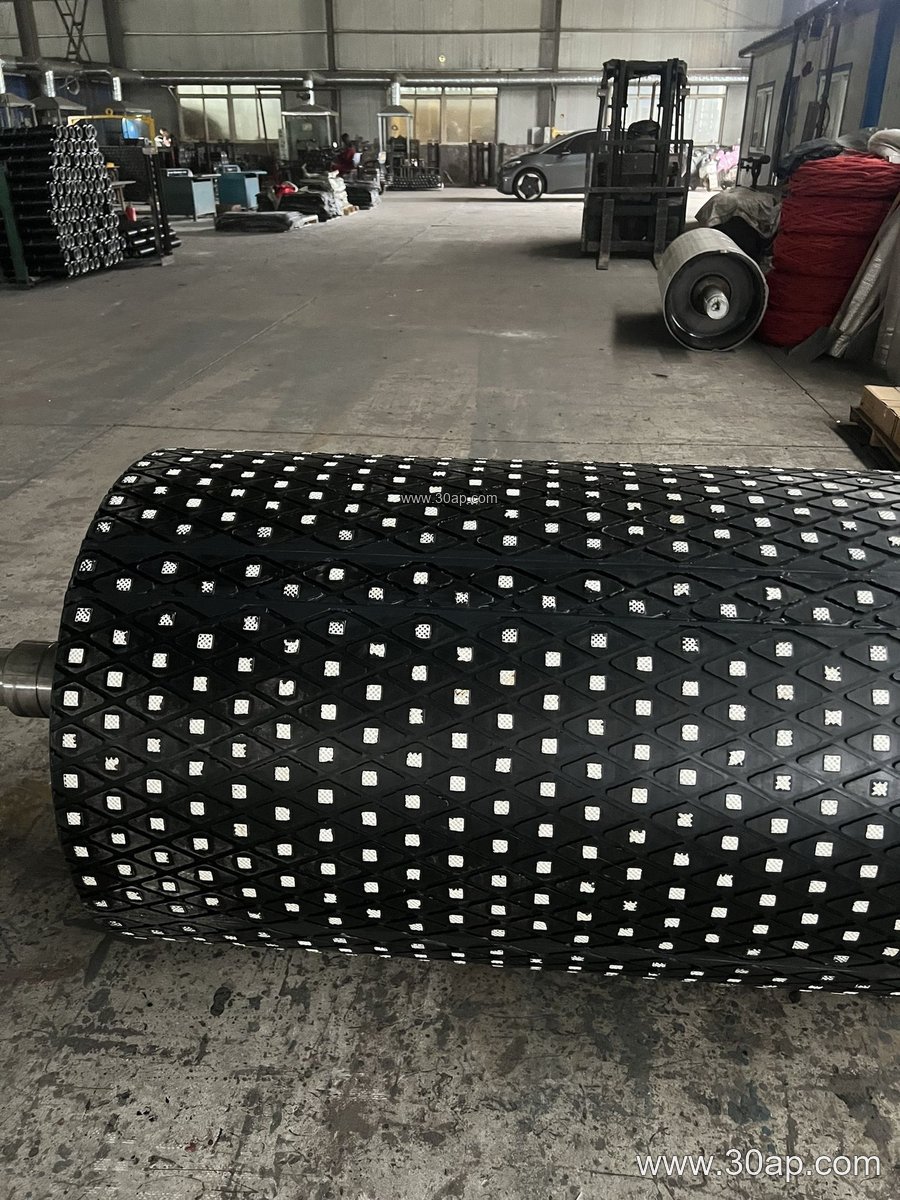
The assembly centers on a steel shell with machined end discs, welded to a shaft that runs in bearing housings. Depending on the duty, the shell may be plain, lagged with rubber, or fitted with ceramic tiles for grip. The bearings sit in sliding or fixed housings that ride on the take-up frame, and the frame carries the counterweight, screw, or hydraulic cylinder that generates tension.
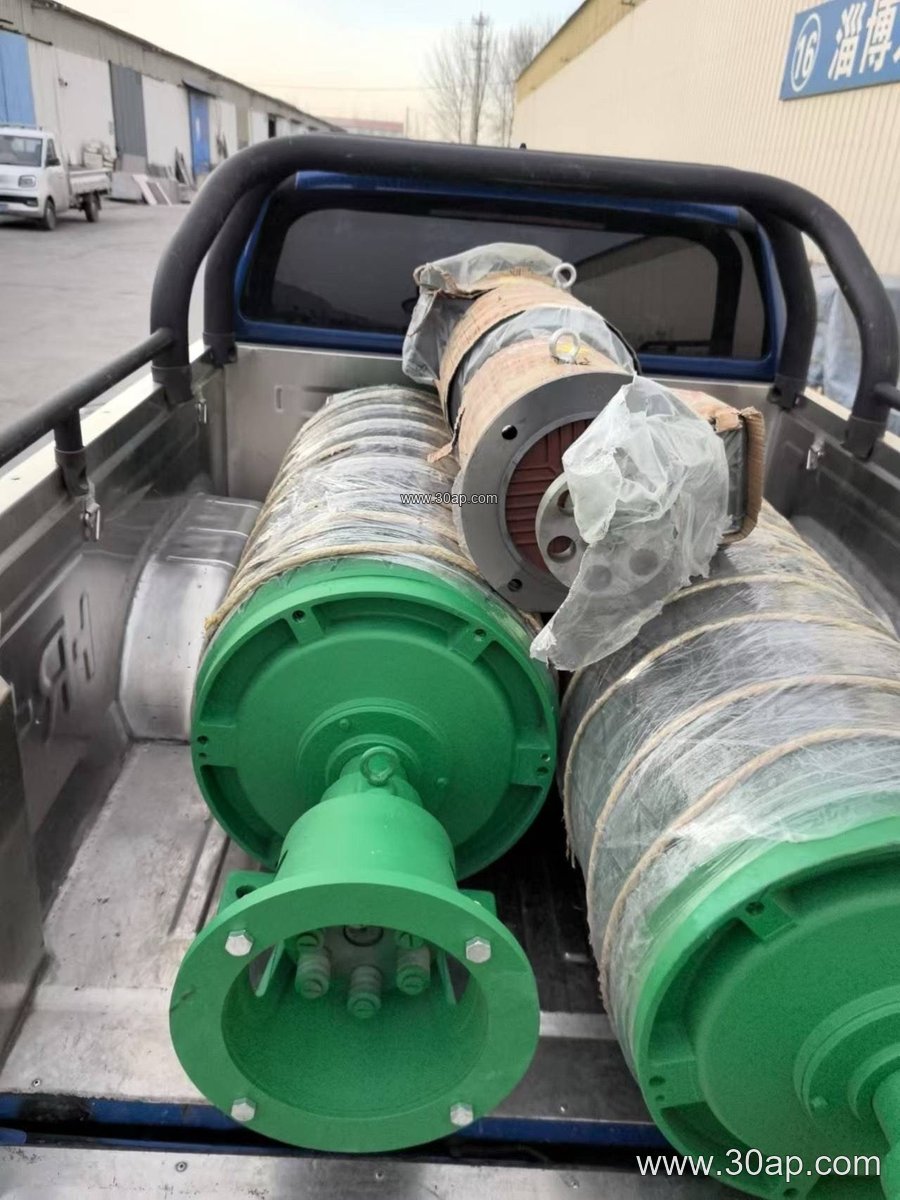
- Shell and shaft sized for the tension load, not just belt width
- Bearing housings arranged for sliding travel in the take-up guides
- Lagging selected for grip and wear life
- Frame with counterweight, screw, or hydraulic tensioning
Shaft diameter is determined by torque and bending load. Common shaft sizes range from Ø50 to Ø200, but no belt width automatically dictates one shaft size. A B800 conveyor in a coal mine and a B800 line in a quarry can carry very different tensions and therefore different shafts.
Common Sizes and Surface Options
Drum diameters for take-up service usually fall between Ø200 and Ø1800, with Ø400 to Ø1000 being typical for medium and heavy conveyors. Shell face width generally exceeds belt width by roughly 100 to 200 mm per side. The table below gives reference combinations; final selection follows the actual belt tension and wrap angle.
| Belt Width | Approx. Shell Face Width | Example Diameter Range |
|---|---|---|
| B500 | 600 mm | Ø315 to Ø500 |
| B800 | 950 mm | Ø400 to Ø630 |
| B1000 | 1150 mm | Ø500 to Ø800 |
| B1200 | 1400 mm | Ø630 to Ø1000 |
| B1400 | 1600 mm | Ø800 to Ø1250 |
| B1800 | 2000 mm | Ø1000 to Ø1400 |
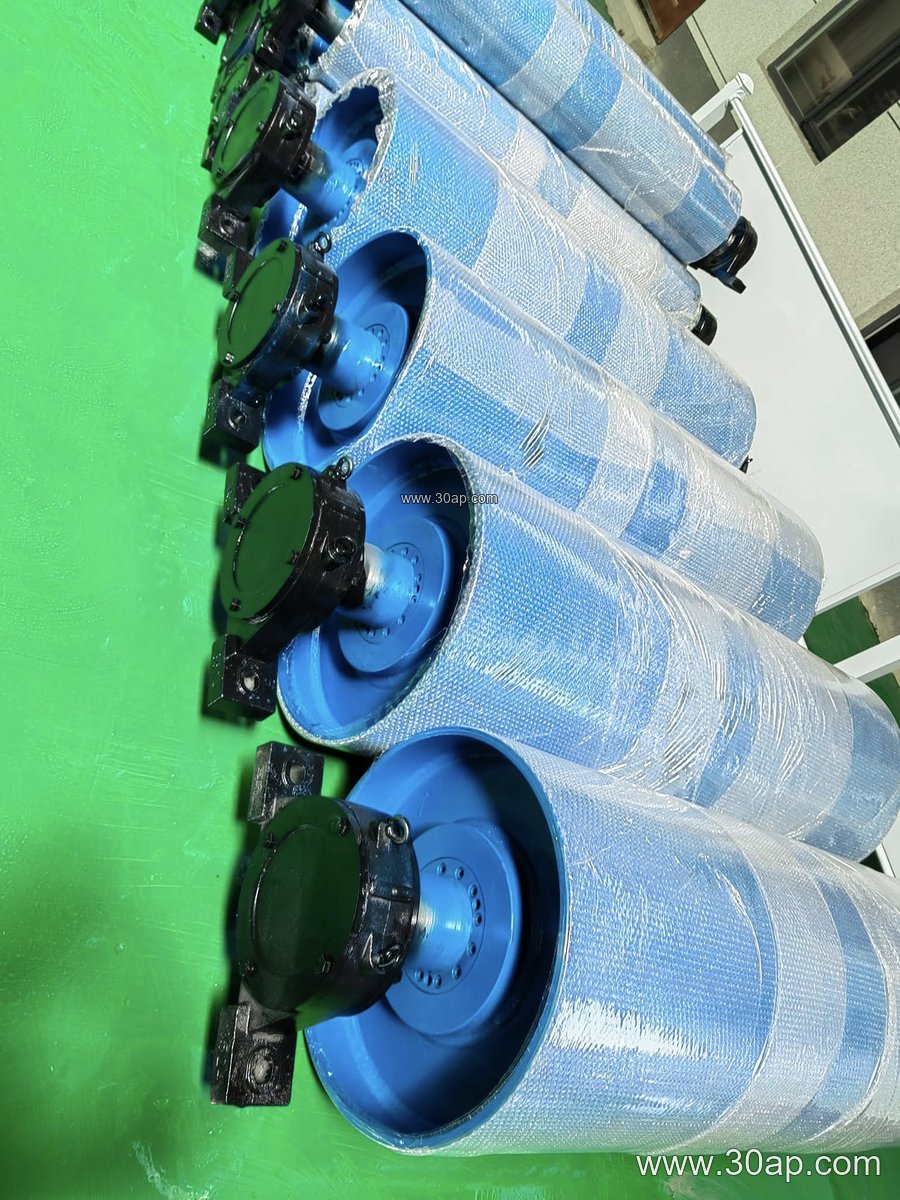
Surface forms include plain, cold-bonded rubber, hot-vulcanized rubber, diamond lagging, and ceramic lagging, with lagging thickness commonly 8, 10, 12, 15, or 20 mm. A smooth drum suits light tensioning duty, while lagged or ceramic surfaces help where the belt must grip under wet or dusty conditions.
Where It Fits in the Plant
Take-up pulleys appear across bulk handling operations. In a coal preparation plant or underground coal mining conveyor, a gravity take-up tower keeps the belt tensioned as the load changes. In a limestone quarry or aggregate crushing line, a screw take-up at the tail keeps a short transfer conveyor tracking. Cement plants, power plant coal yards, and port ship loading conveyors all rely on the same principle.
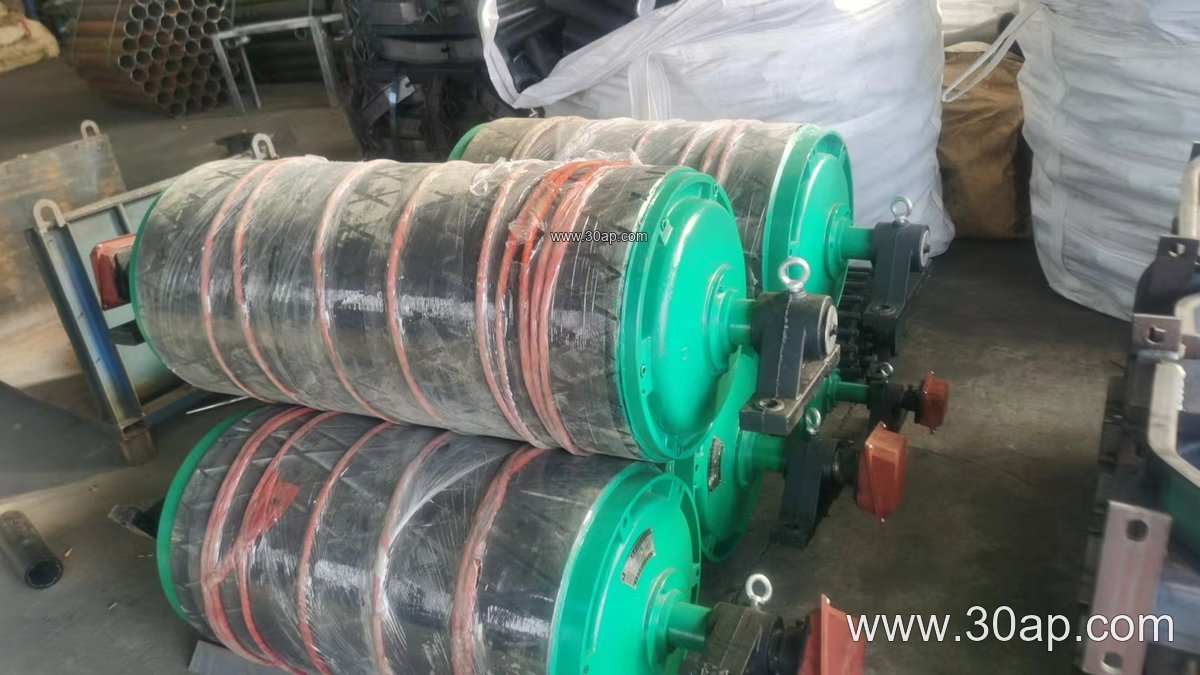
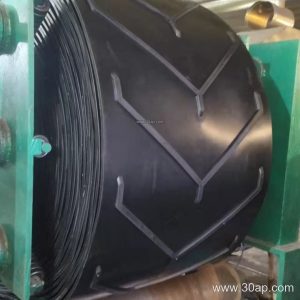
The tensioning drum must match the belt it serves. A heavy-duty mining conveyor belt with a steel cord carcass needs a larger drum and stronger frame than a lightweight fabric core belt on a short yard conveyor. The take-up pulley also works alongside the conveyor pulley set, idler roller groups, and conveyor bracket assemblies, so alignment across the whole structure matters. For belt selection, products such as EP conveyor belt, NN conveyor belt, and flame retardant conveyor belt each bring different elongation behavior, which affects how much take-up travel is needed. At www.example.com/conveyor-pulley, buyers can compare drum options alongside conveyor belt specifications.
What to Check Before Ordering
Start with the belt tension at the take-up point, the required travel distance, and the take-up method. Then confirm drum diameter, shell face width, lagging type and thickness, shaft size, bearing type, and frame mounting. Check that the pulley fits the existing guides and that the bearing housings allow the intended sliding movement. For abrasive duties, an abrasion resistant conveyor belt paired with a lagged drum reduces slip and shell wear. In cold climates, a cold resistant conveyor belt may call for different tension settings because its flexibility changes at low temperature.
Finally, confirm the interface with the conveyor bracket and supporting structure, and ask for a dimensional drawing before fabrication. A take-up pulley that fits the frame but not the belt tension will cause tracking problems for the life of the installation.