What a Take-Up Device Pulley Does
A take-up device pulley is the sheave inside a conveyor’s tensioning station that guides the belt while the take-up mechanism pulls slack out of the system. You will also see it called a tension pulley or take-up pulley. It is not a drive pulley, and it is not a tail pulley; those components transmit power or redirect the belt at the discharge and return ends. The take-up device pulley works with a screw, gravity, or hydraulic take-up to keep the conveyor belt at the right tension as it stretches under load or changes temperature.
Proper tension matters on any line handling bulk material. Too little tension and the belt slips on the drive pulley; too much and bearings, splices, and the belt carcass suffer. In a quarry, a cement plant, or a power plant coal yard, a well-set take-up station keeps the belt tracking and reduces spillage.
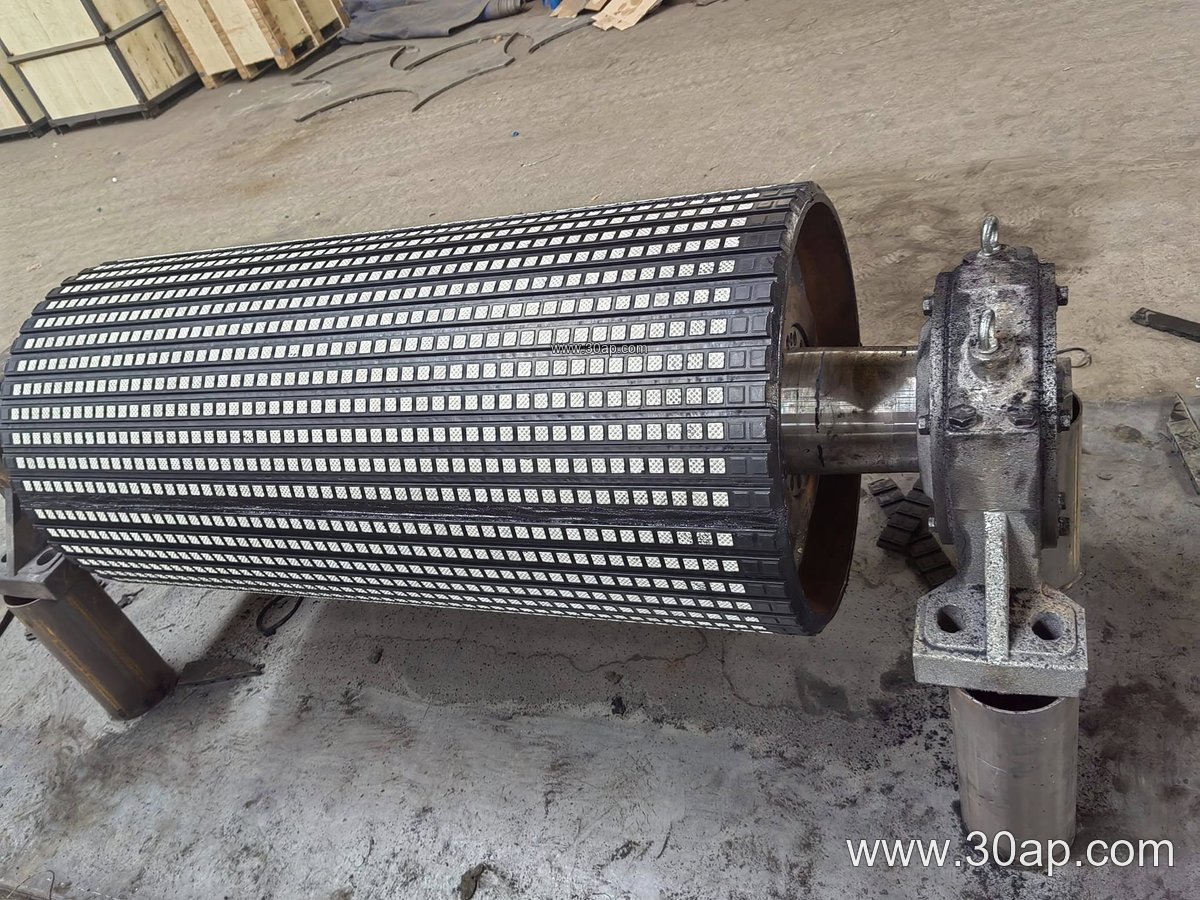
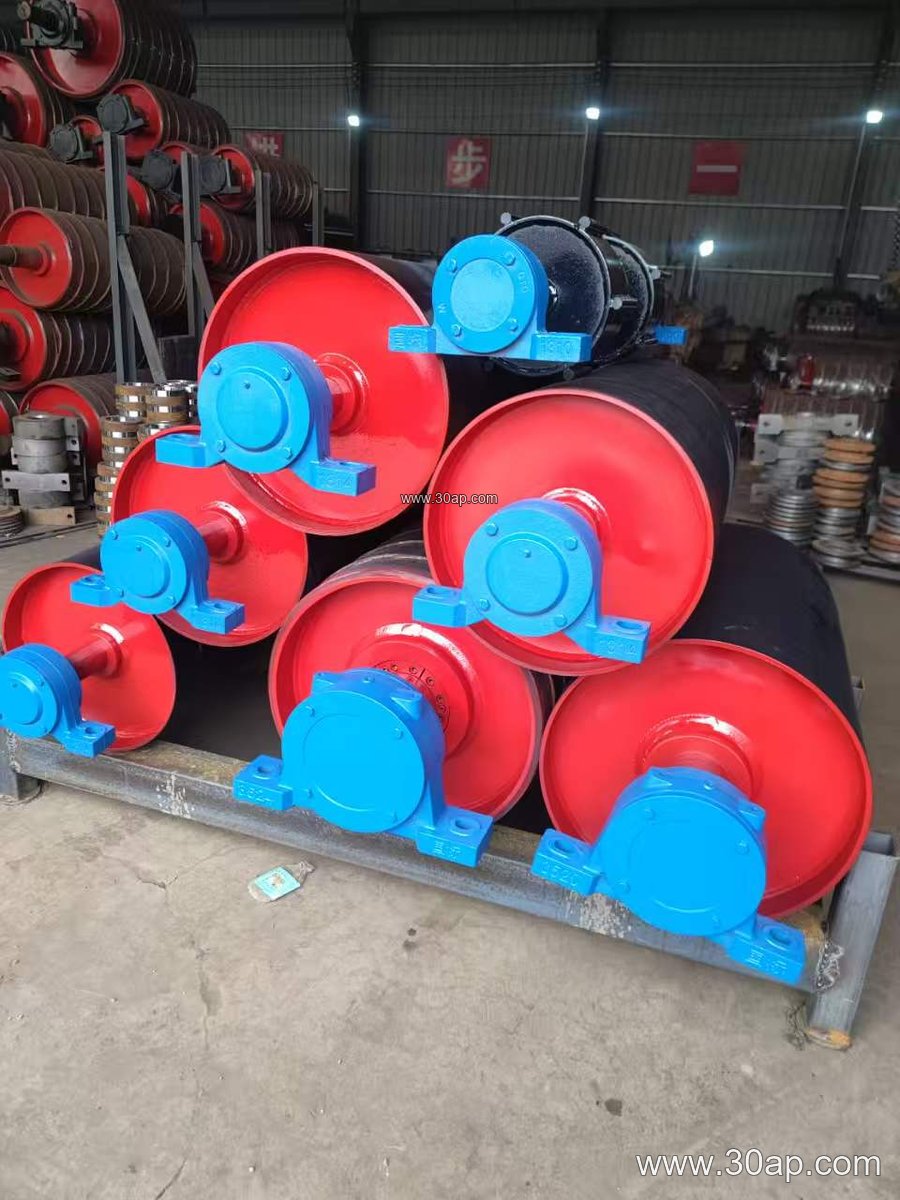
Construction and Surface Options
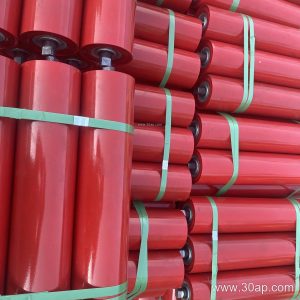
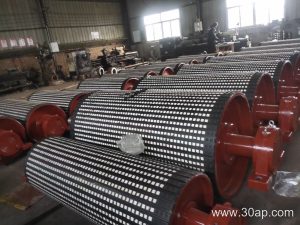
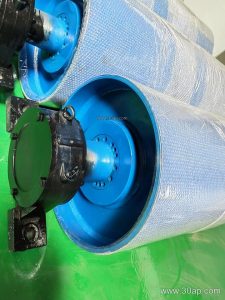
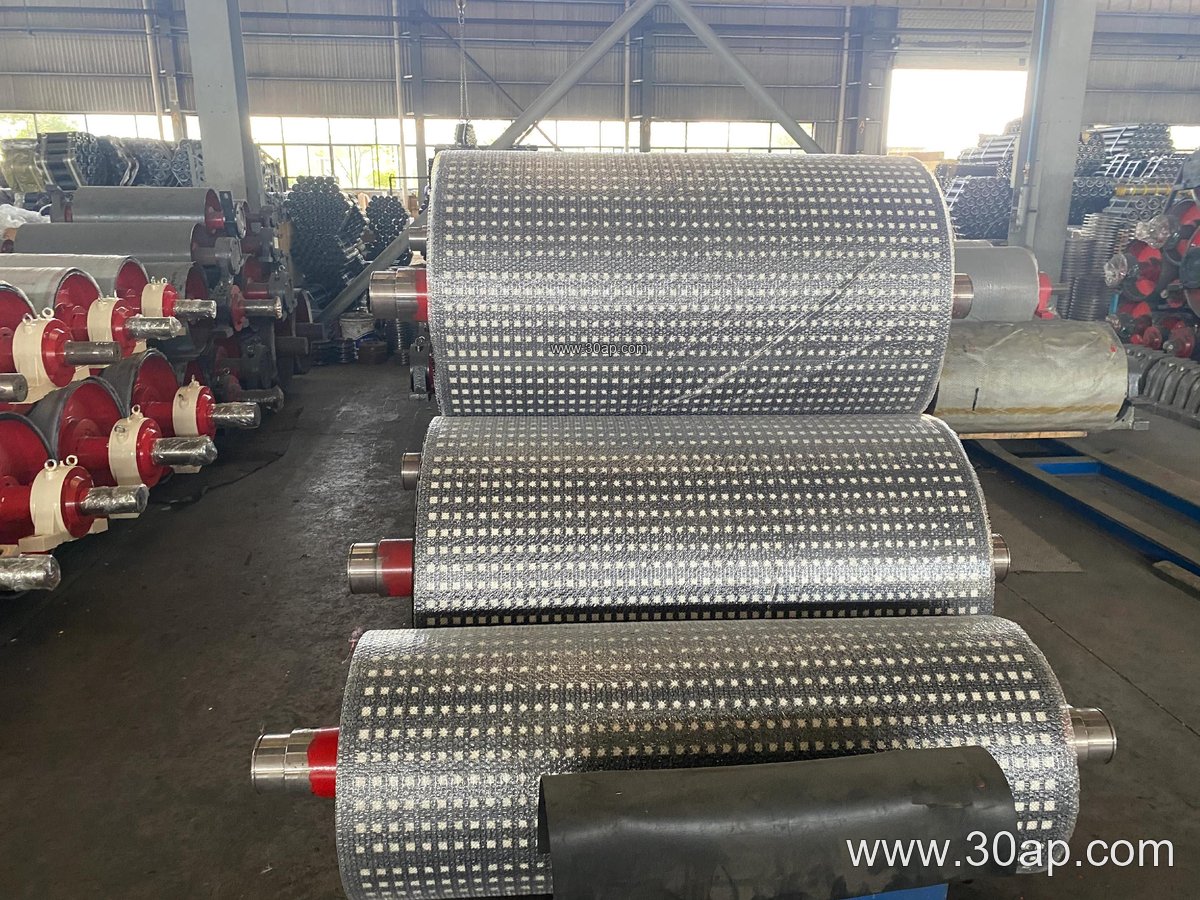
The pulley is typically a welded steel drum with a shaft, hub, and bearing housings, mounted in a take-up frame or carriage that slides along rails. The shell can be plain or covered with rubber lagging to improve grip and protect the belt. Common covering styles include plain rubber, diamond grooved, and ceramic lagging, with lagging thickness usually 8, 10, 12, 15, or 20 mm depending on duty.
Diameter and face width follow the conveyor design. A tension pulley for a B800 belt might use a Ø500 shell with roughly a 950 mm face, while a B1200 line could call for Ø800 or Ø1000. These are typical references, not fixed pairings, and shaft diameter is set by torque and load rather than belt width alone.
Where It Fits in the Conveyor
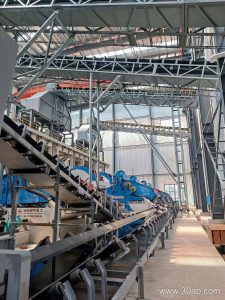
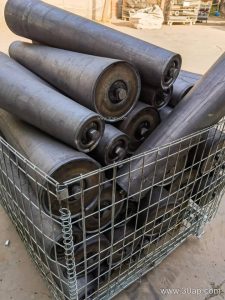
The take-up device pulley sits where the tensioning system needs a redirect, often near the tail or along the return run. It pairs with conveyor brackets, idler rollers, and the main conveyor pulley set. On a long overland line at a mine or a ship loading conveyor at a port, it may be part of a gravity tower with a weighted carriage. In a compact crushing and screening plant, a screw take-up with a small tension pulley is more common.
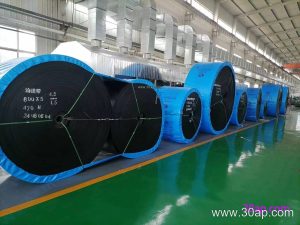
Belt choice and take-up design go together. A heavy-duty mining conveyor belt with a steel cord carcass needs steady tension, while a fabric core belt such as an EP conveyor belt or NN conveyor belt may tolerate more stretch. Abrasion resistant conveyor belts in a rock conveyor or iron ore line also benefit from a take-up that compensates for wear and load changes.
Selection and Maintenance Notes
Buyers should confirm the belt width, pulley diameter, face width, shaft size, bearing type, and take-up travel before ordering. Check whether the frame is fixed or sliding and whether lagging is needed for grip. On coal mining conveyor belts and other flame retardant conveyor belt installations, lagging and pulley materials should suit the site’s fire safety rules.
- Inspect lagging for wear and glazing during scheduled stops.
- Check bearing lubrication and seal condition.
- Verify take-up travel so the carriage does not bottom out.
- Watch belt tracking after tension adjustments.
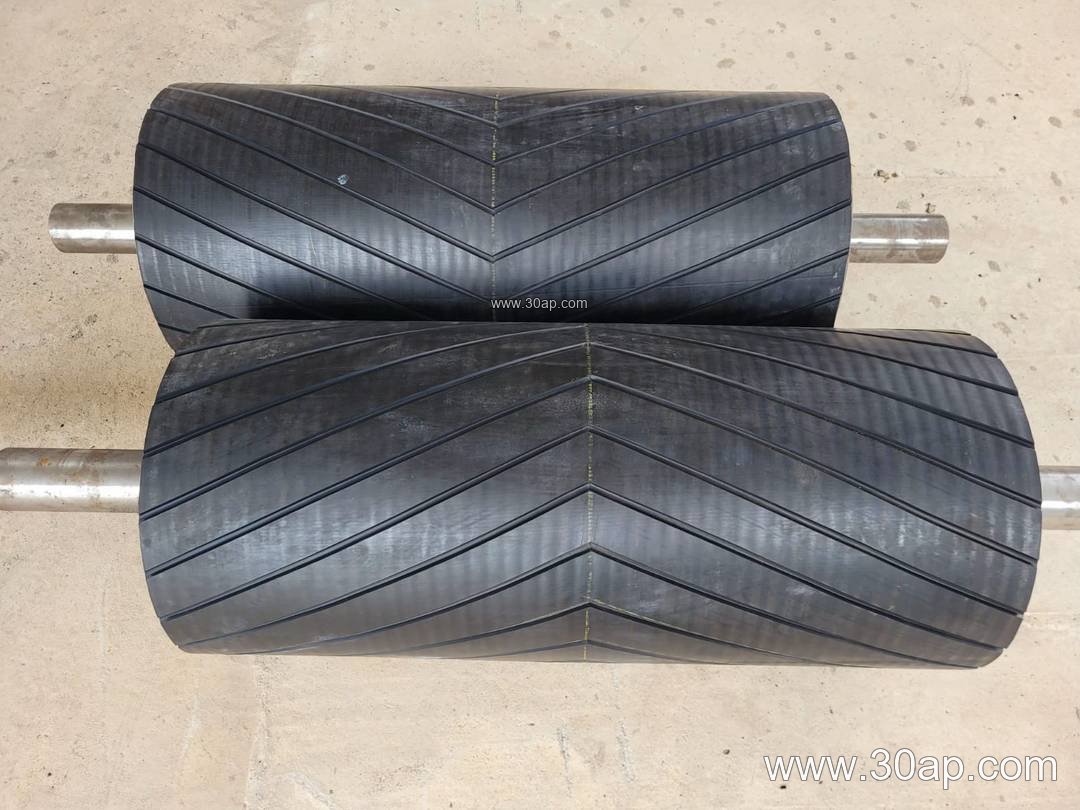
For replacement planning, match the take-up device pulley to the existing conveyor pulley dimensions and confirm the shaft fits the bearing housings. Whether the line runs a pipe conveyor belt, a chevron conveyor belt, or a standard EP conveyor belt, the tension station should be sized for the actual belt and load, not copied from another conveyor.