What a Three-Roll Trough Idler Does on a Conveyor
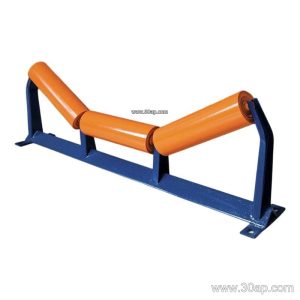
A three-roll trough idler is the standard carrying assembly on most bulk handling belts. Three idler rollers sit in a frame, with the two side rolls angled upward so the belt forms a trough. That shape keeps material centered, reduces spillage, and spreads load across the belt width. In a quarry, a coal preparation plant, or a cement kiln feed line, the trough profile is what allows a fabric core conveyor belt or steel cord conveyor belt to carry loose rock, clinker, or ore without wandering off the structure.
The assembly is also called a three-roll troughing idler or a three-roll carrying idler set. It is not a drive pulley, a tail pulley, or a bend pulley; those are separate components that transmit and redirect belt tension. The trough idler only supports the loaded belt between those pulleys.
How the Assembly Is Built
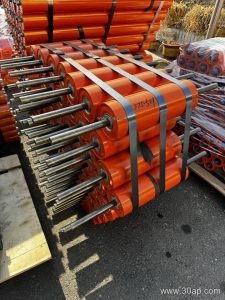
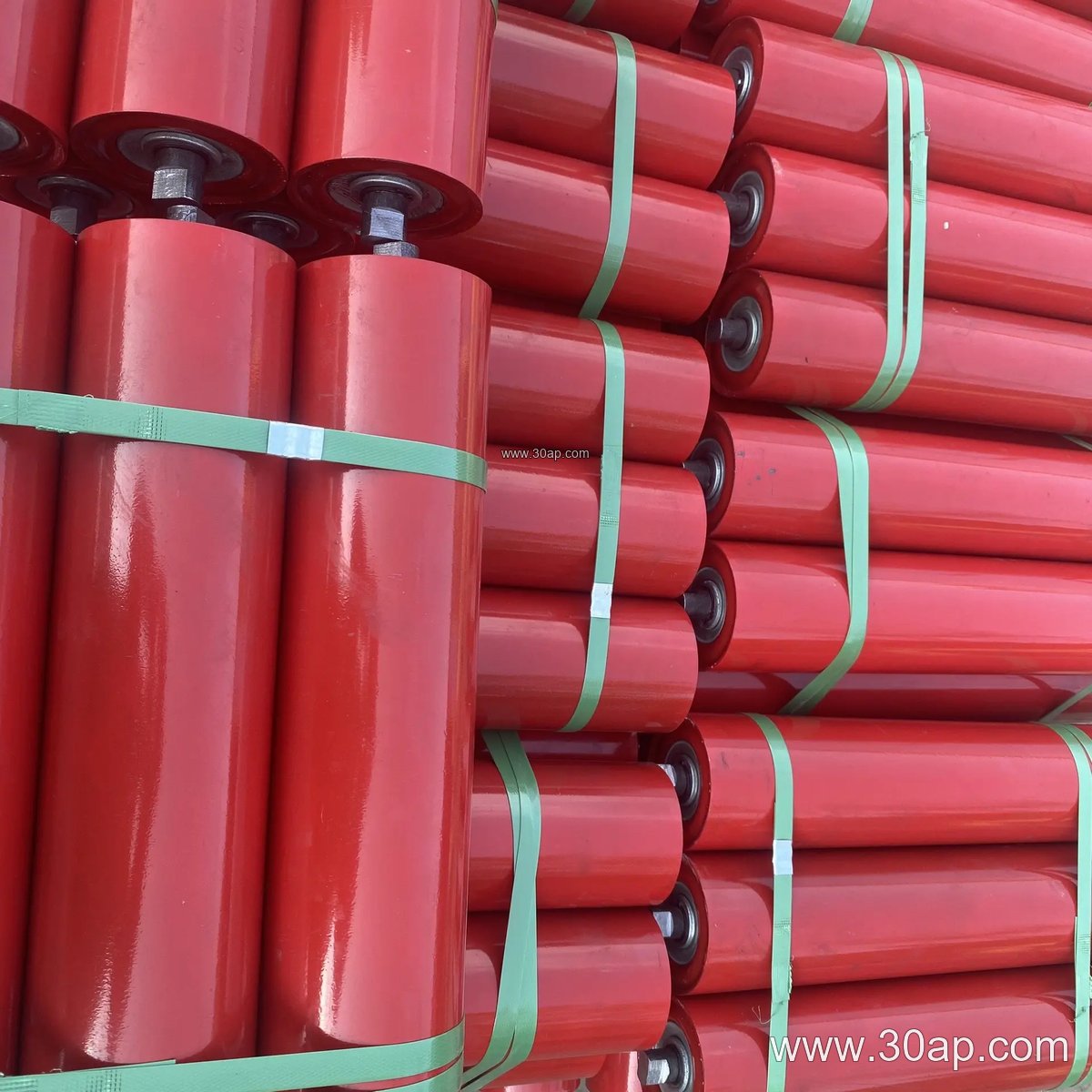
Each roll usually has a steel tube shell, a shaft, bearing housings, and a sealing arrangement. Roll surfaces may be plain steel, nylon, ceramic, or rubber rings depending on the duty. Bearings such as 6204, 6205, 6305, 6306, 6308, or 6310 appear across the range, but bearing size must be matched to roll diameter and load, not guessed from belt width alone.
The frame holds the rolls at a fixed trough angle. Common angles are 20, 30, 35, and 45 degrees. A steeper angle gives deeper material containment, while a shallower angle suits wider belts or materials that need a flatter profile. Some frames are tilted forward about 1.5 to 2 degrees to help training, a detail worth checking when ordering replacement sets.
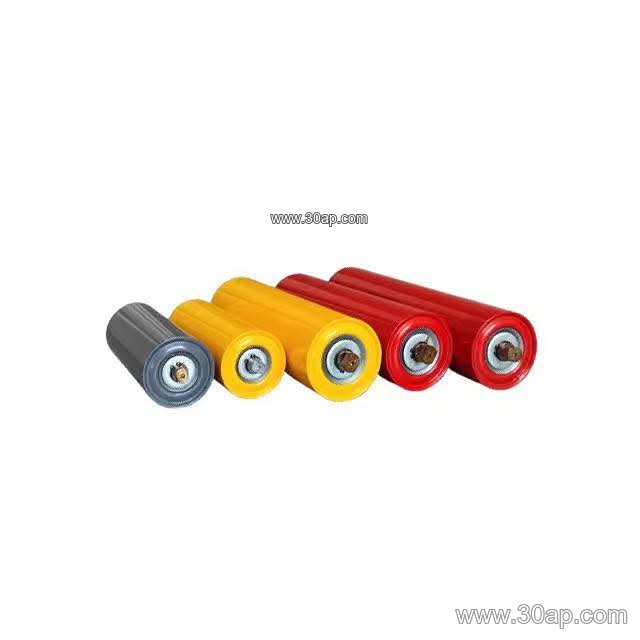
- Side rolls and center roll can differ in length; the center roll is often shorter.
- Roll diameter and shaft size follow the conveyor design load, not one fixed rule.
- Seals matter in dusty service such as crushing and screening plants.
Typical Sizes and Reference Data
Roll diameter choices commonly include Ø63, Ø76, Ø89, Ø102, Ø108, Ø127, Ø133, Ø159, Ø178, Ø194, and Ø219. Belt widths run from B400 up to B2400 in many standard lines. The table below shows common roll length examples for three-roll trough sets; these are reference values, and side rolls may vary.
| Belt Width | Common Roll Length Example | Typical Trough Angle |
|---|---|---|
| B500 | about 200 mm | 20 to 35 degrees |
| B650 | about 250 mm | 20 to 35 degrees |
| B800 | about 315 mm | 30 to 35 degrees |
| B1000 | about 380 mm | 30 to 35 degrees |
| B1200 | about 465 mm | 30 to 35 degrees |
| B1400 | about 530 mm | 30 to 35 degrees |
| B1600 | about 600 mm | 30 to 45 degrees |
| B1800 | about 670 mm | 30 to 45 degrees |
| B2000 | about 750 mm | 35 to 45 degrees |
These figures are examples only. Final roll length, diameter, and shaft size should be confirmed against the conveyor drawing and the actual belt load.
Where Three-Roll Trough Idlers Are Used
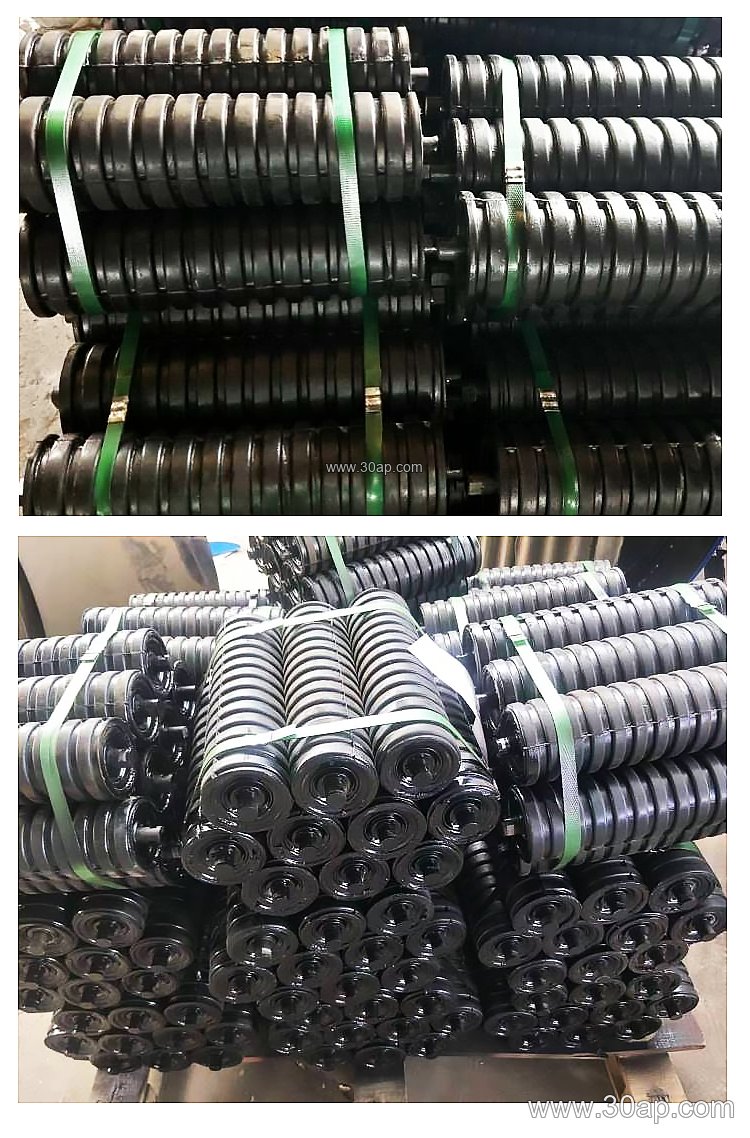
You will find them on the carrying side of belts in limestone mines, iron ore plants, coal washing circuits, and aggregate crushing lines. They also appear in power plant coal handling, port ship loading, and tunnel spoil removal. The belt itself may be an abrasion resistant conveyor belt, a flame retardant conveyor belt for underground work, or a heat resistant conveyor belt near kilns and sinter coolers. Matching the idler to the belt and the material is more important than choosing the largest size available.
On a heavy-duty mining conveyor belt, impact and load are high, so roll wall thickness, bearing class, and seal quality deserve close attention. On a long overland line using an EP conveyor belt or NN conveyor belt, spacing and roll concentricity affect rolling resistance and belt life.
Buyer Checklist Before Ordering
- Confirm belt width, trough angle, and whether the set is three-roll or another arrangement.
- Check roll diameter and shaft diameter against the existing frame and conveyor bracket.
- State the material: wet, sticky, abrasive, or hot, since this affects seal and surface choice.
- Ask for the roll length of both center and side rolls, not just the belt width.
- Verify mounting dimensions and frame hole spacing so the set fits the conveyor bracket.
Replacement sets should be ordered by drawing or by measured dimensions. A three-roll trough idler that fits the frame and matches the belt load will run cooler and last longer than a mismatched assembly. For related components, check belt, idler roller, and conveyor pulley data together so the whole conveyor line stays consistent.