What a Conveyor Support Leg Does
A conveyor support leg is the vertical member that carries the weight of a belt conveyor frame down to the floor, foundation, or steel structure. It is the quiet workhorse of the whole line: the conveyor support leg holds the cross beams, the idler roller stations, and the loaded belt in position, keeps the frame at the correct height, and transfers static and dynamic loads to the ground. In a quarry, a cement plant, or a power plant coal yard, a poorly supported frame shows up quickly as misalignment, spilled material, and uneven belt wear.
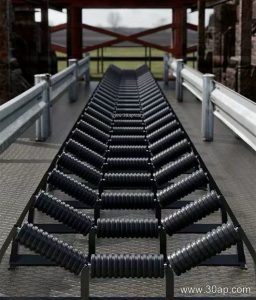
Although the leg looks simple, it is part of a system. The leg supports the cross member; the cross member carries the bracket that holds the idler roller; the roller supports the conveyor belt. Change one element and the others must follow. That is why buyers should treat the conveyor support leg as an engineered component, not a piece of cut steel.
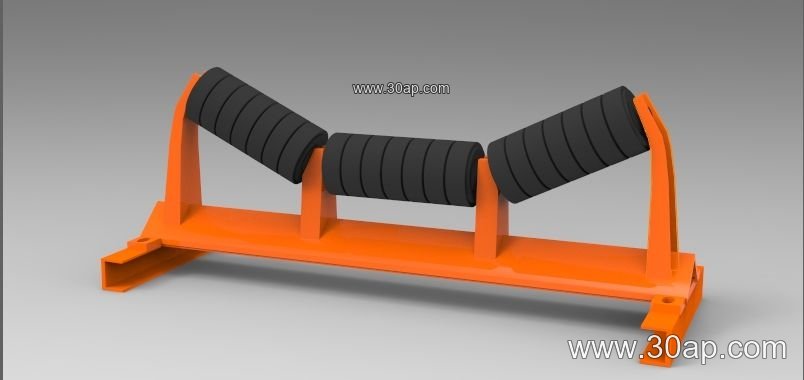
How the Leg Is Built
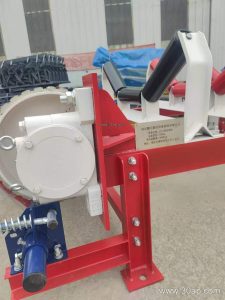
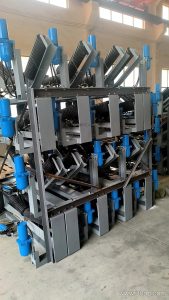
Most support legs are fabricated from angle steel, channel steel, or folded steel plate. The common forms include a straight vertical leg with a base plate, an adjustable leg with slotted holes or a threaded section for height trimming, and a braced leg with a diagonal stay for taller frames. The top of the leg usually carries a flange or a bolted connection to the longitudinal beam, while the bottom ends in a base plate with anchor holes. Surface treatment is normally hot-dip galvanizing or painting, depending on the environment.
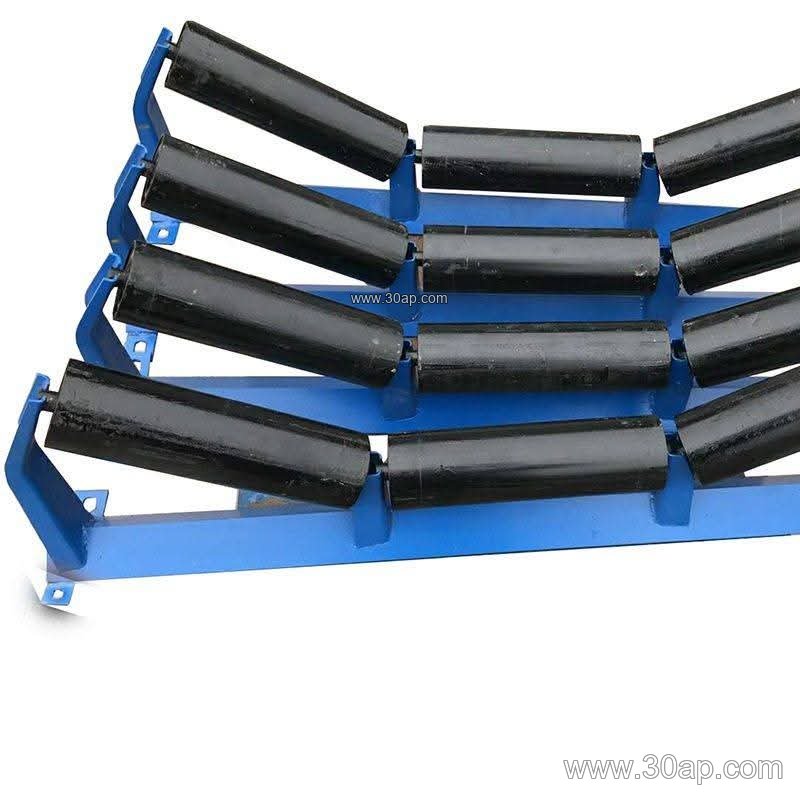
Key construction points a buyer should check are the weld quality at the leg-to-base joint, the flatness of the base plate, the hole pattern at the top connection, and the corrosion protection for wet or coastal sites. For a heavy-duty mining conveyor, the leg section and base plate thickness are usually larger than for a light aggregate line, because the loads from a wide, fully loaded belt are much higher.
Where Support Legs Are Used
Support legs appear wherever a conveyor needs elevation or a change in ground level. In a limestone quarry or a stone crushing line, legs lift the discharge section over a stockpile. In a washing plant or a cement plant, they carry the frame across walkways and equipment. In a power plant coal handling system, legs support the long transfer conveyors between the coal yard and the boiler house. Port and ship loading conveyors also rely on robust legs, often with bracing, to resist wind and operational vibration.
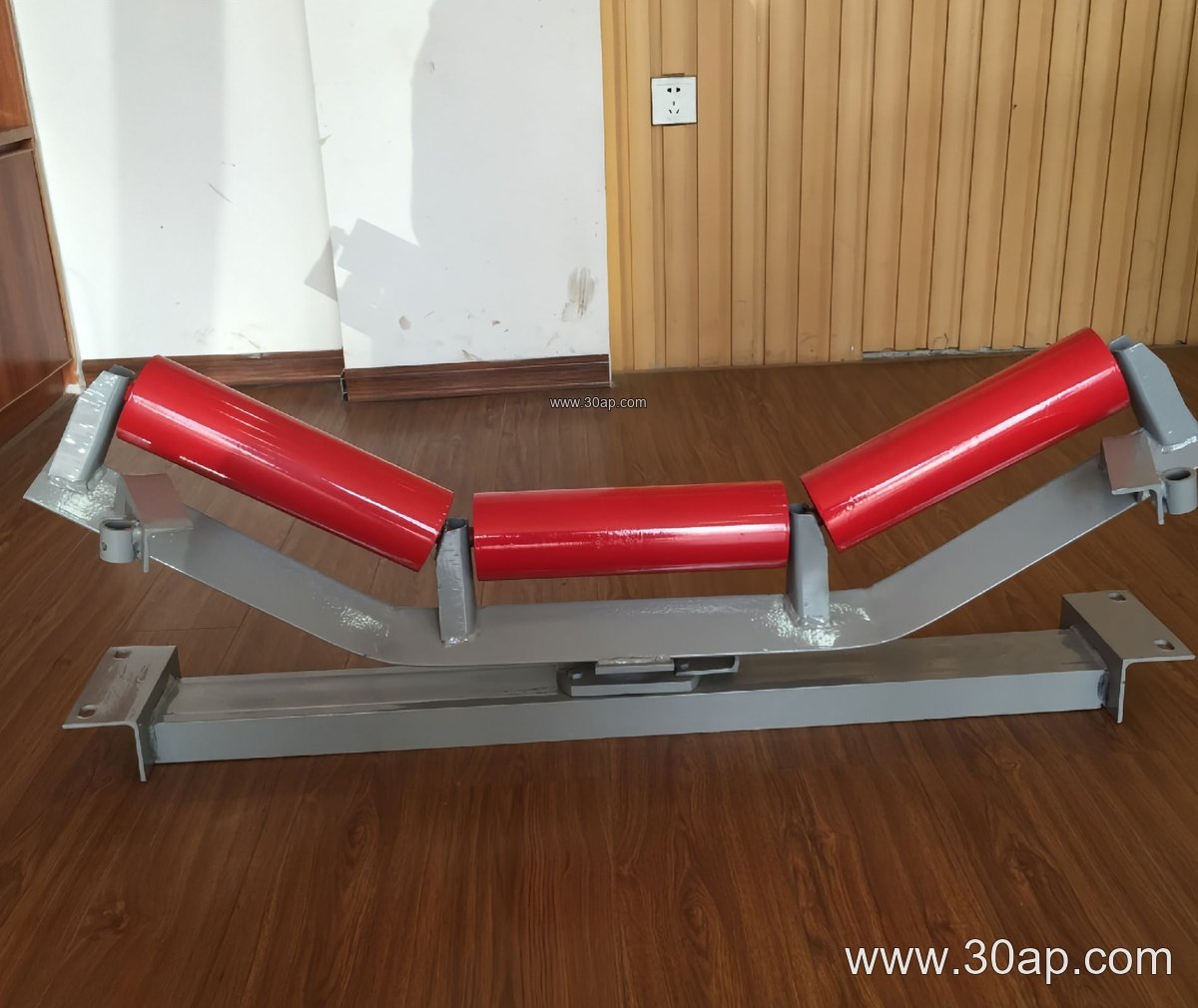
The leg must match the belt and roller arrangement above it. A B800 frame with a 35-degree trough and Ø108 idlers places a different load on the leg than a B1400 frame with a 45-degree trough and Ø133 idlers. The table below gives common reference combinations; actual values are determined by design.
Reference Frame Combinations
| Belt Width | Trough Angle | Idler Diameter | Typical Application |
|---|---|---|---|
| B500 | 20 degrees | Ø89 | Small aggregate or recycling line |
| B650 | 30 degrees | Ø89 | Sand and gravel transfer |
| B800 | 35 degrees | Ø108 | Quarry and crusher discharge |
| B1000 | 35 degrees | Ø108 | Cement plant and coal yard |
| B1200 | 45 degrees | Ø133 | Iron ore and heavy bulk material |
| B1400 | 45 degrees | Ø133 | Power plant coal handling |
| B1600 | 45 degrees | Ø159 | Large mining and port systems |
These combinations are examples only. A wide belt does not force one trough angle or one roller diameter, and the leg spacing, mounting hole distance, and cross beam length should always follow the actual frame design.
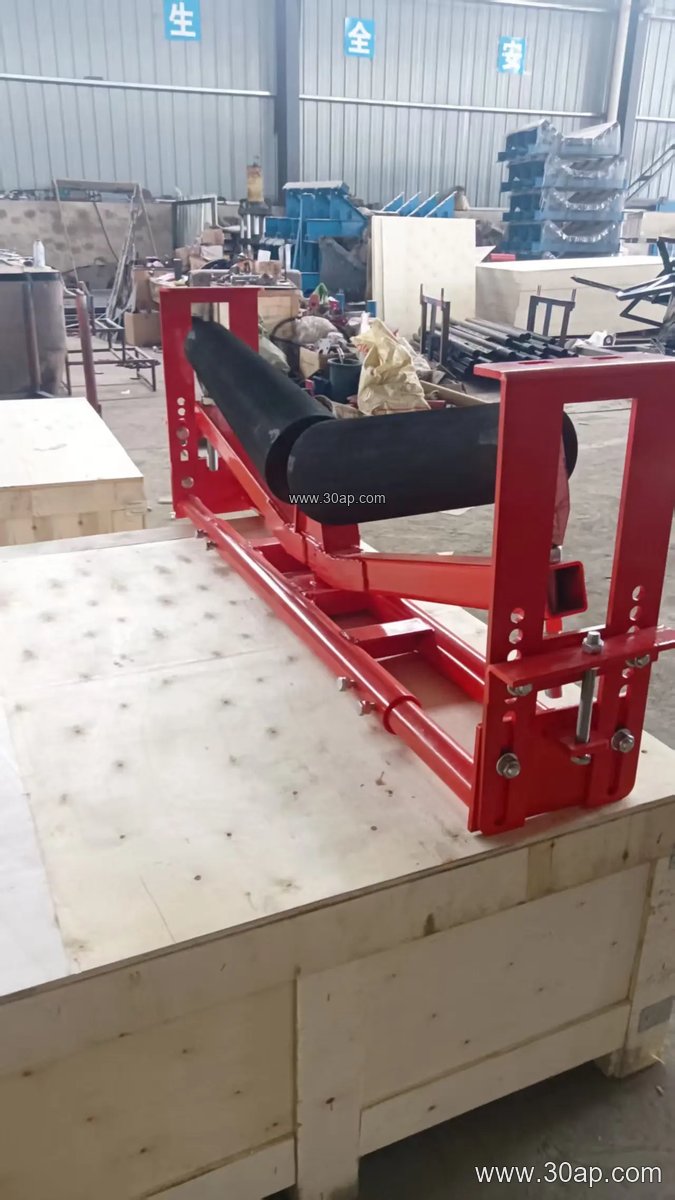
Fixed, Adjustable, and Braced Legs
Fixed legs are welded or bolted to a set height and suit permanent installations where the foundation is level. Adjustable legs allow minor height correction during installation and are useful on uneven ground or where the conveyor may be relocated. Braced legs add a diagonal member to resist lateral forces, and are common on tall frames in mining and port applications.
The choice also depends on the neighboring components. A transition bracket near a conveyor pulley sees different forces than a standard trough bracket in the middle of the run, and the leg beneath it may need extra stiffness. Similarly, a frame carrying a heavy steel cord conveyor belt or a thick abrasion resistant conveyor belt will load its legs more than a light fabric core line.
Buyer Checklist
- Confirm the belt width, trough angle, and idler diameter so the leg height and top connection match the frame.
- State the mounting condition: floor, concrete foundation, or steel structure, and whether anchor bolts are required.
- Ask for the base plate size and hole pattern, since these vary with load and design.
- Specify the environment so the correct coating or galvanizing is applied.
- Check that the leg is compatible with the adjacent bracket and cross beam, not just the belt.
- For long or elevated runs, confirm bracing and leg spacing with the conveyor designer.
A conveyor support leg is a small part of the capital cost but a large part of the line’s reliability. Matching it to the belt, the idler roller, the conveyor bracket, and the foundation keeps the frame square, the belt centered, and maintenance predictable in demanding sites such as mines, cement works, and power stations.