What a Tail Pulley Assembly Is
A tail pulley assembly is the return-end pulley group mounted at the rear of a belt conveyor, opposite the drive. Its main job is to close the belt loop, guide the conveyor belt back onto the carrying run, and, on many conveyors, act as the take-up point that keeps belt tension steady. Because it sits at the loading end on most installations, it also has to survive dust, spillage, and occasional impact from bulk material.
In practice the assembly is more than a bare shell. It usually includes the pulley body, shaft, bearings and bearing housings, a frame or swing base, and often a scraper or plough to keep the rim clean. On shorter or lighter lines it may be a simple fixed tail pulley; on long overland or high-tonnage lines it becomes an adjustable tensioning tail pulley. Belt width, pulley diameter, shaft size and bearing type are all selected together, never from one number alone.
How the Assembly Is Built
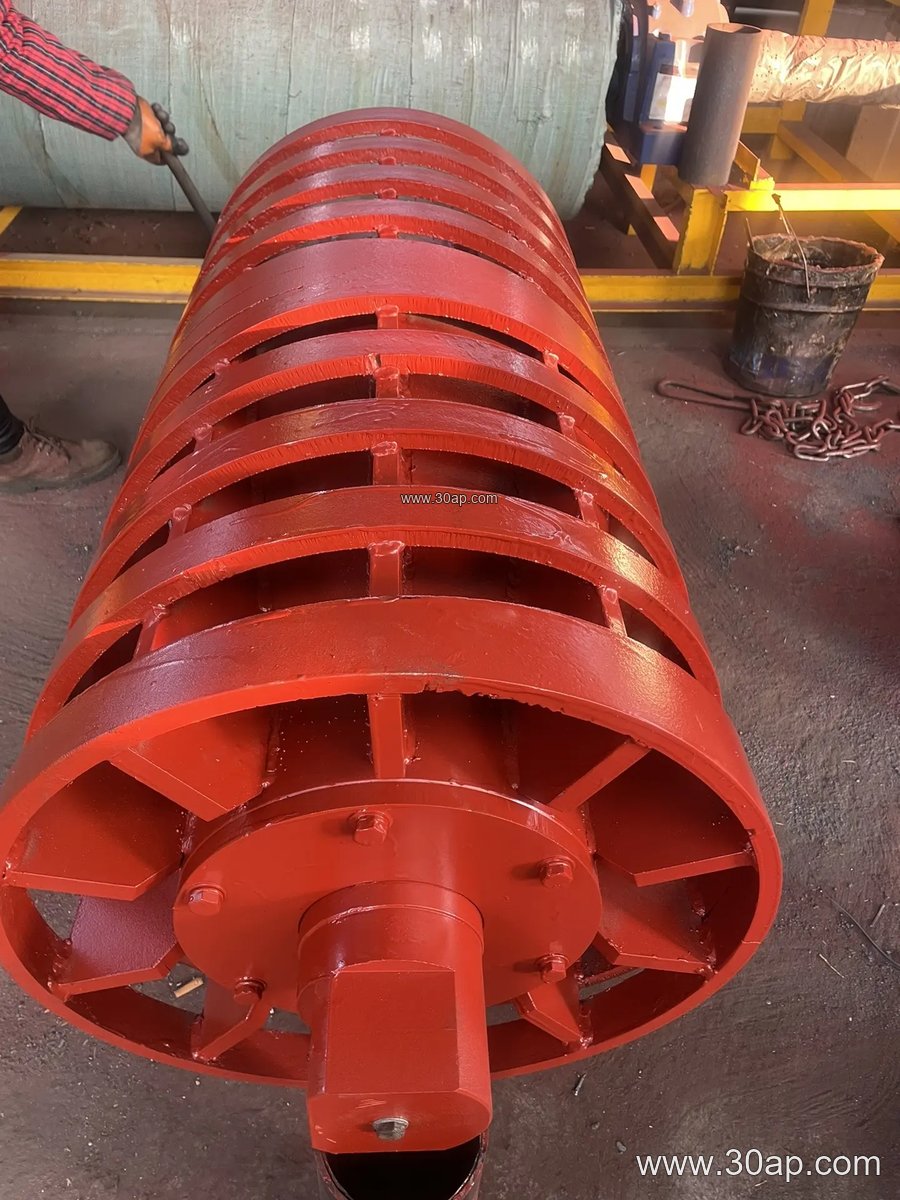
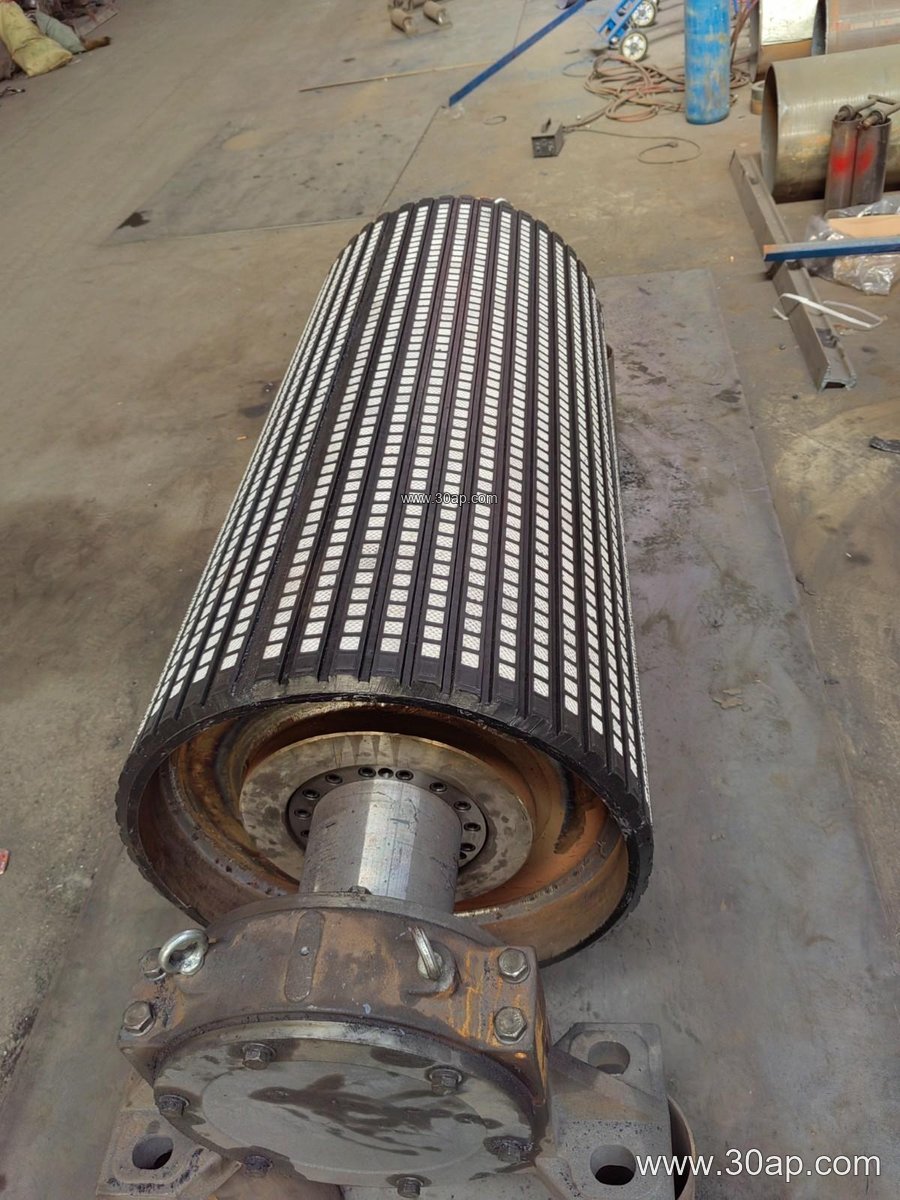
The core is a welded steel drum with dished or flat end plates, machined hubs, and a through shaft keyed or shrink-fitted to the shell. The shaft runs in self-aligning ball or spherical roller bearings carried by cast or fabricated housings. Those housings bolt to a frame that can be fixed, sliding, or pivoting, depending on whether take-up travel is needed.
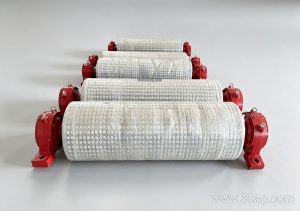
Surface finish matters as much as the steel. A plain finish is common where the belt is clean and tracking is stable. Rubber lagging, applied by hot vulcanizing or cold bonding, improves grip and protects the shell from abrasive fines. Diamond or herringbone grooving helps shed water and fines on wet or dusty lines. Ceramic lagging is chosen where abrasion is severe. Lagging thickness is commonly 8, 10, 12, 15 or 20 mm, selected by duty rather than by habit.
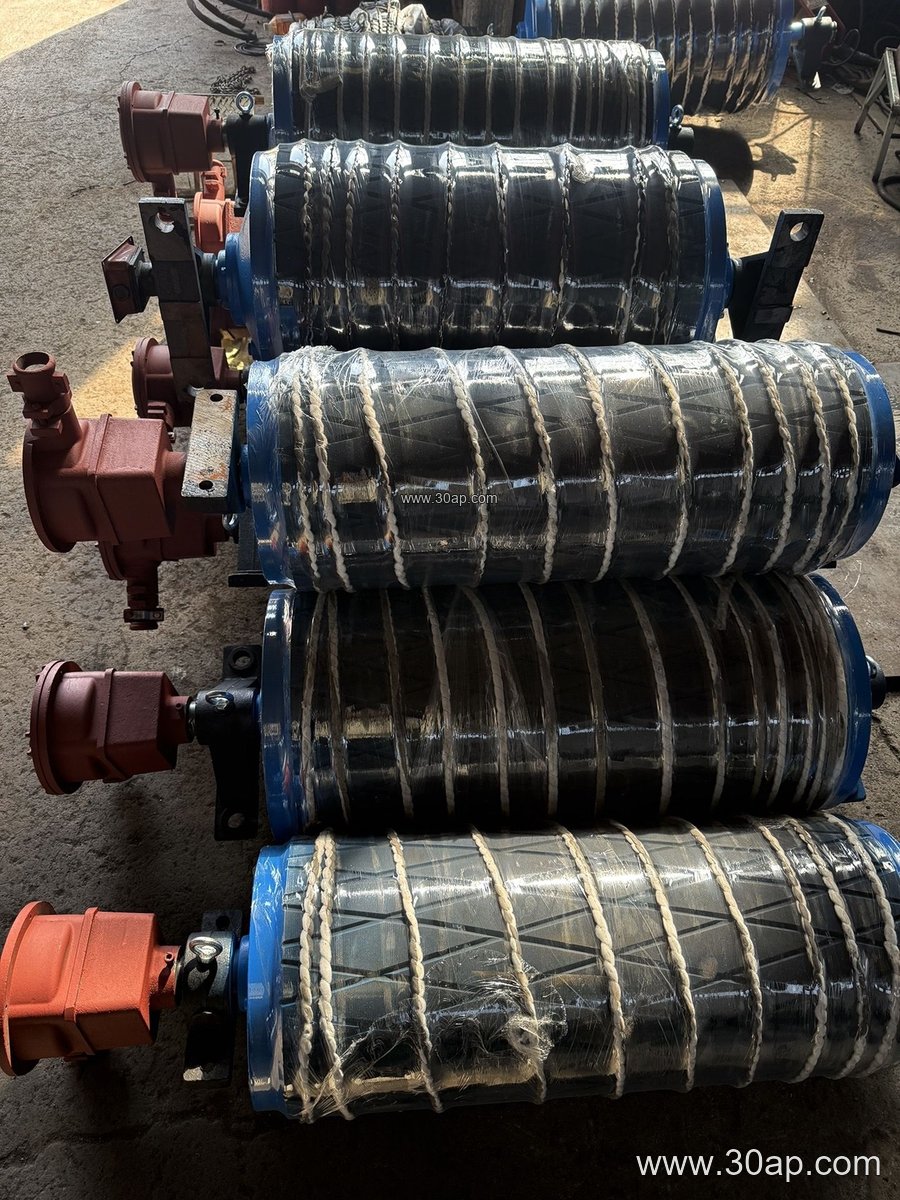
Typical reference dimensions, to be confirmed against the actual conveyor design, look like this:
- Belt width B400 to B2400
- Pulley diameter Ø200 to Ø1800
- Shaft diameter Ø50 to Ø200
- Face width usually somewhat wider than the belt, for example B800 with about 950 mm face
- Common combinations such as B800 × Ø500 or B1200 × Ø1000
The same belt width can work with several pulley diameters, so the drive and tail pulley should be sized from belt tension, wrap angle, and load, not copied from a table.
Where It Fits in Real Plants
In a quarry or aggregate line, the tail pulley assembly sits under the crusher discharge, where rock dust and fines are constant and a scraper is almost obligatory. In a coal handling plant or power station coal yard, flame retardant and anti-static belt grades are usual, and the tail end often doubles as the take-up, so sliding frames and generous travel matter. Cement plants and clinker lines favor abrasion resistant surfaces because grit works into every gap.
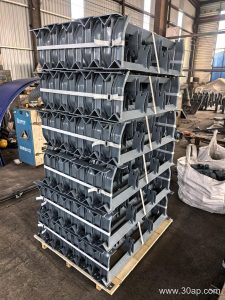
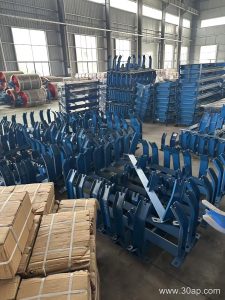
The pulley does not work alone. It has to match the conveyor belt running over it, the conveyor pulley alignment on the drive end, and the conveyor bracket geometry that fixes the whole frame to the structure. A poorly aligned tail end quickly shows up as edge wear and mistracking, whatever the belt grade.
Buyer Checklist Before Ordering
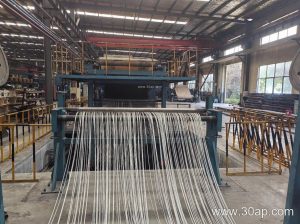
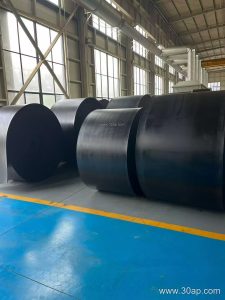
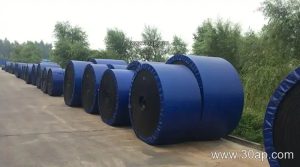
Start with the belt. Record the actual belt width, the belt type, and the belt tension. A heavy-duty mining conveyor belt such as an EP200 or EP300 fabric core belt behaves differently from a steel cord belt like ST1600, and the tail pulley bearing load follows that difference. In underground coal mining, PVG800S belt brings its own fire safety requirements, while a food grade or oil resistant belt may need a clean, non-marking finish.
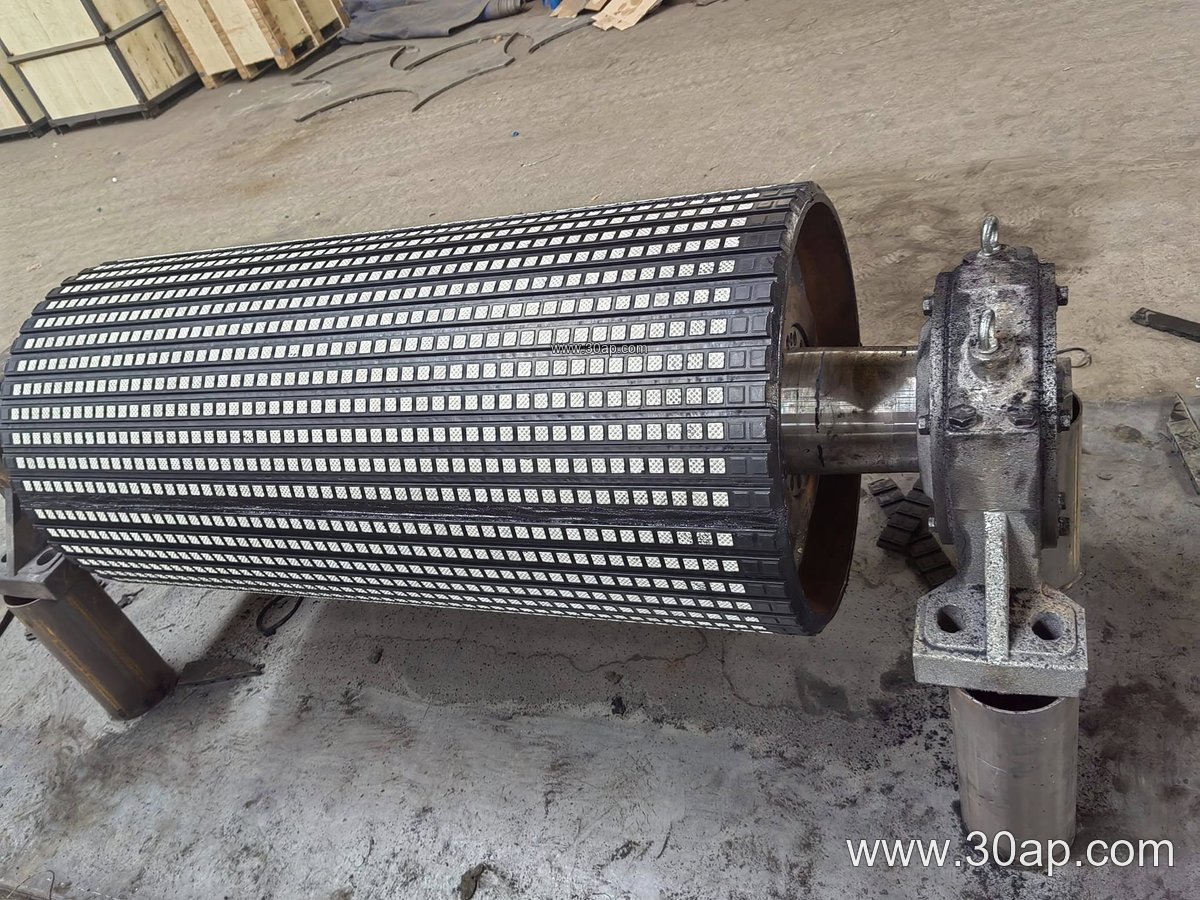
Then confirm the mounting: fixed or take-up, frame type, bearing style, and how the assembly will be lifted into place. Ask for the shaft diameter calculation basis, lagging specification, and balancing class rather than accepting a generic drawing. Spare parts availability for bearings and lagging sheets is worth checking before the first installation, since a seized tail pulley stops the whole line.
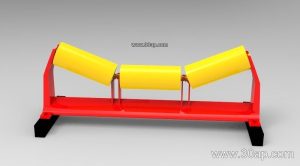
Finally, plan maintenance. Grease points, inspection of lagging wear, and checking that the scraper does not press too hard are simple routines that extend service life. If the tail end sees frequent spillage, a plough or a slight crown on the shell can help keep the belt centered. Suppliers such as cncrusher.com can quote a tail pulley assembly matched to your belt width and duty, and related items like the conveyor idler roller and conveyor bracket are usually ordered in the same pass to keep alignment consistent.
Common Specification Notes
When comparing offers, put the numbers side by side rather than in prose. Face width, shell thickness, shaft diameter, bearing designation, lagging type and thickness, and take-up travel should each be stated. A tail pulley assembly described only as “suitable for 1000 mm belt” is not enough information to judge. Insist on the diameter, the shaft size, and the lagging detail, and confirm that the pulley will be balanced for the intended belt speed. That discipline keeps the tail end reliable whether the conveyor runs in a sand and gravel plant, a copper ore concentrator, or a port bulk terminal.