What a Return Idler Bracket Does on a Conveyor
A return idler bracket is the mounting component that holds the return idlers beneath the carrying run of a conveyor belt. While the upper troughing idlers support the loaded belt, the return side carries the empty belt back to the tail end, and the bracket keeps those return rollers in the correct position, spacing, and alignment. In a quarry, a cement plant, or a power plant coal yard, this small structural part quietly determines how well the belt tracks and how long the idler bearings last.
The bracket is not a wear part in the way a roller shell is, but it is a load-bearing element. It must resist vibration, belt wander, and the pull of a tensioned conveyor belt every hour of operation. Getting the bracket specification right is often the difference between a stable return strand and a belt that drifts, rubs, or throws rollers.
How the Bracket Is Built
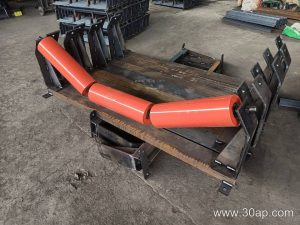
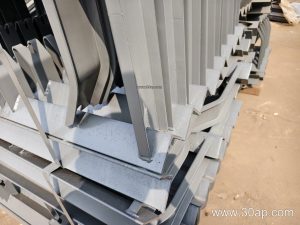
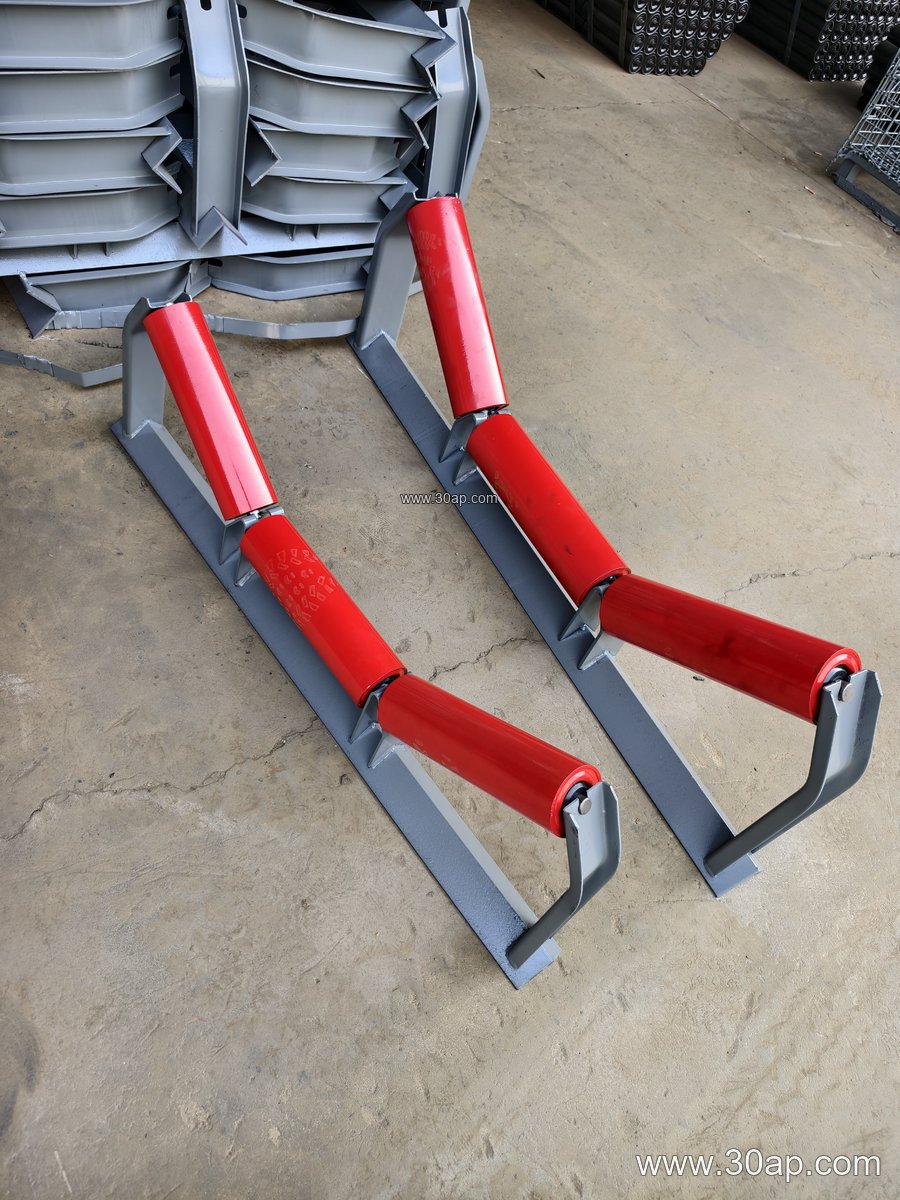
Most return idler brackets are fabricated from angle steel, channel steel, or folded steel plate. The frame is cut, punched, and welded into a shape that suits the mounting position, then finished with holes for the idler shaft and the conveyor frame. Common forms include a simple flat bracket for a single return roller, a V-shaped cradle for two rollers set at an angle, and adjustable versions that allow the roller height or angle to be tuned after installation.
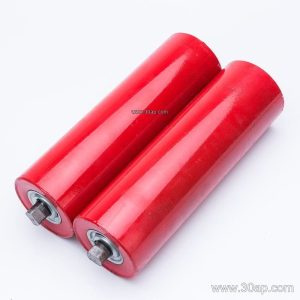
The bracket usually pairs with an idler roller of a given shaft diameter. Roller diameters such as Ø89, Ø108, Ø133, Ø159, and Ø194 are common across bulk handling lines, and the bracket bore and slot must match the shaft end. Materials and plate thickness are selected by the conveyor designer according to belt width and load, so a bracket for a 500mm belt is not the same as one for a 2000mm belt.
Common Bracket Forms and Where They Fit
The return side is not one uniform run. Designers choose different bracket forms along the same conveyor:
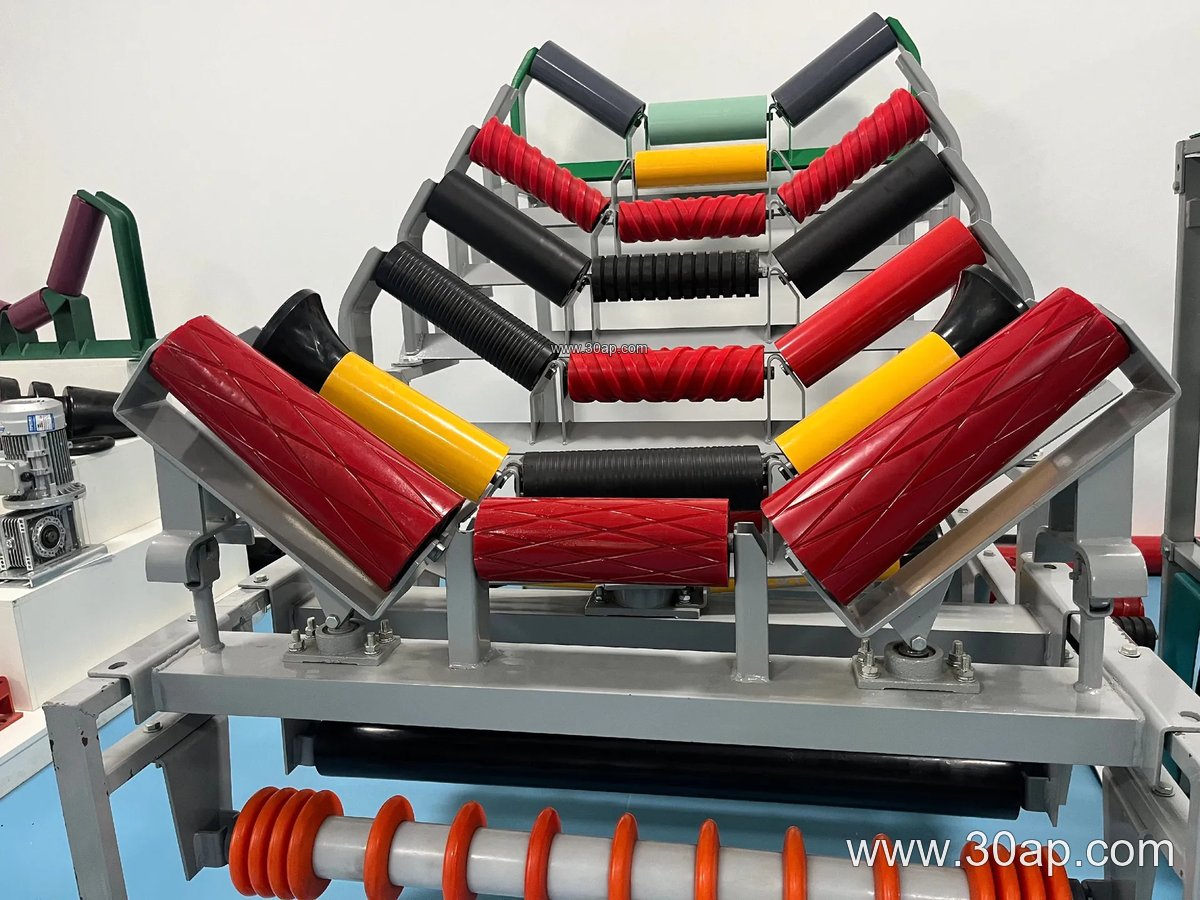
- Flat return bracket — holds a single horizontal return roller; the most common arrangement on straight sections.
- V-return bracket — carries two rollers set in a V to help center the belt and shed fines.
- Adjustable bracket — allows height or angle changes for training the belt after installation.
- Self-aligning bracket — works with training idlers to correct belt drift on long or curved routes.
- Impact or buffer bracket — used at transfer points where the return belt may receive lumps or shock.
These are not interchangeable. A V-return bracket does a different job from a flat bracket, and a training bracket is not a substitute for a standard return support. The right choice depends on belt width, roller diameter, and the behavior of the belt on that section.
Matching Bracket, Roller, and Belt Width
Belt width and roller diameter are usually considered together, but there is no fixed one-to-one rule. A B650 conveyor might run Ø89 return rollers, while a B1200 line often uses Ø133 or Ø159. A B1800 or B2000 conveyor in an iron ore or coal mining application may use larger rollers and heavier brackets. The table below shows typical reference combinations only — actual values are set by the conveyor design.
| Belt Width | Typical Return Roller Diameter | Bracket Note |
|---|---|---|
| B500 | Ø89 | Light flat bracket |
| B650 | Ø89–Ø108 | Flat or adjustable |
| B800 | Ø108 | Flat or V-return |
| B1000 | Ø108–Ø133 | V-return common |
| B1200 | Ø133 | V-return or training |
| B1400 | Ø133–Ø159 | Heavy flat bracket |
| B1600 | Ø159 | Heavy V-return |
| B1800 | Ø159–Ø194 | Heavy-duty bracket |
| B2000 | Ø194 | Heavy-duty bracket |
Mounting hole spacing and crossbeam length change with belt width and bracket type, so brackets are normally ordered against the conveyor frame drawing rather than picked from a single size chart.
Where Return Idler Brackets Matter Most
In a sand and gravel line, return brackets take constant grit and dust, and a poorly fitted bracket lets the belt ride off-center. In a coal handling system, flame retardant conveyor belts and anti-static conveyor belts are common, and the return brackets must hold rollers firmly so that no metal-to-belt contact develops. In a cement plant, heat resistant conveyor belts near the kiln area and abrasion resistant conveyor belts on clinker lines both rely on stable return support to avoid edge damage.
Ports and ship loading conveyors use long return spans where self-aligning brackets help keep wide belts on track. In fertilizer and grain silo operations, corrosion resistance of the bracket finish matters as much as its strength. Whatever the site, the bracket works together with the conveyor belt, the idler roller, and the conveyor pulley to keep the whole line running smoothly.
Buyer Checklist Before Ordering
- Confirm belt width and the actual return roller shaft diameter.
- State the bracket form — flat, V-return, adjustable, or training.
- Check mounting hole spacing against the existing conveyor frame.
- Confirm material and finish for the site environment, especially in wet or dusty plants.
- Ask whether the bracket is supplied with or without the roller.
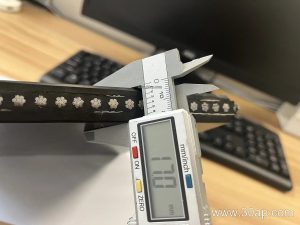
For a mine or crusher conveyor, it also helps to specify the belt type in use, such as an EP conveyor belt, a steel cord conveyor belt, or a multi-ply fabric core conveyor belt, because belt stiffness affects how the return strand behaves. A bracket that suits a flexible thin belt may not suit a thick, heavy-duty mining conveyor belt.
Finally, keep spare brackets on site. A cracked or bent return idler bracket is a small failure that can quickly damage a roller and then the belt edge. Replacing it early protects the conveyor bracket, the idler, and the belt itself.