What the NN400 Conveyor Belt Is
The NN400 Conveyor Belt is a multi-ply fabric core belt built on nylon (NN) canvas. In the strength naming system used for this family, the number refers to the nominal tensile strength of the carcass per unit width, so an NN400 grade sits in the upper-middle range of nylon belts — above NN100, NN200 and NN300, and below the heaviest nylon constructions. Buyers will also see it described as an NN400 nylon conveyor belt or a nylon fabric core conveyor belt; these are the same product under different wording.
Nylon is chosen for its high strength-to-weight ratio, good fatigue resistance and strong adhesion between plies. That makes the belt well suited to long runs, repeated flexing over pulleys and steady haulage of abrasive bulk material. It is not the same as an EP Conveyor Belt (polyester warp, nylon weft), and it should not be confused with a Steel Cord Conveyor Belt, which uses steel cables instead of fabric plies.
Construction and Lay-Up
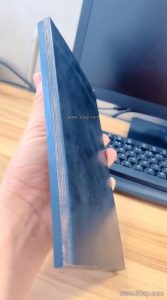
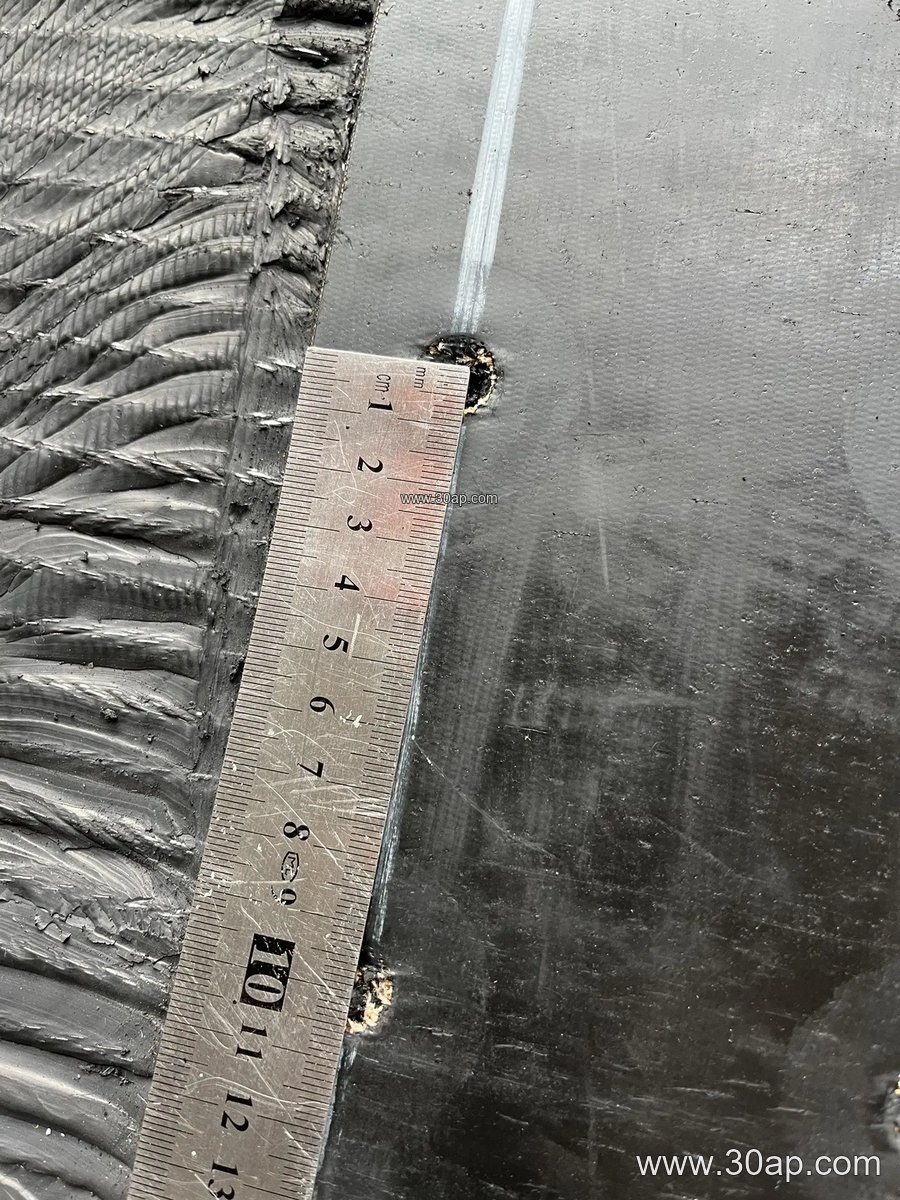
A typical NN400 belt is a sandwich of nylon fabric plies bonded with rubber skim, wrapped in top and bottom cover rubber. Ply count is usually selected by the belt designer rather than fixed by the strength grade alone; common builds run from two to six plies depending on belt width, troughability requirements and the duty cycle.
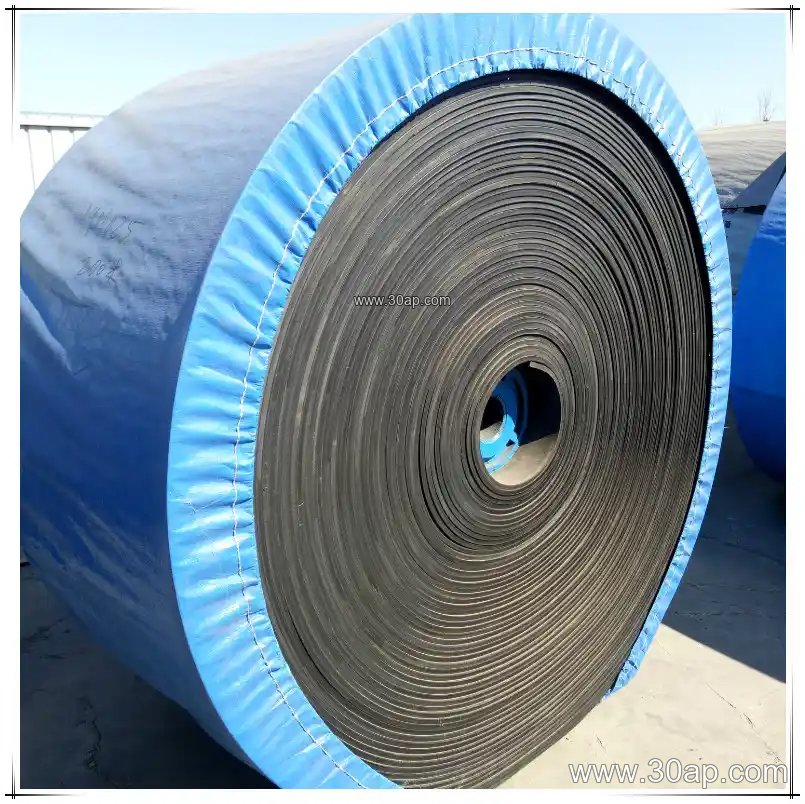
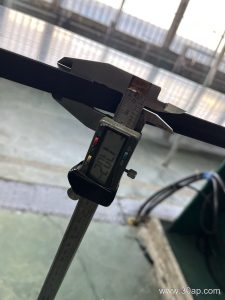
Cover thickness is normally quoted as top plus bottom, for example 4+2 mm, 5+2 mm, 6+2 mm or 8+3 mm for heavier abrasion. The cover compound can be tailored to the site: an Abrasion Resistant Conveyor Belt grade for crusher and quarry duty, a Heat Resistant Conveyor Belt compound near clinker or sinter, a Flame Retardant Conveyor Belt or Fire Resistant Conveyor Belt build for coal handling, and an Oil Resistant Conveyor Belt compound where lubricants or oily feedstock are present.
Reference Data for Nylon Belt Grades
The figures below are common reference values, not universal specifications. Actual ply count, cover gauge and tolerances are agreed with the manufacturer for each order.
- Strength grades in the nylon family: NN100, NN200, NN300, NN400
- Common belt widths: B500, B650, B800, B1000, B1200, B1400, B1600, B1800, B2000
- Cover combinations often quoted: 3+1.5, 4+2, 5+2, 6+2, 8+3 mm
- Carcass plies: usually 2 to 6
When comparing grades, note that an EP400 belt and an NN400 belt may share a strength number but behave differently: EP belts generally show lower elongation and better dimensional stability, while nylon belts offer superior impact absorption and flex life. The right choice depends on the conveyor profile, not the number alone.
Where It Fits in the Plant
NN400 is frequently specified for main haulage and transfer conveyors in mines, coal preparation plants, cement works, power stations, steel plants and sand and gravel operations. It handles crushed rock, ore, clinker, limestone, aggregate and similar Bulk Material Conveyor Belt duties where shock loading at the loading point is moderate to high.
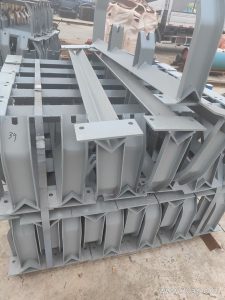
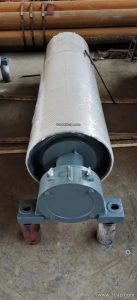
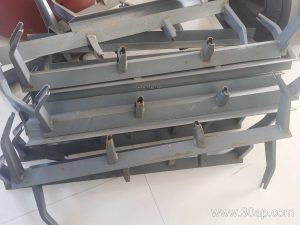
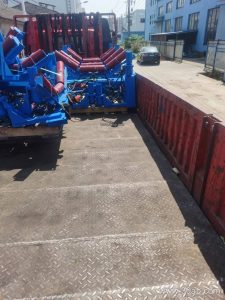
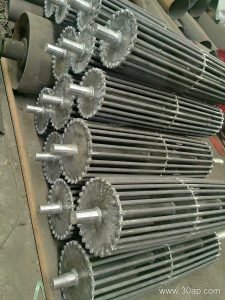
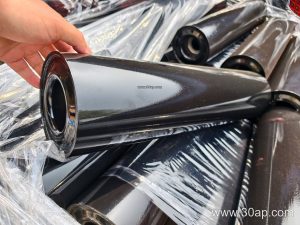
On a typical conveyor, the belt runs over idler rollers that support the trough, wraps the drive pulley and tail pulley, and is guided by bend or take-up pulleys along the route. These pulley roles are distinct and not interchangeable: the drive pulley transmits torque, the tail pulley returns the belt, and bend pulleys change direction. Conveyor brackets and frame components hold the idlers and pulleys in alignment. Good alignment protects the belt edges and extends carcass life.
For dusty, potentially explosive atmospheres such as underground coal mining, specify a Flame Retardant Conveyor Belt and Anti-Static Conveyor Belt combination. In colder regions, a Cold Resistant Conveyor Belt compound helps prevent cover cracking during winter starts. Where the route climbs steeply, a Chevron Conveyor Belt or a Corrugated Sidewall Conveyor Belt may be considered instead of a plain NN400 build, but those are different product types, not substitutes for the NN400 itself.
What a Buyer Should Confirm
Before ordering, gather the conveyor design data: capacity in tonnes per hour, belt speed, trough angle, pulley diameters, take-up type and the maximum lump size. Then confirm the following with the supplier.
- Required strength grade and ply count for the actual duty
- Cover compound and top/bottom thickness, matched to abrasion, heat, oil or fire risk
- Belt width in millimetres, and whether edges need extra protection
- Whether the belt is supplied as an Endless Conveyor Belt or in open lengths for splicing on site
- Splice method and the belt’s suitability for mechanical fasteners or vulcanized joints
Remember that belt width does not dictate pulley diameter on its own; pulley sizing follows belt tension, ply count and the manufacturer’s minimum bend radius guidance. Do not assume a shaft diameter from width either. Ask for the belt’s recommended minimum pulley diameter and check it against the drive, tail and bend pulleys already installed.
Finally, plan storage and handling. Nylon belts absorb moisture, so keep coils dry and off the ground, and avoid sharp bends during installation. A correctly specified NN400 belt, matched to its idler rollers, conveyor pulleys and frame, will deliver long, predictable service in demanding bulk handling environments.