What a Port Conveyor Idler Does at the Terminal
A port conveyor idler is the rotating support that carries the belt and its cargo along the loading and unloading lines of a bulk terminal. At a ship loader, a stockyard stacker-reclaimer, or a quay transfer house, dozens of these rollers sit under a moving belt that may be handling iron ore, coal, fertilizer, or grain. The idler roller itself looks simple, yet it decides how evenly the belt runs, how much power the drive needs, and how often maintenance crews have to intervene. In a port, where conveyors often run near continuous shifts, that reliability matters as much as the tonnage moved.
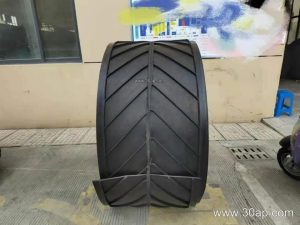
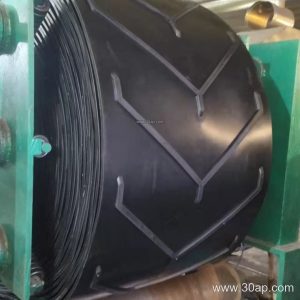
The working partner is the conveyor belt. A heavy-duty mining conveyor belt or a steel cord conveyor belt carrying ore needs a robust roller beneath it, while a lighter aggregate conveyor belt on a small transfer line can use a smaller frame. Matching the two is the first step in any sensible layout.
Construction of the Roller
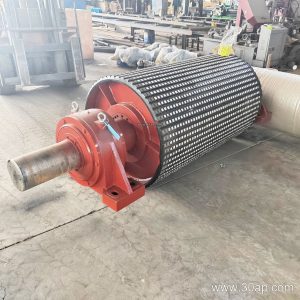
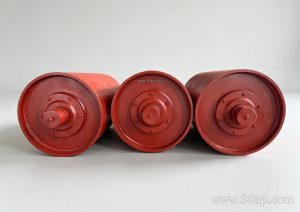
Most units share a common build. A steel tube forms the shell, with a shaft running through the centre and bearing housings pressed into each end. Seals keep dust and water out, which is critical in a coastal environment where salt air and wind-blown cargo are constant. The shell surface may be plain steel, nylon, ceramic, or fitted with rubber rings.
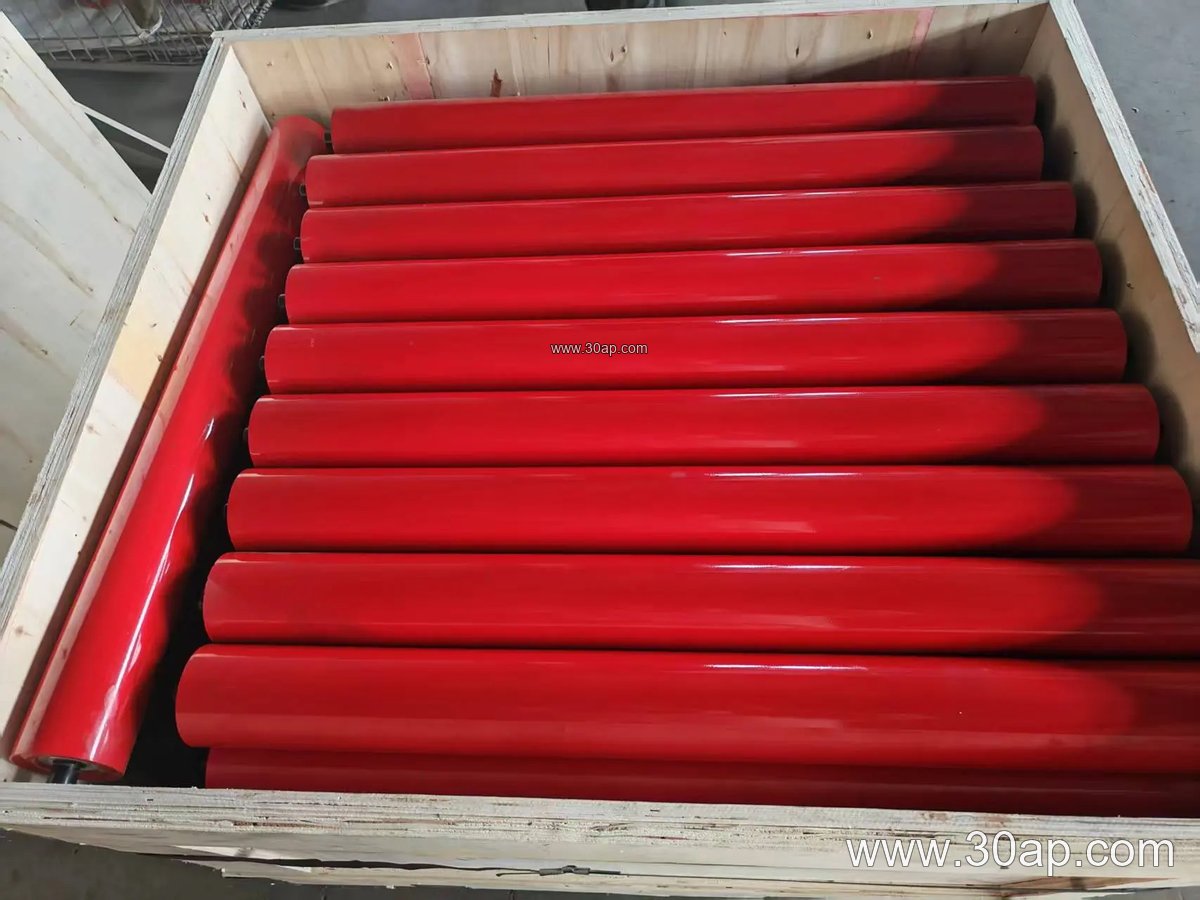
- Tube and shaft: sized to the load and the belt width
- Bearings: common sizes include 6204, 6205, 6305, 6306, 6308, and 6310, chosen by load and speed rather than by a fixed rule
- Sealing: labyrinth or contact seals for dusty terminal conditions
- Surface: steel for general duty, rubber rings for impact zones, ceramic or nylon where sticking and wear are problems
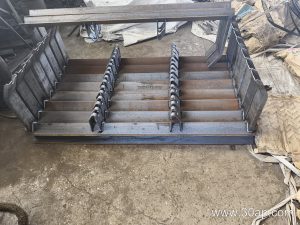
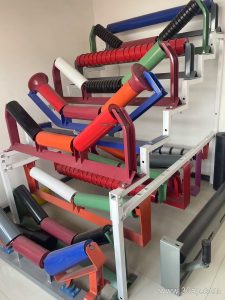
The conveyor bracket that holds each roller also matters. A poorly aligned bracket will shorten roller life no matter how good the roller is, so brackets and frames should be checked together during installation.
Where Idlers Sit on a Port Belt Line
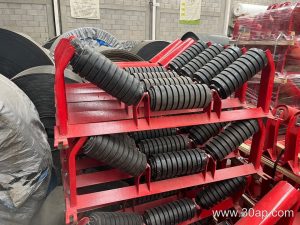
On the carrying side, three-roll troughing sets are normal, with side rollers inclined to cup the belt. Trough angles of 20, 30, 35, and 45 degrees are common; a wider angle suits free-flowing material, while a gentler angle reduces stress on the belt edge. On the return side, flat or V-shaped rollers support the empty belt. Impact rollers with rubber rings are used below transfer chutes where lumps drop onto the belt.
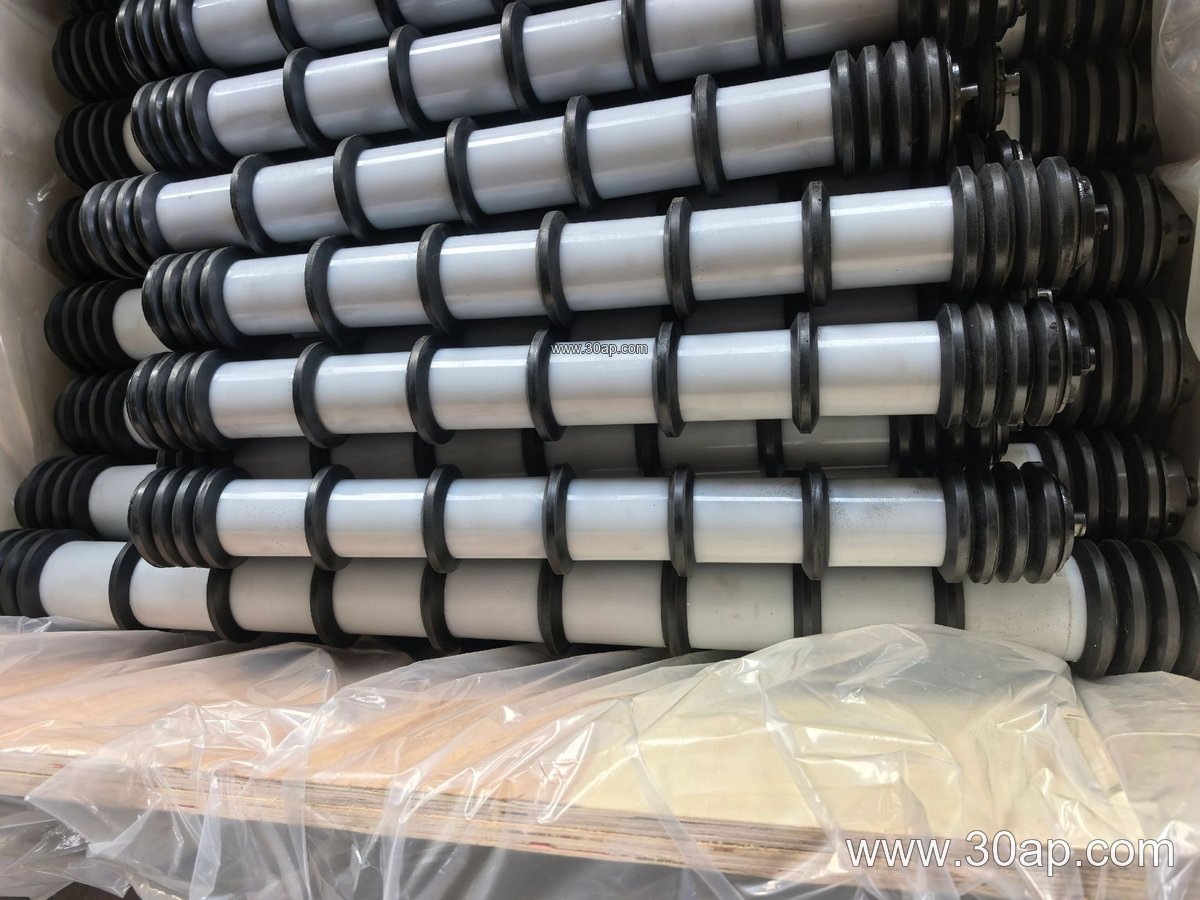
Roller diameter and belt width are selected together but not in a fixed pairing. Common diameters run from about 89 mm to 219 mm, and belt widths from B500 up to B2400 appear in terminal work. A B1200 line may use a 133 mm or 159 mm roller depending on load and speed; a B1800 or B2000 line usually needs a larger diameter and a heavier frame. Roller length follows belt width, trough angle, and the roll arrangement, so side and centre rolls can differ even within one set.
Choosing the Right Roller for the Cargo
The cargo should guide the choice. Abrasive iron ore and quarry stone favour wear-resistant shells and sturdy seals. Coal and other combustible dusts call for careful attention to static and flame behaviour, and the belt above the roller should suit the same duty, such as a flame retardant conveyor belt or an anti-static conveyor belt. Fertilizer and some mineral concentrates can be corrosive, so coated or sealed designs are worth discussing. In cold climates, a cold resistant conveyor belt and rollers with low-friction seals help start-up.
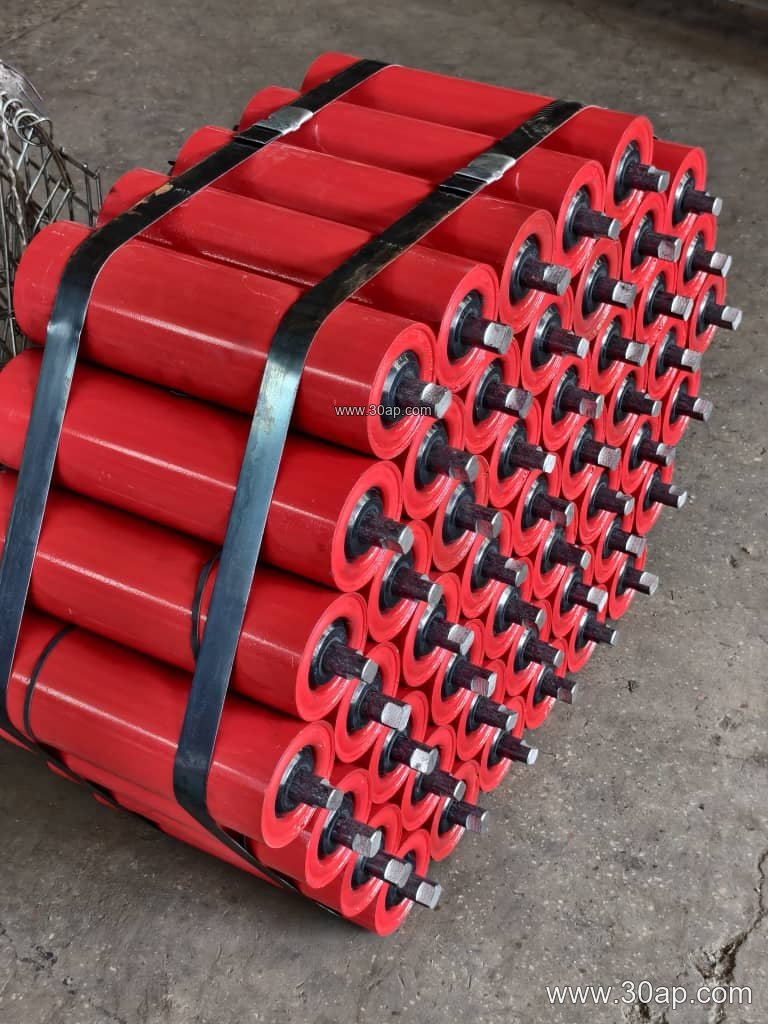
Where the belt tends to wander, self-aligning rollers with a slight forward tilt of about 1.5 to 2 degrees can bring it back. These are not a substitute for proper pulley alignment, but they reduce edge damage on long terminal runs.
Specification Reference
The table below lists common reference values. They are examples, not fixed combinations, and final sizes should follow the conveyor design.
| Item | Common Reference |
|---|---|
| Roller diameter | 63, 76, 89, 102, 108, 127, 133, 159, 178, 194, 219 mm |
| Belt width | B400 to B2400 |
| Trough angle | 20, 30, 35, 45 degrees |
| Roller set | single, two-roll, three-roll troughing |
| Bearing | 6204, 6205, 6305, 6306, 6308, 6310 |
| Surface | steel tube, nylon, ceramic, rubber rings |
For a B1000 three-roll set, a roller length near 380 mm is often quoted; for B1400, about 530 mm; for B1600, about 600 mm. These figures are typical examples only, and side rolls may differ from the centre roll.
Buyer Checklist
- Confirm the belt width, trough angle, and roll arrangement before ordering.
- State the material, lump size, and tonnage so the roller class can be matched.
- Ask about seal type and bearing size rather than assuming one size fits all.
- Check that the conveyor bracket and frame match the roller shaft ends.
- Plan a spare stock of the most heavily loaded positions, especially below transfer points.
Regular inspection of a port conveyor idler is inexpensive compared with a seized roller that cuts a belt. Listening for squeals, checking for build-up on the shell, and confirming free rotation during shutdowns will keep a terminal line running through the busiest shipping season.