What a Cement Conveyor Belt Has to Handle
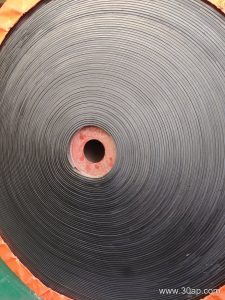
A cement conveyor belt is the load-carrying element that links quarry crushing, raw meal grinding, clinker cooling, and packing lines. The duty is rarely gentle. Limestone, clay, gypsum, and clinker arrive as sharp, abrasive, sometimes hot bulk material, and the belt must keep moving it through dusty transfer points and long inclined runs. For this reason, a Cement Conveyor Belt is usually specified as a heavy-duty, abrasion resistant product rather than a general-purpose belt.
The same belt family appears in mines, coal preparation plants, power stations, and aggregate yards, so buyers often compare notes across industries. What changes is the cover compound, the carcass strength, and the edge construction, not the basic working principle.
Construction and Common Configurations
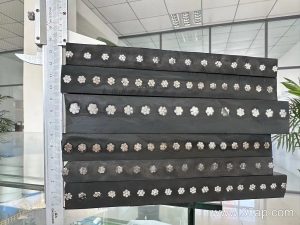
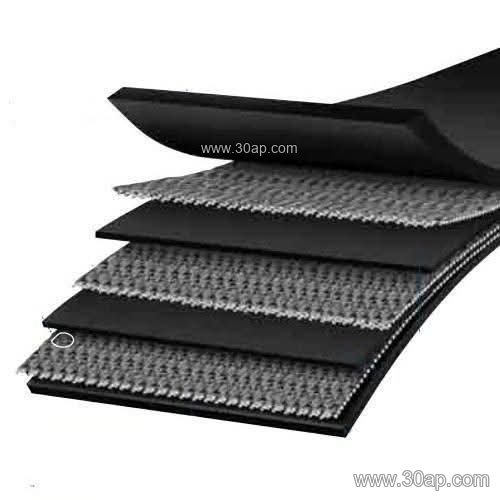
Most belts used in cement plants are fabric-cored, with EP (polyester-cotton) or NN (nylon) plies carrying tension and rubber covers protecting the carcass. Steel cord construction is chosen when the conveyor is long, the lift is high, or the belt width is large. Typical carcass options include:
- EP Conveyor Belt grades such as EP200, EP400, EP630, EP1000, and EP1250
- NN Conveyor Belt grades such as NN200, NN300, and NN400
- Steel Cord Conveyor Belt grades such as ST1000, ST1600, and ST2000
Cover thickness is normally stated as top plus bottom, for example 4+2 mm, 6+2 mm, or 8+3 mm. The top cover takes the abrasion and impact, while the bottom cover runs over the return idler roller. A high abrasion resistant cover is the usual starting point for limestone and clinker; a heat resistant cover is needed where clinker temperatures remain elevated at the transfer point.
Widths, Strengths, and Surface Forms
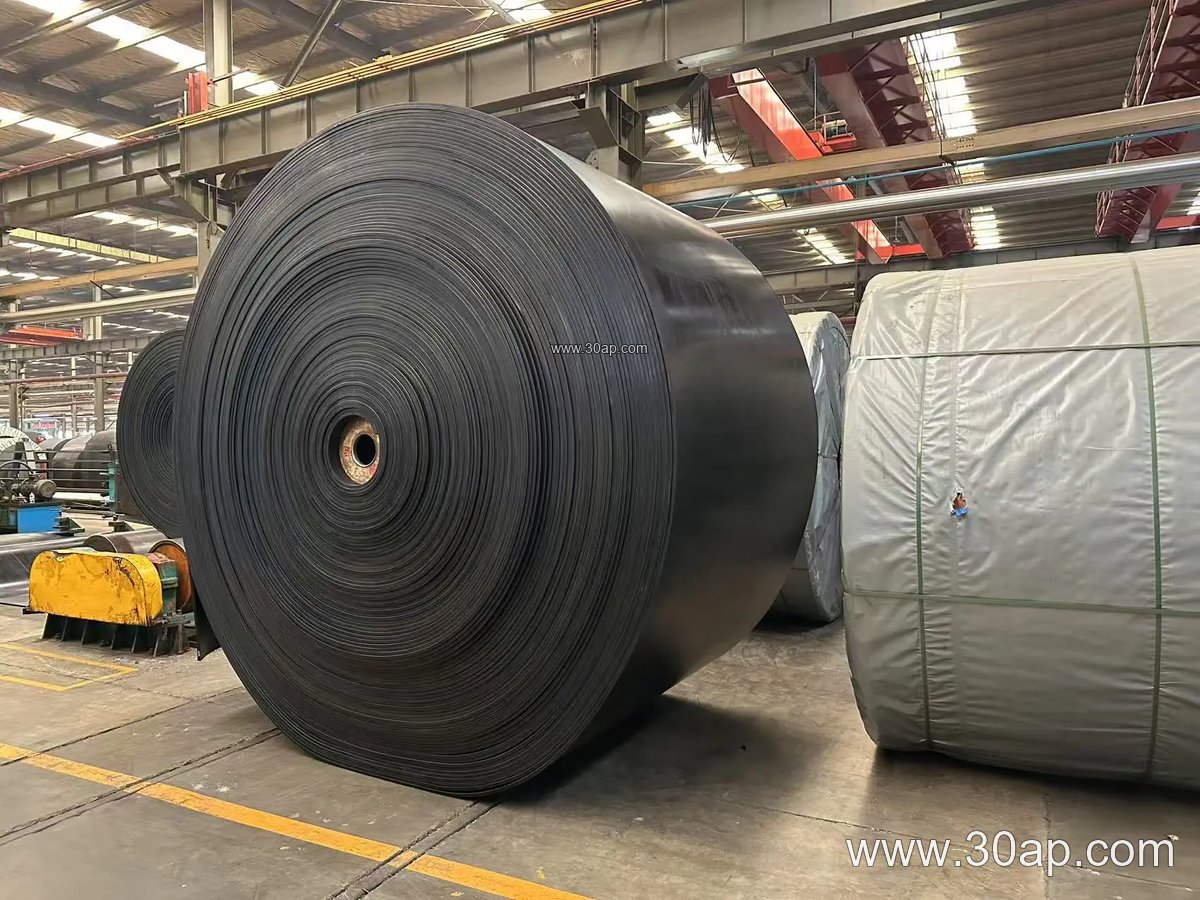
Belt width follows the conveyor design and the lump size, not a single universal rule. Common widths include 650 mm, 800 mm, 1000 mm, 1200 mm, 1400 mm, and 1600 mm, with wider belts used on main trunk lines. The table below shows reference combinations only; final selection depends on the actual conveyor layout.
| Reference | Typical use | Notes |
|---|---|---|
| EP630, 1000 mm wide, 6+2 mm cover | Clinker transport, medium length | Abrasion resistant cover |
| EP1000, 1200 mm wide, 8+3 mm cover | Limestone primary haul | Impact resistant top cover |
| ST1600, 1400 mm wide | Long inclined main line | Steel cord carcass |
| NN300, 800 mm wide, 4+2 mm cover | Additive and gypsum feed | Moderate duty |
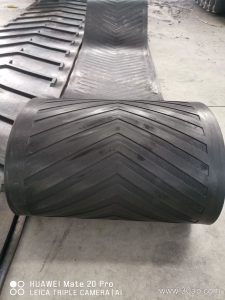
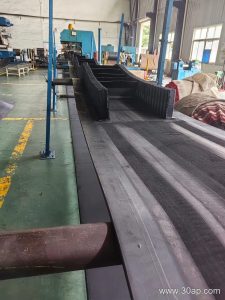
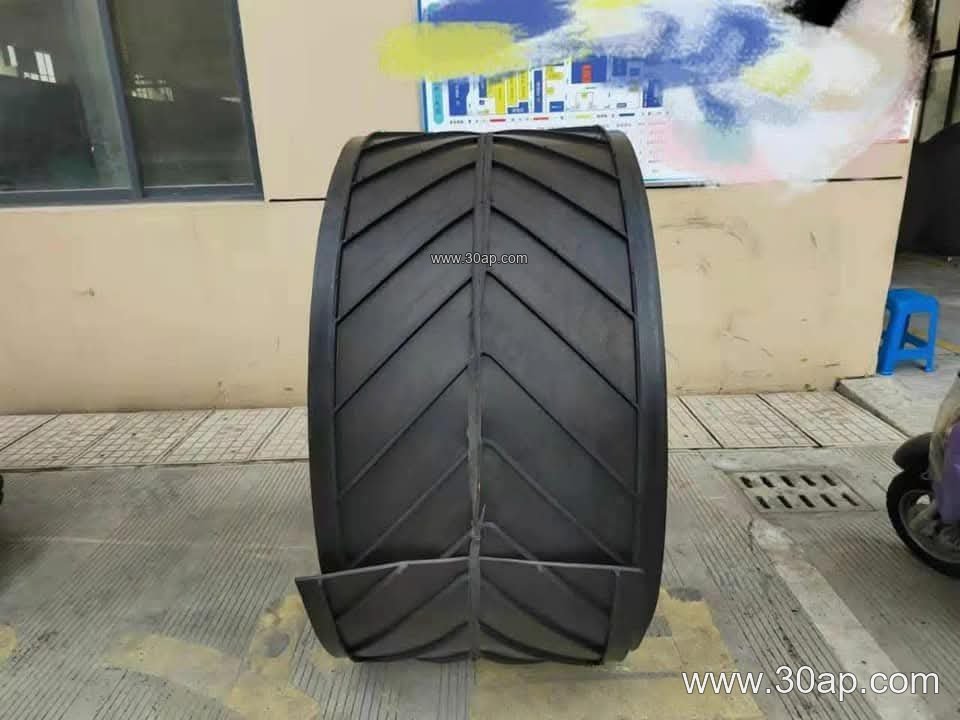
Surface forms matter too. A Chevron Conveyor Belt or a Corrugated Sidewall Conveyor Belt helps on steep inclines where material would otherwise slide back. A skirted belt keeps material centered at the loading point. In enclosed circuits or dusty transfer towers, a Pipe Conveyor Belt can reduce spillage, though it is a different belt type and not a substitute for the standard troughed design.
Where These Belts Run
Inside a cement plant, belts move limestone from the quarry crusher to the raw mill, transport raw meal and kiln feed, carry clinker to the cooler and storage, and feed gypsum and pozzolan into the finish mill. Similar belts serve iron ore, copper ore, and gold mining operations, as well as port ship loading and aggregate yards. In coal-fired power plants, a flame retardant and anti-static belt is often required for safety, especially in underground coal mining and enclosed galleries.
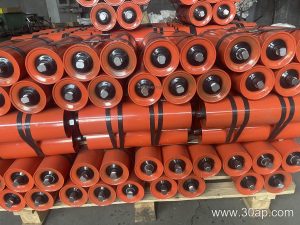
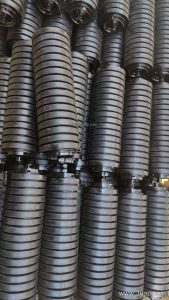
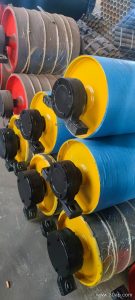
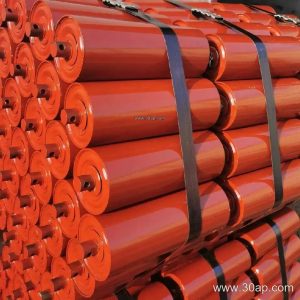
Because the material is abrasive, the belt interacts closely with the conveyor pulley, idler roller, and conveyor bracket. A worn bend pulley or a seized idler can damage the cover quickly, so mechanical condition and belt quality deserve equal attention.
What Buyers Should Confirm Before Ordering
- Material type, lump size, and maximum temperature at the loading point
- Required tensile grade and number of plies, matched to the conveyor design
- Cover thickness and compound: abrasion resistant, heat resistant, oil resistant, or flame retardant
- Belt width and whether the edges need extra protection
- Whether an Endless Conveyor Belt is preferred for a vulcanized joint on a critical line
- Ambient conditions such as cold, humidity, or chemical exposure
Ask for the carcass and cover data separately, and keep a spare length for planned shutdowns. For a Cement Conveyor Belt, the cheapest way to reduce downtime is usually to match the cover compound and ply strength to the real duty rather than to oversize only the width.