What a Self-Centering Idler Does
A self-centering idler is a carrying or return roller assembly designed to correct belt misalignment as the conveyor runs. Instead of sitting square to the frame like a standard troughing set, this roller group pivots slightly when the belt drifts, and the resulting angle gently steers the belt back toward the center line. Operators in a quarry, a coal washing plant, or a power plant coal yard often add these units at points where the belt is most likely to wander, such as long straight runs, transition zones, and curves in the route.
The same product is also called a self-aligning idler or training idler, and those names describe the same function. It is not a drive pulley, tail pulley, or bend pulley, and it should never be treated as a substitute for those components. Its job is tracking, not power transmission or direction change.
How the Roller Set Is Built
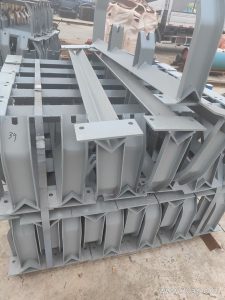
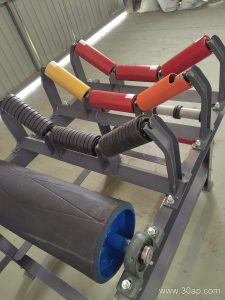
A typical assembly combines a frame that can rotate about a vertical pivot, two or three rollers, and a sensing roller or guide arm that contacts the belt edge. When the belt moves off center, it pushes the sensing element, the frame swings a few degrees, and the rollers apply a small sideways force that brings the belt back. Friction self-aligning and conical self-aligning versions use slightly different roller shapes and pivot behavior, but the working principle is the same.
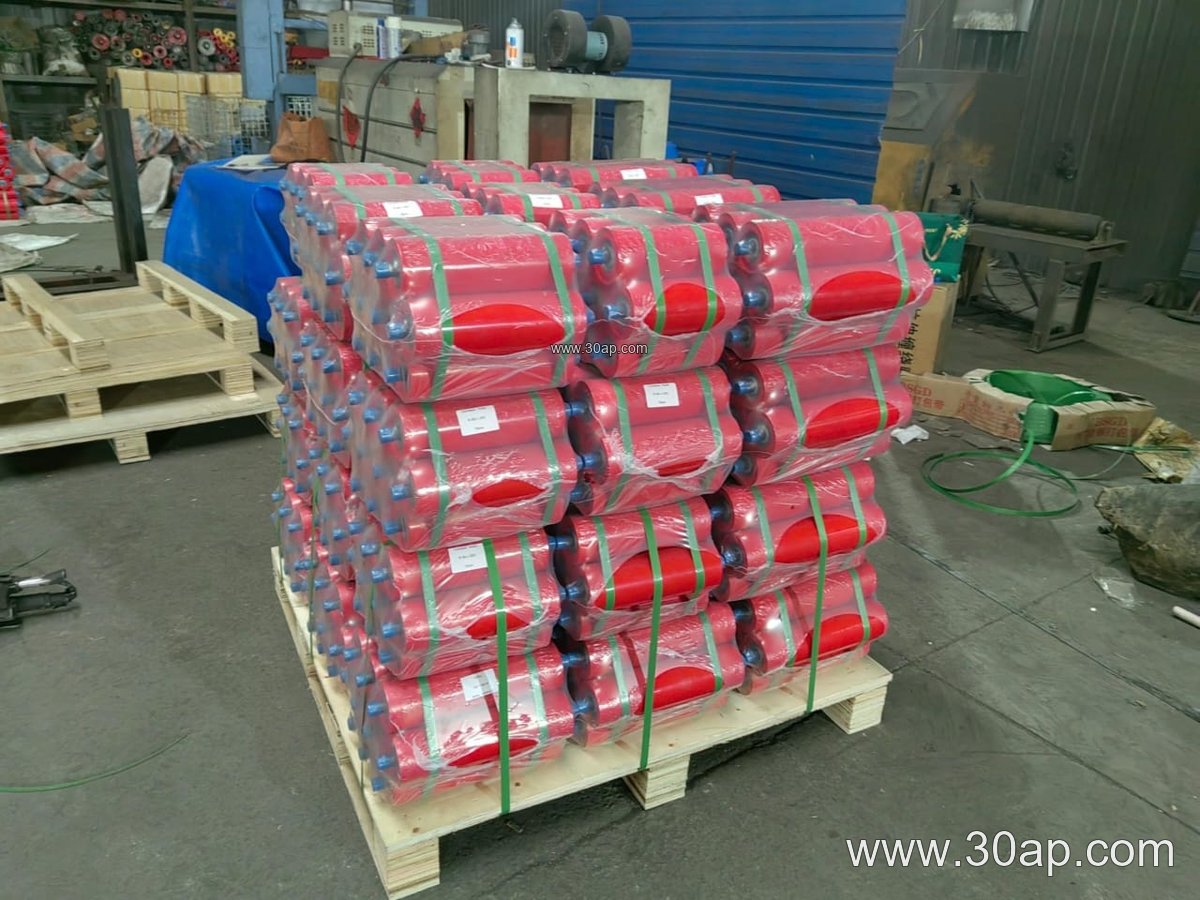
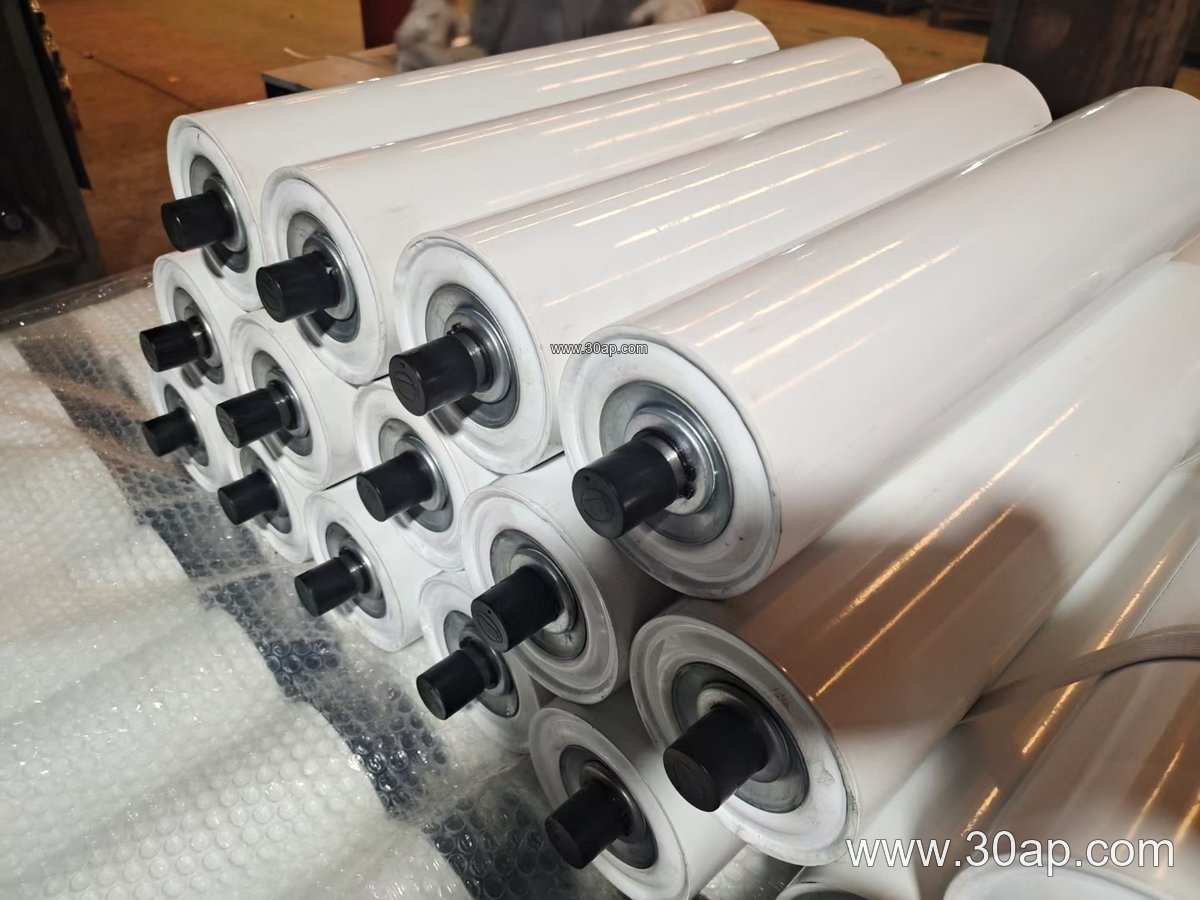
Roller shells are commonly steel tube, nylon, or ceramic-faced, and rubber rings may be added on impact or buffer positions. Bearings such as 6204, 6205, 6305, 6306, 6308, and 6310 appear across the range, matched to load and shaft design rather than to one fixed shell diameter. Common roller diameters include Ø63, Ø76, Ø89, Ø102, Ø108, Ø127, Ø133, Ø159, Ø178, Ø194, and Ø219 mm. Belt widths run from B400 and B500 up through B2400, with three-roll troughing sets common on wider belts.
| Item | Common reference values |
|---|---|
| Roller diameter | Ø63, Ø89, Ø108, Ø133, Ø159, Ø194 mm |
| Belt width | B500, B800, B1000, B1200, B1400, B1800 mm |
| Trough angle | 20°, 30°, 35°, 45° |
| Lead angle (forward tilt) | about 1.5° to 2° |
| Roller length, three-roll set | about 250 mm at B650, 380 mm at B1000, 530 mm at B1400, 600 mm at B1600 |
These figures are typical examples, not fixed pairings. Side rollers and center rollers can differ, and final dimensions follow the conveyor design.
Where It Fits on the Conveyor
Training idlers are usually placed on the carrying side after the loading point, on long straight sections, and ahead of the head pulley. Return-side self-aligning sets are also used where the returning belt tends to run off. In a crushing and screening line, a self-centering idler after the crusher discharge helps keep a loaded belt steady; in a cement plant or limestone quarry, units on the inclined sections reduce edge damage and spillage. Coal mining conveyors and underground mining conveyors benefit as well, especially where the structure is long and slightly uneven.
On a belt carrying abrasive ore or heavy aggregate, a worn or seized roller can drag the belt sideways, so pairing a self-centering idler with a good abrasion resistant conveyor belt and well-aligned pulleys pays off. A steel cord conveyor belt on a long overland route may need more training stations than a short fabric core belt, and a pipe conveyor belt has different tracking needs altogether. Matching the belt type, such as an EP conveyor belt, NN conveyor belt, or heat resistant conveyor belt, to the environment is part of the same decision.
Buyer Checklist
- Confirm belt width and trough angle before choosing the roller length and frame.
- Check the roller diameter and bearing size against the actual load, not just the belt width.
- Decide between friction, conical, and plain training designs based on how much correction is needed.
- Review the roller surface: steel for general duty, rubber rings for buffer zones, ceramic where sticking is a problem.
- Plan inspection intervals, since a dirty or seized pivot defeats the self-centering action.
For anyone sourcing conveyor components, the practical rule is simple: specify the self-centering idler by function, belt width, trough angle, and environment, then confirm the pivot and roller details with the supplier. A well-chosen training idler keeps the belt centered, protects edges, and reduces spillage on mining, quarry, and bulk material conveyor systems.