What This Pulley Does in a Power Plant
In a coal-fired thermal power plant, the coal handling system moves raw coal from the stockyard or receiving pit to the crusher house and then to the boiler bunkers. The Thermal Power Plant Conveyor Pulley is the rotating drum that drives the conveyor belt, maintains its tension, and changes its direction along this route. It is not a single component but a family of drums, each with a specific job. The drive pulley, often called the head pulley, transmits power from the gearbox to the belt. The tail pulley at the loading end provides the return turning point and initial tension. Bend pulleys guide the belt around take-up systems, while snub pulleys increase wrap angle on the drive drum.
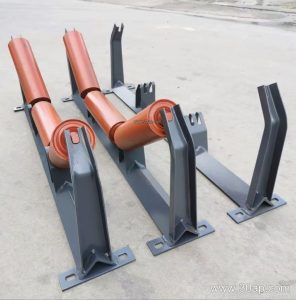
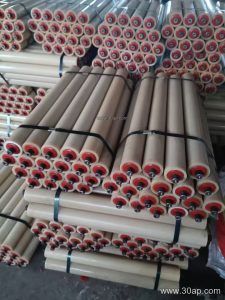
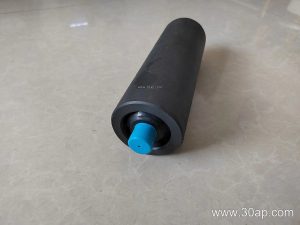
These drums are distinct from idler rollers, which support the belt along its carrying and return runs. A conveyor pulley is a larger, heavier assembly with a shaft, hub, and lagging surface, designed to handle the high torque and tension of a power plant coal conveyor.
Construction and Surface Options
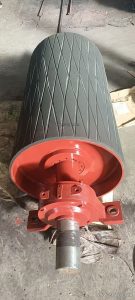
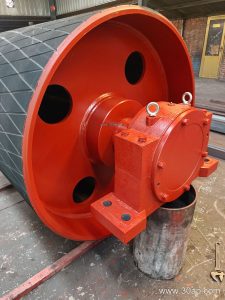
A typical thermal power plant conveyor pulley is built from a rolled steel shell, welded to end discs and a central shaft. The shaft is sized by torque and load, not by belt width alone, and common shaft diameters include Ø80, Ø100, Ø120, Ø140, and Ø160 mm depending on the drive power. The shell diameter is selected to suit the belt thickness and the required contact area; common sizes range from Ø400 to Ø1250 mm for coal handling duty. Pulley face width usually exceeds the belt width by 100 to 200 mm to allow for belt tracking. For example, a B1000 belt may run on a pulley with a face width around 1150 mm, while a B1200 belt might use a 1400 mm face.
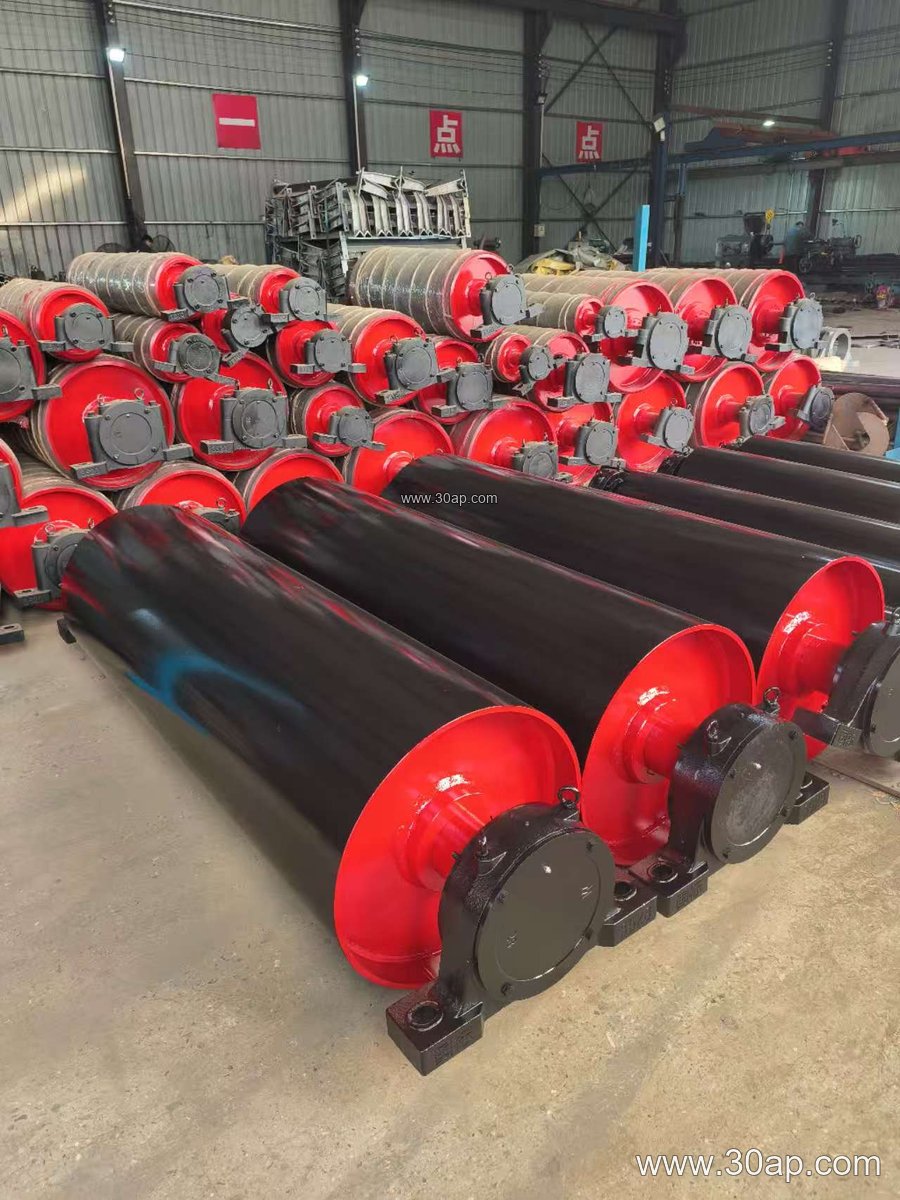
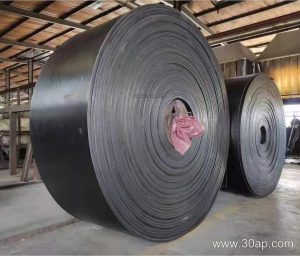
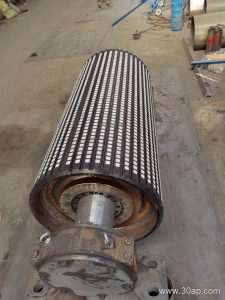
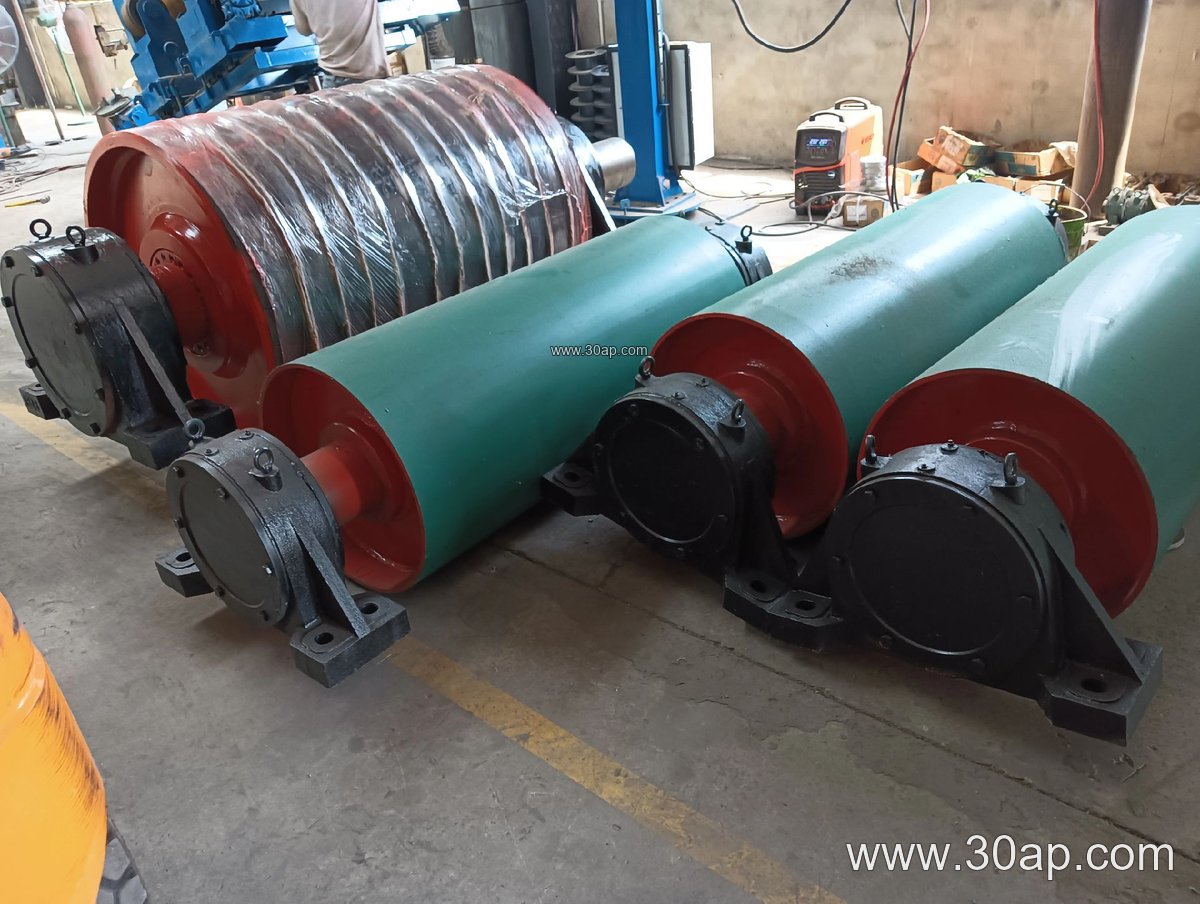
Surface lagging is critical in a coal plant, where coal dust and occasional moisture reduce friction. Plain steel shells are rarely used on drive pulleys. Instead, buyers specify rubber lagging applied by cold bonding or hot vulcanizing, often in a diamond pattern to improve grip and shed water. Ceramic lagging is chosen for high-torque drives where belt slip must be eliminated. Lagging thickness commonly falls between 8 mm and 20 mm. For bend and tail pulleys, plain or lightly lagged surfaces are often sufficient. The belt itself may be a flame retardant conveyor belt or an abrasion resistant conveyor belt, and the pulley lagging should be compatible with the belt cover compound.
Matching Pulleys to Belt and Duty
Selection starts with the belt specification. A coal conveyor might use an EP conveyor belt or a steel cord conveyor belt for long runs. The pulley diameter must be large enough to limit bending stress in the belt carcass. As a rule, a multi-ply fabric core belt needs a larger diameter relative to its thickness than a steel cord belt. This is why a heavy-duty mining conveyor belt with thick covers may call for a Ø800 or Ø1000 mm drive pulley, while a lighter fabric belt on a short transfer could use Ø500 mm. The table below shows typical combinations, but these are reference points, not fixed rules.
| Belt Width | Typical Pulley Face Width | Common Pulley Diameter Range |
|---|---|---|
| B650 | 750 mm | Ø315 to Ø630 mm |
| B800 | 950 mm | Ø400 to Ø800 mm |
| B1000 | 1150 mm | Ø500 to Ø1000 mm |
| B1200 | 1400 mm | Ø630 to Ø1250 mm |
| B1400 | 1600 mm | Ø800 to Ø1250 mm |
For a thermal power plant, the drive pulley often runs at a relatively high speed, and the lagging must resist heat from the coal and ambient conditions. A heat resistant conveyor belt may be used in areas near the boiler, and the pulley in that section should avoid excessive rubber buildup. In the coal yard, a flame retardant conveyor belt is common, and the pulley should be earthed to prevent static accumulation, similar to an anti-static conveyor belt requirement.
Installation and Maintenance Notes
Proper alignment of the conveyor pulley with the conveyor bracket and frame is essential. Misalignment accelerates lagging wear and can cause belt mistracking. Bearing housings should be greased according to the duty cycle, and the lagging surface should be inspected for grooves or embedded coal particles. When lagging wears unevenly, re-lagging or replacing the pulley is preferable to allowing belt slip, which can overheat the drum. In coal handling, a slip can create a fire risk, so the drive pulley is often fitted with a speed sensor.
Buyers should specify the belt width, the belt type (for example, EP200 or ST1250), the operating tension, and the ambient conditions. The supplier can then confirm the shell diameter and shaft size. Avoid assuming that a given belt width dictates one pulley diameter; the conveyor layout, take-up system, and starting torque all influence the final choice. For a reliable coal flow from the stockyard to the bunker, the thermal power plant conveyor pulley must be treated as an engineered component, not a commodity item.