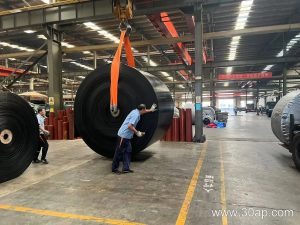
What an EP Fabric Core Conveyor Belt Is
An EP Fabric Core Conveyor Belt is a multi-ply rubber belt whose load-bearing carcass is built from polyester warp yarns and polyamide weft yarns, commonly written as EP or polyester-polyamide. The carcass gives the belt its tensile strength and its ability to absorb starting and impact loads, while the rubber covers protect the fabric from abrasion, moisture, heat or oils depending on the compound chosen. In day-to-day plant language the same product is often called an EP Conveyor Belt, an EP Rubber Conveyor Belt or simply a polyester conveyor belt, and those names refer to the same fabric-core construction rather than to different product families.
Because the EP carcass stretches less than an all-nylon carcass under load, it holds trough shape well and keeps take-up travel within reasonable limits on long horizontal and inclined runs. That characteristic is one reason it appears so often in quarry, cement, coal and port bulk handling circuits.
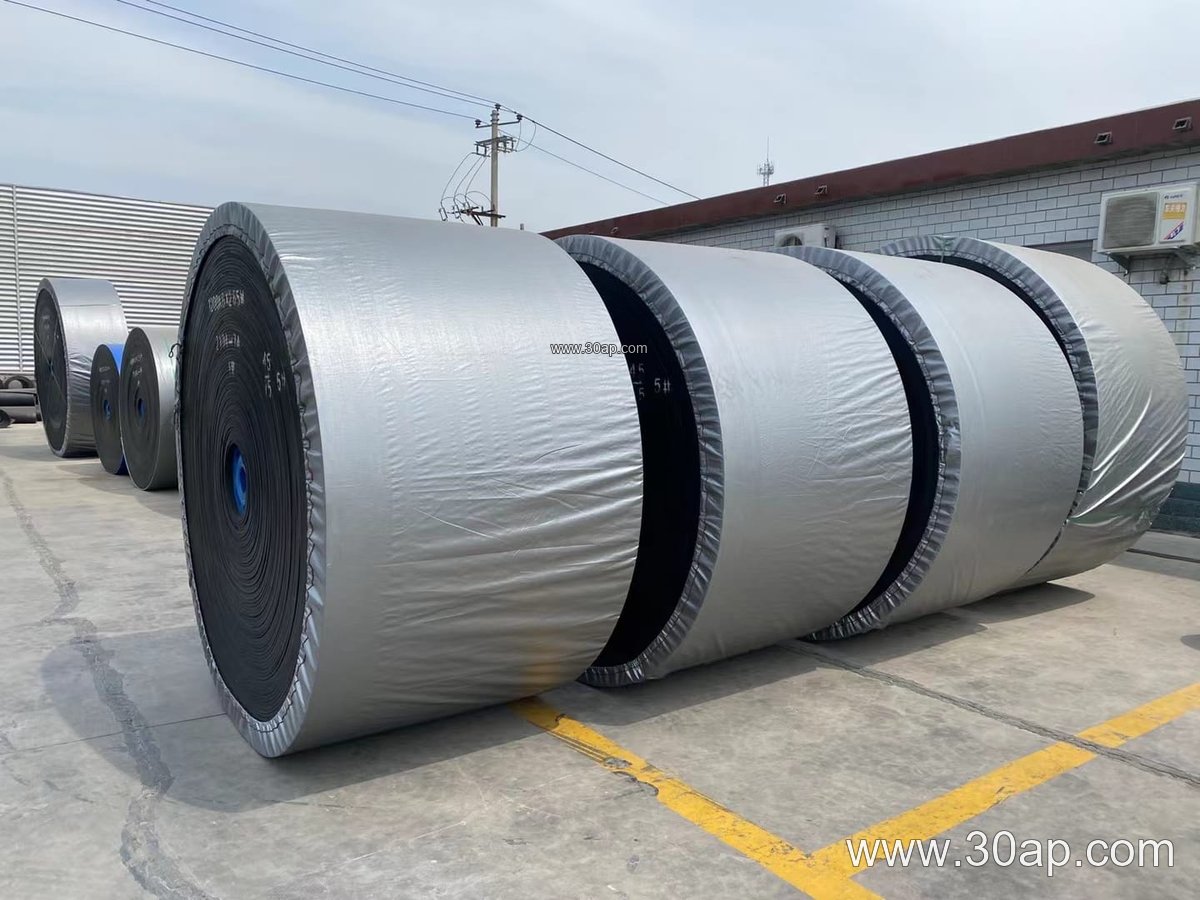
How the Belt Is Built
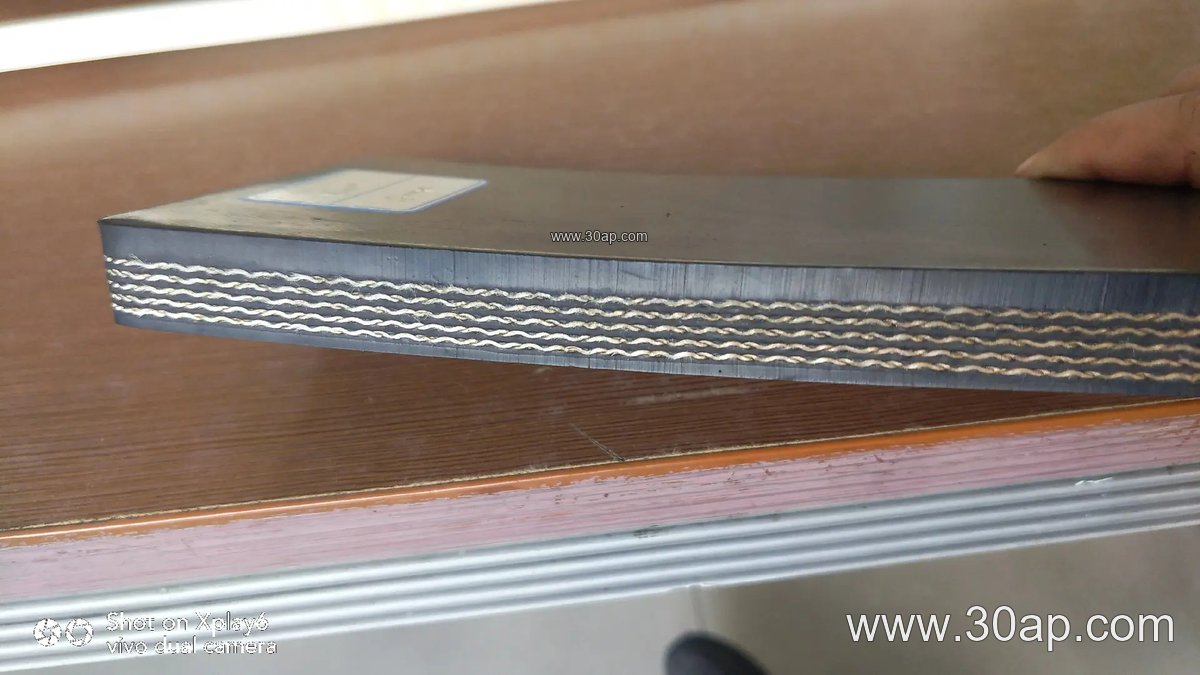
The carcass is usually 2 to 6 plies of EP fabric bonded with skim rubber and frictioned rubber, then consolidated under heat and pressure. Top and bottom covers are applied at the same time. A buyer will normally see the cover construction expressed as two numbers, for example 4+2 mm or 6+2 mm, meaning top cover thickness plus bottom cover thickness; 3+1.5 mm and 5+2 mm are also common combinations.
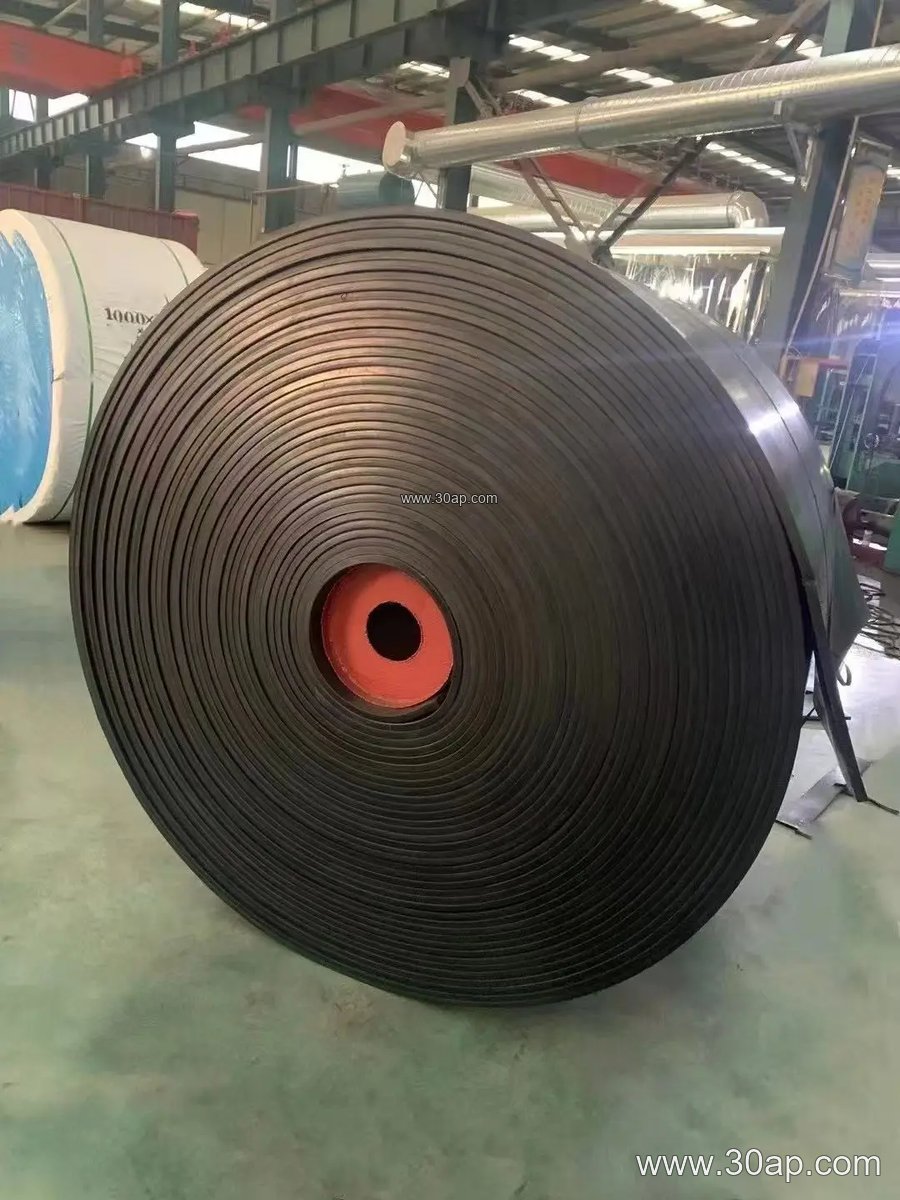
- Carcass: EP fabric plies, typically 2 to 6 layers.
- Bonding layer: skim and friction rubber between plies.
- Covers: abrasion resistant, heat resistant, oil resistant, flame retardant, anti-static or cold resistant compounds.
- Edges: cut edges or moulded edges depending on the duty.
The strength class is printed on the belt and in the data sheet. EP200, EP315, EP400, EP500, EP630, EP800, EP1000, EP1250, EP1600 and EP2000 are the usual designations, where the number relates to the nominal tensile strength of the carcass per unit width. A higher class does not automatically make a belt better for a given conveyor; the drive power, pulley diameter, troughing angle and material lump size all take part in the decision.
Common Duty Classes and Cover Compounds
Standard black rubber covers suit general bulk material handling. For sharper duties, the compound is changed rather than the carcass style. A High Abrasion Resistant Conveyor Belt is chosen for crushed stone, sinter and clinker; a Heat Resistant Conveyor Belt or High Temperature Conveyor Belt for cement kiln discharge and coke; a Flame Retardant Conveyor Belt or Fire Resistant Conveyor Belt for coal handling and underground coal mining conveyor routes; an Oil Resistant Conveyor Belt for oily scrap and some mineral ores; and a Cold Resistant Conveyor Belt for sites that start up below freezing. Anti-static and acid resistant variants exist where the environment calls for them.
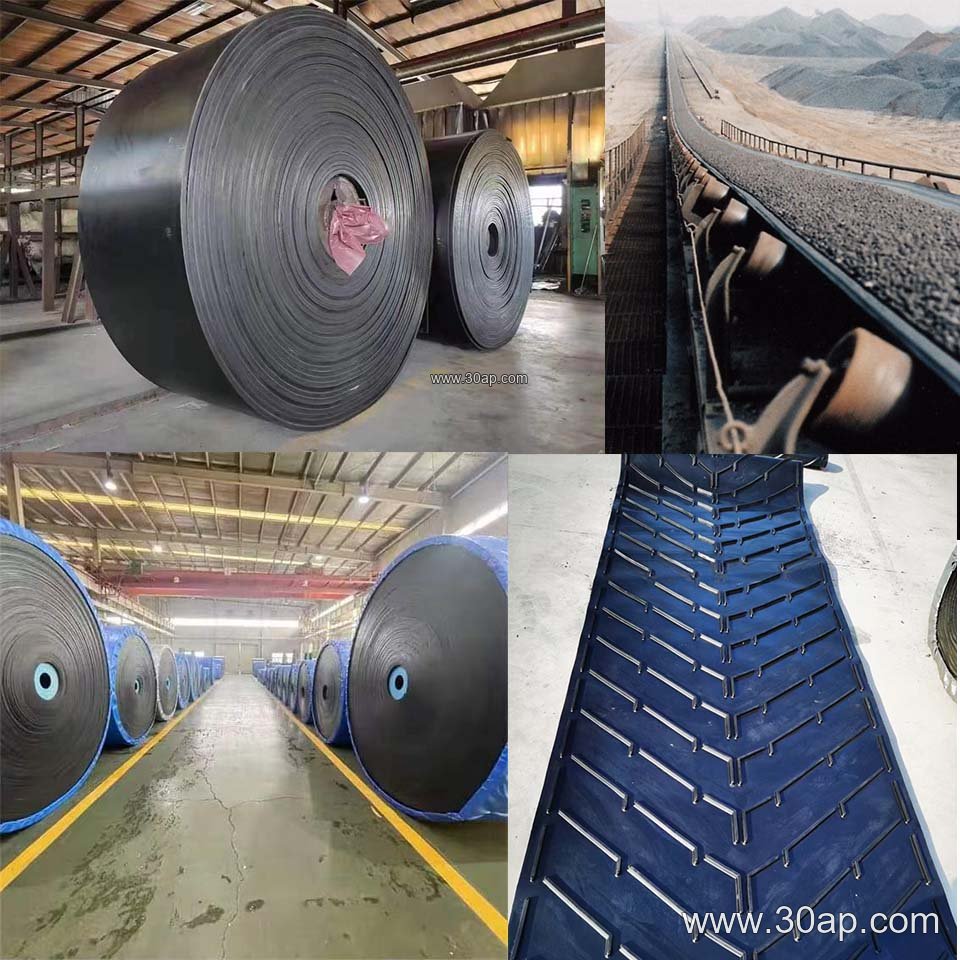
Where the route needs extra grip or material containment, the same EP carcass can carry a Chevron Conveyor Belt profile, a Corrugated Sidewall Conveyor Belt with cross cleats, or a Skirted Conveyor Belt design. Those are surface forms added to the fabric core belt, not replacements for it.
Typical Industries and Conveyor Positions
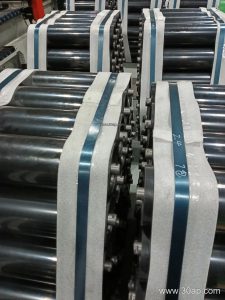
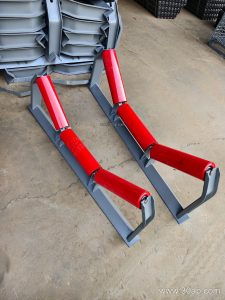
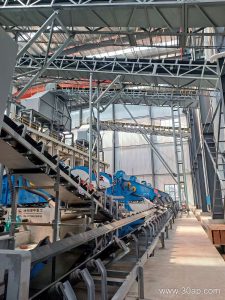
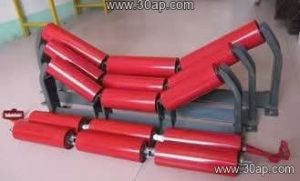
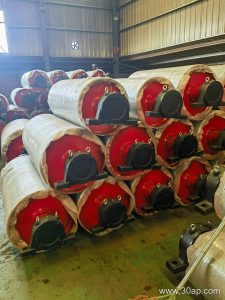
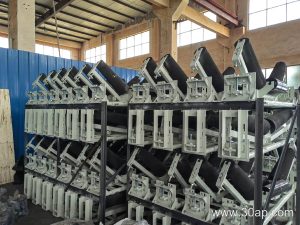
EP fabric belts are widely used in mines, coal preparation plants, cement works, power stations, sand and gravel yards, crushing and screening lines, steel plants and port ship loading systems. They run over conveyor pulleys at the head, tail and bend positions, supported by idler rollers and frames carried on conveyor brackets. When engineers compare carcass options, they usually set the EP belt against an NN Conveyor Belt for elongation behaviour, against a Steel Cord Conveyor Belt for very high tension and long single flights, and against PVC or PVG belts for fire-sensitive underground work. Each comparison ends with a different belt, so the EP choice should be confirmed on its own merits.
Dimensions a Buyer Should Confirm
Width and thickness are project-specific. The table below gives common reference values rather than universal supply commitments; final figures follow the conveyor design and the manufacturer’s data sheet.
| Parameter | Common reference values |
|---|---|
| Belt width | B500, B650, B800, B1000, B1200, B1400, B1600, B1800, B2000 mm |
| Strength class | EP200, EP315, EP400, EP500, EP630, EP800, EP1000, EP1250, EP1600, EP2000 |
| Cover thickness | 3+1.5, 4+2, 5+2, 6+2, 8+3 mm |
| Carcass plies | 2 to 6 plies, by design |
For example, an EP1000 belt at 1200 mm width is a different specification from an EP630 belt at the same width, and a 10 mm thick EP Conveyor Belt may be built with a thin cover over a heavier carcass or the reverse. Always match the class, cover grade and width together, and check that the selected belt suits the smallest pulley in the run.
Selection and Maintenance Checks
Confirm the material, lump size, moisture, temperature and any oil or chemical exposure before fixing the cover grade. Verify the tensile rating against the calculated operating tension with a sensible service factor, and check the pulley diameters against the carcass flexibility recommended by the belt maker. On site, keep the belt tracking straight, maintain the conveyor pulleys and idler rollers free of build-up, and inspect splice and edge condition regularly. A well-matched EP Fabric Core Conveyor Belt, correctly spliced and kept on aligned rollers, usually delivers long, predictable service in bulk handling work.