What a Galvanized Conveyor Bracket Does on a Belt Line
A galvanized conveyor bracket is the structural support that holds idlers in position under and along the carrying run of a belt conveyor. It connects the idler roller to the conveyor frame, sets the trough angle, and keeps spacing consistent so the belt tracks smoothly. In dusty, damp, or washdown-prone sites such as a quarry, a limestone mine, or a cement plant, the zinc coating on this bracket helps resist corrosion that would otherwise shorten service life.
The bracket is not a pulley and does not drive or redirect the belt. Drive, tail, and bend pulleys perform different duties, and a galvanized bracket should not be treated as a substitute for any of them. It works together with the conveyor pulley, the conveyor belt, and the idler roller as part of one support system.
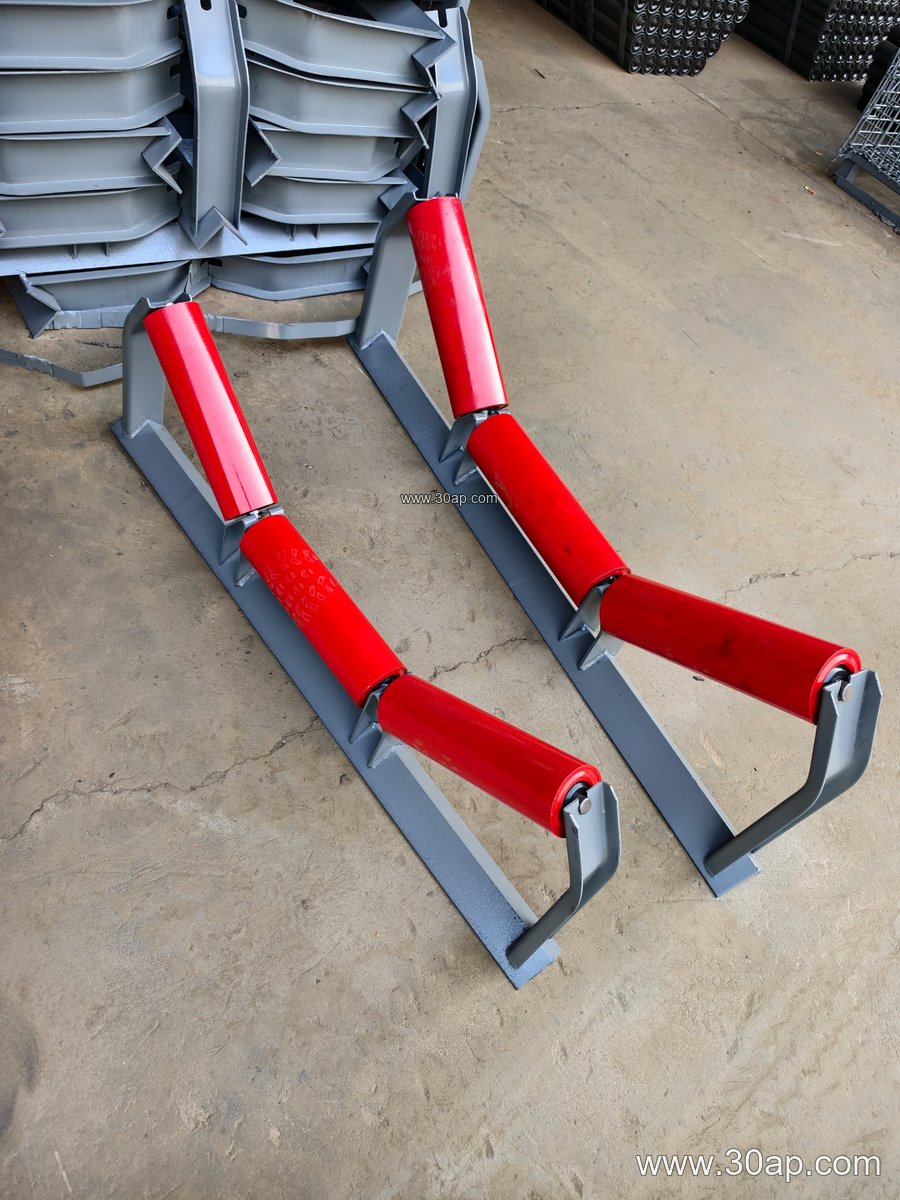
How the Bracket Is Built
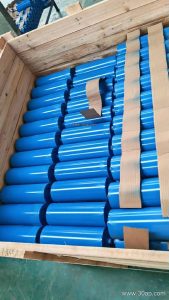
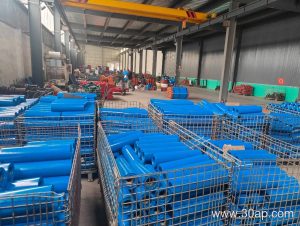
Most units are fabricated from angle steel, channel steel, or folded steel plate, then hot-dip galvanized or otherwise zinc coated. The shape follows the duty. A troughing bracket carries three idlers at a set angle; a return bracket holds the belt on the return side; a V-return bracket supports the belt in a V form to aid tracking.
- Troughing and upper troughing brackets for the carrying side
- Transition brackets near pulleys to ease the belt from flat to troughed
- Return and V-return brackets for the lower run
- Impact brackets under loading points
- Self-aligning and forward-leaning brackets for tracking control
- Suspended and adjustable brackets for flexible frames
Adjustable brackets allow the trough angle to be set between common values, while fixed brackets hold one angle. Forward-leaning designs are usually set at about 1.5 to 2 degrees to help center the belt.
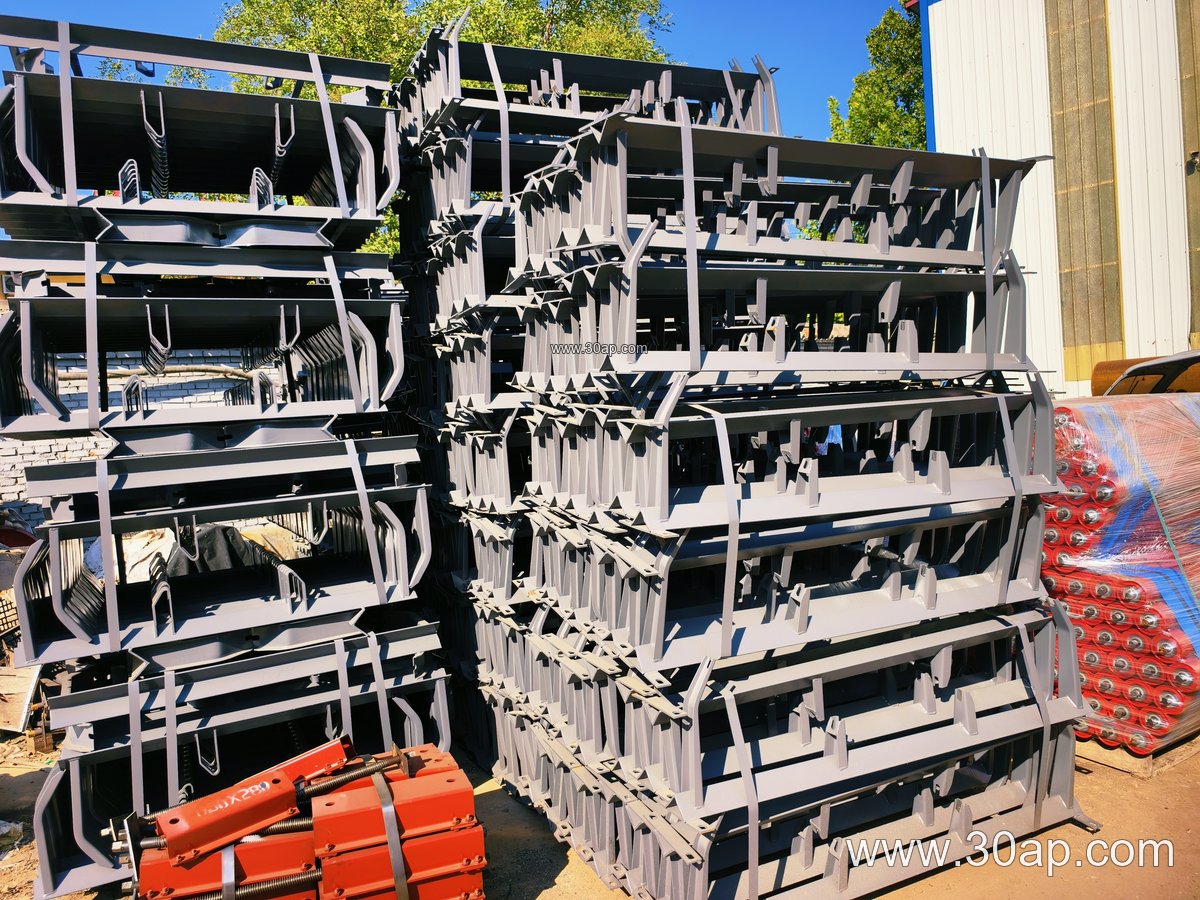
Matching Bracket, Belt Width, and Idler Diameter
Bracket dimensions follow the belt width, the chosen trough angle, and the idler diameter. Installation hole spacing and crossbeam length change with these factors and are confirmed at design stage rather than fixed numbers. The table below shows typical reference combinations, not mandatory pairings.
| Belt Width | Common Trough Angle | Typical Idler Diameter | Typical Bracket Type |
|---|---|---|---|
| B500 | 20°, 30° | Ø89 | Troughing, return |
| B650 | 30°, 35° | Ø89, Ø108 | Troughing, transition |
| B800 | 30°, 35° | Ø108, Ø133 | Troughing, impact |
| B1000 | 35°, 45° | Ø108, Ø133 | Troughing, self-aligning |
| B1200 | 35°, 45° | Ø133, Ø159 | Troughing, V-return |
| B1400 | 35°, 45° | Ø133, Ø159 | Troughing, impact |
| B1600 | 35°, 45° | Ø159, Ø194 | Troughing, transition |
| B1800 | 35°, 45° | Ø159, Ø194 | Troughing, V-return |
| B2000 | 35°, 45° | Ø194 | Troughing, impact |
A wide belt does not lock the line to one angle or one idler size. For instance, B1200 at 45° with Ø133 is common, and B800 at 35° with Ø108 also appears in many layouts. The final choice depends on load, belt stiffness, and transition length.
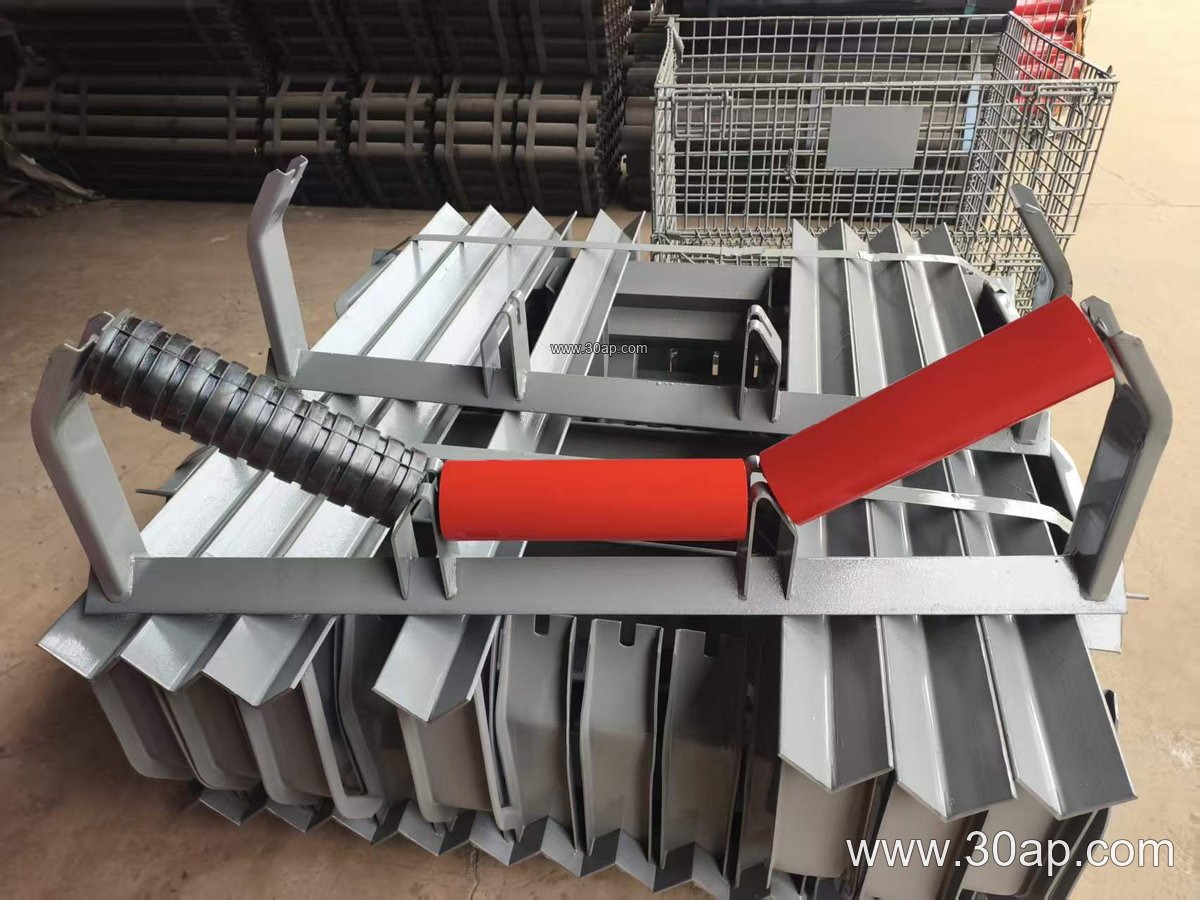
Where These Brackets Are Used
You will find galvanized brackets in coal washing plants, power station coal handling, sand and gravel lines, crushing and screening circuits, and fertilizer or grain silo systems. In a crusher discharge line, impact brackets absorb shock under the chute while standard troughing brackets carry the load further along. On a long overland run, self-aligning brackets reduce edge wear on the conveyor belt.
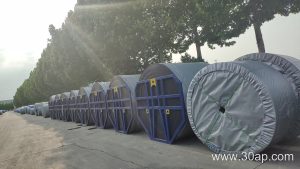
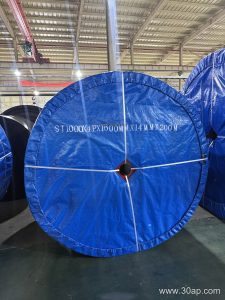
The belt itself may be a Rubber Conveyor Belt, an EP Conveyor Belt, or a Steel Cord Conveyor Belt depending on tension and distance. Heavier belts usually need stiffer brackets and larger idler diameters, so the support frame is matched to the belt family rather than chosen in isolation.
Buyer Checklist
- Confirm belt width, trough angle, and idler diameter before ordering.
- State the mounting hole spacing and crossbeam length required by the frame.
- Choose coating thickness for the environment; coastal or washdown areas need more protection.
- Decide between fixed and adjustable brackets based on whether the angle may change.
- Check that impact and transition positions are covered, not only the standard carrying idlers.
For support layout questions, the site team can review conveyor bracket options together with roller and pulley data at conveyoridlerrolller.com, where frame details are matched to each line.