What a Thick Conveyor Belt Is
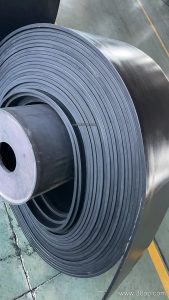
A thick conveyor belt is a heavy-duty belt built with a greater total gauge than standard stock belting, achieved through heavier cover rubber, more fabric plies, or a steel cord carcass. The extra thickness is not cosmetic. It adds abrasion life, impact resistance, and stiffness where a plant moves lumpy, sharp, or hot material at high tonnage. Buyers often describe it as a heavy-duty conveyor belt, and in many plants the same construction is simply ordered as a high abrasion resistant conveyor belt with a thicker top cover.
Thickness is a product of the carcass and the covers. Two belts with the same overall gauge can behave very differently if one uses more plies and the other uses thicker rubber.
How the Belt Is Built
- Carcass: multi-ply fabric core for general heavy duty, or steel cord for long center distances and high tension. EP and NN fabric carcasses are common in aggregate and cement duty.
- Covers: top and bottom rubber, usually expressed as a pair such as 6+2 mm or 8+3 mm. The top cover carries the load and takes the wear.
- Edges: cut edges or molded edges, depending on the splice method and pulley tracking requirements.
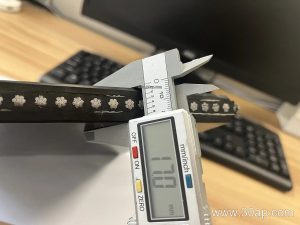
For a genuinely thick build, a compound such as 10 mm total cover on a multi-ply carcass is common in crusher and quarry service. Steel cord belt can be supplied at similar gauges where tension demands it, and an ST1600 or ST2000 construction is often specified for mainline haulage.
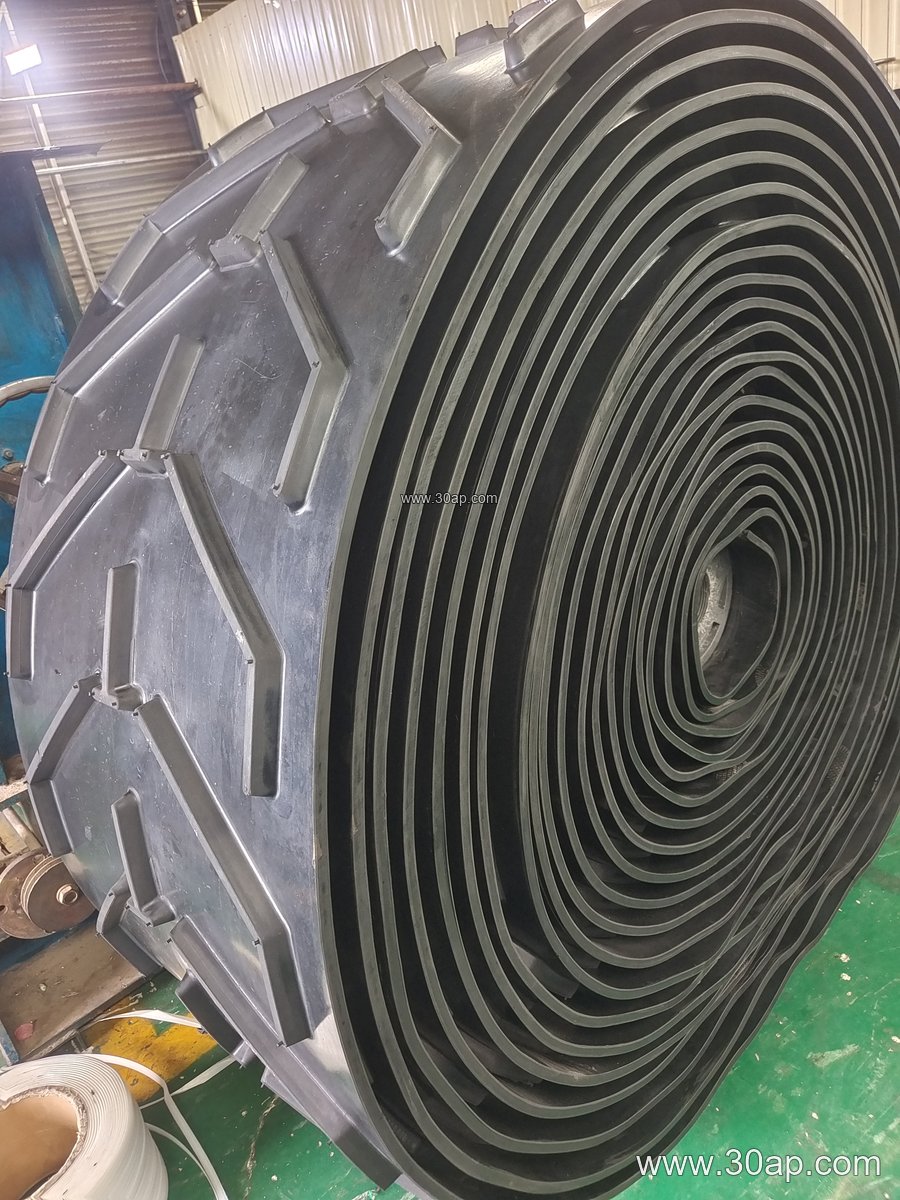
Thickness by Construction, Typical Reference
| Construction | Common strength range | Typical cover build | Typical use |
|---|---|---|---|
| EP fabric, multi-ply | EP200 to EP1000 | 4+2, 5+2, 6+2 mm | Aggregate, cement, general bulk |
| NN nylon fabric | NN200 to NN400 | 4+2, 5+2 mm | Impact zones, crusher feed |
| Steel cord | ST1000 to ST2500 | 6+2, 8+3 mm | Long overland and mainline conveyors |
| PVG / PVC | PVG800S and similar | Per design | Underground coal mining |
Widths commonly run from B500 and B650 up to B1800 or B2000. A thick belt is frequently ordered as an 800mm, 1000mm, or 1200mm wide conveyor belt, but width and gauge are chosen independently. A wide belt is not automatically thick, and a narrow one can be very heavy.
Where Thick Belting Fits
Mines, coal preparation plants, cement works, power stations, steel plants, ports, and sand and gravel yards are the usual homes for this product. At a primary crusher, a thick abrasion resistant belt absorbs rock impact that would punch through lighter covers. In a cement plant, a heat resistant conveyor belt with thicker cover handles clinker and hot kiln feed. Underground coal mining relies on flame retardant and anti-static constructions, usually PVG or PVC, where the cover gauge is set by regulation and design rather than by wear alone.
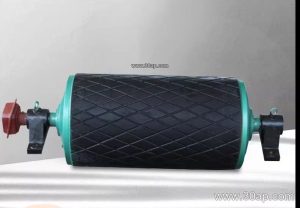
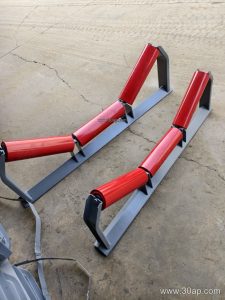
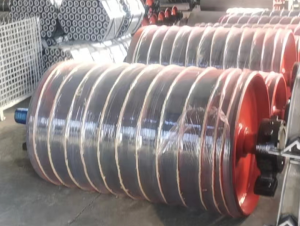
Long overland lines in iron ore or copper ore duty often pair a steel cord conveyor belt with large conveyor pulleys at the drive and tail, supported on idler rollers spaced to control sag. The extra belt mass matters here: it raises the load on every roller and pulley.
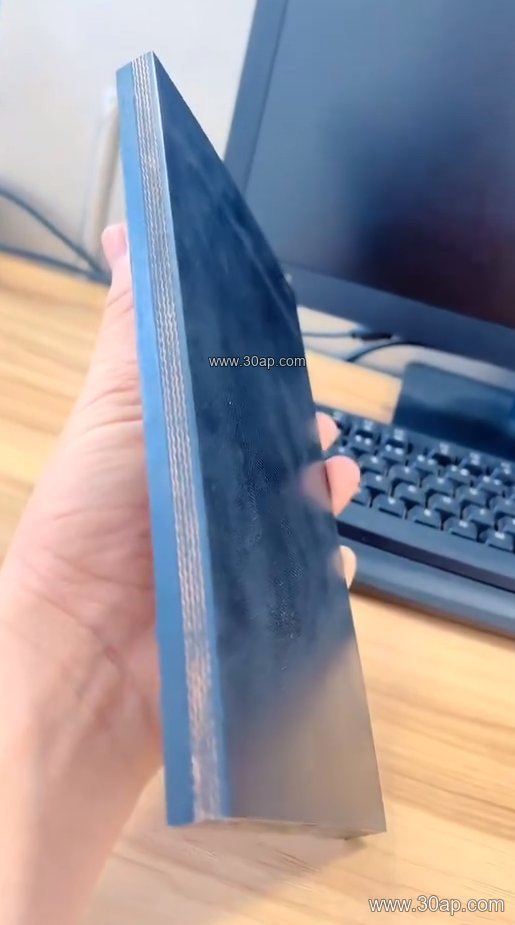
Choosing the Right Gauge
Start with the material: lump size, sharpness, temperature, oil or chemical exposure, and fall height at transfer points. Then set the tension using the conveyor profile, and only then select cover thickness and carcass. A belt that is thick but under-strength will fail at the splice; a belt that is strong but thin will wear out at the loading point.
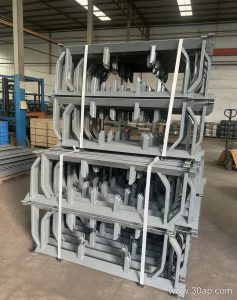
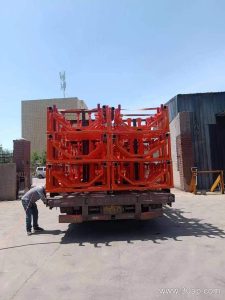
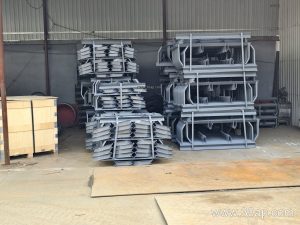
Ask the supplier for the cover compound class, ply count, and total gauge in writing. Confirm the recommended pulley diameters for the carcass, since a stiff thick belt needs larger pulleys than a thin one at the same tension. Check that conveyor brackets and frame clearances allow the heavier belt and its splices to pass.
Installation and Maintenance Notes
- Use the splice method the manufacturer specifies for the carcass; thick multi-ply belts need stepped splices with adequate step length.
- Check skirt rubber and chute clearance, because a thicker belt changes the belt line height.
- Inspect cover wear at the loading zone first; that is where thickness is consumed.
- Keep idler rollers turning freely, as drag increases tension and edge stress on heavy belting.
- For cold climates, a cold resistant grade avoids cover cracking at start-up.
For a quotation, provide belt width, duty, material, temperature, and conveyor layout. A supplier can then propose a build rather than a single number, and you can compare offers on the same basis.