What a Large-Diameter Conveyor Idler Does on the Line
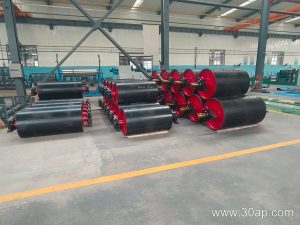
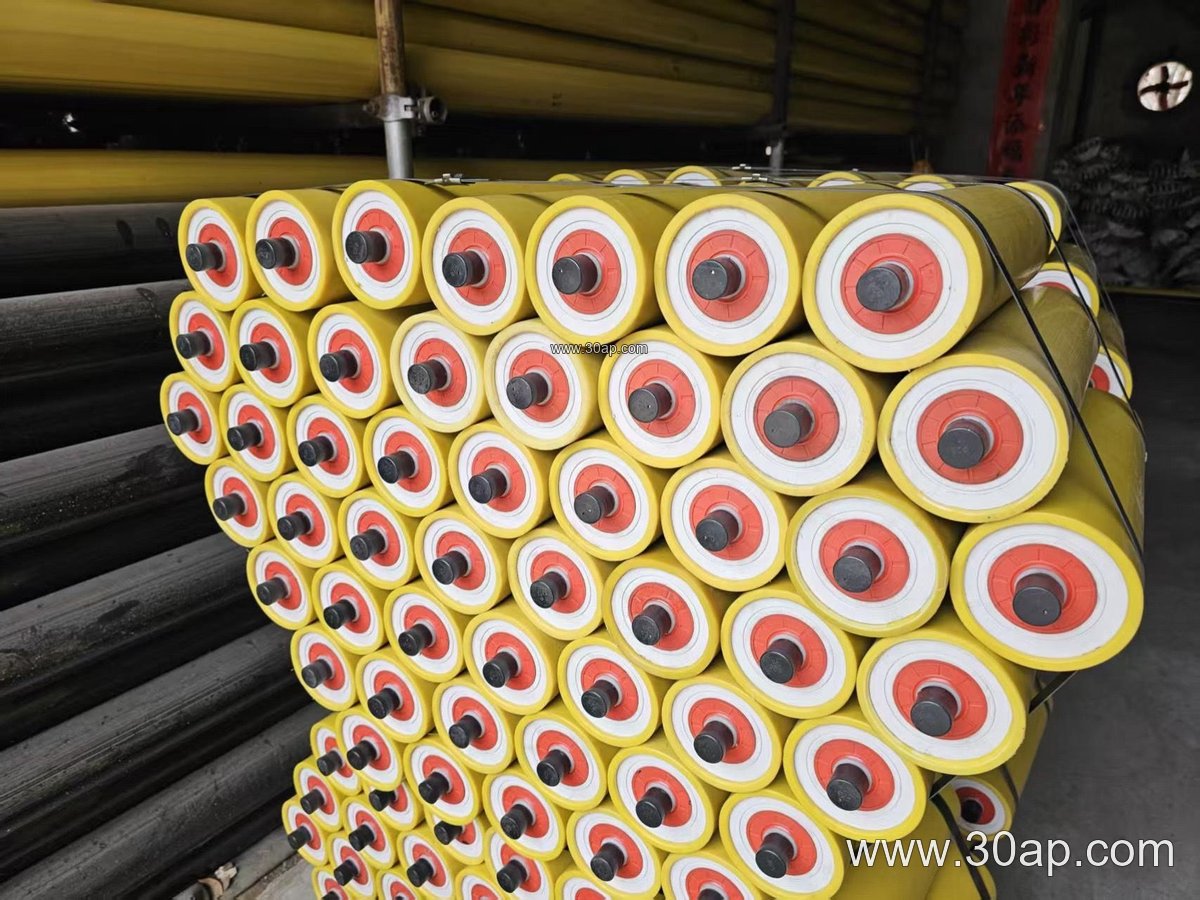
A large-diameter conveyor idler is a load-bearing roller with an outside diameter noticeably above the common small sizes used on light-duty belts. In practice, the term usually points to rollers in the range of Ø159 mm up to Ø219 mm, though the exact cut-off depends on the conveyor design. These idlers sit under the belt and carry the weight of the material, so their size has a direct effect on rolling resistance, bearing life, and how well the belt tracks. They are not the same as a conveyor pulley, which drives or redirects the belt at the head and tail. Drive pulleys, tail pulleys, and bend pulleys each have their own role and are never swapped for an idler roller.
Construction Details That Matter
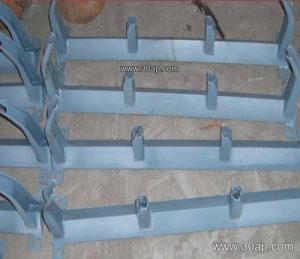
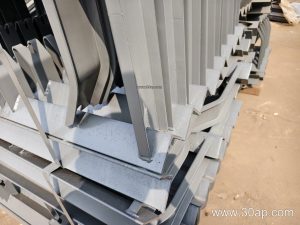
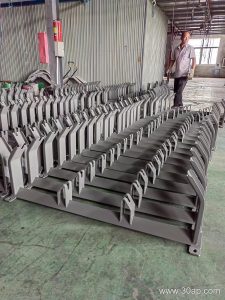
The shell is normally a seamless steel tube, machined at the ends to hold the bearing housings. A large roller needs a stiff shaft and a robust bearing arrangement, because the radial load grows with belt width and material weight. Common bearing sizes found in these assemblies include 6205, 6305, 6306, 6308, and 6310, matched to the shaft and load case rather than to a single fixed roller diameter. Sealing is critical in dusty plants: a multi-stage labyrinth seal with grease retention keeps fines out of the bearing cavity. The roller surface may be plain steel, nylon-coated, ceramic-lined, or fitted with rubber rings for impact absorption. A conveyor bracket holds the idler ends and sets the trough angle.
Where Large Rollers Fit
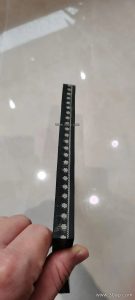
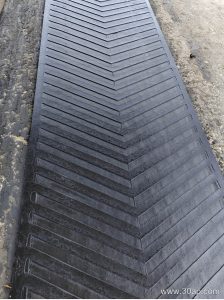
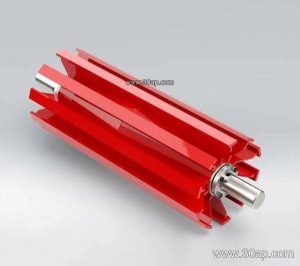
These rollers are common in quarry and aggregate lines, limestone mines, iron ore and copper ore operations, coal washing plants, cement plants, and power station coal handling. They also appear in port loading systems and steel plant sinter lines. On a heavy-duty mining conveyor belt carrying lump ore, a larger roll diameter reduces the number of revolutions per minute for the same belt speed, which can extend bearing life. In a crusher discharge area, rubber-ring impact idlers of large diameter help cushion falling rock before it reaches the troughed carrying run.
Trough Angles and Belt Width
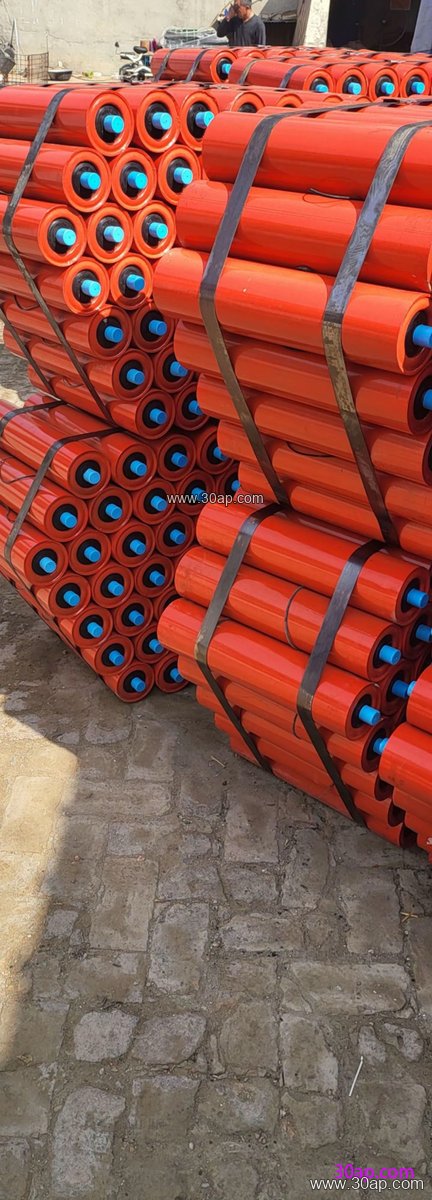
Trough angle affects how the belt sits in the idler set. Common angles are 20, 30, 35, and 45 degrees. A three-roll set is typical for wider belts, while two-roll and single-roll arrangements appear in special cases. The roller length changes with belt width, trough angle, and roll configuration. The table below gives common examples for the center roll of a three-roll troughing set; side rolls can differ.
| Belt width | Typical center roll length | Common large idler OD |
|---|---|---|
| B800 | 315 mm | Ø133 to Ø159 |
| B1000 | 380 mm | Ø159 to Ø178 |
| B1200 | 465 mm | Ø159 to Ø194 |
| B1400 | 530 mm | Ø178 to Ø194 |
| B1600 | 600 mm | Ø194 to Ø219 |
| B1800 | 670 mm | Ø194 to Ø219 |
These figures are examples only. A large belt width does not force one pulley diameter, and a given belt width does not fix a shaft size by itself. The conveyor designer calculates load, speed, and spacing before choosing the roller.
Buyer Checklist
- Confirm the belt width and trough angle, then check the idler set dimensions, not just the roller diameter.
- Ask for the bearing size and seal type; in dusty cement or coal handling, seal quality matters as much as shell thickness.
- Match the roller surface to the duty: plain steel for clean bulk material, rubber rings for impact zones, ceramic or nylon where stickiness or wear is a concern.
- Check that the conveyor bracket and frame can accept the larger end shaft and bearing housing.
- For high-temperature or oil-exposed lines, confirm that the belt and the roller components are compatible with the environment.
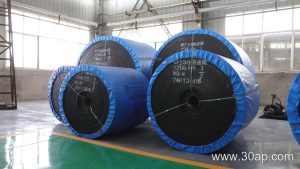
On a full system, the idler works with the conveyor belt, the conveyor pulley at the drive, and the conveyor bracket that ties everything to the frame. A well-chosen large-diameter idler roller lowers rolling friction and keeps the belt centered, but it must be selected as part of the whole conveyor, not as a stand-alone upgrade.