What a Mining Conveyor Belt Does on Site
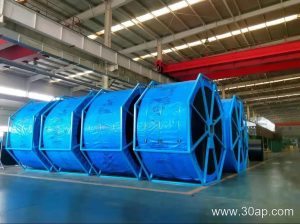
A Mining Conveyor Belt is the load-carrying element of a continuous haulage system, moving crushed ore, coal, aggregate, cement clinker or overburden between the crusher, stockpile, screen house and load-out point. In a mine or quarry the belt often works without stopping for long shifts, so its cover compound and carcass must match the material being carried and the way it is fed onto the line. The same product is also called a mine conveyor belt or a heavy-duty mining belt, and those names describe the same article rather than separate categories.
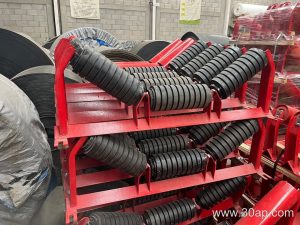
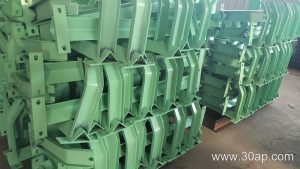
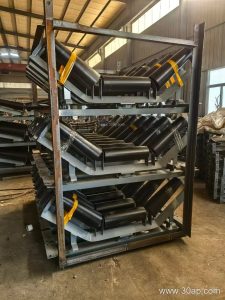
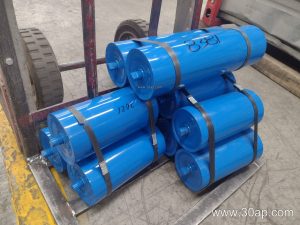
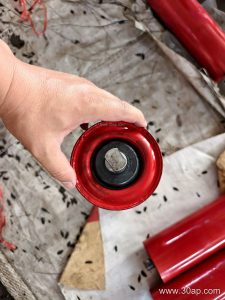
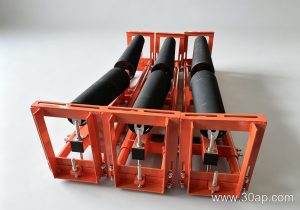
The belt runs over a frame fitted with idler rollers, a head or drive pulley, a tail pulley and bend pulleys, all held by conveyor brackets. Each of these parts has its own job and they are not interchangeable, even though they are often grouped together as conveyor components. A poorly matched belt will wear quickly regardless of how good the pulleys are.
Construction of the Belt
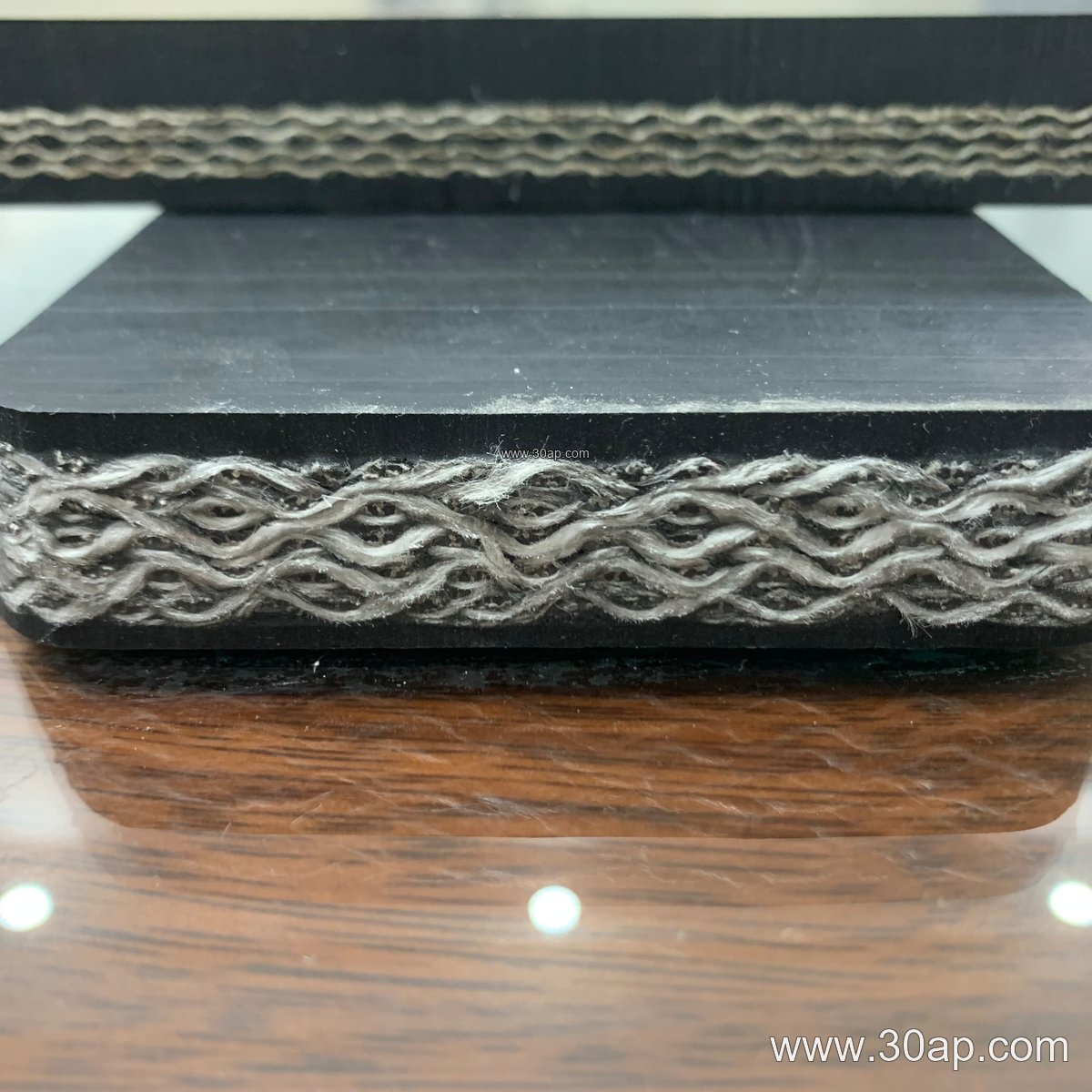
The carcass gives tensile strength, while the rubber covers protect the carcass from abrasion, impact and moisture. Fabric-based designs use multiple plies of EP or NN fabric, and a Multi-Ply Fabric Core Conveyor Belt is common on medium-duty trunk lines. For long lifts and high tonnage, a Steel Cord Conveyor Belt carries the load in a single layer of brass-coated wires. Underground work in coal mines often calls for a PVG Conveyor Belt, which combines a fabric carcass with a flame-retardant, anti-static cover.
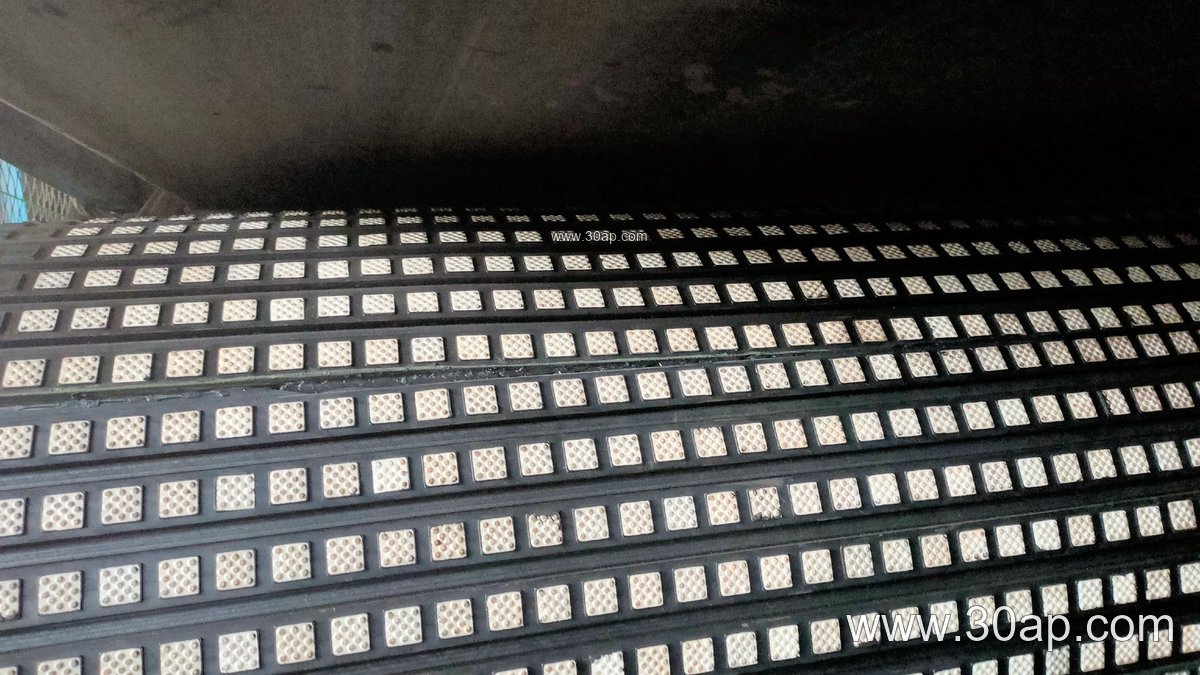
- EP Conveyor Belt — polyester warp, nylon weft, good fatigue resistance and low stretch
- NN Conveyor Belt — all-nylon carcass, strong impact absorption
- Steel Cord Conveyor Belt — high strength for long centre distances
- PVC and PVG belts — solid-woven or fabric core with fire-retardant covers
- Special covers — Heat Resistant, Oil Resistant, Cold Resistant and Abrasion Resistant Conveyor Belt grades
Typical Strength and Width Ranges
Fabric belts are usually specified by nominal strength, for example EP200, EP400, EP630, EP1000 or EP1250, while steel cord grades run from ST1000 up to ST3150 and beyond. Band widths commonly range from B500 to B2000, and the cover gauge is written as top plus bottom thickness, such as 4+2 mm or 6+2 mm. These are reference figures; the final choice is set by the conveyor design, the lump size and the duty cycle.
| Parameter | Common reference values |
|---|---|
| Fabric strength (EP) | EP200, EP315, EP400, EP500, EP630, EP800, EP1000, EP1250, EP1600, EP2000 |
| Steel cord strength | ST1000, ST1250, ST1600, ST2000, ST2500, ST3150 |
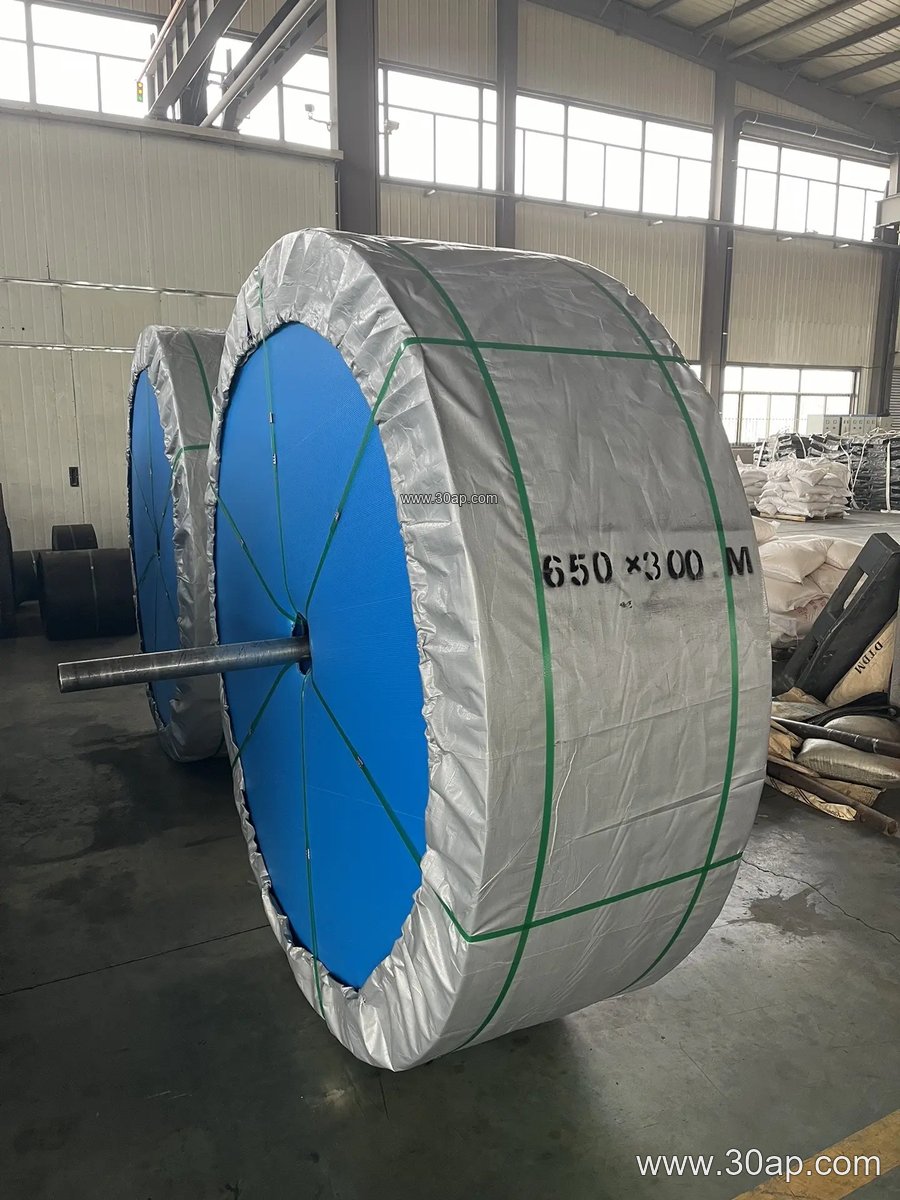
| Belt width | B500, B650, B800, B1000, B1200, B1400, B1600, B1800, B2000 |
| Cover thickness | 3+1.5, 4+2, 5+2, 6+2, 8+3 mm |
| Carcass plies | Usually 2 to 6 layers for fabric constructions |
Width and pulley diameter are matched by calculation, not by a fixed rule, so a 1200mm belt may run on different pulley sizes depending on tension and wrap angle. Do not assume a shaft diameter from width alone.
Where These Belts Are Used
Applications span coal mining, iron ore and copper ore handling, gold mining, cement plants, power plant coal yards, steel plants, sand and gravel pits, stone crushing lines and port ship loading. A Coal Mining Conveyor Belt in an underground roadway needs flame retardance and anti-static properties, while a Quarry Conveyor Belt on the surface is usually chosen for abrasion resistance. Transfer points that drop large lumps benefit from an Impact Resistant Conveyor Belt or a belt with extra cover thickness.
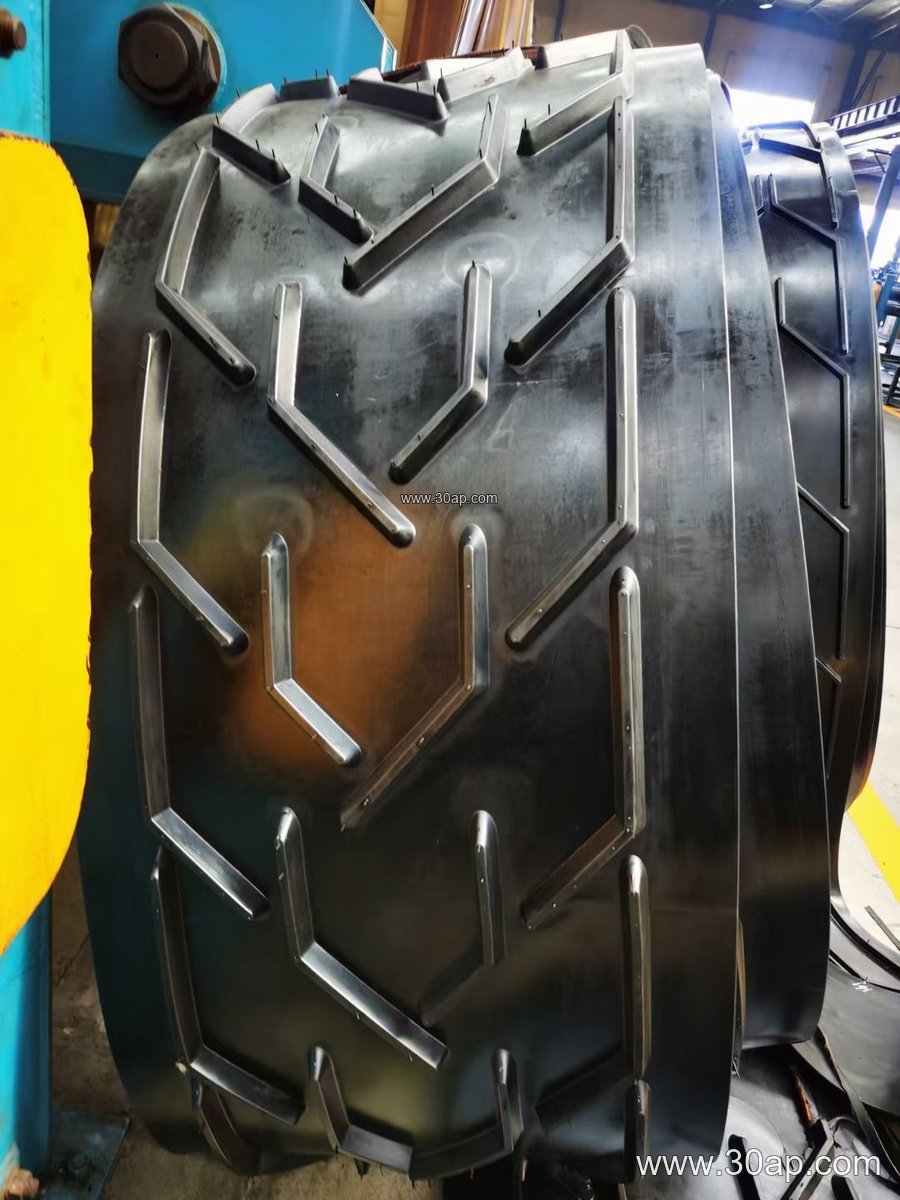
Where the route climbs steeply, a Chevron Conveyor Belt or a Corrugated Sidewall Conveyor Belt keeps material from rolling back. Enclosed routing, dust control and curved alignment may call for a Pipe Conveyor Belt. A Skirted Conveyor Belt is useful at loading zones to contain spillage.
Buyer Checklist
Before ordering, confirm the material type, lump size, tonnage per hour, centre distance, incline angle, ambient temperature and any fire or oil exposure. State whether the belt will be spliced on site or supplied as an Endless Conveyor Belt. Ask for the cover grade, carcass construction, ply count and cut-edge or moulded-edge finish. For hot clinker or sinter, specify a Heat Resistant Conveyor Belt grade; for coal dust and methane risk, insist on Flame Retardant Conveyor Belt and Anti-Static Conveyor Belt properties.
Maintenance also matters. Check idler roller rotation, pulley lagging and belt tracking regularly, and keep the loading chute centred so material lands in the middle of the belt. A worn skirt rubber or a misaligned conveyor pulley can damage an otherwise sound belt within weeks.
For more on matching belts with rollers and pulleys, see the selection notes at www.example.com/mining-conveyor-belt and the component pages for idler roller and conveyor pulley.