What a Conveyor Frame Does on a Bulk Handling Line
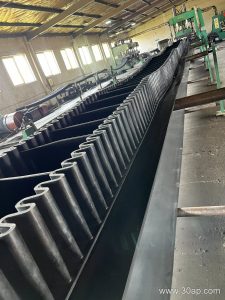
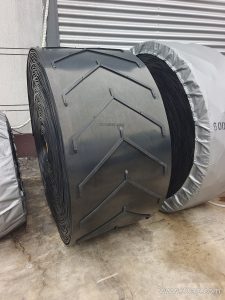
A conveyor frame is the structural backbone that holds every idler roller, pulley, and belt support in alignment along a conveyor route. In a quarry, a cement plant, or a power plant coal yard, the frame carries the weight of the loaded belt and keeps the trough shape consistent so material does not spill. The frame also sets the spacing between idlers, which directly affects how well an EP conveyor belt or a steel cord conveyor belt tracks under load.
The frame works together with the conveyor bracket and conveyor pulley. A drive pulley pulls the belt, a tail pulley returns it, and a bend pulley changes direction, but none of these can compensate for a weak or misaligned frame. The frame is the fixed reference that everything else is measured against.
How the Structure Is Built
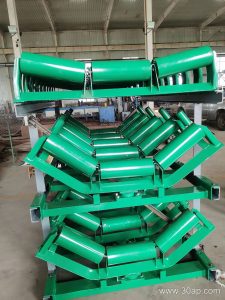
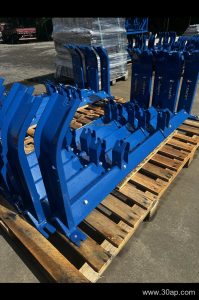
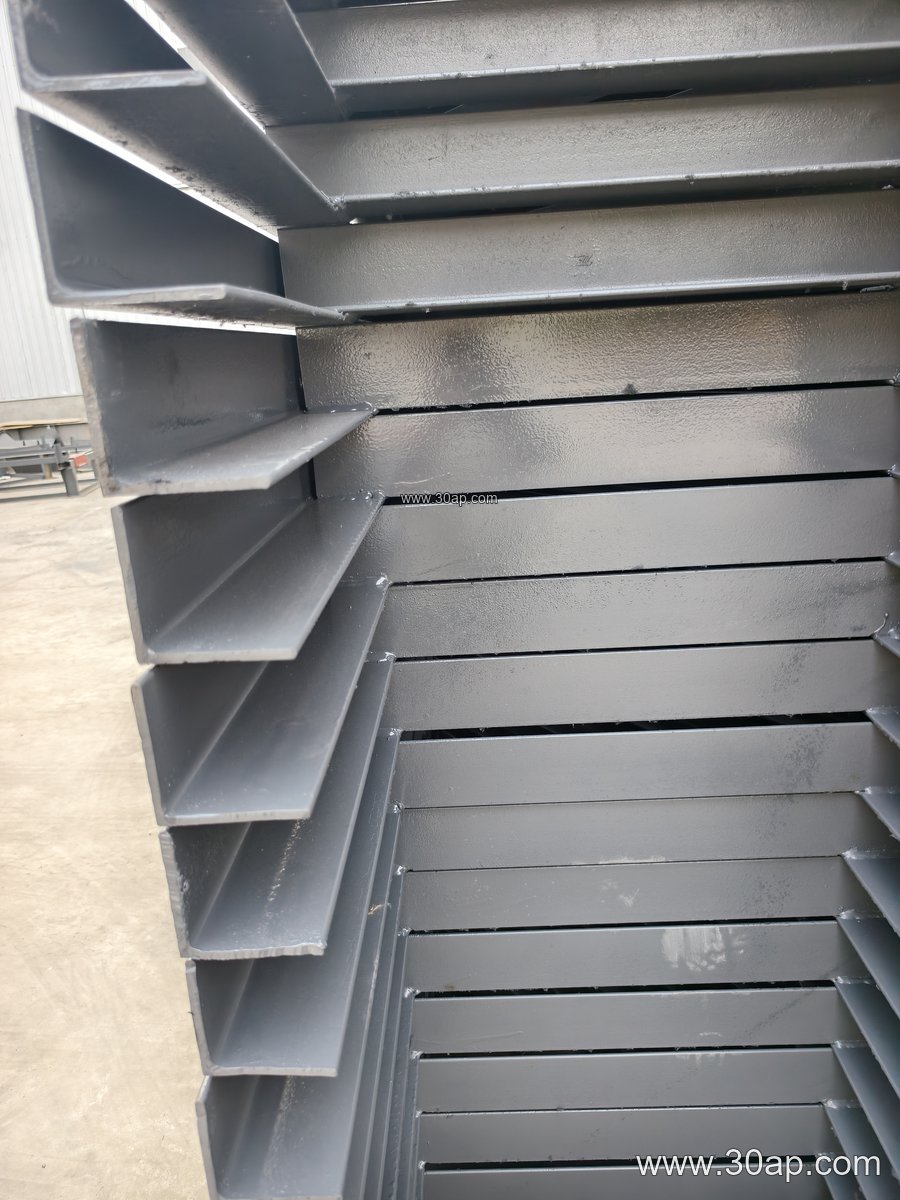
Most frames are fabricated from angle steel, channel steel, or folded steel plate. The cross beams are welded or bolted to longitudinal stringers, and mounting holes are drilled to match the idler roller shaft ends. Because hole spacing and beam length change with belt width and trough angle, a frame is usually made to order rather than picked from a shelf.
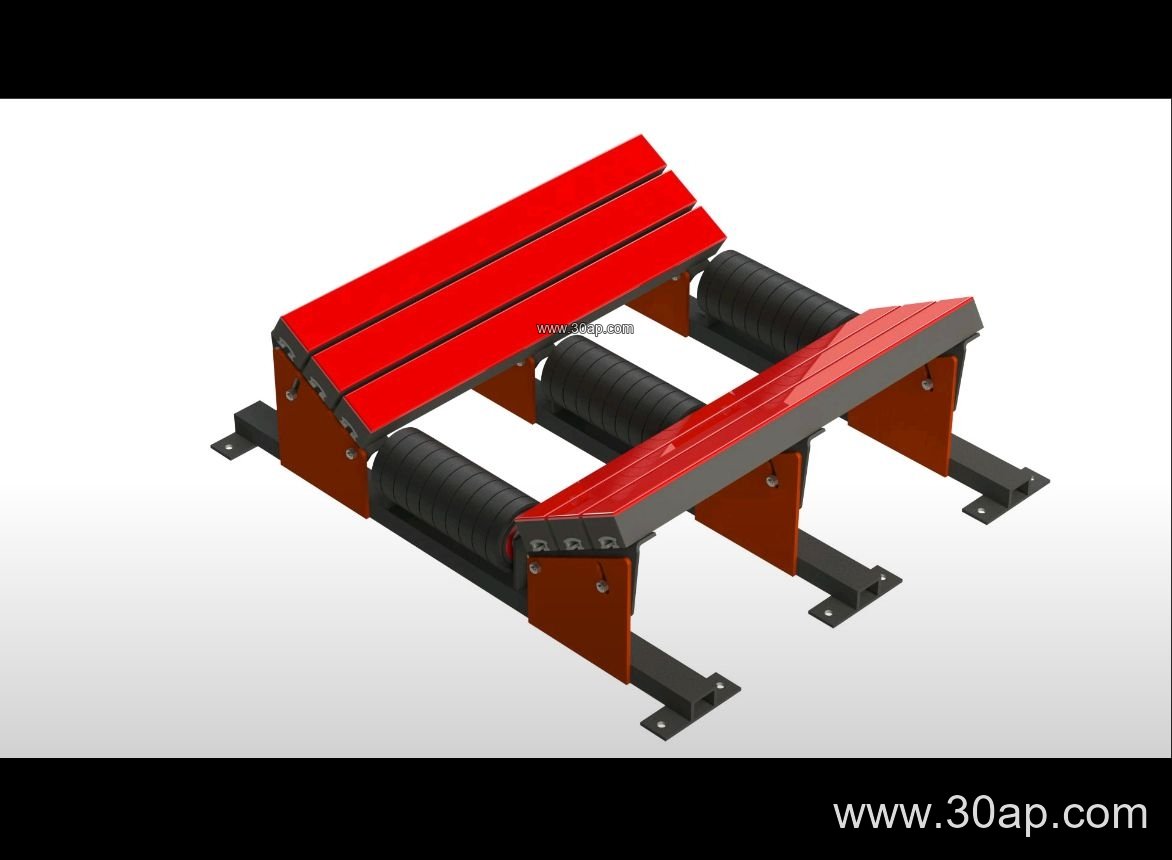
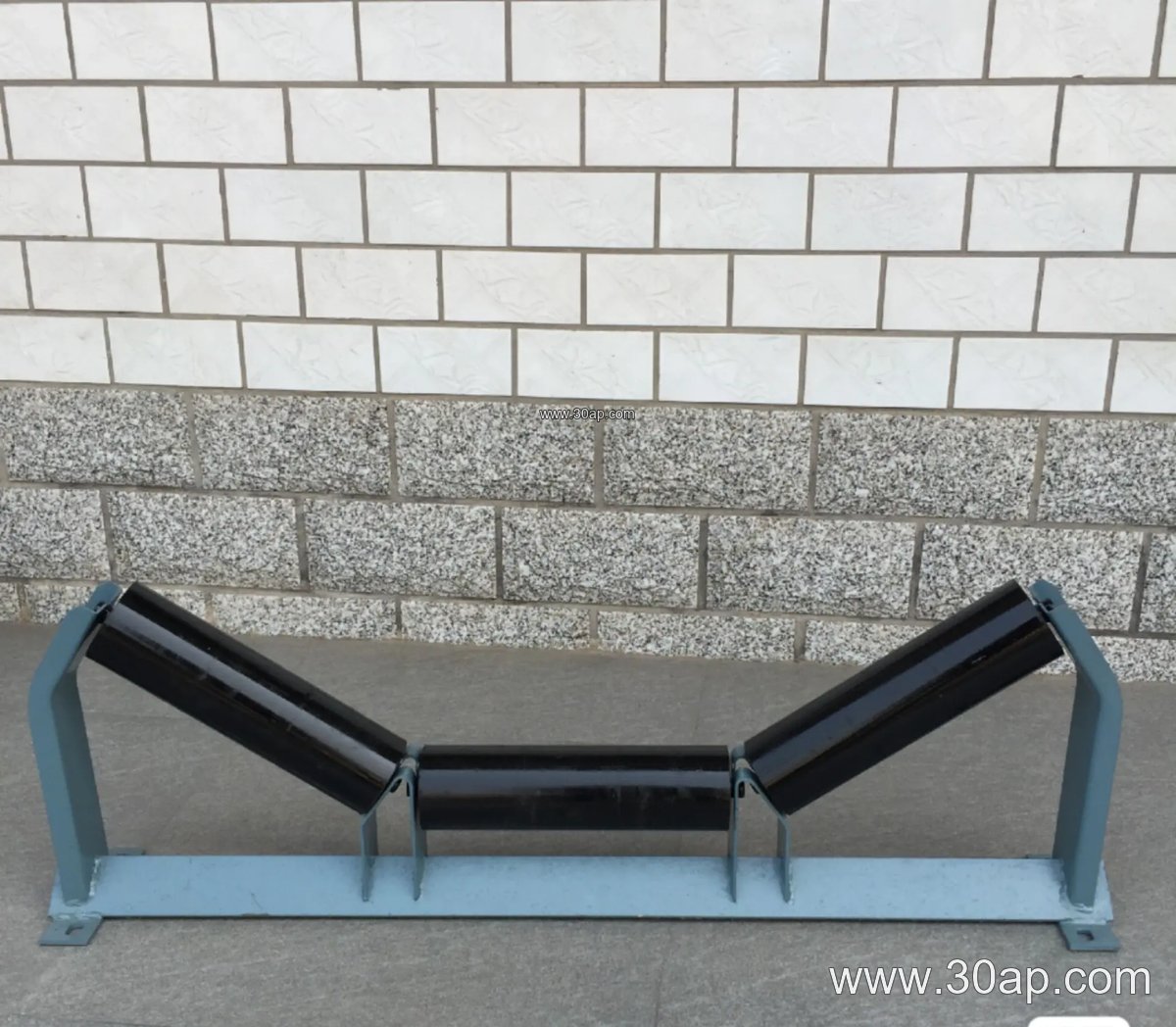
Common frame types include troughing frames, transition frames, return frames, V-return frames, impact frames, and self-aligning frames. Each has a specific job. A troughing frame holds three idlers at a set angle; an impact frame sits under the loading point with cushion idlers; a self-aligning frame corrects belt drift before it becomes a problem.
Matching Frame, Belt Width, and Idler Diameter
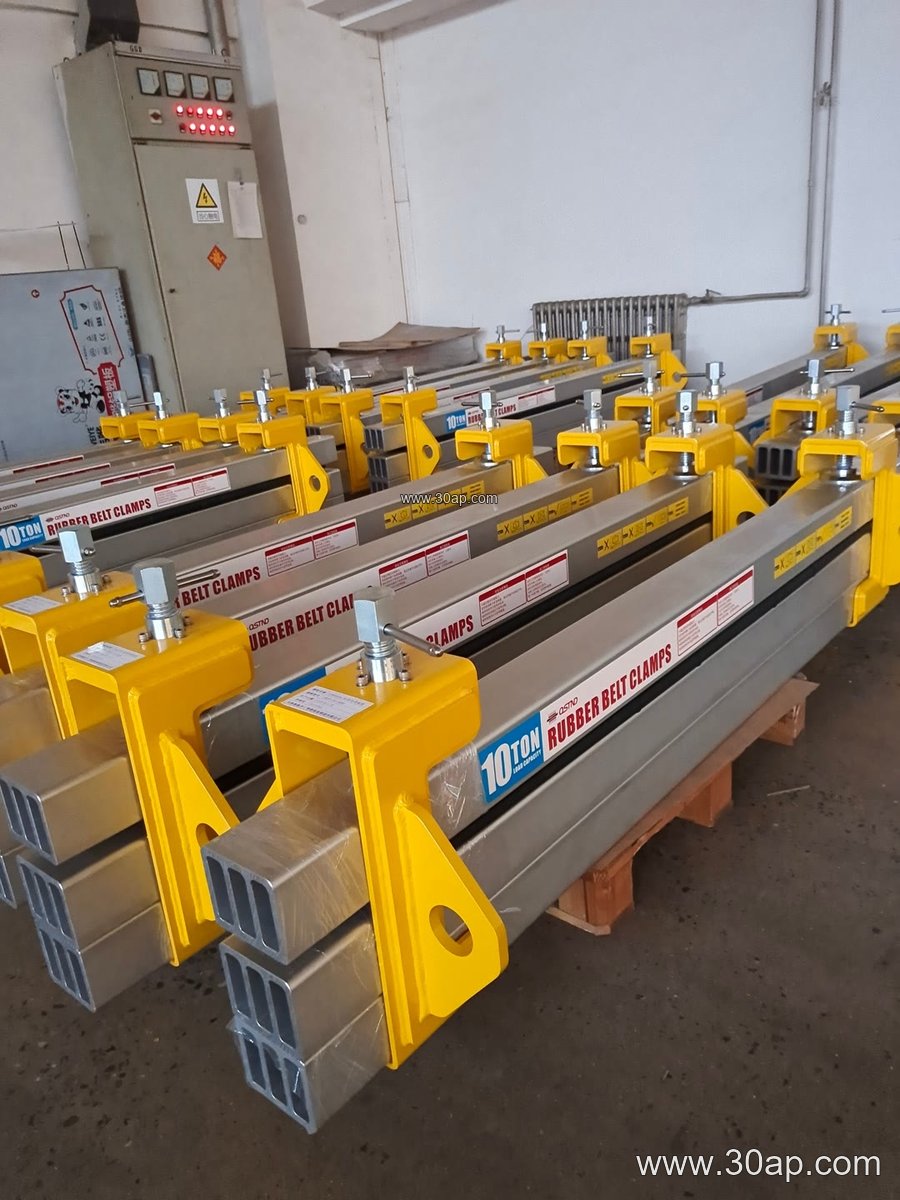
Buyers often ask which frame fits which belt. The answer is a range, not a fixed rule. A B800 frame with a 35 degree trough and Ø108 idlers is a common combination in aggregate plants, while a B1200 frame with 45 degree troughing and Ø133 idlers suits higher-capacity ore lines. Neither belt width locks you into one trough angle or one roller diameter; the choice depends on material, speed, and load.
Typical reference values are shown below. These are common ranges, not universal specifications.
- Belt width: B500, B650, B800, B1000, B1200, B1400, B1600, B1800, B2000, B2200
- Trough angle: 20, 30, 35, 45 degrees; adjustable frames can move between these
- Idler diameter: Ø89, Ø108, Ø133, Ø159, Ø194
- Forward tilt on some troughing frames: about 1.5 to 2 degrees
For a 1000mm or 1200mm wide conveyor belt, the frame cross beam is longer and the mounting holes sit farther apart than on a 650mm frame. This is why frame drawings are tied to belt width and trough angle together.
Where Frames Are Used
In a limestone mine or a crushing and screening line, troughing frames carry abrasive rock and are often paired with an abrasion resistant conveyor belt. In a coal washing plant, flame retardant conveyor belt grades are common, and the frame must resist vibration from heavy lump feed. In a steel plant sintering line, heat resistant conveyor belt sections need frames that stay true under thermal cycling.
Port terminals handling iron ore or copper ore use long frames with close idler spacing to control sag. A pipe conveyor belt route needs frames with special transition geometry, while a corrugated sidewall conveyor belt may require modified frame supports at the loading zone.
Adjustable Versus Fixed Frames
Fixed frames are welded or bolted at one set trough angle. Adjustable frames let maintenance crews change the trough angle within a range, which helps when the belt has been running with edge wear or when material characteristics change. Adjustable frames are also useful during commissioning, when the best trough angle for a new EP conveyor belt or NN conveyor belt is still being tested.
In both cases, the frame must sit on a level foundation. A frame that is out of level will cause the belt to drift regardless of how well the idlers are aligned.
What Buyers Should Check Before Ordering
- Confirm belt width and trough angle, and whether the frame must be adjustable.
- State the idler diameter so shaft ends and mounting holes match.
- Check the loading point: an impact frame may be needed under the chute.
- Ask about material and finish, especially in wet or corrosive plants.
- Request drawings showing hole spacing and beam length for your belt width.
For a fast quote, send the belt width, trough angle, idler diameter, and the number of frames per section. A frame supplier can then confirm the bracket layout and cross beam dimensions without guesswork.