What a High Strength Conveyor Belt Is
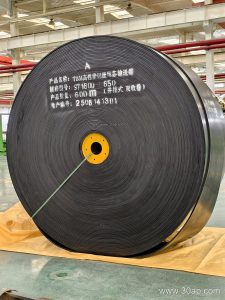
A High Strength Conveyor Belt is a heavy-duty conveyor belt built to carry large loads, long center distances, and abrasive bulk materials without excessive stretch or early failure. In practice, the term usually refers to belts with a strong tension-bearing carcass, such as an EP Conveyor Belt (polyester-nylon fabric core), an NN Conveyor Belt (nylon-nylon), or a Steel Cord Conveyor Belt for very high tension and long hauls. The strength class is normally expressed in the belt designation, for example EP400, EP630, EP1000, or ST1600.
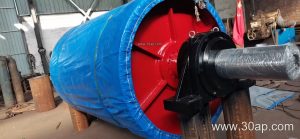
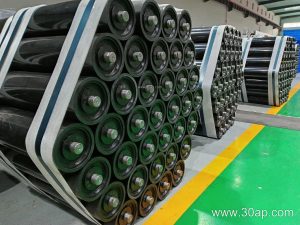
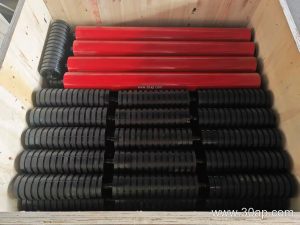
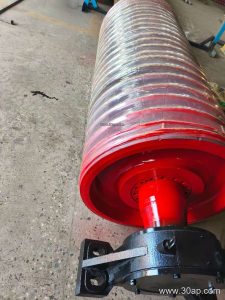
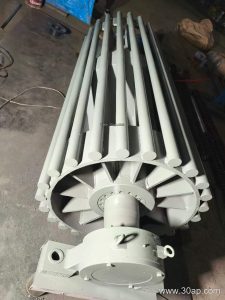
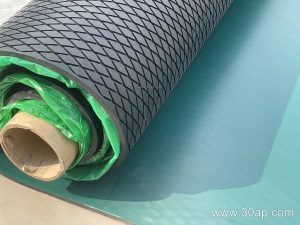
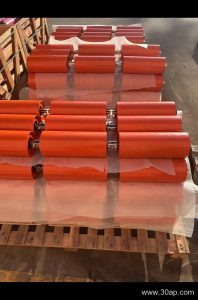
These belts are common in mines, coal preparation plants, cement works, power stations, quarries, sand and aggregate yards, steel plants, and port bulk terminals. They work alongside conveyor pulleys, idler rollers, and conveyor brackets, so the belt, the drive pulley, the tail pulley, and the bend pulleys must be matched as a system rather than chosen separately.
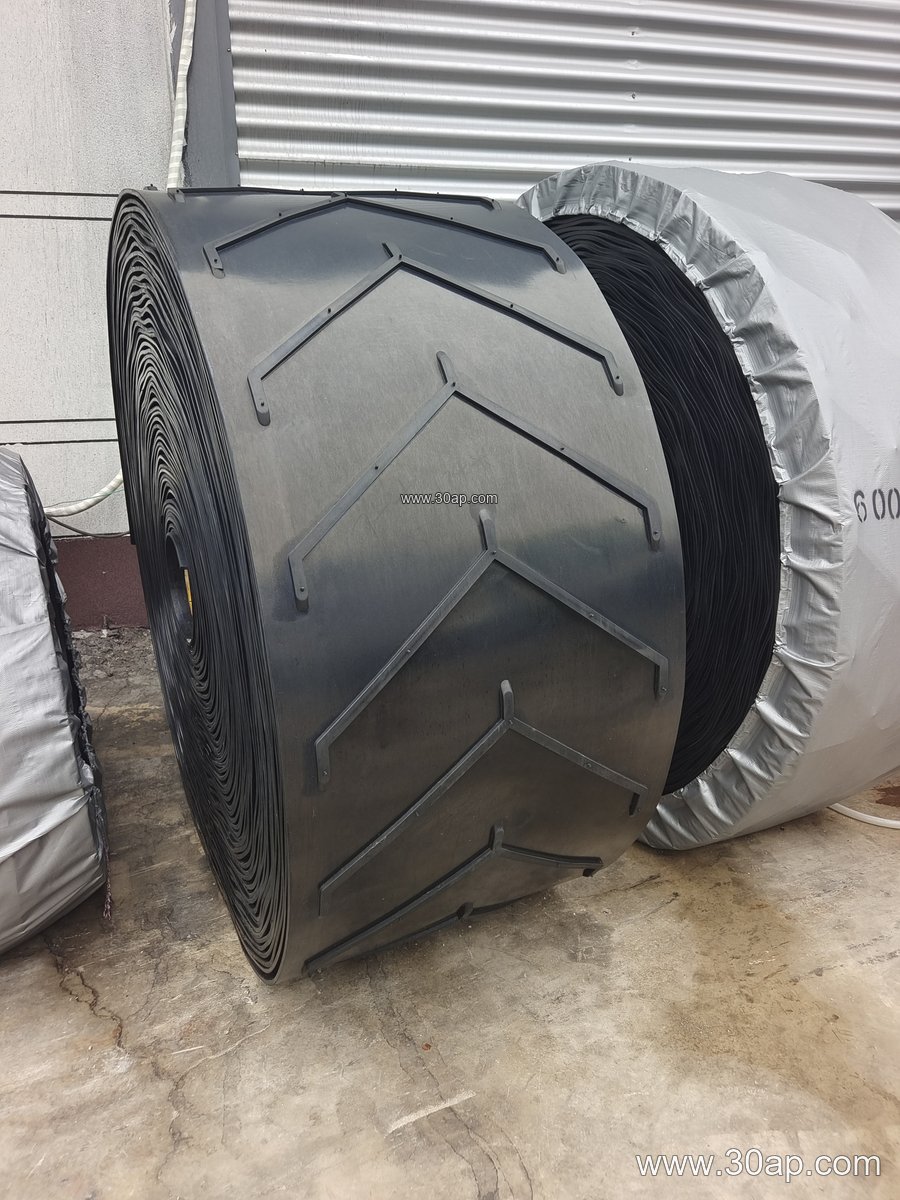
How the Belt Is Built
The carcass carries the tension. Fabric-core belts use multiple plies of EP or NN fabric, usually two to six plies depending on load and duty. Steel cord belts use parallel brass-coated wires in place of fabric plies, which suits high tension and low elongation over long conveyors. Rubber covers protect the carcass from abrasion, impact, heat, oil, or flame, and the cover grade should match the actual site conditions.
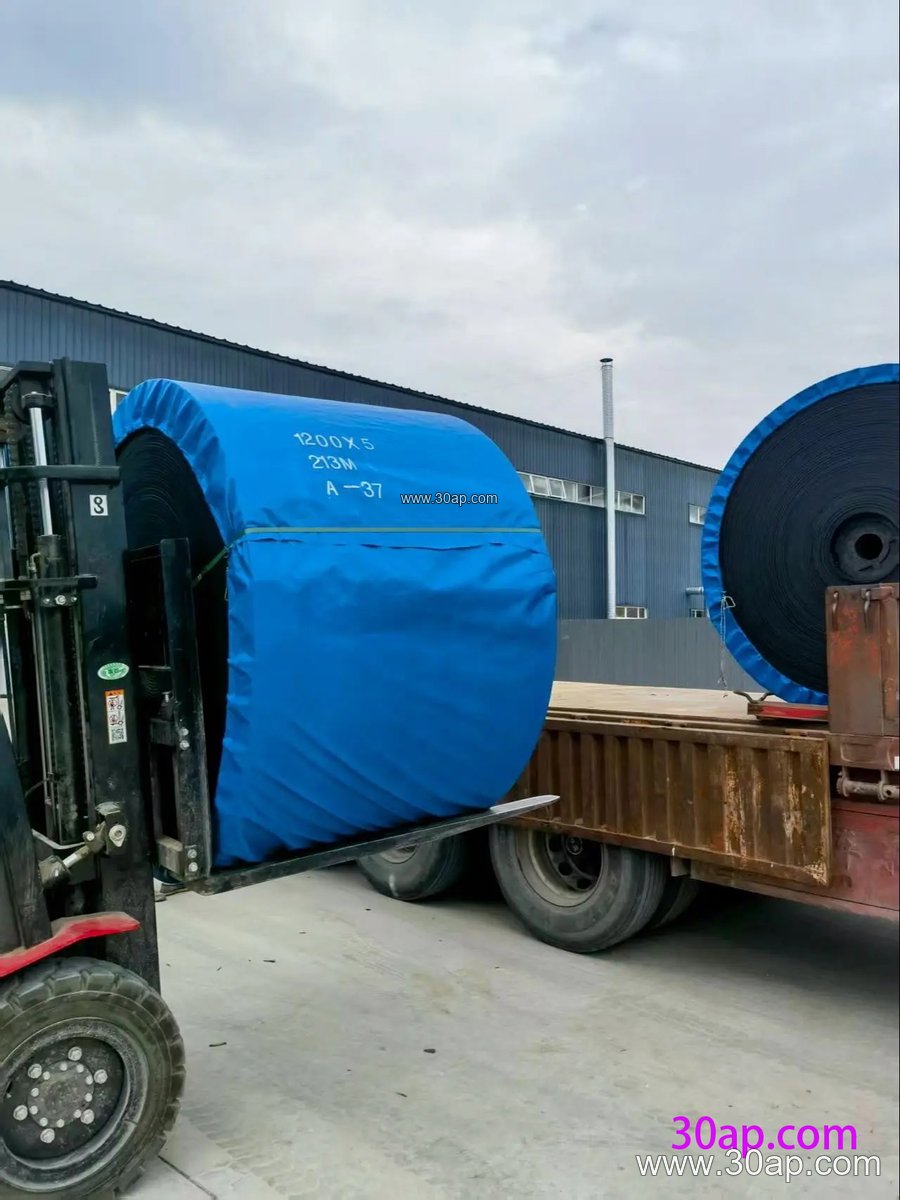
Common cover thickness combinations include 3+1.5 mm, 4+2 mm, 5+2 mm, 6+2 mm, and 8+3 mm. Top cover thickness matters most on the carrying side, while the bottom cover protects the pulley side. Cover compound choice is just as important as thickness: an Abrasion Resistant Conveyor Belt may be right for crushed rock, while a Heat Resistant Conveyor Belt suits clinker or sinter, and a Flame Retardant Conveyor Belt or Fire Resistant Conveyor Belt is often specified for underground coal mining conveyors.
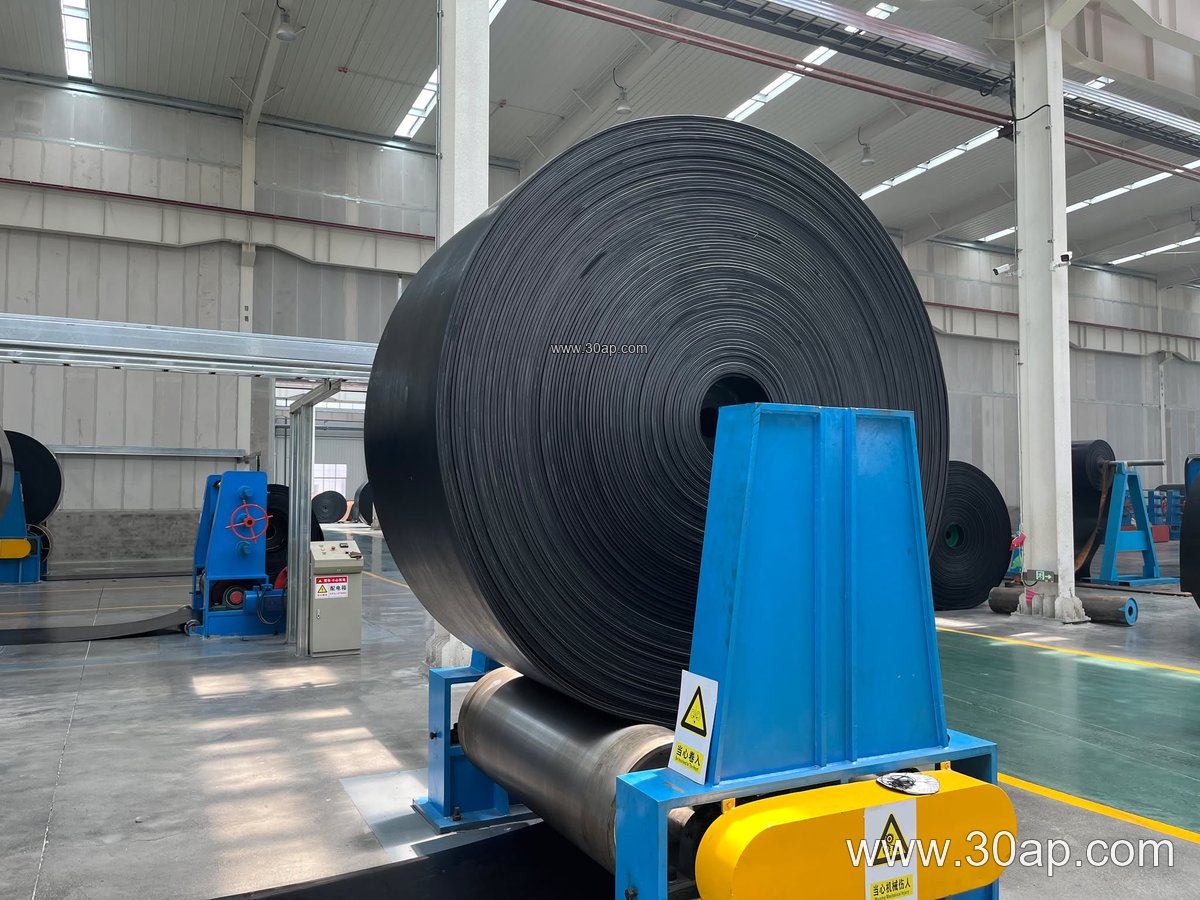
Common Strength and Width Ranges
The table below shows reference values often seen in catalogues. Actual availability varies by manufacturer, so treat these as typical ranges, not fixed supply promises.
| Parameter | Typical reference values |
|---|---|
| EP fabric strength grades | EP200, EP315, EP400, EP500, EP630, EP800, EP1000, EP1250, EP1600, EP2000 |
| Steel cord strength grades | ST1000, ST1250, ST1600, ST2000, ST2500, ST3150 |
| Belt width | B500, B650, B800, B1000, B1200, B1400, B1600, B1800, B2000 |
| Cover thickness (top + bottom) | 3+1.5 mm, 4+2 mm, 5+2 mm, 6+2 mm, 8+3 mm |
| Fabric plies | Usually 2 to 6 plies |
Belt width and pulley diameter are related by design calculations, not by a single fixed rule. A 1200mm wide belt may run on different pulley sizes depending on tension, speed, and carcass type, so the drive pulley, tail pulley, and bend pulleys should each be checked against the belt manufacturer’s data.
Where It Fits in the Plant
In a coal mine, a flame retardant and anti-static belt is often required, and PVG or PVC belts may be used in some underground sections. In a cement plant, heat resistant belts handle clinker while EP belts move limestone and raw meal. In a quarry or stone crushing line, a high abrasion resistant belt with a thick top cover is common, and chevron or corrugated sidewall belts may appear on steep inclines. Port and ship loading conveyors often use steel cord belts for long runs and high capacity.
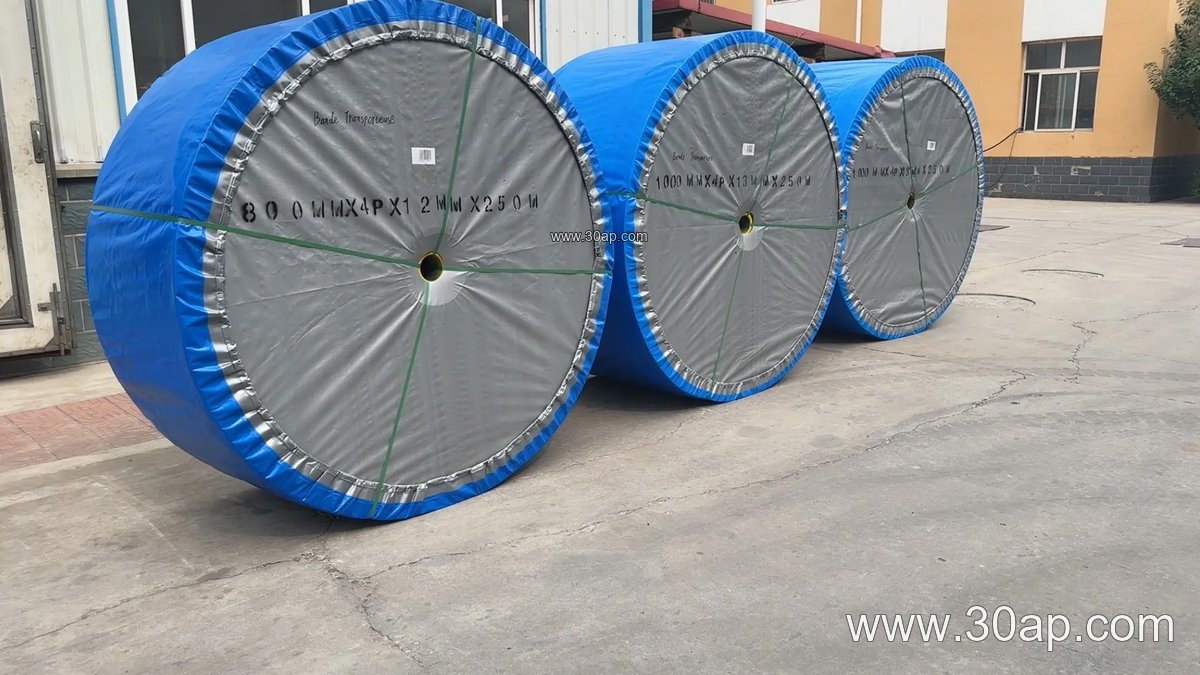
Whatever the industry, the belt is only one part of the line. Idler rollers support the belt and affect tracking and cover wear; conveyor pulleys transfer drive force; conveyor brackets and frames keep alignment stable. A poorly aligned frame or a worn idler roller can shorten the life of even a premium belt.
Buyer Checklist
- Confirm the required strength class from the conveyor design tension, not from habit.
- Match the cover compound to the material: abrasive, hot, oily, or flame-risk service.
- State the belt width and the pulley sizes so the supplier can check compatibility.
- Ask about splice method, since a high strength belt needs a splice that preserves carcass strength.
- Review storage and handling, because heavy belts should not be kinked or dragged over edges.
For a reliable high strength conveyor belt, share the duty, material, width, and pulley details with the supplier. A belt sized to the real load and maintained with its idler rollers and pulleys will give better service than an oversized belt on a neglected conveyor.