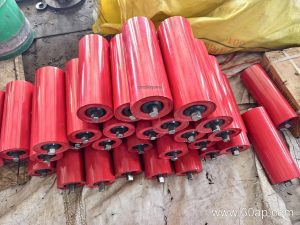
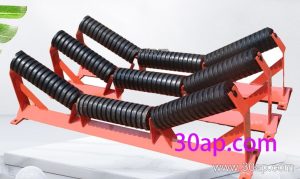
What the Conveyor Tail Pulley Does
The conveyor tail pulley sits at the return end of a belt conveyor, opposite the drive. Its main job is to close the belt loop and guide the conveyor belt back into the carrying run. Because it turns with the belt rather than driving it, the tail pulley is a driven roller in the functional sense, not a power source. On many conveyors it also carries a tensioning function, which is why the terms tail pulley and take-up pulley are sometimes used loosely in the field, though they describe different duties.
In a limestone quarry or a coal washing plant, a badly aligned tail pulley shows up quickly as edge wear, belt wander, and spilled material at the transfer point. That makes this component a small but critical part of the whole conveyor pulley set.
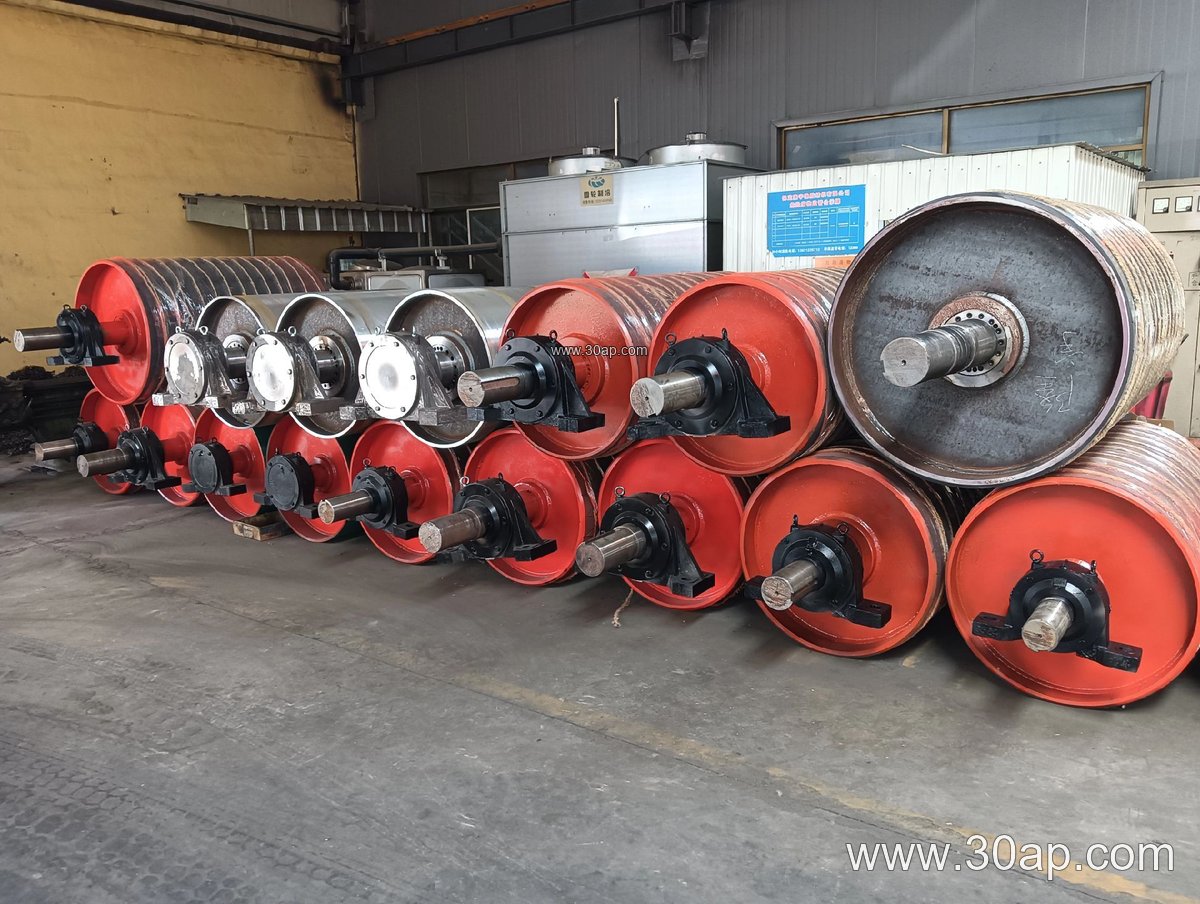
Construction and Surface Options
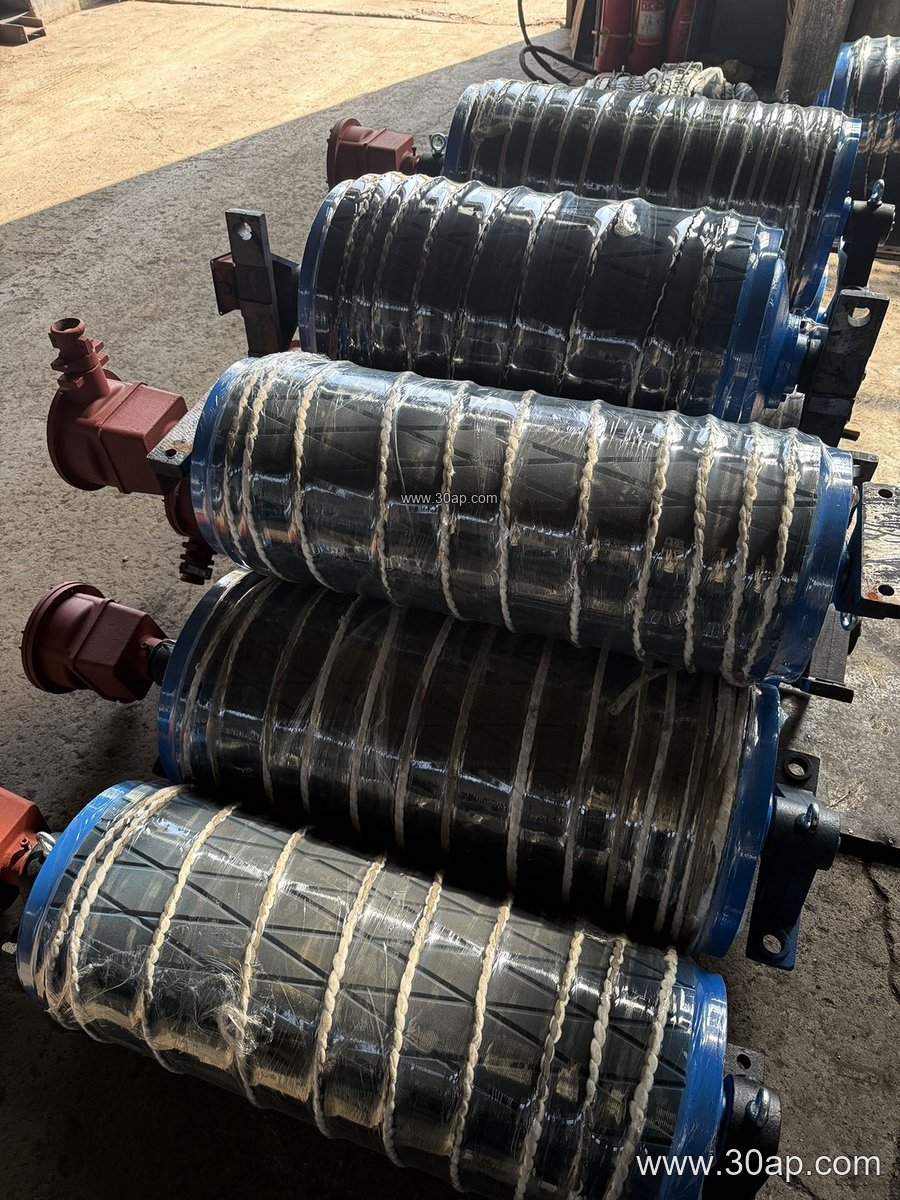
A typical conveyor tail pulley is built around a steel drum with dished or flat end plates, welded to a shaft that runs in bearing housings mounted on the conveyor bracket. The shell may be plain or lagged. Plain shells suit clean, dry duties, while rubber lagging improves grip and sheds fines. Common lagging forms include diamond grooving and plain rubber, usually applied at 8, 10, 12, 15 or 20 mm thickness depending on the duty.
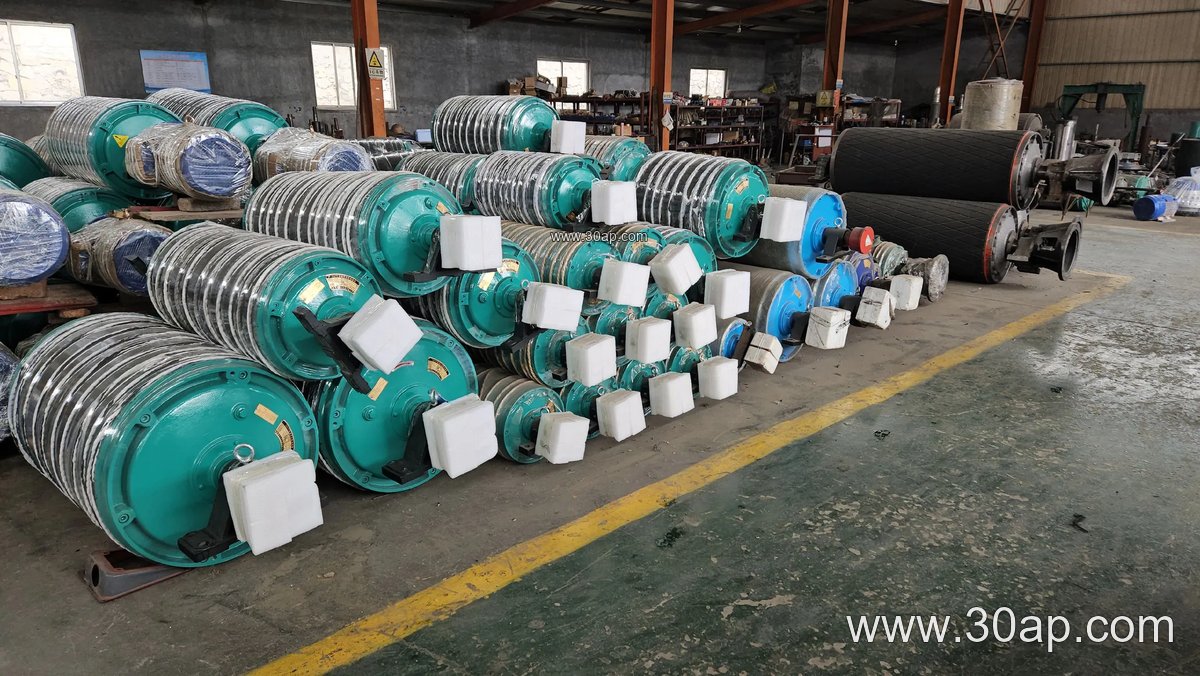
For abrasive stone crushing lines, a cold-bonded or hot-vulcanized rubber cover reduces shell wear. Ceramic lagging is occasionally specified where slip and abrasion are both severe, but it is more often seen on drive pulleys. The tail position rarely needs a herringbone pattern, since that form is mainly chosen to help self-cleaning and tracking on the driving drum.
Sizing by Belt Width and Duty
There is no single rule that ties one belt width to one pulley diameter. Diameter is chosen from belt tension, shaft load, available space, and the minimum bend radius the belt construction can accept. A heavy steel cord belt generally needs a larger diameter than a thin fabric core belt at the same width. The table below gives reference combinations that appear in general design work; treat them as examples, not fixed pairings.
- B500 belt with Ø250 or Ø315 tail pulley, shell width about 600 mm
- B800 belt with Ø400 or Ø500 tail pulley, shell width about 950 mm
- B1000 belt with Ø500 or Ø630 tail pulley, shell width about 1150 mm
- B1200 belt with Ø800 or Ø1000 tail pulley, shell width about 1400 mm
- B1400 belt with Ø800 or Ø1000 tail pulley, shell width about 1600 mm
- B1600 belt with Ø1000 or Ø1250 tail pulley, shell width about 1800 mm
Shaft diameter is set by torque and bearing load, not by belt width alone. Common shaft sizes range from Ø50 up to Ø200, and the final figure should come from the conveyor designer. Shell face width is normally a little wider than the belt so the belt edge is fully supported.
Where It Fits in the Plant
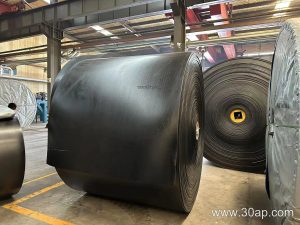
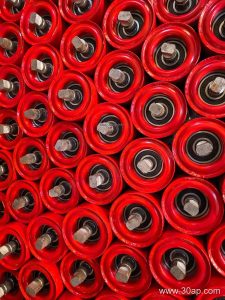
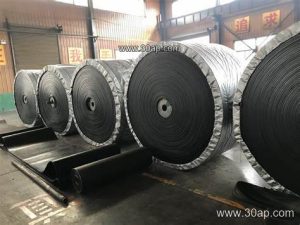
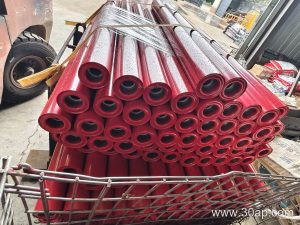
Tail pulleys appear across bulk handling: a cement plant clinker line, a power station coal yard, an iron ore transfer house, a sand and aggregate plant, and a port shiploading system. The belt type changes with the site. A flame retardant conveyor belt is common underground, an abrasion resistant conveyor belt suits crushed rock, and a heat resistant conveyor belt may be needed near sinter or clinker. The tail pulley itself is usually a standard steel drum, but its lagging and bearing protection should match the environment.
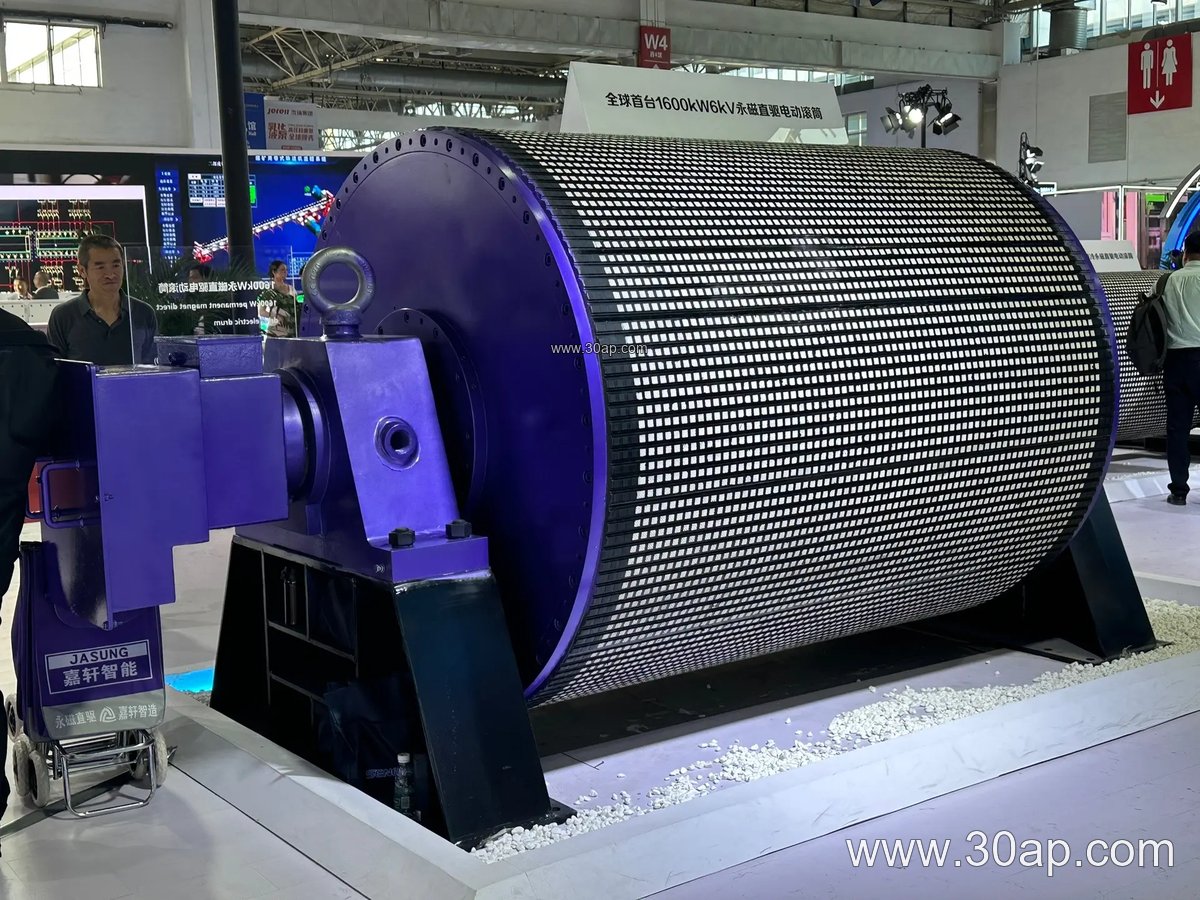
Belt tracking starts here. If the tail pulley is not square to the frame, no amount of idler roller adjustment will fully correct the belt path. For this reason, alignment at installation deserves as much attention as the pulley specification.
Buyer Checklist
- Confirm the actual function: fixed tail, take-up tail, or bend position, since these are not interchangeable.
- Provide belt width, belt type, and maximum tension so the supplier can propose a suitable diameter.
- State the lagging preference and thickness, and whether the surface must be oil or heat tolerant.
- Check shaft size against the bearing housing and conveyor bracket dimensions.
- Ask for the balance grade and runout tolerance if the belt speed is high.
- Plan bearing type and lubrication access before delivery, especially in dusty coal or ore service.
Spare parts planning matters too. Keeping one correct tail pulley and a set of bearings on site shortens downtime in a quarry or power plant far more than stocking several near-fit drums that cannot be installed safely.