What the Take-Up Pulley Does on a Conveyor
In a belt conveyor system, the take-up pulley is the component that maintains the correct tension in the conveyor belt. Often referred to as a tension pulley, it moves along a guided track to compensate for belt stretch and load variations. Without proper tension, a belt may slip on the drive pulley or wander off the tail pulley. The take-up pulley is distinct from the drive pulley, tail pulley, and bend pulley, each of which has a specific role in the conveyor layout. In quarry and aggregate lines, as well as in cement plants and power plant coal handling, the take-up pulley helps keep the belt tracking smoothly under fluctuating loads.
Construction and Key Features
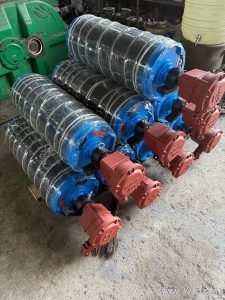
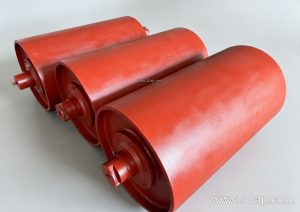
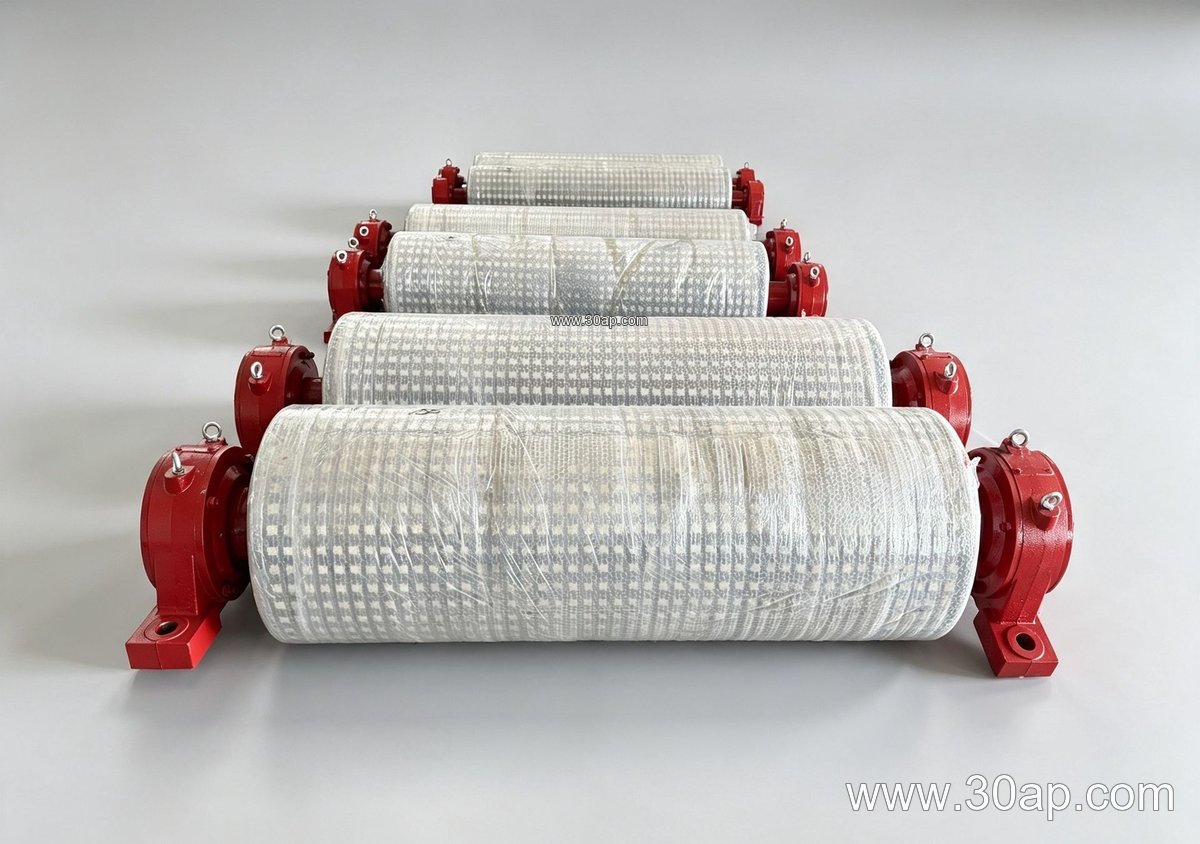
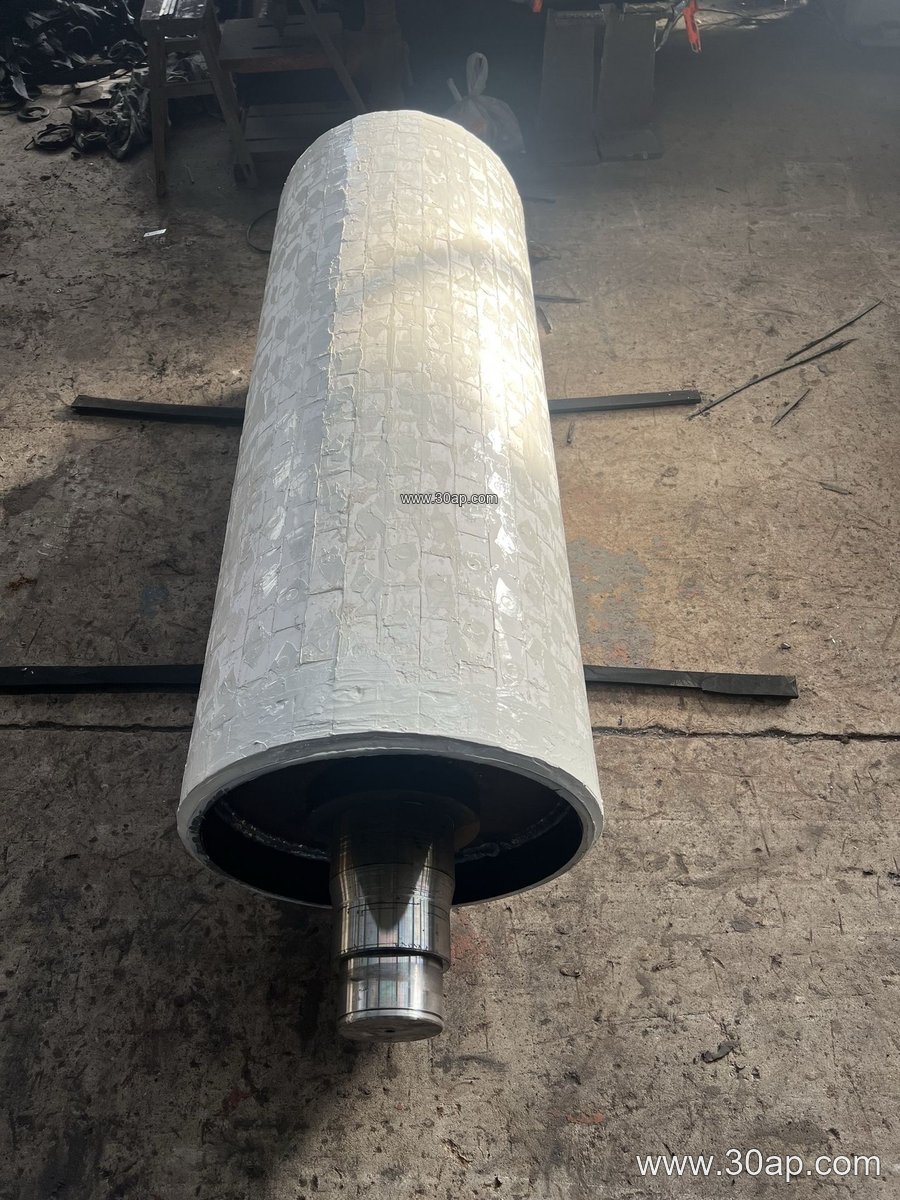
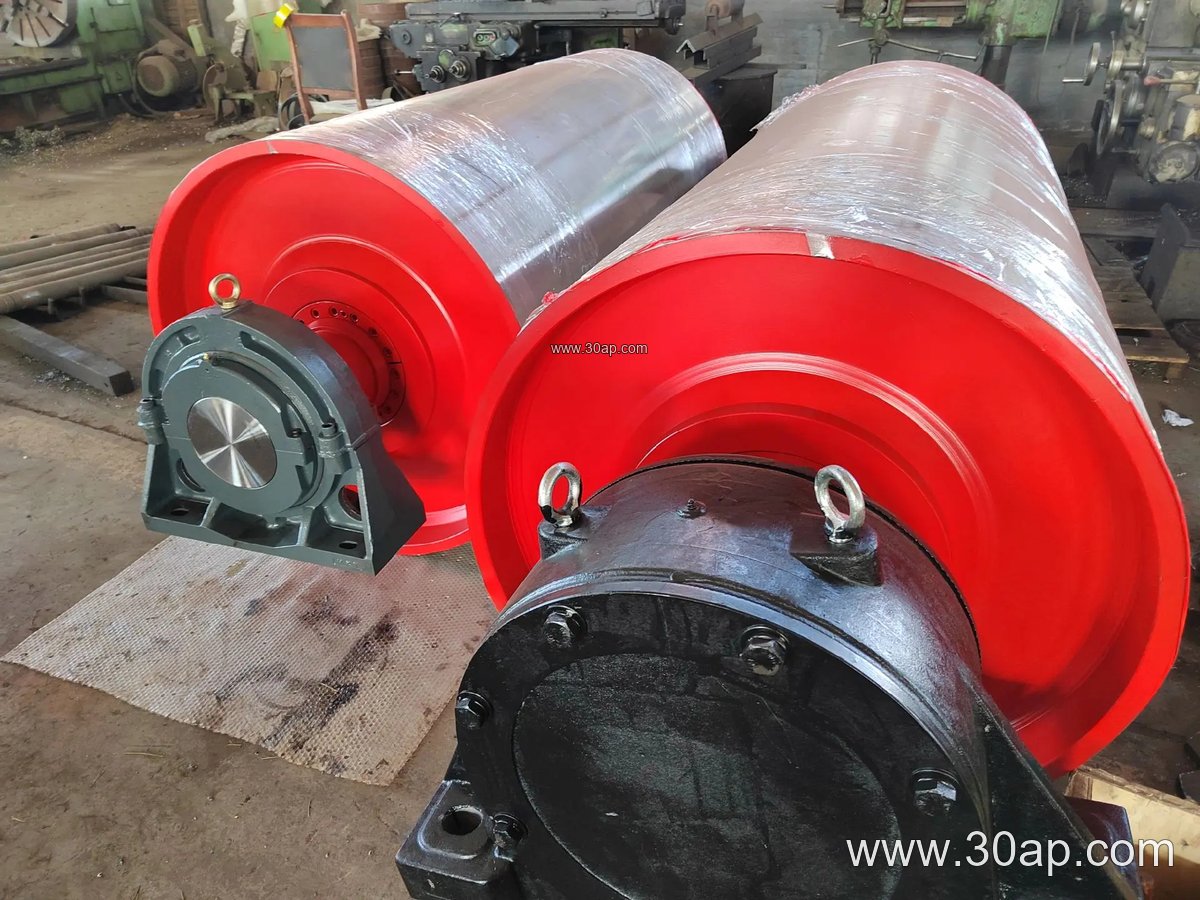
A typical belt conveyor take-up pulley consists of a cylindrical shell, shaft, bearing housings, and often a rubber lagging. The shell is usually made from seamless steel tube or rolled plate, machined for balance. The shaft is sized according to torque and radial load, not simply by belt width. Common shaft diameters include Ø80, Ø100, Ø120, and Ø140, but final selection depends on the conveyor design. Bearings are mounted in pillow blocks that slide along the take-up frame. Lagging options include plain rubber, diamond grooved, and ceramic lagging, with thicknesses often 8 mm, 10 mm, or 12 mm. The pulley surface may be plain, or it may have a rubber cover to improve grip and reduce belt wear.
Where It Is Used
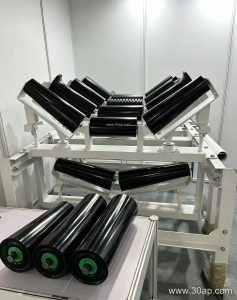
Take-up pulleys are found in a wide range of bulk handling operations. In a limestone quarry, a Belt Conveyor Take-Up Pulley might be part of a field conveyor that transports crushed rock to the stockpile. In a coal washing plant, the take-up pulley works alongside a flame retardant conveyor belt and impact idler rollers to handle abrasive coal. In a cement plant, the take-up pulley on a clinker conveyor may be exposed to heat, so a heat resistant conveyor belt and suitable lagging are chosen. The pulley is also common in port bulk terminals, steel plant sinter lines, and sand and gravel operations. Its location can be at the tail end, in a vertical gravity take-up tower, or as part of a screw take-up arrangement.
Matching the Pulley to the Belt and Duty
Selecting a take-up pulley involves more than picking a diameter. The pulley diameter should be compatible with the belt thickness and flexibility. For example, a B800 conveyor with an EP conveyor belt may use a Ø500 or Ø630 take-up pulley, while a B1200 conveyor with a steel cord conveyor belt might require a Ø800 or Ø1000 pulley. These are common combinations, not fixed rules. The table below shows some typical reference dimensions for take-up pulleys; actual sizes are determined by the conveyor designer.
| Belt Width (mm) | Pulley Face Width (approx. mm) | Common Pulley Diameter (mm) | Typical Shaft Diameter (mm) |
|---|---|---|---|
| B500 | 600 | Ø250, Ø315 | Ø60, Ø70 |
| B650 | 750 | Ø315, Ø400 | Ø70, Ø80 |
| B800 | 950 | Ø400, Ø500 | Ø80, Ø90 |
| B1000 | 1150 | Ø500, Ø630 | Ø90, Ø100 |
| B1200 | 1400 | Ø630, Ø800 | Ø100, Ø120 |
| B1400 | 1600 | Ø800, Ø1000 | Ø120, Ø140 |
| B1600 | 1800 | Ø1000, Ø1250 | Ø140, Ø160 |
These values are for reference only; the exact pulley and shaft size must be calculated from the belt tension, starting torque, and load profile. A belt conveyor take-up pulley with a larger diameter can reduce belt bending stress, which is beneficial when using a thick, heavy-duty mining conveyor belt.
Buying Considerations
When purchasing a take-up pulley, confirm the required take-up travel distance, which affects the frame length and the pulley position. Check the lagging type and thickness for the environment: abrasive ore may call for ceramic lagging, while a food-grade application might require a different belt and pulley finish. Ensure the bearing housings fit the take-up slides and that the shaft diameter matches the coupling or take-up mechanism. For conveyors using a pipe conveyor belt or a corrugated sidewall conveyor belt, special attention is needed to keep the pulley aligned and free of material buildup.
Maintenance Tips
Regular inspection of the belt conveyor take-up pulley includes checking lagging wear, bearing temperature, and shaft alignment. Worn lagging can cause belt slip and tracking issues. Keep the take-up track clean so the pulley moves freely. Lubricate bearings according to the manufacturer’s schedule. In dusty environments such as a quarry or a coal yard, inspect more frequently and clean accumulated dust from the pulley face. A well-maintained take-up pulley extends the life of the conveyor belt and reduces downtime.