What a Large Conveyor Idler Does on a Bulk Handling Line
A large conveyor idler is the rotating support that carries the loaded side of a conveyor belt in mines, quarries, cement plants, and power station coal yards. In heavy-duty service, the idler must handle high belt tension, abrasive lumps, and continuous operation without seizing. The term usually points to idlers with larger roller diameters and longer shells that match wide belts, but size alone does not define performance. A properly built large conveyor idler combines a sturdy shell, sealed bearings, and a frame that keeps the belt profile stable.
When the belt is loaded with iron ore or limestone, the idler set also influences belt tracking and energy draw. A large conveyor idler used in a three-roll troughing set spreads the load across three rollers, while a single-roll or two-roll arrangement may suit narrower belts or special transition zones. The idler is not a drive or tail pulley; those are separate components with different duties.
Construction Details That Matter in the Field
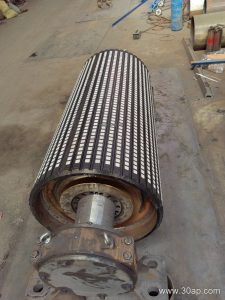
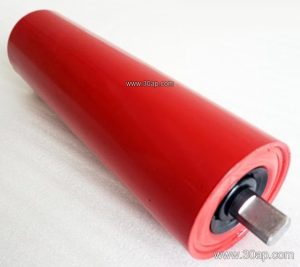
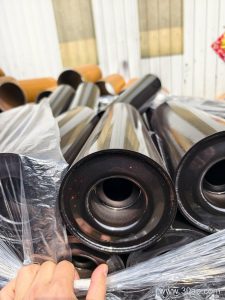
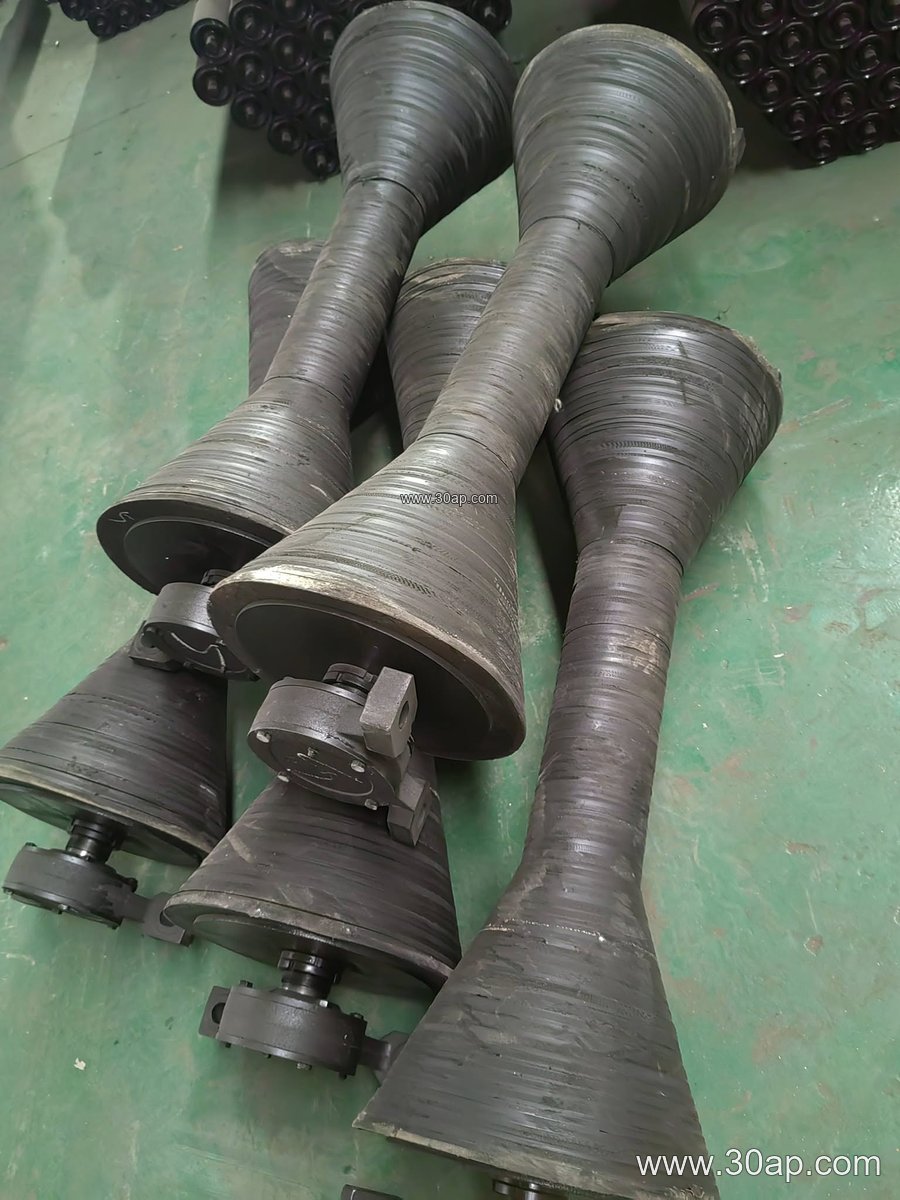
The shell is often made from steel tube, and the surface can be plain, nylon-coated, ceramic-covered, or fitted with rubber rings. Rubber disc idlers are common in impact zones under a crusher discharge, while plain steel rollers suit clean, high-speed lines. Bearing housings typically use deep-groove ball bearings such as 6205, 6305, or 6308, but the bearing size must match the shaft and load, not simply the roller diameter.
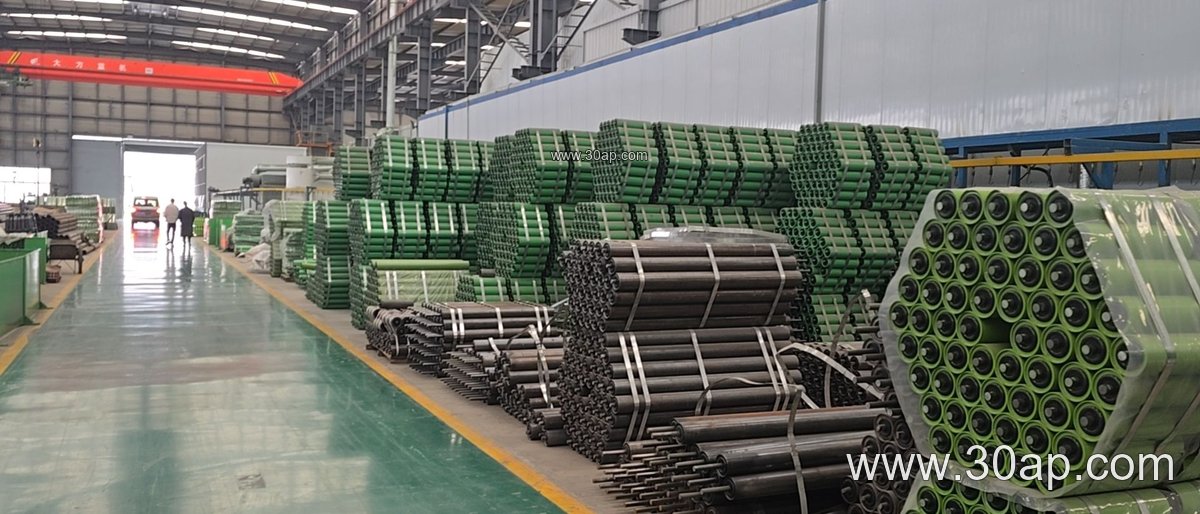
Sealing is a frequent failure point in dusty coal mining and quarry applications. Labyrinth seals and contact seals help keep fines out, and the choice affects maintenance intervals. The shaft, end caps, and bracket connection should be checked for corrosion resistance if the conveyor runs in a wash-down or coastal environment. For a large conveyor idler, the roller length is selected by belt width and trough angle; a common three-roll set may use a 380 mm roller on a B1000 belt and a 530 mm roller on a B1400 belt, but side rollers and center rollers can differ.
Where Large Conveyor Idlers Are Used
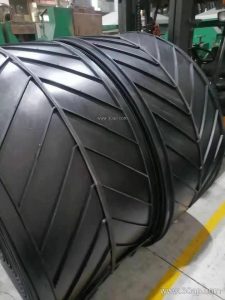
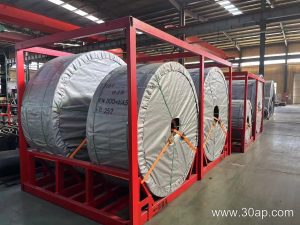
In a limestone quarry, a large conveyor idler supports the main haulage belt after primary crushing, where rock lumps and dust are constant. In a coal-fired power plant, the same idler type appears on the coal yard conveyor and the bunker feed line, often with flame retardant and anti-static belt grades. The idler also works under a rubber conveyor belt or an EP conveyor belt carrying aggregate, and it must tolerate the belt’s own weight plus the material load.
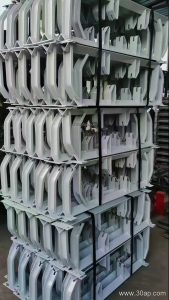
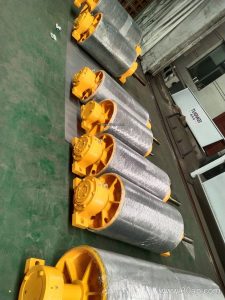
Other relevant equipment includes the conveyor pulley at the head and tail, the conveyor bracket that fixes the idler frame, and the conveyor belt itself. An idler roller in a cement plant may be exposed to fine alkaline dust, while a large conveyor idler in a copper mine faces wet, abrasive ore. In each case, the idler is selected for the belt width, trough angle, and load, not by a single universal rule.
Trough Angle, Roll Diameter, and Belt Width
Trough angles of 20, 30, 35, and 45 degrees change the material cross-section and the side load on the idler. A 35-degree trough is common in bulk handling, while a 45-degree set may be used where the belt must contain a deep material bed. Roller diameters for large conveyor idlers often include 127 mm, 133 mm, 159 mm, 178 mm, and 194 mm. Larger diameters generally reduce rotation speed and can improve bearing life, but the frame and belt clearance must allow it.
Belt width and idler length are related but not fixed. A B800 belt may use a 315 mm roller in a three-roll troughing set, while a B1800 belt may use a 670 mm roller. These are common reference examples, not mandatory pairings. The conveyor designer confirms the exact roller length, shaft diameter, and bearing arrangement for each station.
Buyer Checklist for Large Conveyor Idlers
- Confirm belt width, trough angle, and whether the station is carrying, impact, or return duty.
- Check the roller diameter and shell thickness against the load and belt speed.
- Review seal type and bearing size for dust, water, and temperature exposure.
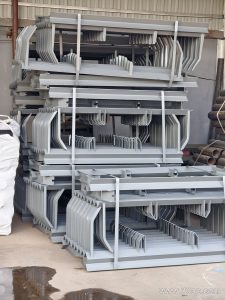
- Match the idler frame to the existing conveyor bracket and stringer spacing.
- Ask for the roller length and shaft details rather than assuming a belt width alone determines them.
A large conveyor idler is a long-term wear component, so the buyer should compare shell material, seal design, and bearing quality rather than price alone. On a heavy-duty mining conveyor belt line, a well-selected idler reduces downtime and protects the belt from edge damage and mistracking.