What a Belt Conveyor Take-Up Pulley Does
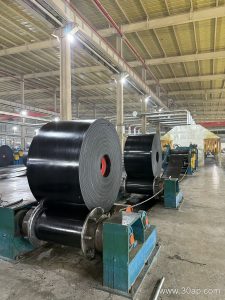
A belt conveyor take-up pulley is the drum that holds tension in the conveyor belt so the system can transmit power without slipping. It sits in the take-up section of the conveyor, usually at the tail end or in a dedicated tensioning station, and it moves along a guided frame to absorb slack as the belt stretches or contracts. In a quarry, a coal preparation plant or a power plant coal yard, this pulley is what keeps the belt tracking correctly from the load point to the discharge.
Although it looks similar to other drums, a belt conveyor take-up pulley is not a substitute for the drive pulley, the tail pulley or a bend pulley. Those parts have different jobs. The drive pulley transmits torque, the tail pulley redirects the belt at the loading end, and the bend pulley changes belt direction. The take-up pulley, also called a tension pulley or take-up drum, is defined by its travel and its role in maintaining belt tension.
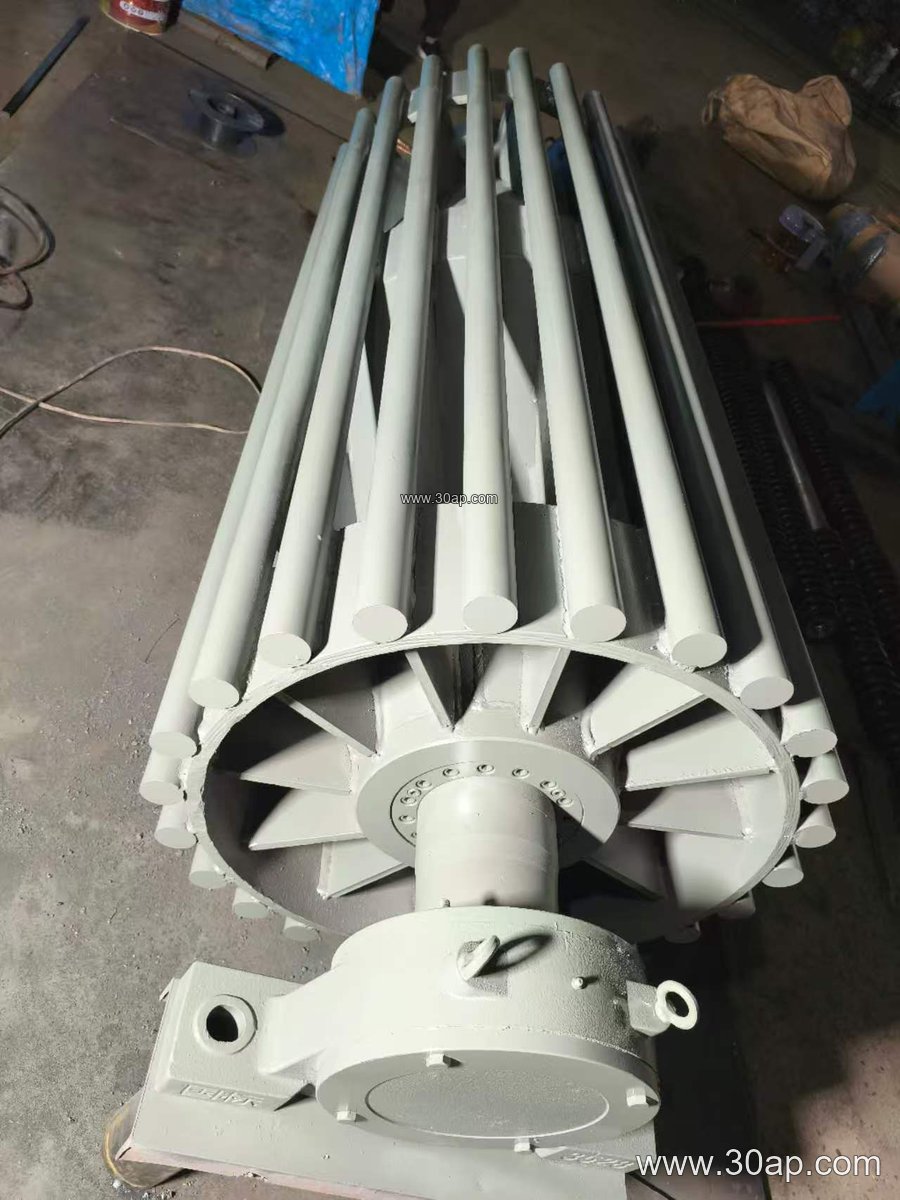
Construction and Surface Options
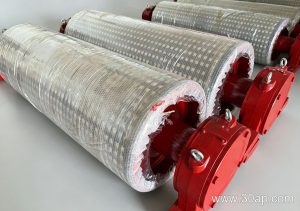
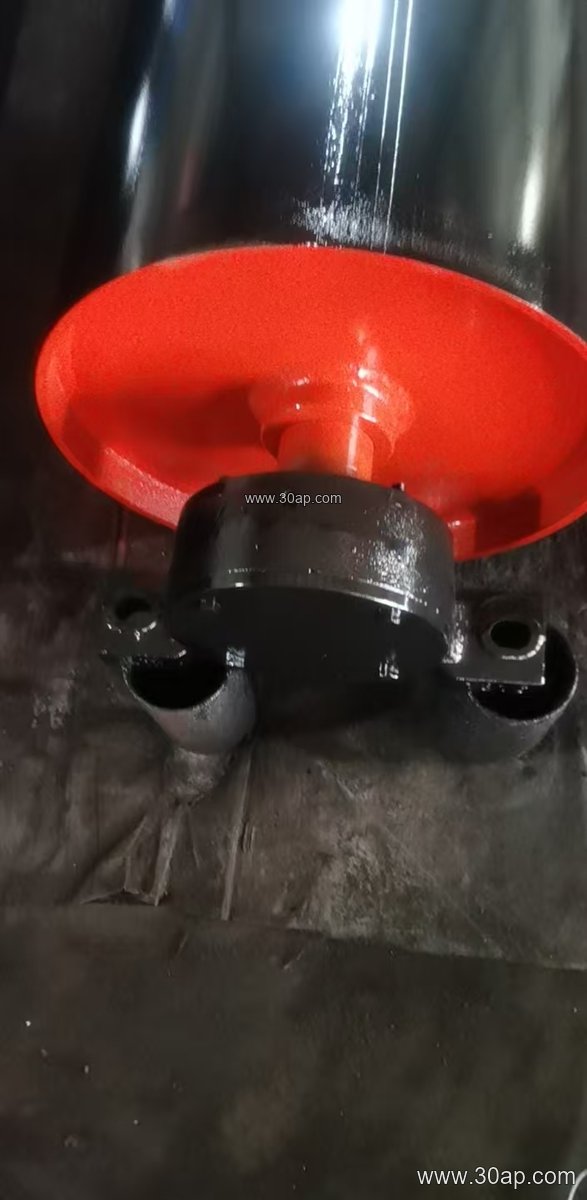
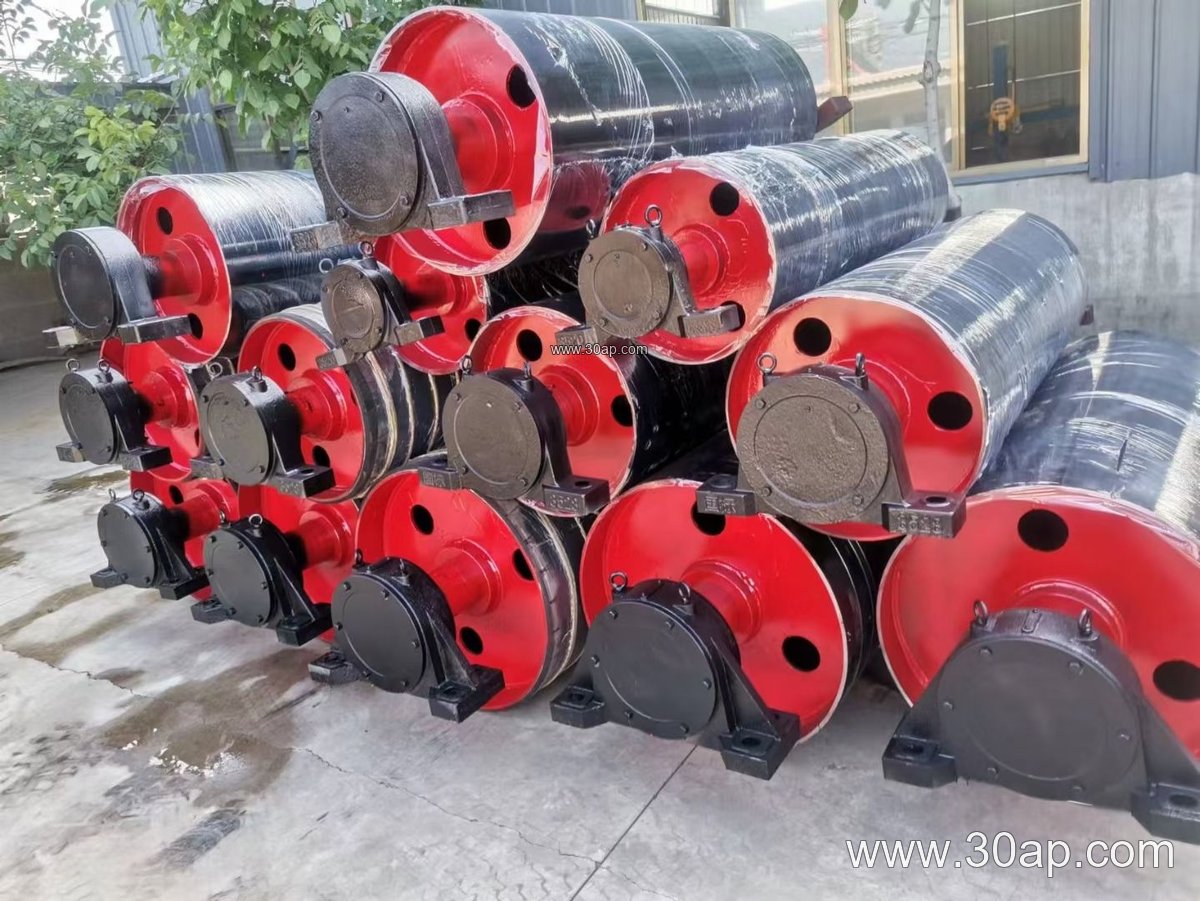
The take-up drum is normally built from a welded steel shell with a machined face, end discs and a shaft supported in bearing housings that slide on the take-up frame. Common face widths are sized a little wider than the belt, for example about 1400 mm for a 1200 mm belt or about 950 mm for an 800 mm belt. Typical diameter ranges include Ø500, Ø630, Ø800 and Ø1000, with larger drums used where belt tension and wrap angle demand it.
Surface treatment depends on the duty. A plain face may be enough in a clean, dry station, while lagging improves grip and protects the shell. Available forms include cold-bonded rubber, hot-vulcanized rubber, diamond lagging and ceramic lagging, with lagging thickness commonly 8, 10, 12, 15 or 20 mm. Shaft diameter is set by torque and bearing load rather than belt width alone, so sizes such as Ø80, Ø100, Ø120 or Ø160 should be confirmed by the conveyor designer.
| Item | Common reference values |
|---|---|
| Belt width | B650, B800, B1000, B1200, B1400, B1600 |
| Pulley diameter | Ø400, Ø500, Ø630, Ø800, Ø1000, Ø1250 |
| Face width | About 750 mm for B650; about 1150 mm for B1000; about 1600 mm for B1400 |
| Lagging | Plain, cold-bonded rubber, hot-vulcanized rubber, diamond, ceramic |
| Lagging thickness | 8, 10, 12, 15, 20 mm |
Where It Fits in the Conveyor Layout
Take-up stations appear in many bulk handling routes. In an iron ore or copper ore concentrator, the take-up pulley may be part of a gravity tower that uses a weighted carriage. In a cement plant clinker line or a limestone quarry, a screw or hydraulic take-up is more common where space is limited. Port bulk terminals and ship loading conveyors often use long travel frames to handle large elastic stretch in high-strength belts.
The belt itself matters too. A heavy-duty mining conveyor belt or a steel cord conveyor belt stretches differently from a multi-ply fabric core belt, and an EP conveyor belt or NN conveyor belt has its own elongation behaviour. The take-up travel must be long enough for the belt type, the ambient temperature and the load profile. In a coal mining conveyor belt installation, a flame retardant conveyor belt is often specified, and the take-up drum should be matched to the same duty class.
Selection and Maintenance Notes
Buyers should confirm the belt width, the required tension, the travel distance and the available space before choosing a drum. Check whether the frame is gravity, screw or hydraulic, and confirm the bearing type, the shaft size and the lagging form. A wear-resistant lagging helps in abrasive service such as a crusher conveyor belt line or an aggregate conveyor belt route, while a plain face may suit a clean food or grain application.
- Inspect lagging wear and re-lag before the shell is exposed.
- Keep the take-up frame guides clean so the pulley slides freely.
- Check bearing temperature and lubrication at each shutdown.
- Verify belt tension after any splice or belt replacement.
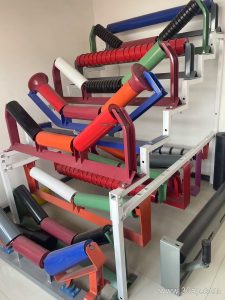
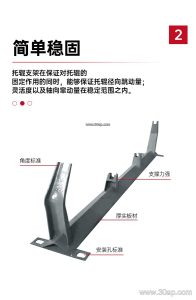
- Confirm alignment with the conveyor bracket and the idler roller frames.
For a reliable belt conveyor take-up pulley, match the drum to the belt, the structure and the maintenance plan. Whether the plant handles ore, clinker, coal or sand, the tension drum is a small but decisive part of keeping the belt running true.