What a Heavy-Duty Steel Conveyor Bracket Does on a Conveyor Line
A heavy-duty steel conveyor bracket is the structural support that holds the idler roller in position along the carrying or return side of a belt conveyor. It carries the weight of the conveyor belt, the material load, and the idler itself, and it keeps the roller at the correct height and angle so the belt tracks properly. In a quarry, a crushing and screening line, or a cement plant, the bracket is often the part that takes the most punishment because it sits directly under falling rock and abrasive aggregate.
While a conveyor pulley drives or redirects the belt at the head, tail, and bend positions, the bracket works along the line, supporting the idler roller that carries the belt. The two functions should not be confused: a drive pulley, a tail pulley, and a bend pulley are not interchangeable with a bracket, and neither are different idler types. Selecting the right bracket means matching it to the belt width, the trough angle, and the roller diameter it will hold.
How the Bracket Is Built
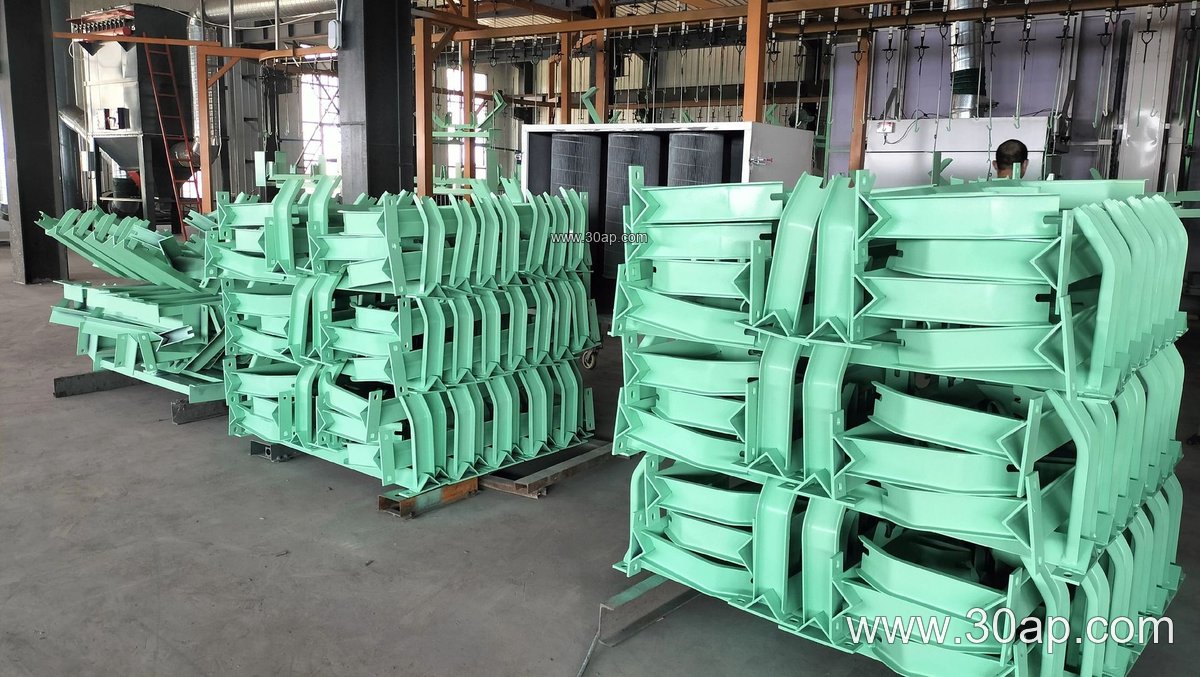
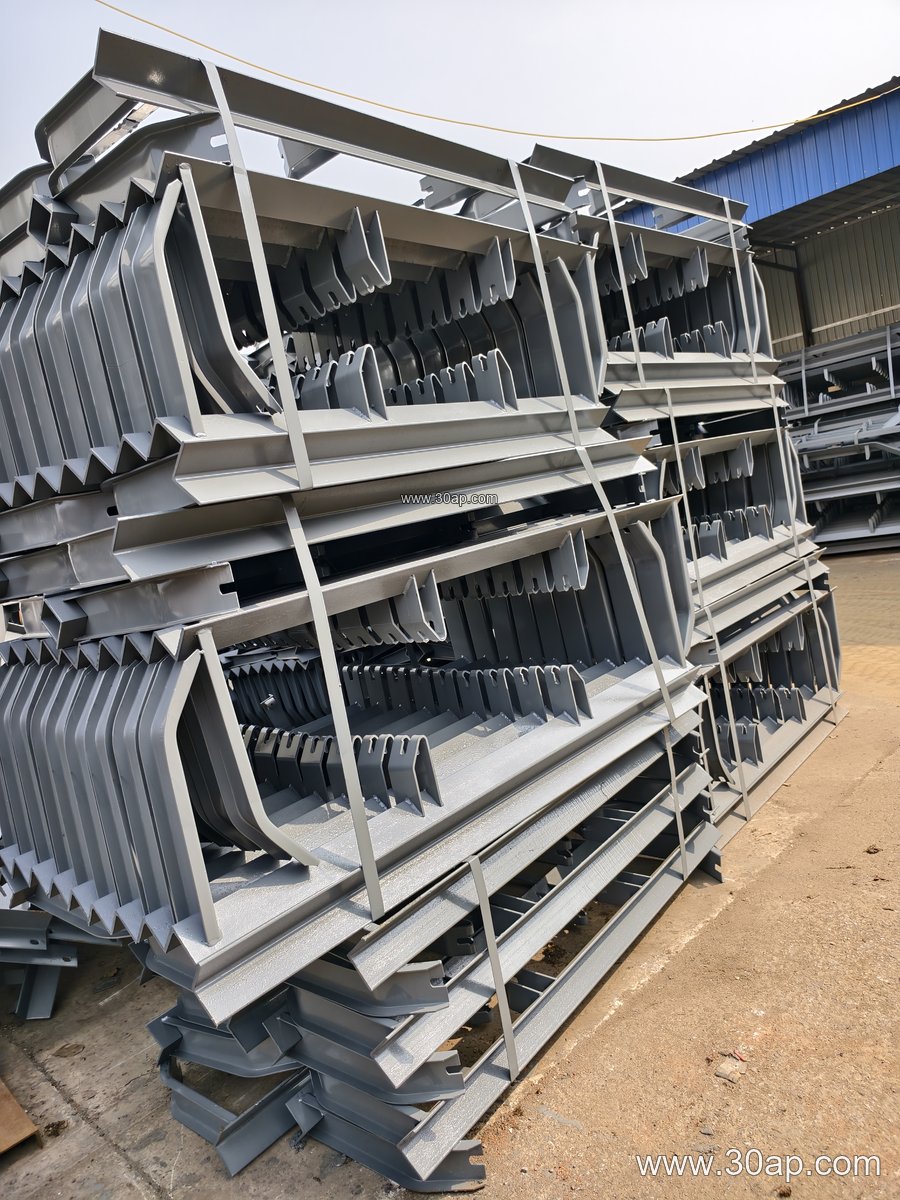
Most heavy-duty brackets are fabricated from angle steel, channel steel, or formed steel plate. The frame is welded or bolted, and the mounting slots or holes are positioned to accept the shaft ends of the idler roller. Because the bracket must resist vibration and impact, the welds and the base plate thickness matter as much as the steel grade. A well-made unit keeps the rollers aligned, which reduces belt edge wear and helps prevent mistracking.
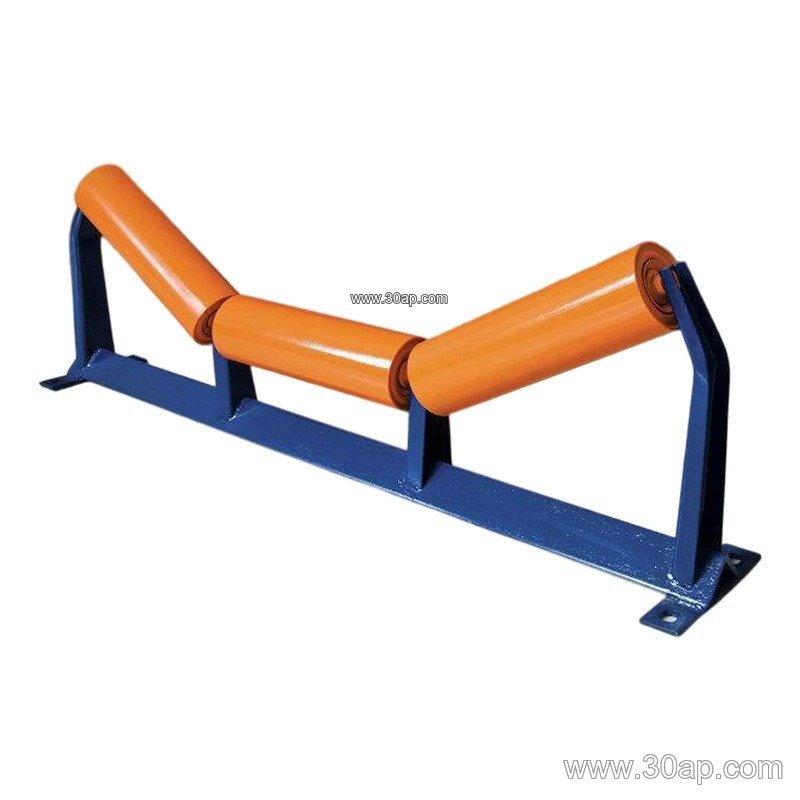
Common forms and their roles
- Troughing bracket, also called an upper trough bracket, sets the three-roller trough that shapes the belt.
- Transition bracket supports the belt where it changes from flat to troughed.
- Return bracket or flat return bracket holds the lower idler roller.
- V-return bracket gives the return belt a V shape for better self-cleaning.
- Impact bracket, used under loading points, carries impact idlers.
- Self-aligning bracket and forward-tilt bracket help correct belt drift.
- Suspended bracket hangs from the conveyor frame instead of sitting on it.
- Adjustable bracket allows the trough angle to be changed on site.
Adjustable and fixed versions differ mainly in flexibility. A fixed bracket is set at one angle at manufacture, while an adjustable one can be moved between common trough angles such as 20, 30, 35, or 45 degrees. Forward tilt is usually about 1.5 to 2 degrees and is used to encourage belt centering.
Matching Belt Width, Trough Angle, and Roller Diameter
Brackets are usually specified by belt width and roller diameter. Common belt widths include B500, B650, B800, B1000, B1200, B1400, B1600, B1800, B2000, and B2200. Roller diameters commonly run from Ø89 to Ø194, with Ø108 and Ø133 being frequent choices on mid-size lines. A combination such as B800, 35 degrees, Ø108 is a typical reference, but it is not a universal rule. A given belt width can work with more than one trough angle or roller diameter depending on load, speed, and material.
Installation hole spacing and crossbeam length change with belt width and trough angle, so these dimensions should be confirmed from the conveyor design rather than assumed. The table below shows typical reference combinations, not fixed supply specifications.
| Belt width | Trough angle | Roller diameter | Typical use |
|---|---|---|---|
| B500 | 20–30 degrees | Ø89 | Light aggregate, small transfer points |
| B650 | 30 degrees | Ø89–Ø108 | Sand and gravel lines |
| B800 | 35 degrees | Ø108 | General bulk handling |
| B1000 | 35–45 degrees | Ø108–Ø133 | Cement, coal, ore |
| B1200 | 35–45 degrees | Ø133 | Heavy mining duty |
| B1400–B1600 | 35–45 degrees | Ø133–Ø159 | High-capacity main lines |
| B1800–B2200 | 35–45 degrees | Ø159–Ø194 | Port and large plant conveyors |
Where These Brackets Are Used
Heavy-duty brackets appear wherever abrasive or heavy bulk material moves continuously. In an iron ore or limestone mine, they support the idler roller under a high-abrasion belt. In a coal washing plant or power plant coal yard, they must cope with dust and constant load. In a cement plant, the kiln feed and clinker lines rely on robust brackets to keep the belt centered. Port ship loading conveyors and steel plant sinter lines use wide, strong frames for the same reason.
The bracket should be chosen together with the belt and roller. A heavy-duty mining conveyor belt or an abrasion resistant conveyor belt adds weight, and the bracket and roller must be rated for it. On long overland lines, an EP conveyor belt or a steel cord conveyor belt may be used, and the bracket spacing must follow the belt sag and load requirements. In dusty or wet conditions, a flame retardant conveyor belt or an underground mining conveyor belt may be specified, but the bracket still needs adequate corrosion protection and clean mounting surfaces.
What Buyers Should Check Before Ordering
Start with belt width, trough angle, and roller diameter, then confirm the mounting dimensions against the existing frame. Ask whether the bracket is fixed or adjustable, and whether it is for the carrying side, return side, or a transition zone. Check the steel section and finish, since a quarry or coal yard will punish thin fabrication. For impact zones, specify an impact bracket and pair it with suitable impact idlers. Finally, keep spare brackets and rollers on hand, because a failed support can damage the belt and stop the whole line.
For more on related components, see the conveyor bracket, idler roller, and conveyor pulley ranges offered by the supplier. A bracket that fits properly and is built from adequate steel will outlast one that is merely close in size.