What Is a Heavy-Duty Ceramic Lagged Pulley
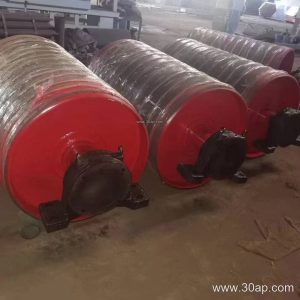
A heavy-duty ceramic lagged pulley is a conveyor pulley whose shell is covered with ceramic tiles set in a tough rubber or epoxy matrix. This ceramic lagging creates a high-friction surface that grips the conveyor belt firmly, reducing slip even when the belt is wet, muddy, or carrying abrasive bulk materials. Unlike standard rubber lagging, the ceramic chips provide a hard, wear-resistant contact point that stands up to constant scraping and impact. This pulley is typically used as a drive pulley, where torque transmission is critical, but it can also appear on tail or bend positions when extra grip is needed. It is not a substitute for a tail pulley or a bend pulley in terms of function; those subtypes serve different roles in the conveyor layout.
Construction and Key Components
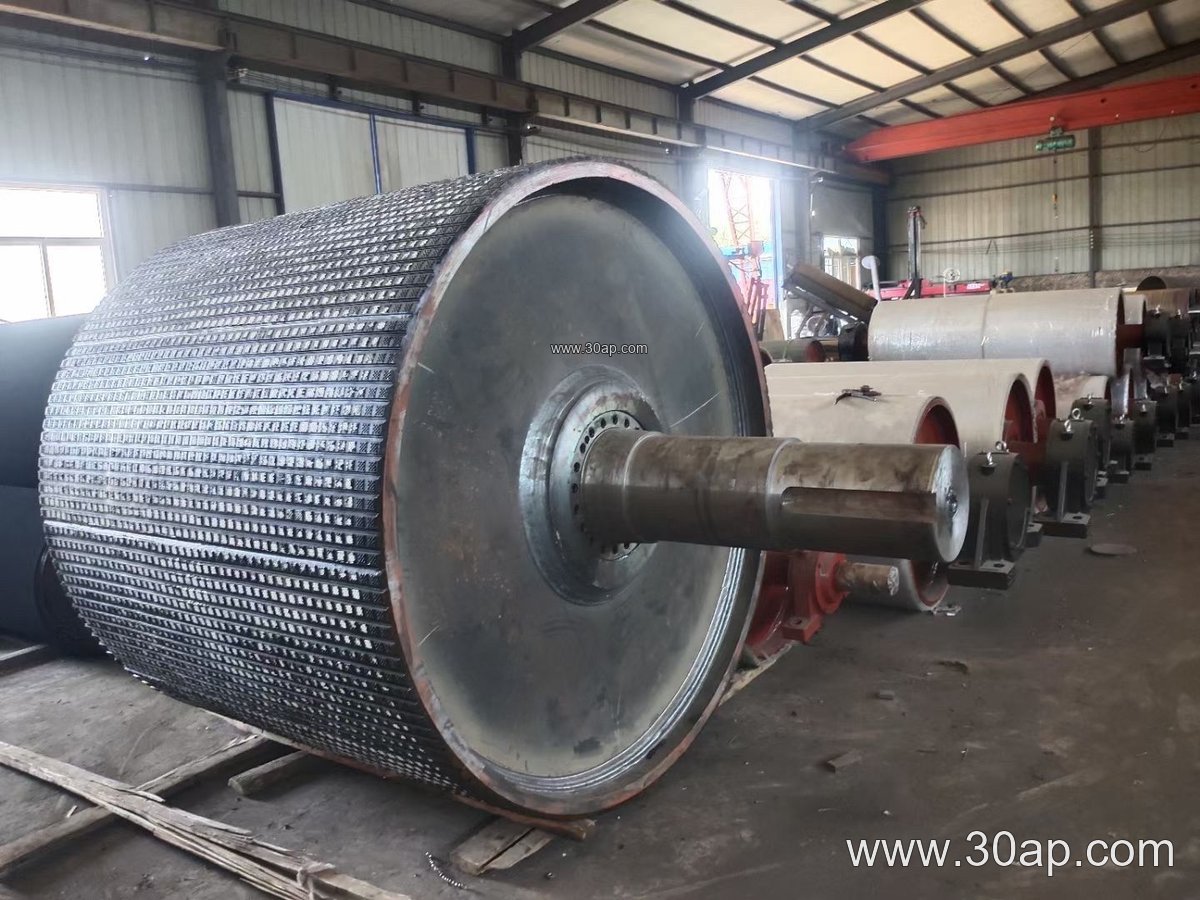
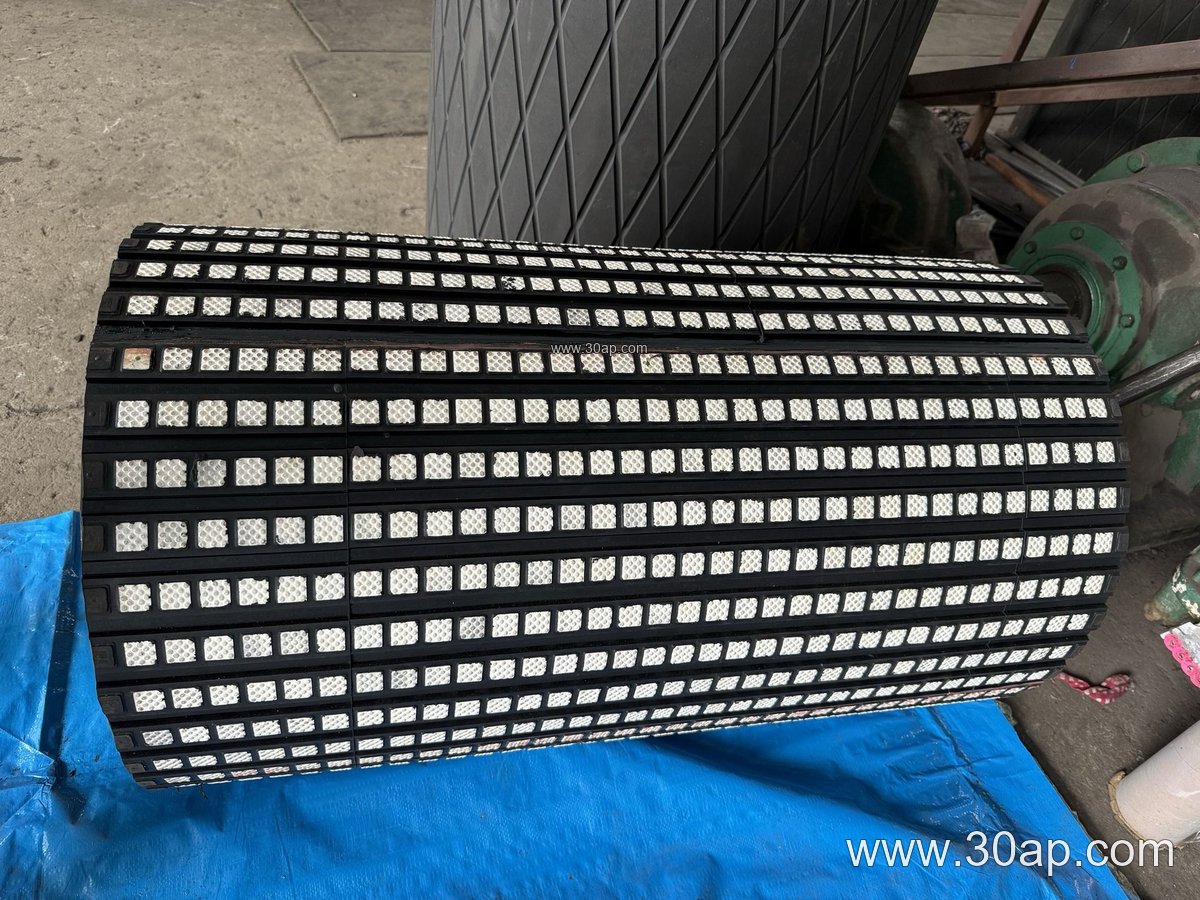
The base is a robust steel shell, often machined to precise tolerances. Ceramic tiles, usually small squares or rectangles with raised dimples or grooves, are bonded to the shell using a vulcanized rubber layer or a cold-bonded epoxy. The rubber or epoxy fills the gaps between tiles and provides a cushion that absorbs shock and prevents tile loss. Shafts are sized by torque and load, not by belt width; common shaft diameters range from Ø50 to Ø200 mm, but the final choice depends on the drive power and radial loads. The pulley face width is normally wider than the belt, for example a B800 belt might use a pulley face around 950 mm, while a B1200 belt could use about 1400 mm. These are typical references, not fixed rules. Lagging thickness commonly falls between 8 mm and 20 mm, with 15 mm often chosen for heavy-duty service. The ceramic surface may be flat or patterned, but the key feature is the exposed ceramic buttons that bite into the belt cover.
Where It Fits in the Conveyor System
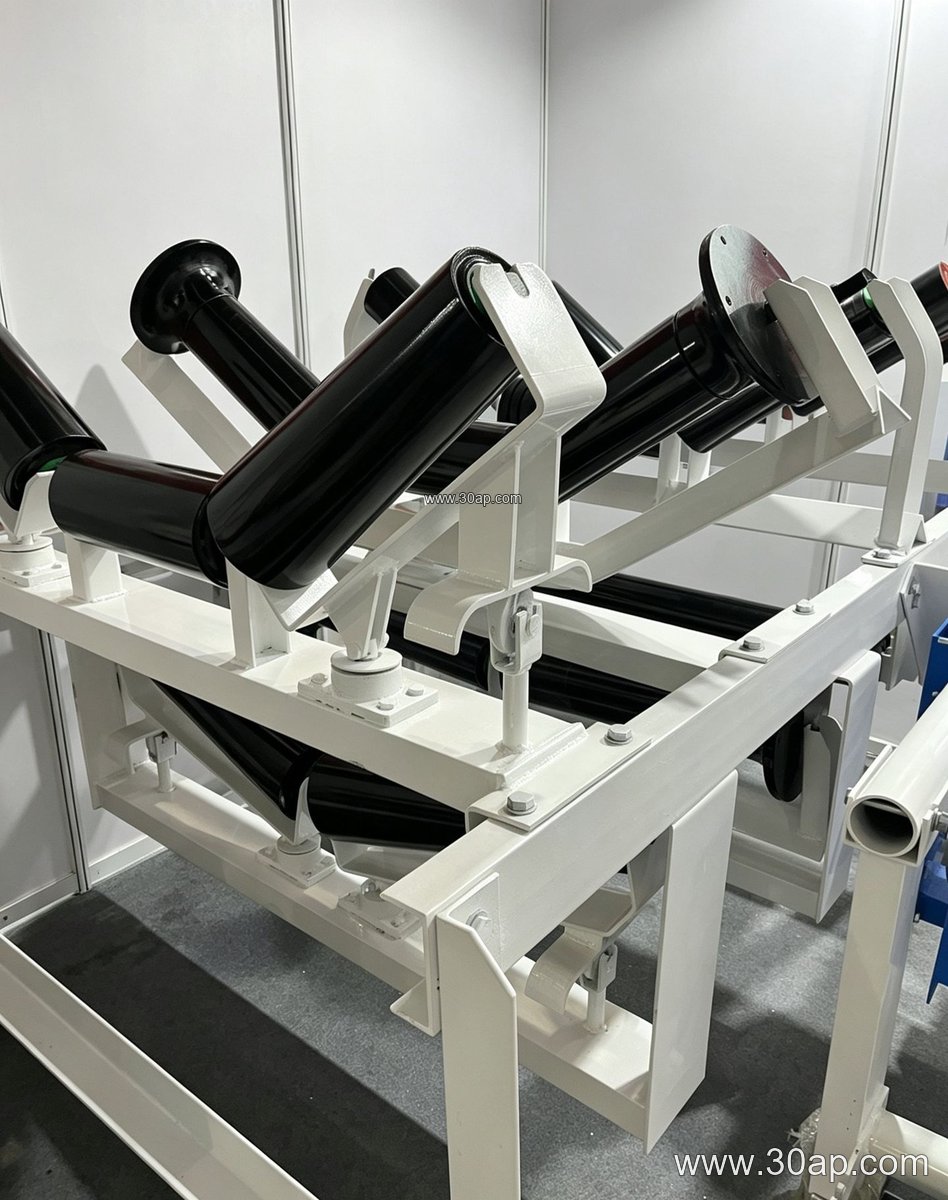
You will find heavy-duty ceramic lagged pulleys in primary drive positions on high-tension conveyors. In a limestone quarry, a drive pulley with ceramic lagging keeps a 1200 mm wide abrasion resistant conveyor belt from slipping when the belt is coated with wet dust. At a coal washing plant, the same pulley type helps maintain grip on a flame retardant conveyor belt that may carry moisture. In a cement plant, clinker conveyors often use ceramic lagging on the head pulley to handle the combination of heat and abrasive fines. The pulley works together with the conveyor belt, idler rollers, and conveyor brackets to keep the system running smoothly. For very dusty or oily conditions, a ceramic lagged pulley can outperform plain rubber, but it is not a replacement for a bend pulley or a take-up pulley; each position has its own design requirements.
Matching the Pulley to Belt and Duty
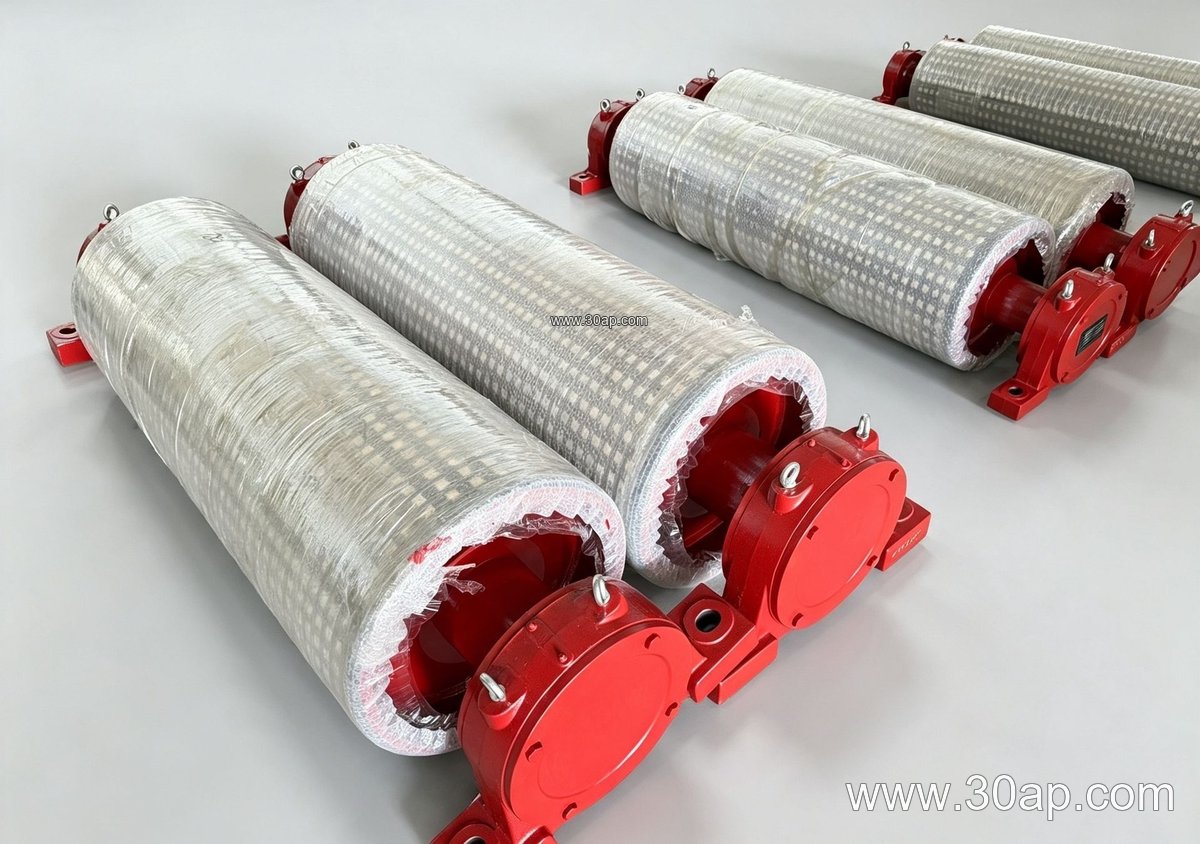
Selecting a heavy-duty ceramic lagged pulley starts with the belt width and the required traction. A common approach is to combine a belt width with a suitable diameter, for example B800 × Ø500 or B1200 × Ø1000, but many other combinations are possible. The table below shows reference data for face width and typical diameter ranges; these are not universal specifications.
| Belt Width | Typical Pulley Face Width | Common Diameter Range |
|---|---|---|
| B500 | 600 mm | Ø250–Ø400 |
| B650 | 750 mm | Ø315–Ø500 |
| B800 | 950 mm | Ø400–Ø630 |
| B1000 | 1150 mm | Ø500–Ø800 |
| B1200 | 1400 mm | Ø630–Ø1000 |
| B1400 | 1600 mm | Ø800–Ø1250 |
Remember that shaft diameter is determined by torque and load, not by belt width alone. A B1000 belt might use a Ø100 mm shaft or a Ø120 mm shaft depending on the drive arrangement. Always confirm the pulley load rating with the manufacturer.
Buyer Checklist for Ceramic Lagged Pulleys
- Confirm the pulley position: drive, tail, bend, or take-up. A heavy-duty ceramic lagged pulley is most often a drive pulley, but it can be specified for other positions if slip is a concern.
- Check the belt type: an EP conveyor belt or a steel cord conveyor belt may require different lagging hardness and tile pattern. For high abrasion, a ceramic lagging with 15 mm thickness is common.
- Verify the shaft size and bearing selection based on actual torque, not just belt width.
- Ask about the bonding method: vulcanized rubber bonding typically offers better tile retention than cold-bonded epoxy in high-impact areas.
- Consider the environment: in a sand and gravel plant, ceramic lagging resists grit; in a fertilizer plant, check chemical compatibility of the bonding layer.
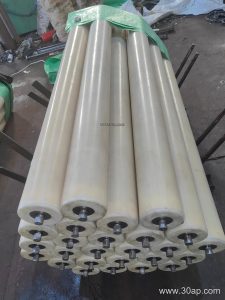
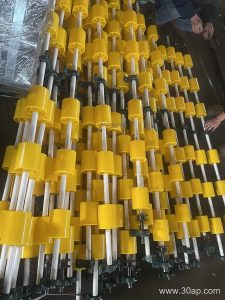
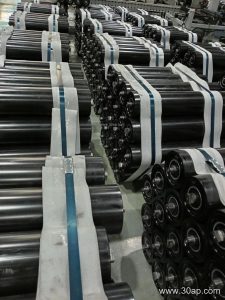
For more information on conveyor components such as conveyor pulleys and idler rollers, or to discuss belt selection including abrasion resistant conveyor belt and heat resistant conveyor belt options, please contact our engineering team. We also supply conveyor brackets and complete pulley assemblies to match your conveyor belt width and duty.