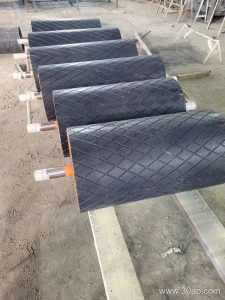
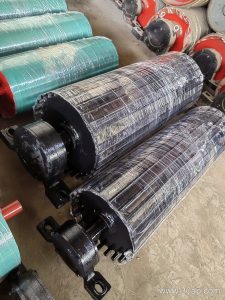
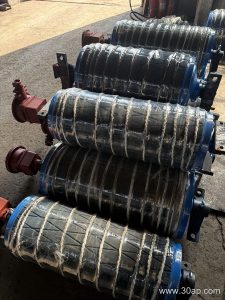
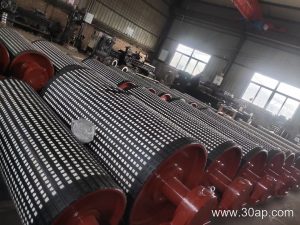
What a Cement Conveyor Idler Does
A cement conveyor idler is the rotating roller that supports the conveyor belt along its carrying and return runs. In a cement plant, these idlers handle clinker, limestone, gypsum, and additives that are abrasive and often hot. The idler roller keeps the belt aligned, reduces friction, and protects the belt from sagging between pulleys. Unlike a conveyor pulley, which drives or redirects the belt at the ends, idlers are distributed along the entire length of the conveyor. This article focuses on the cement conveyor idler itself, not on drive, tail, or bend pulleys.
You will find these idlers in quarry conveyor belts feeding the crusher, in raw mill feed lines, and in clinker transport. They also appear in power plant coal handling and aggregate conveyor belts at concrete batching stations.
Construction and Common Types
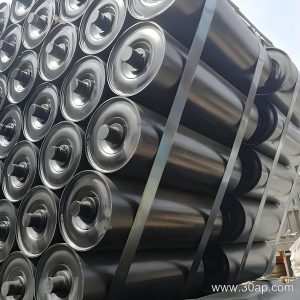
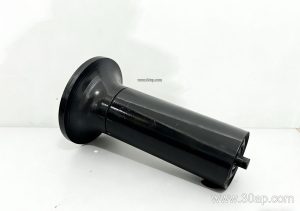
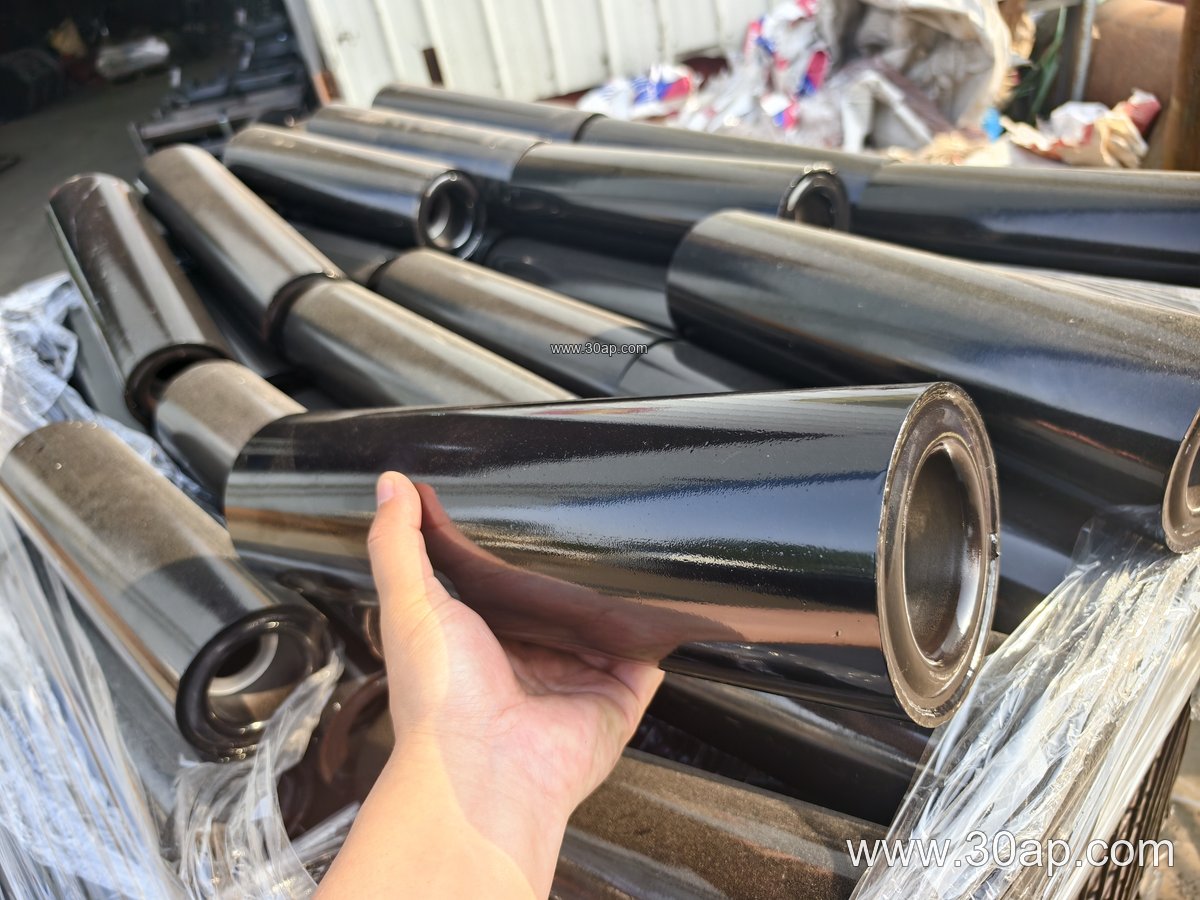
Most cement conveyor idlers use a steel tube shell with pressed bearing housings at each end. The shaft is usually cold-drawn steel, and the bearings are sealed for life. Common bearing numbers include 6204, 6205, 6305, 6306, 6308, and 6310; the bearing size is matched to the load and speed, not to a single roller diameter. Roller surfaces can be plain steel, nylon, ceramic, or rubber rings. Rubber rings are common on impact idlers under crusher discharge.
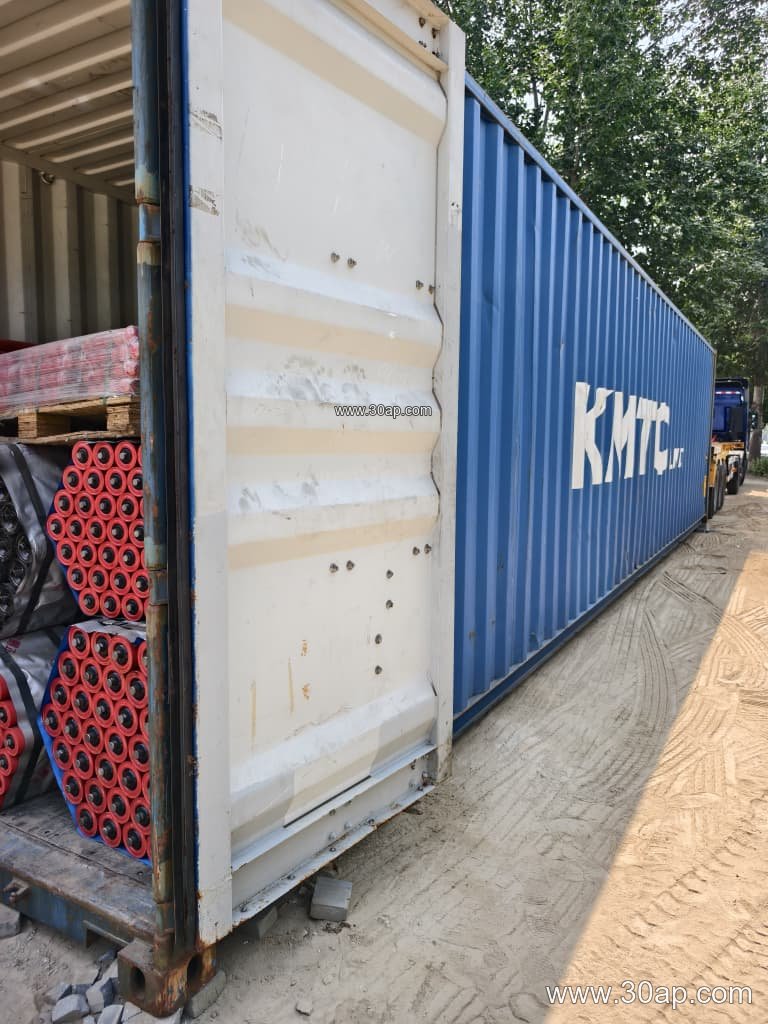
Typical idler types in cement service include:
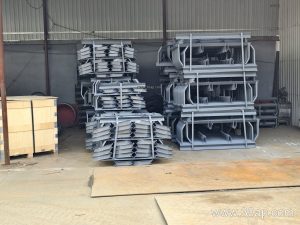
- Troughing idlers (3-roll, 2-roll, or single-roll) for the carrying side
- Return idlers, including flat and V-type, for the empty belt
- Impact idlers with rubber rings under loading points
- Self-aligning idlers to correct belt wander
- Transition idlers near pulleys to ease belt curvature
Common roller diameters are Ø63, Ø76, Ø89, Ø102, Ø108, Ø127, Ø133, Ø159, Ø178, Ø194, and Ø219 mm. Belt widths range from B400 to B2400. Trough angles are often 20, 30, 35, or 45 degrees. For a 3-roll troughing set, idler length varies with belt width and trough angle; for example, B800 often uses about 315 mm rolls, while B1200 may use about 465 mm. These are common examples, not fixed rules.
Where Cement Conveyor Idlers Are Used
In a limestone quarry, troughing idlers carry heavy rock from the face to the primary crusher. After crushing, cement plant conveyor belts move raw meal and clinker. In a coal yard or power plant, idlers support coal mining conveyor belts that may be flame retardant. In a sand and gravel line, aggregate conveyor belts rely on impact idlers at transfer points. The same idler roller design appears in port ship loading and in tunnel spoil removal.
Because cement dust is fine and abrasive, sealing quality matters. A good seal keeps grit out of the bearing and keeps grease in. Idlers with nylon or ceramic shells can reduce wear in wet or sticky material, while rubber-covered impact idlers absorb shock from large lumps.
Selection and Sizing Notes
Buyers should match idler diameter, shaft size, and bearing class to the belt width, speed, and load. A wider belt does not automatically require a larger shaft; the conveyor designer calculates that. The table below gives common reference ranges for troughing idler roll length by belt width. Use it as a starting point, then confirm with the conveyor design.
| Belt Width | Common Roll Length (3-roll trough) | Typical Idler Diameter Range |
|---|---|---|
| B500 | ≈200 mm | Ø63–Ø89 |
| B650 | ≈250 mm | Ø76–Ø108 |
| B800 | ≈315 mm | Ø89–Ø127 |
| B1000 | ≈380 mm | Ø102–Ø133 |
| B1200 | ≈465 mm | Ø108–Ø159 |
| B1400 | ≈530 mm | Ø127–Ø178 |
| B1600 | ≈600 mm | Ø133–Ø194 |
| B1800 | ≈670 mm | Ø159–Ø219 |
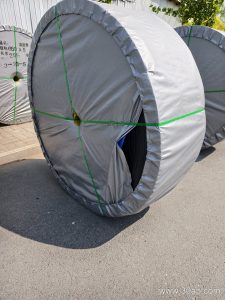
Also consider the belt itself. A rubber conveyor belt with high abrasion resistance may allow standard steel idlers, while a heat resistant conveyor belt in clinker service may need idlers with heat-tolerant bearings and seals. For long overland lines, steel cord conveyor belt or EP conveyor belt constructions influence the idler spacing and load per idler.
Maintenance and Buyer Checklist
Inspect idlers for seized bearings, worn shells, and buildup of cement dust. A seized idler can wear through the belt cover quickly. Replace idlers in sets when possible, and check that the conveyor bracket and frame are square. Keep training idlers free to move, and do not overtighten seals during replacement.
When ordering, specify belt width, trough angle, idler type, roller diameter, shaft diameter, bearing number, and surface form. Ask for dimensional drawings. Avoid assuming that one belt width matches one pulley diameter; idlers and pulleys are selected separately. A cement conveyor idler that fits the duty will outlast a mismatched one, whether the line runs in a quarry, a cement plant, or a port terminal.