What a Composite Idler Is
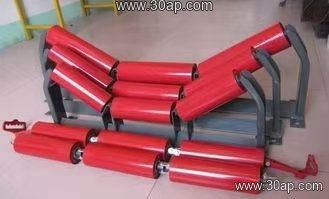
A composite idler is a conveyor idler roller whose barrel is built from composite material rather than plain steel tube. In practice, the term usually describes an idler roller with a polymer, reinforced plastic or composite shell, fitted with steel shaft and bearing assemblies at each end. It sits under the belt on a conveyor bracket and carries the load, just as a steel idler does, but the roll body is engineered to resist corrosion, reduce weight and damp vibration. Buyers often meet the same product under the name composite conveyor idler roller, and both names refer to the same item.
These rollers are common on bulk handling lines where moisture, dust or mild chemical exposure shortens the life of painted steel. You will see them in a quarry conveyor, a cement plant transfer house, a power plant coal handling gallery and a port shiploading line. They work alongside a rubber conveyor belt, an EP conveyor belt or a steel cord conveyor belt, and they interact with the conveyor pulley at the head and tail of the run.
How the Roller Is Put Together
A typical unit combines four elements:
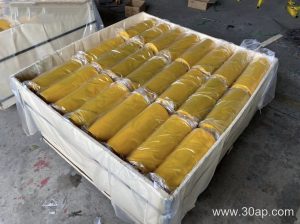
- A composite barrel, often glass-fiber reinforced resin or a similar engineered polymer, formed as a tube with a smooth or profiled surface.
- End caps that seal the bearing housing against dust and water.
- A through shaft or stub shafts, usually carbon steel, sometimes plated.
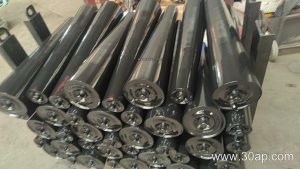
- Sealed ball bearings, commonly 6204, 6205, 6305, 6306, 6308 or 6310 depending on the load class and shaft design.
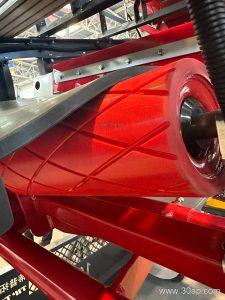
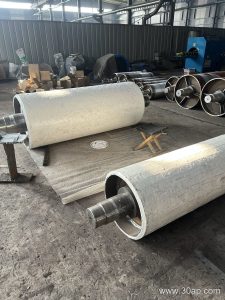
The seal is the critical detail. A composite shell will not rust, but a bearing will fail quickly if grit reaches it, so labyrinth seals, felt seals and grease retention features matter as much as the barrel material. Roll face options can include plain composite, rubber rings for impact absorption, or a ceramic-faced variant in abrasive service.
Where It Fits on the Conveyor
The composite idler normally appears in carrying and return positions. On the carrying side, three-roll troughing sets with 20, 30, 35 or 45 degree trough angles are common, and the composite roll can serve as the centre roll or side roll. On the return side, flat and V-return arrangements are typical. Transition idlers near the head and tail help the belt change shape without stress, and self-aligning types are used where belt tracking is a concern.
Roll diameter and belt width are selected together, not in a fixed pairing. Common diameters include Ø63, Ø76, Ø89, Ø102, Ø108, Ø127, Ø133, Ø159, Ø178, Ø194 and Ø219 mm, and common belt widths run from B400 to B2400. Roll length follows belt width, trough angle and roll set form; for a three-roll troughing set, examples are roughly 200 mm at B500, 315 mm at B800, 465 mm at B1200 and 600 mm at B1600, though centre and side rolls differ. These are reference figures for discussion, not a supply promise.
Selection Points for Buyers
Start with the duty. A heavy-duty mining conveyor belt carrying iron ore or copper ore at high tonnage needs a larger shaft and bearing class than a light aggregate line. In a coal mining conveyor belt or underground coal mining conveyor belt, flame retardant and anti-static properties are usually specified for the belt, and the idler should be compatible with that environment. Heat resistant conveyor belt service in a sintering or cement kiln area may call for a different roll face than an abrasion resistant conveyor belt duty.
Check the following before ordering:
- Belt width and the actual roll set geometry, including trough angle.
- Roll diameter and shell thickness, matched to load and belt speed.
- Shaft diameter, bearing size and sealing class for the site conditions.
- Roll face: plain, rubber ring or ceramic, depending on impact and wear.
- Mounting details on the conveyor bracket and frame spacing.
Do not assume that one belt width locks in one pulley diameter or one shaft size. The drive pulley, tail pulley and bend pulley are separate components with their own design rules, and they are not interchangeable with idlers. If a quotation lists a composite idler with a 108 mm roll and a 6205 bearing, confirm the load calculation rather than copying the number to another line.
Maintenance and Field Notes
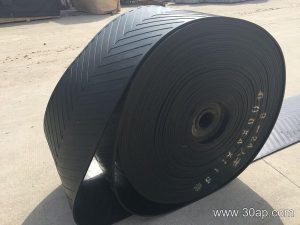
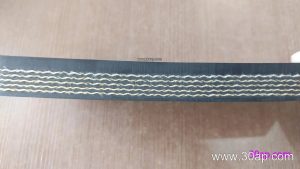
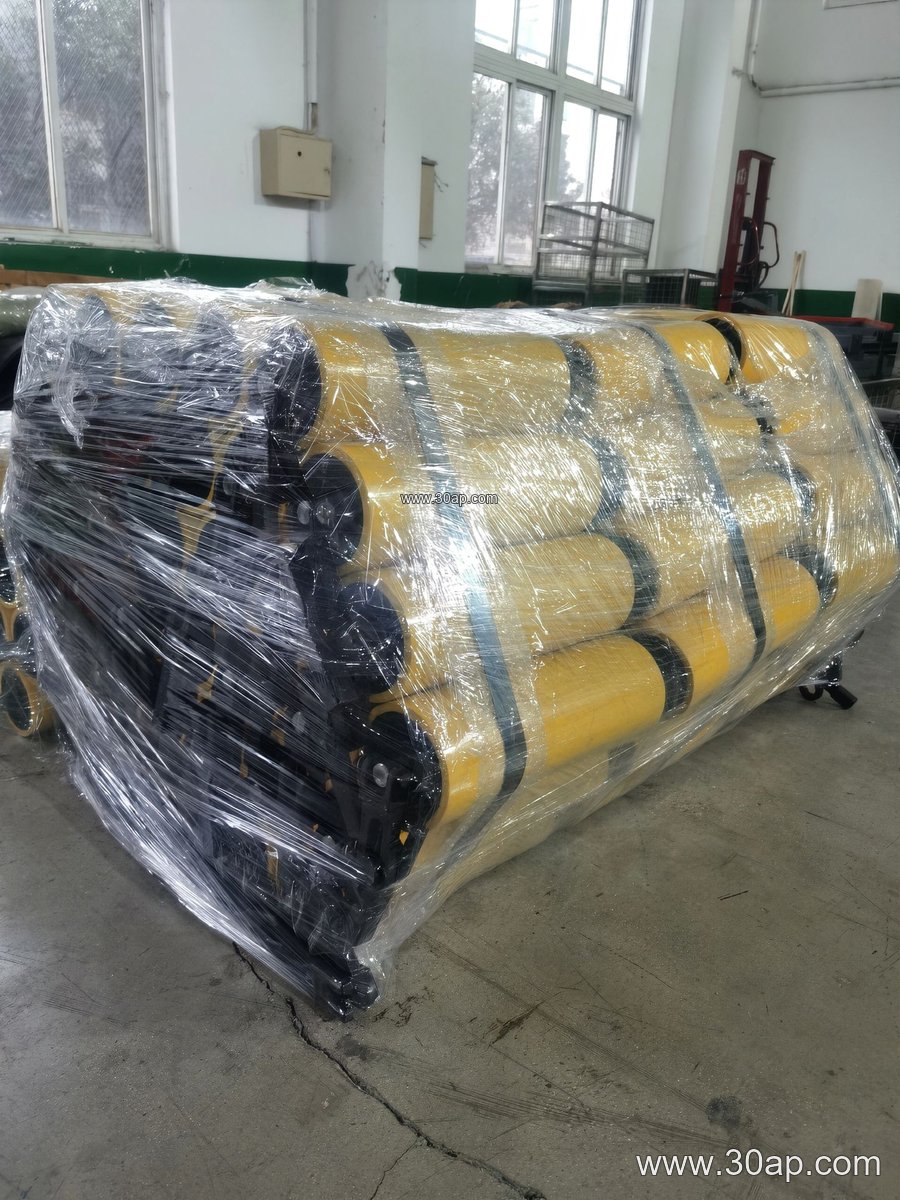
Composite rollers are lighter to handle, which speeds replacement on a long gallery. Inspect seals at each shutdown, listen for bearing noise, and check that the roll turns freely by hand. A seized roller can wear through a fabric core conveyor belt or a multi-ply fabric core conveyor belt quickly, and a wobbly roll may indicate a worn shaft or a cracked end cap. Keep spare units matched to the original roll length and bearing size so a change-out does not disturb belt training. For sites handling chevron conveyor belt or corrugated sidewall conveyor belt profiles, confirm clearance around the roll before installing a larger diameter.
Used sensibly, a composite idler is a practical choice for wet, corrosive or moderate-load conveyors where steel corrosion is the main enemy. Match it to the belt, the frame and the duty, and it will do its quiet job for a long time.