What a Sand and Gravel Production Line Idler Does
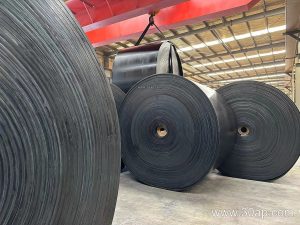
On an aggregate conveyor, the sand and gravel production line idler is the small rotating component that carries the belt and the load between the head and tail. In a quarry or a crushing and screening circuit, dozens of these idler rollers sit under a troughing belt, supporting tonnes of stone and sand every hour. The belt itself may be an abrasion resistant conveyor belt or a heavy-duty mining conveyor belt, but without reliable idlers the belt will sag, track poorly and wear early.
The idler is a simple assembly in principle: a steel tube shell, a shaft, bearing housings at each end, and a sealing arrangement. In practice, the details decide service life. Dust from crushed rock is abrasive, and water from washing or rain turns fine particles into a grinding paste. Good sealing and a properly greased bearing matter more than a glossy paint finish.
Where Idlers Sit on the Conveyor
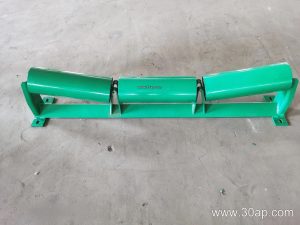
Carrying idlers support the loaded strand, usually in a three-roll troughing set with a 20, 30, 35 or 45 degree trough angle. Return idlers support the empty belt underneath; flat return rolls or V-return rolls are common. Impact idlers with rubber rings are placed under the loading point where large lumps drop onto the belt. Transition idlers ease the belt from the flat pulley into the trough, and self-aligning idlers help keep the belt centered on long runs. Each position asks something different of the roller, so a single specification for the whole conveyor is rarely the best approach.
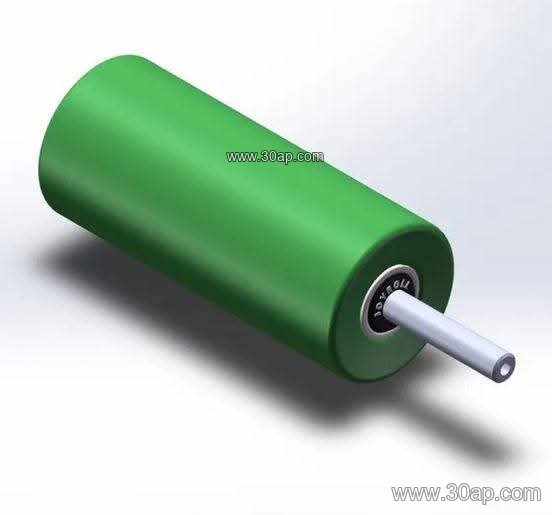
- Carrying side: troughing sets, three-roll or two-roll
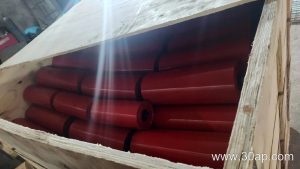
- Return side: flat or V-shaped return rolls
- Loading zone: impact idlers with rubber rings
- Pulleys: drive, tail and bend pulleys remain separate components and are not interchangeable with idlers
Roller Diameter, Belt Width and Roll Length
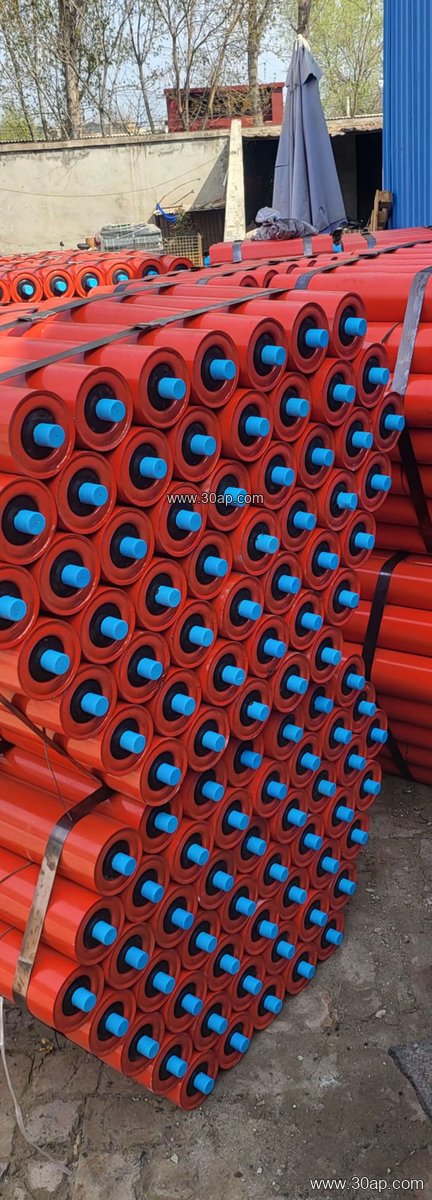
Roller diameter and belt width are chosen together with belt speed, load and the conveyor frame. Typical roller diameters in aggregate service include Ø89, Ø102, Ø108, Ø127, Ø133 and Ø159 mm; heavier duties may use larger shells. A 650mm conveyor belt or an 800mm conveyor belt generally uses smaller rollers than a 1200mm or 1400mm belt, but there is no fixed rule that ties one belt width to one diameter. Roll length follows belt width, trough angle and roll arrangement. For a three-roll troughing set, common roll lengths are roughly 250 mm for B650, 315 mm for B800, 380 mm for B1000, 465 mm for B1200 and 530 mm for B1400. The side rolls and center roll can differ, so these are design references rather than fixed combinations.
| Belt width (common) | Typical troughing roll length | Roller shell options |
|---|---|---|
| B650 | about 250 mm | steel, nylon, rubber ring |
| B800 | about 315 mm | steel, nylon, rubber ring |
| B1000 | about 380 mm | steel, nylon, ceramic |
| B1200 | about 465 mm | steel, nylon, ceramic |
| B1400 | about 530 mm | steel, nylon, ceramic |
Bearings such as 6204, 6205, 6305, 6306, 6308 and 6310 appear across this range. A given bearing is not reserved for one diameter; the housing and load rating decide the match.
Matching the Idler to the Material and the Belt
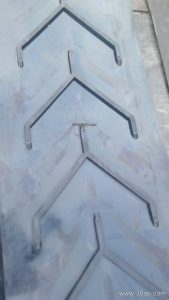
Sand and gravel is abrasive but usually not hot, so wear resistance and sealing lead the specification. Where the feed comes from a crusher, impact idlers under the chute protect the belt from sharp lumps. If the conveyor runs in an enclosed transfer tower or a dusty screening building, dust-tight sealing and smooth rotation reduce build-up. The belt choice also matters: an EP conveyor belt or a multi-ply fabric core conveyor belt flexes differently from a steel cord conveyor belt, and troughability affects how well the idler set holds the load. On a wash plant line, water exposure makes bearing protection a priority.
Buyer Checklist
Before ordering, confirm the belt width, the trough angle, the roll arrangement and the loading conditions. Ask for the roller diameter, shell material and bearing size in writing, and check that the idler frame or conveyor bracket matches the existing stringers. Spare impact rolls for the loading point and a few return rolls are worth keeping on site. Inspect idlers during routine shutdowns: a seized roller or a worn shell can damage an otherwise healthy belt, and replacing a roller early is far cheaper than replacing a belt.