Understanding the Iron Ore Conveyor Belt
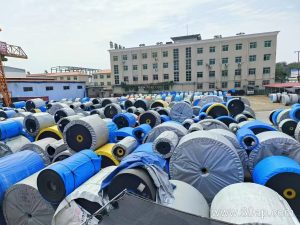
An iron ore conveyor belt is a heavy-duty component engineered to transport abrasive, dense, and often sharp iron ore across mining, processing, and port facilities. Unlike general-purpose belts, this belt must withstand high impact at loading points, continuous abrasion from ore lumps, and sometimes harsh weather or wet conditions. It is typically a rubber-covered fabric or steel cord construction, chosen to match the specific load and environment.
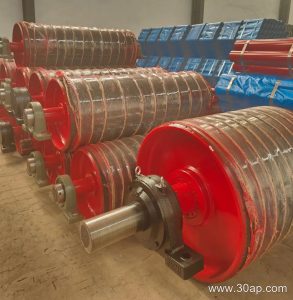
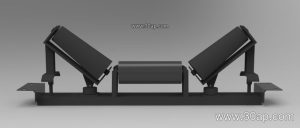
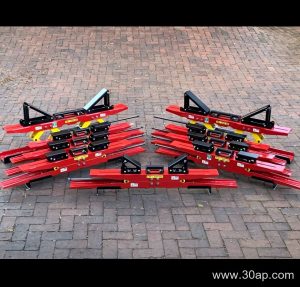
Common synonyms for this product include ore conveyor belt and mining conveyor belt, but the core function remains the same: moving bulk iron ore efficiently and safely. In a typical conveyor system, the belt runs over idler rollers and is driven by a head pulley, with tail and bend pulleys guiding its path. Each component—belt, pulley, idler roller, and conveyor bracket—plays a distinct role, and they are not interchangeable.
Construction and Key Components
The belt’s construction determines its performance. A fabric core belt uses multiple layers of EP (polyester-nylon) or NN (nylon-nylon) fabric, embedded in rubber. Steel cord belts feature high-tensile steel wires for long-distance, high-capacity haulage. The cover rubber grades are selected for abrasion resistance, heat resistance, oil resistance, or flame retardancy, depending on the site.
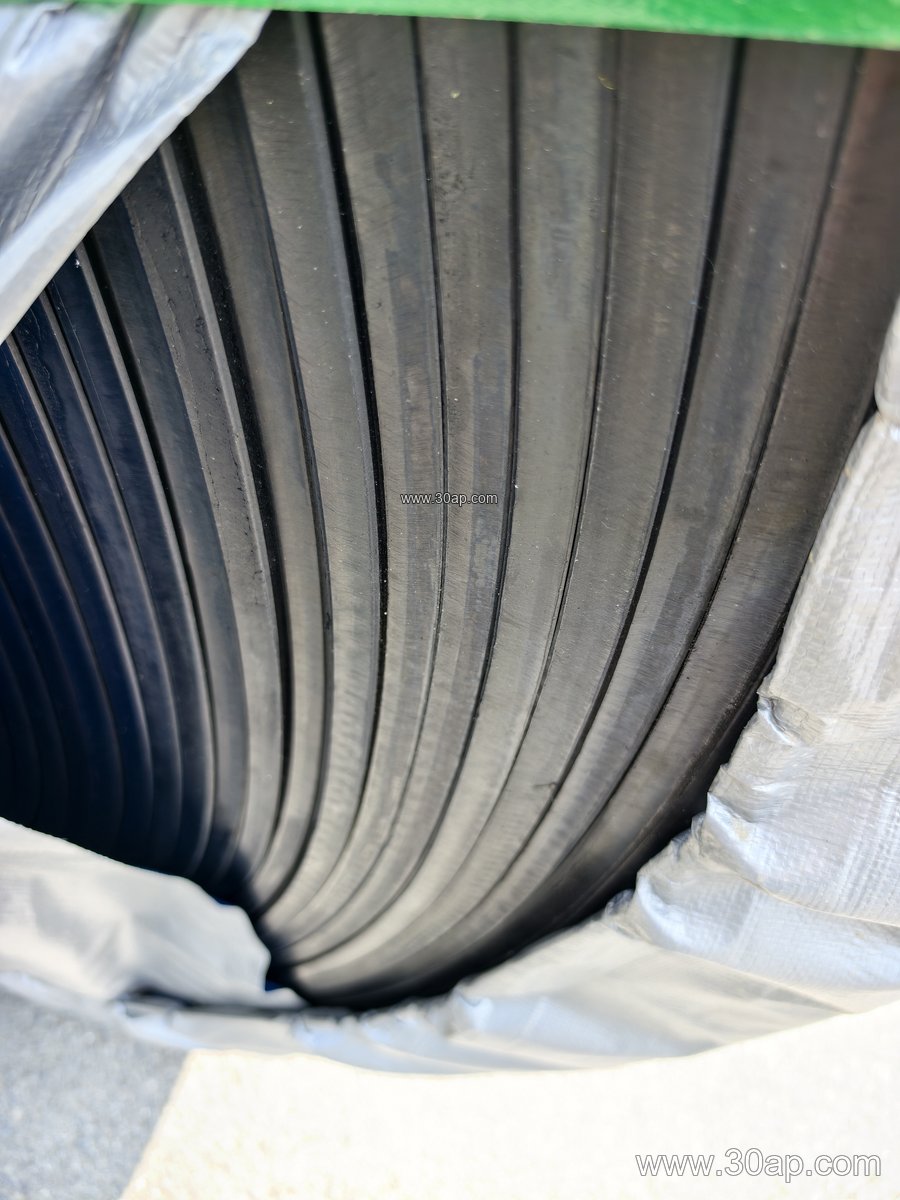
For iron ore, abrasion resistance is usually paramount. A high abrasion resistant conveyor belt with thick covers (e.g., 6+2 mm or 8+3 mm) is common, but final thickness depends on lump size and drop height. Impact resistant conveyor belt designs add breaker fabric or extra rubber at loading zones. In cold climates, a cold resistant conveyor belt prevents cracking, while in underground mines, a flame retardant conveyor belt (often PVG or PVC type) is required for safety.
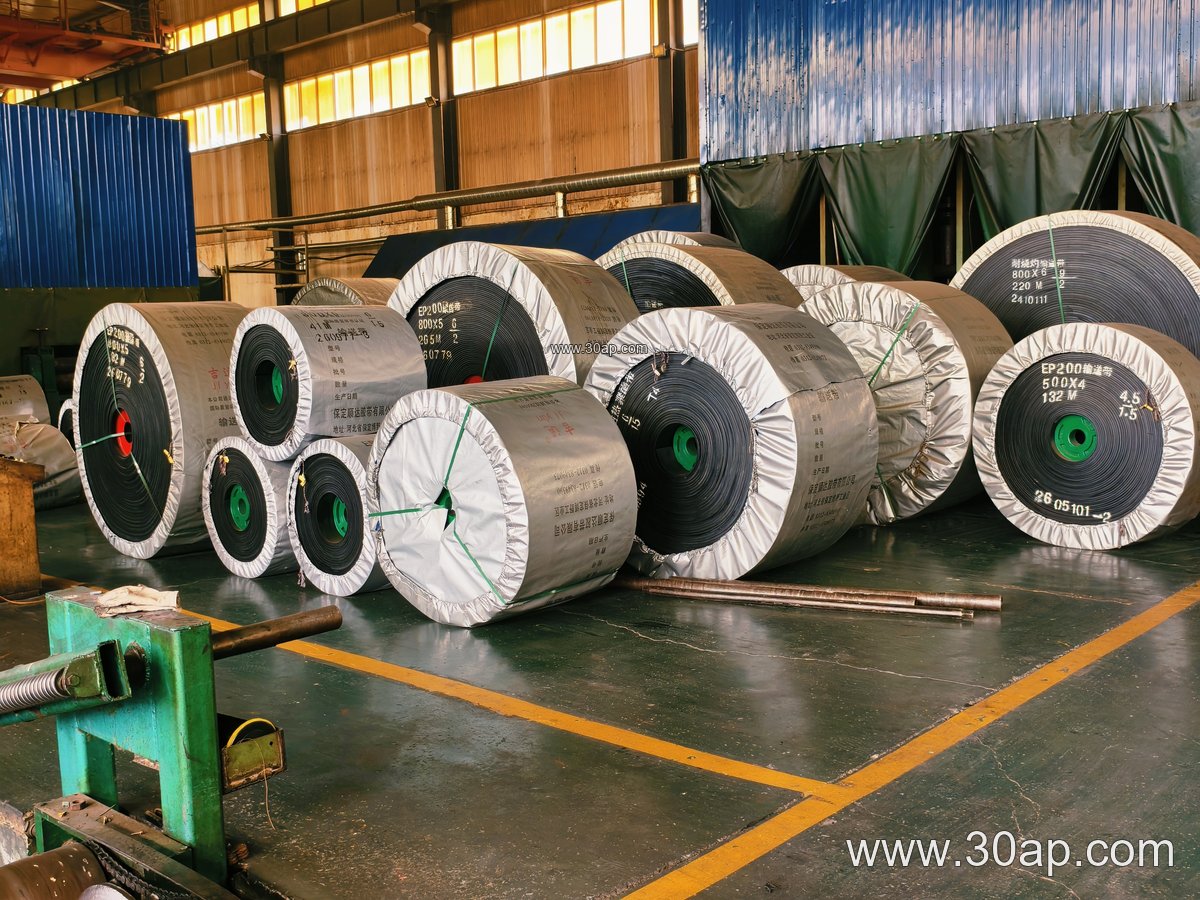
Typical belt widths for iron ore range from 800 mm to 2000 mm, with 1200 mm and 1400 mm being frequent choices. Strength grades for fabric belts might be EP200 to EP630, while steel cord belts can range from ST1000 to ST3150. These values are indicative; actual selection follows conveyor design calculations.
Where It Is Used
Iron ore conveyor belts are found in open-pit mines, underground mines, crushing plants, screening stations, stockyards, and ship loading terminals. They also appear in steel plants and cement plants that handle iron ore as a raw material. In quarry and aggregate operations, a heavy-duty mining conveyor belt may transfer ore from primary crushers to stockpiles. Port facilities use wide belts (e.g., 1800 mm or 2000 mm) for rapid ship loading.
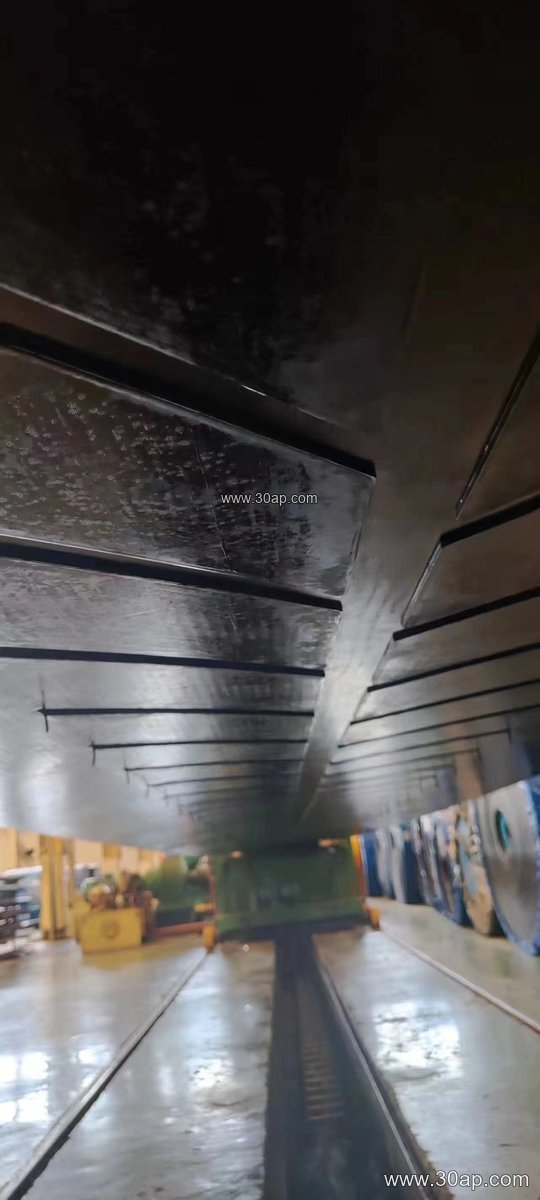
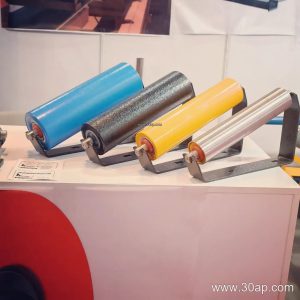
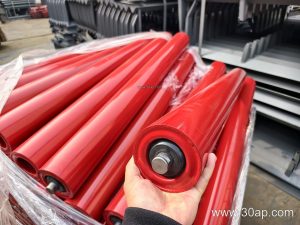
The belt works alongside conveyor pulleys (drive, tail, bend), idler rollers, and conveyor brackets. Drive pulleys transmit power, tail pulleys return the belt, and bend pulleys change direction—these are not interchangeable. Idler rollers support the belt and influence its wear pattern.
Buyer Checklist and Specifications
When specifying an iron ore conveyor belt, consider the following:
- Material characteristics: Lump size, density, moisture, and temperature. Abrasive ore calls for high abrasion resistant cover; hot ore may need heat resistant conveyor belt.
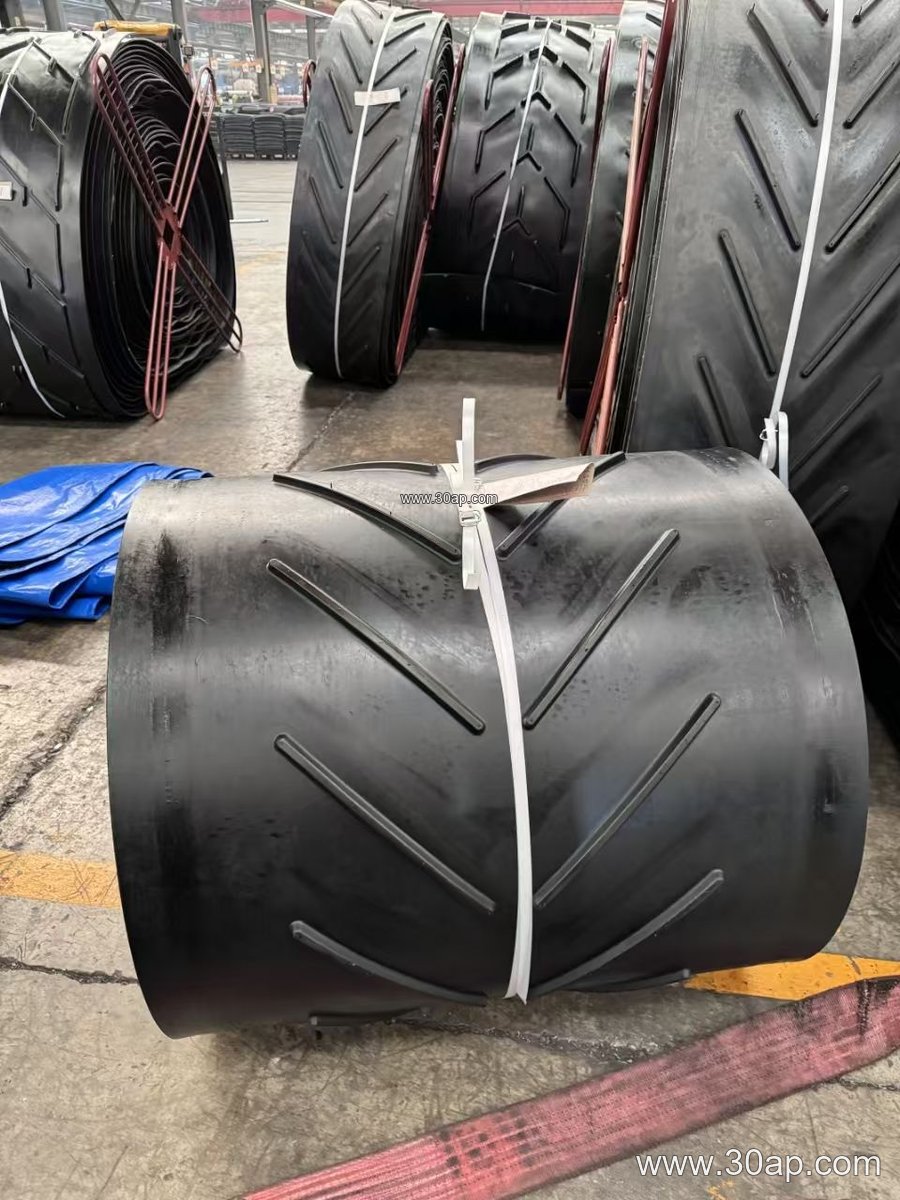
- Belt type: Fabric core (EP or NN) for shorter conveyors; steel cord for long distances and high tensions. Chevron or corrugated sidewall belts may be used on inclines to prevent material rollback.
- Cover thickness: Common combinations include 4+2 mm, 5+2 mm, 6+2 mm, and 8+3 mm. Thicker covers last longer under abrasive ore but add weight.
- Width: Match to throughput and lump size. Standard widths: 800, 1000, 1200, 1400, 1600, 1800, 2000 mm.
- Strength: EP200–EP630 for fabric; ST1000–ST3150 for steel cord. Verify with conveyor tension calculations.
- Safety and environment: Flame retardant (PVG/PVC) for underground coal and metal mines; anti-static for explosive dust; oil resistant if exposed to lubricants.
Always request the manufacturer’s data sheet for exact cover grades, ply count, and tolerances. No single belt width or strength suits every conveyor; selection must be based on design.
Maintenance Practices
Regular inspection extends belt life. Check for edge wear, cover gouges, and splice integrity. Keep idler rollers turning freely; seized rollers can cause belt tracking issues and premature wear. Align pulleys and maintain proper tension. Clean spillage from return rollers and brackets to avoid buildup. For steel cord belts, monitor for cord exposure or impact damage.
Store spare belts in a cool, dry place away from sunlight and ozone sources. When installing, ensure the belt is not twisted and that pulleys are parallel. Training personnel on proper splicing and tensioning reduces downtime.
Final Notes
Iron ore conveyor belts are available in many constructions—EP, NN, steel cord, and specialty covers. The right choice balances abrasion resistance, tensile strength, and environmental factors. Work with a reputable supplier who can provide technical support and genuine specifications for your site conditions.