What a Self-Aligning Idler Bracket Does
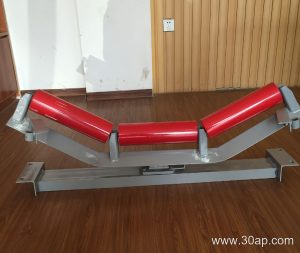
A self-aligning idler bracket is the pivot-mounted support that carries the troughed idler rollers on a conveyor and lets the whole idler set swing slightly when the belt starts to drift. Instead of fixing the rollers rigidly to the stringer, the bracket sits on a vertical pivot or a central bearing point, so any sideways force from a misaligned belt nudges the assembly and steers the belt back toward the centre line. In a quarry conveyor or a power plant coal handling line, this small self-correcting movement is often the cheapest way to reduce edge damage and spillage.
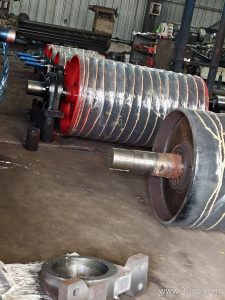
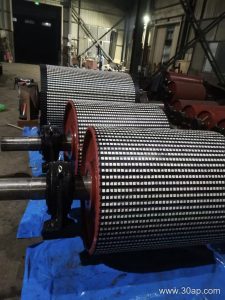
The same item is also called a self-tracking idler bracket or self-aligning roller bracket. Those names describe the same product; they are not a different bracket family. A self-aligning idler bracket is not a drive pulley bracket, a tail pulley bracket or a bend pulley bracket, and it should not be ordered as a substitute for those fixed pulley supports.
How the Bracket Is Built
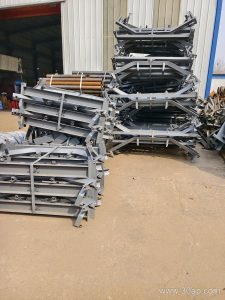
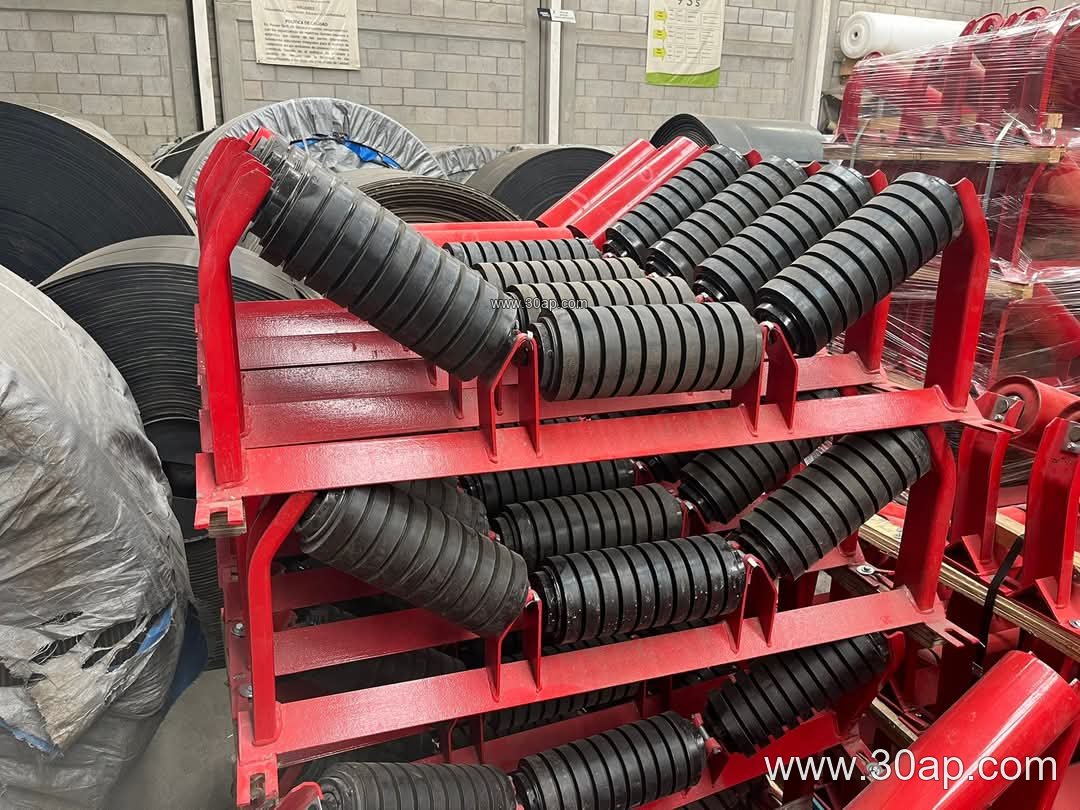
Most units are fabricated from angle steel, channel steel or folded steel plate, with a pivot shaft, a stop lug and two or three roller cradles. The cradles hold the idler roller at the required trough angle, while the pivot allows a few degrees of rotation in the horizontal plane. A return-side version may carry a single flat roller or a pair of V-return rollers. Common materials are painted carbon steel, and galvanised versions are used in damp tunnels or port terminals.
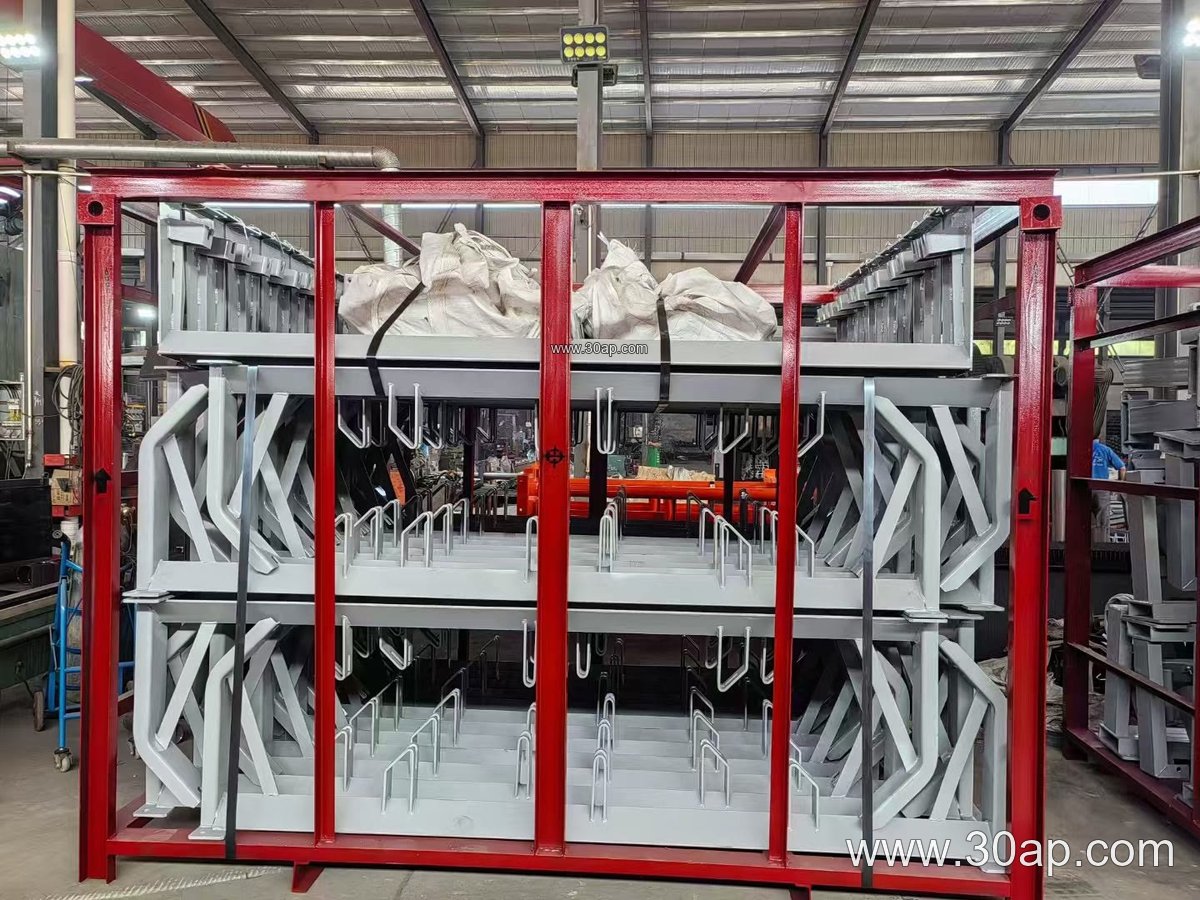
- Pivot type: central vertical pin, or a base plate with a bearing bush
- Roller cradles: two or three positions for troughed carrying idlers
- Stop lugs: limit swing so the bracket cannot over-travel
- Mounting: bolt holes in the base, matched to the stringer spacing
Matching Bandwidth, Trough Angle and Roller Diameter
Selection starts with the belt width, the trough angle and the roller diameter, and the three are related but not locked together. A self-aligning idler bracket for a 650 mm belt may run 30 degrees with 89 mm rollers in a light sand line, while a 1200 mm heavy-duty mining conveyor might use 35 or 45 degrees with 133 mm or 159 mm rollers. Wider belts such as B1600, B1800 or B2000 need longer cross beams and heavier frames, but the exact hole spacing and beam length are determined by the conveyor design, not by the belt width alone.
| Belt width | Typical trough angle | Common roller diameter | Typical duty |
|---|---|---|---|
| B500 / B650 | 20 to 30 degrees | Ø89 / Ø108 | Sand, aggregate, small plant |
| B800 / B1000 | 30 to 35 degrees | Ø108 / Ø133 | Crushing and screening lines |
| B1200 / B1400 | 35 to 45 degrees | Ø133 / Ø159 | Cement, coal, ore conveying |
| B1600 to B2200 | 35 to 45 degrees | Ø159 / Ø194 | Port, mine and bulk terminals |
These figures are common references, not fixed pairings. A self-aligning bracket with adjustable cradles can be set between 20 and 45 degrees on site, which helps when a plant changes its belt loading pattern. Forward-leaning designs, usually about 1.5 to 2 degrees, are a separate feature and should be specified only when the application calls for it.
Where It Fits on the Conveyor
Self-aligning brackets are normally installed on the carrying side at intervals along the middle of the run, and on the return side where belt wander is a known problem. In a limestone mine or a cement plant, they are often placed after a loading point, where off-centre material feed pushes the belt sideways. In a coal washing plant or a port ship loader, they help hold tracking on long, slightly curved routes. They work with the conveyor belt, the idler roller set and the conveyor pulley, but they do not replace correct pulley alignment or proper belt splicing.
Buyer Checklist
- Confirm belt width, trough angle and roller diameter before quoting.
- State whether the bracket is for the carrying side or the return side.
- Ask for the mounting hole pattern and cross beam length, since these follow the conveyor frame design.
- Check pivot clearance and stop lug condition, as worn pivots cause the bracket to hunt.
- Match the bracket duty to the belt: a heavy-duty mining conveyor with a thick abrasion resistant conveyor belt needs a stiffer frame than a light sand line.
- Keep spare pivot bushes and bolts, because a seized pivot turns a self-aligning bracket into a fixed one.
During maintenance, check that the bracket swings freely by hand, that the stop lugs are not bent, and that the idler rollers still rotate. A self-aligning idler bracket only corrects tracking when the pivot is clean and the roller set is square to the frame. For plant operators working with rubber conveyor belt, EP conveyor belt or steel cord conveyor belt systems, this small component is a practical first check before adjusting pulleys or re-splicing the belt.