What a Trough Idler Bracket Does on a Belt Conveyor
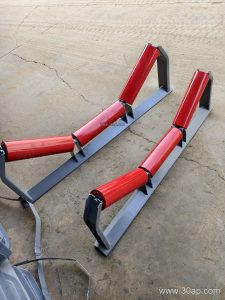
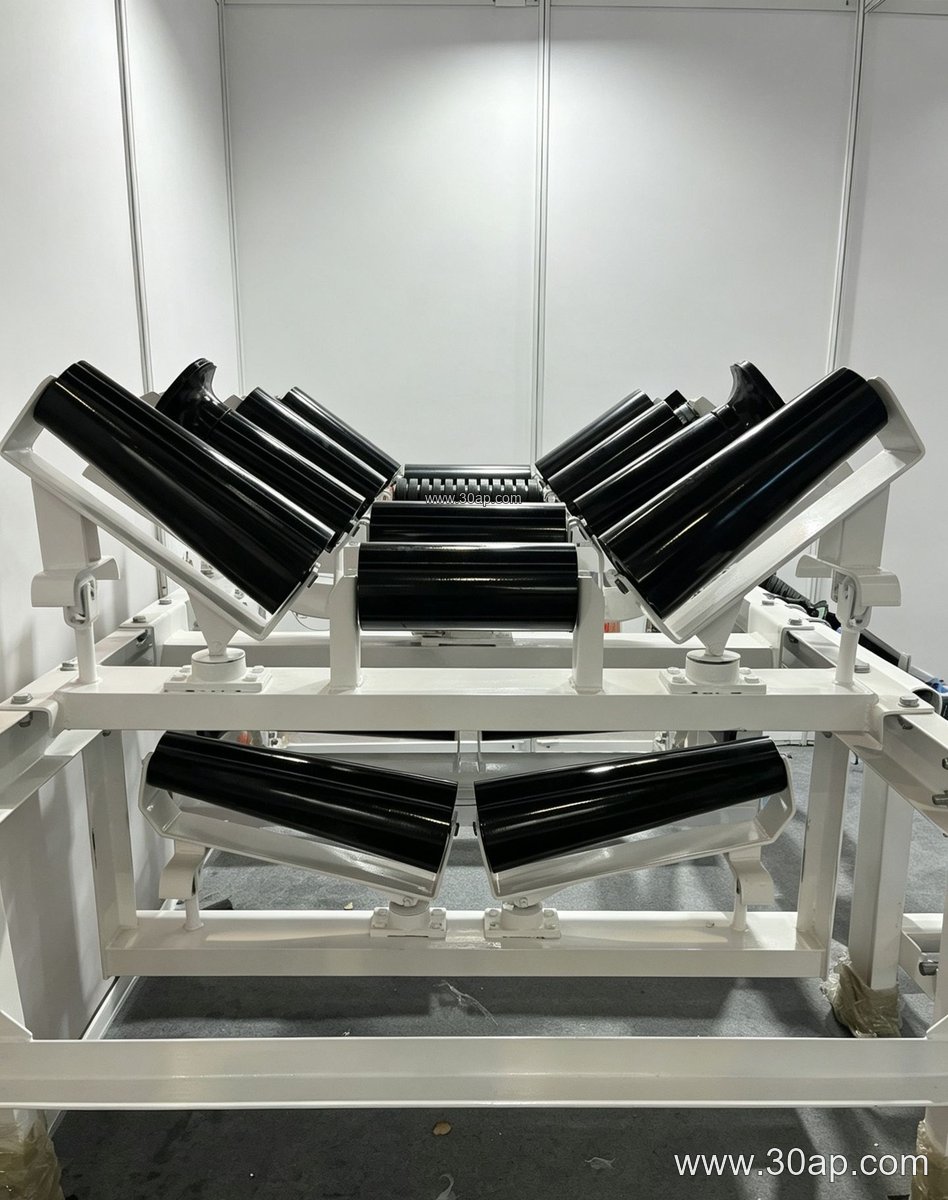
A trough idler bracket is the steel support that holds the three-roller trough set in the carrying run of a belt conveyor. It fixes the side rollers at the trough angle, keeps the centre roller level, and transfers the load of the belt and material into the conveyor frame. In a quarry, a cement plant or a power plant coal yard, this component is easy to overlook, yet it decides how well the belt keeps its shape and how evenly the load sits on the idler rollers.
Because the bracket sets the geometry of the trough, it works together with the troughing idler set, the conveyor belt and the frame. A poorly matched bracket shows up quickly as belt edge wear, material spillage or uneven roller loading.
Construction and Common Materials
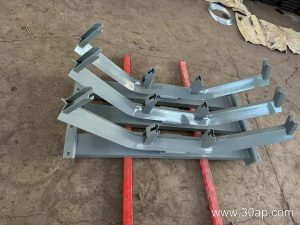
Most troughing brackets are fabricated from angle steel, channel steel or folded steel plate. The side arms are bent or welded to the chosen trough angle, and the base is drilled to match the frame pitch. Slots or multiple hole positions are often added so the same bracket body can serve more than one roller size or mounting layout.
Typical build details include:
- Welded or bolted side arms with roller mounting notches
- Reinforced base plate for bolting to the stringer
- Galvanised or painted finish for outdoor installations
- Adjustable versions with slotted arms for trough angle changes
The bracket must be stiff enough to resist the bending load from the belt and material. On a heavy-duty mining conveyor belt line, a light bracket may deflect and let the rollers tilt out of alignment.
Where Troughing Brackets Are Used
These supports appear wherever a conveyor carries bulk material: limestone and iron ore handling, coal preparation plants, clinker and raw meal transport in cement works, aggregate lines after a crusher, and belt systems in ports and steel plants. They are also found on tunnel spoil conveyors and in fertiliser or grain silo operations.
On a typical stone crushing line, the bracket sits on the top run after the crusher conveyor belt, where impact and abrasion are high. On a power plant coal conveyor, the same part must cope with dust, moisture and continuous operation.
Matching Bracket, Belt Width and Roller Diameter
Selection starts with the belt width and the required trough angle. Common belt widths include B500, B650, B800, B1000, B1200, B1400, B1600, B1800 and B2000. Trough angles are usually 20, 30, 35 or 45 degrees. Roller diameters commonly seen are Ø89, Ø108, Ø133, Ø159 and Ø194.
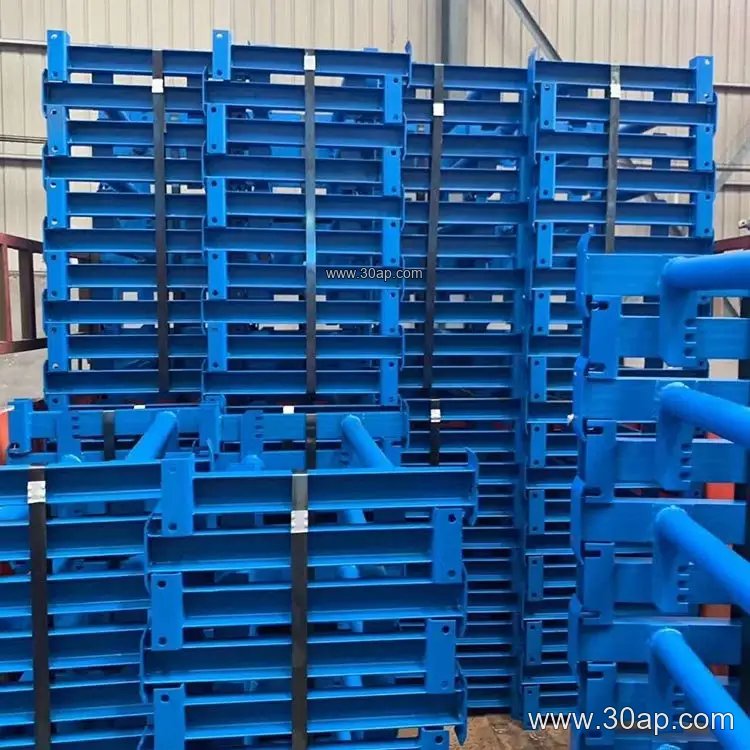
These values are reference points, not fixed combinations. A B800 belt may run at 30 or 35 degrees with Ø89 or Ø108 rollers depending on the duty. Mounting hole spacing and crossbeam length change with belt width and trough angle, so they are determined by design rather than by a single standard number.
| Parameter | Common Reference Values |
|---|---|
| Belt width | B500 to B2000 |
| Trough angle | 20°, 30°, 35°, 45° |
| Roller diameter | Ø89, Ø108, Ø133, Ø159, Ø194 |
| Forward tilt | about 1.5° to 2° |
| Material | angle steel, channel steel, folded plate |
Example combinations seen in practice include B800 with 35 degrees and Ø108, or B1200 with 45 degrees and Ø133. A B650 line might use 30 degrees and Ø89. Always confirm the bracket drawing against the actual idler set.
Fixed, Adjustable and Transition Versions
A fixed trough idler bracket holds one trough angle permanently. An adjustable bracket allows the angle to be changed within a range, which helps when a conveyor is being tuned or when material characteristics vary. Transition brackets near the head and tail pulleys gently open the belt from the trough to a flat profile. Impact brackets under a loading point carry cushion rollers, while self-aligning brackets help correct belt tracking.
For a comparison only, a return bracket supports the belt on the lower run and is a different component from the carrying-side troughing support. A bend pulley or tail pulley changes belt direction, but it does not replace the troughing bracket.
Buyer Checklist
- Confirm belt width, trough angle and roller diameter before ordering
- Check mounting hole spacing and crossbeam length on the frame drawing
- Ask for the steel grade and surface treatment
- Decide between fixed and adjustable arms
- Match bracket strength to the belt and material load
- Keep spare brackets for wear-prone loading zones
Correct bracket choice keeps the belt seated, extends roller life and reduces spillage. For more conveyor components, see the range at conveyoridler.com, where troughing brackets, idler rollers and related parts are described together. Buyers working with heat resistant conveyor belt or abrasion resistant conveyor belt grades should still check that the bracket and roller set suit the belt thickness and load.