What a Return Self-Aligning Idler Does
A return self-aligning idler is a training idler mounted on the return strand of a conveyor. Its job is to keep the belt centered as it travels back to the tail. Unlike a fixed flat return roller, this idler can pivot slightly around a vertical axis. When the belt drifts to one side, the idler skews and steers the belt back toward the centerline. In a quarry or a coal handling system, that small correction protects the belt edges and reduces spillage.
The same product is also called a self-aligning return roller or a training return idler. It is not a drive pulley, tail pulley, or bend pulley; those are conveyor pulleys that transmit power or change belt direction. The return self-aligning idler is a rotating roller assembly that supports the empty belt and corrects misalignment.
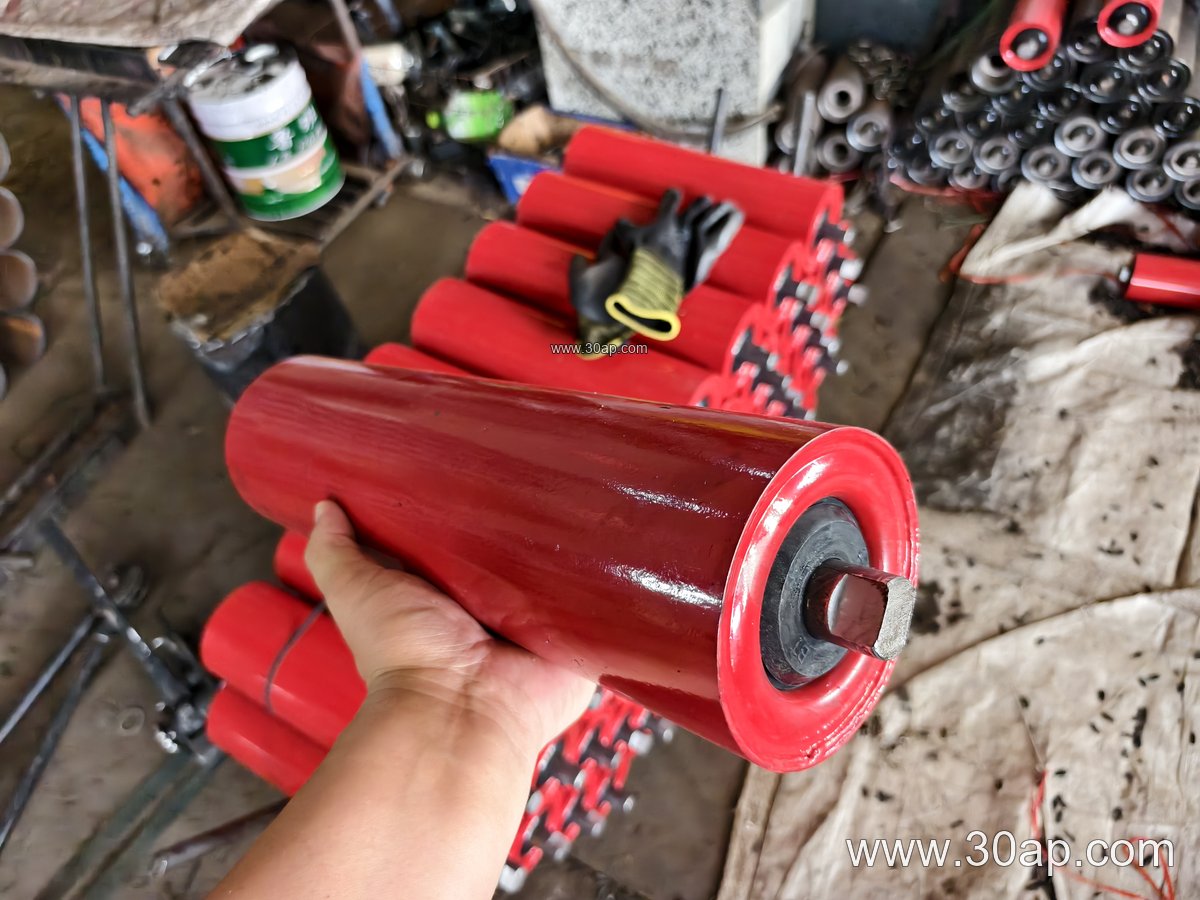
Construction and Common Configurations
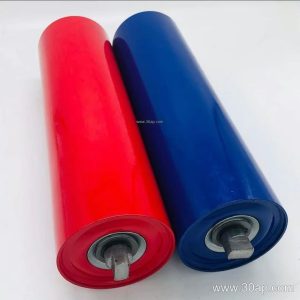
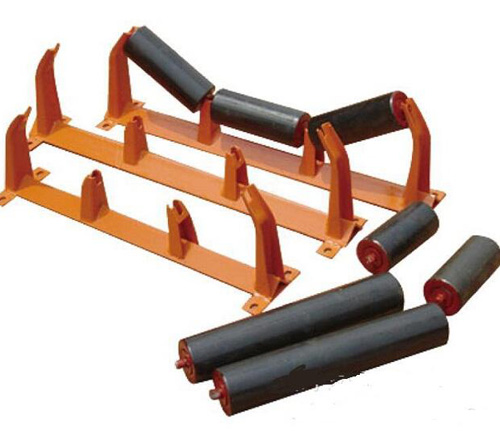
A typical unit uses a steel tube shell, a through shaft, and two bearing housings. The assembly sits in a bracket that allows a small amount of rotation. Many designs use a pair of vertical guide rollers or a friction disc to sense belt drift. Common roller diameters include Ø89, Ø108, Ø127, Ø133, and Ø159 mm. Bearing sizes such as 6205, 6305, and 6308 are often selected to match the load and shaft design, not just the roller diameter.
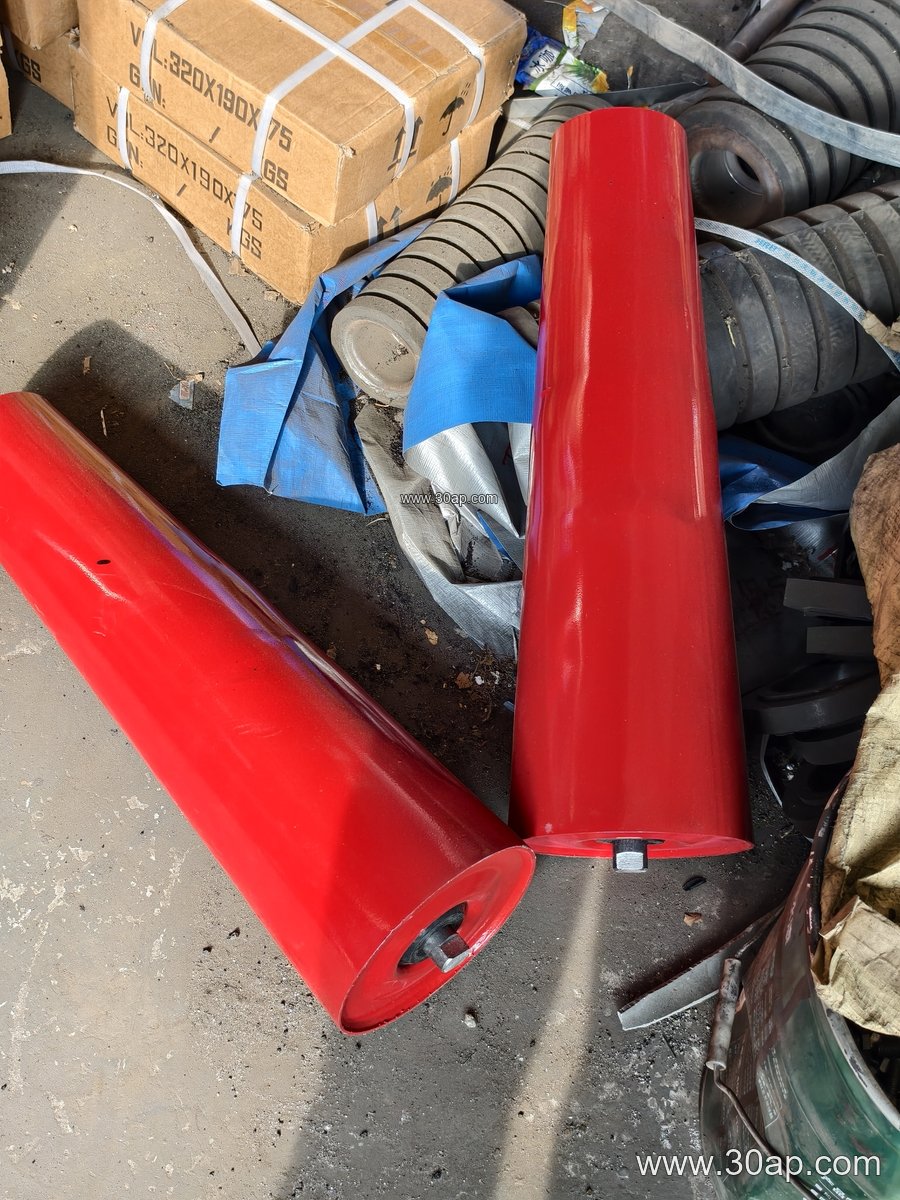
The roller face may be plain steel, nylon, or rubber-covered. Rubber rings can improve grip on a wet belt, while nylon or ceramic covers may suit abrasive service. The idler length follows belt width, frame design, and the number of rollers in the assembly. For reference, a B800 belt often uses a return idler around 315 mm long per roller section, while a B1200 belt may use roughly 465 mm. These are common examples only; the final length is set by the conveyor designer.
Reference Dimensions for Return Idlers
| Belt Width | Common Roller Diameter | Typical Roller Length (example) | Common Bearing |
|---|---|---|---|
| B500 | Ø89 / Ø108 mm | 200 mm | 6204 / 6205 |
| B650 | Ø89 / Ø108 mm | 250 mm | 6205 / 6305 |
| B800 | Ø108 / Ø127 mm | 315 mm | 6305 / 6306 |
| B1000 | Ø108 / Ø133 mm | 380 mm | 6306 / 6308 |
| B1200 | Ø127 / Ø133 mm | 465 mm | 6308 / 6310 |
| B1400 | Ø133 / Ø159 mm | 530 mm | 6308 / 6310 |
| B1600 | Ø133 / Ø159 mm | 600 mm | 6310 |
These values are reference data, not a fixed match. A B1000 conveyor may use different roller lengths depending on frame type and belt training needs. The shaft diameter should be confirmed from the idler manufacturer’s drawing, not guessed from belt width alone.
Where It Fits on the Conveyor
The return self-aligning idler is usually installed on the return run, after the bend pulley or before the tail pulley, where the belt is empty. It may be placed at intervals along a long overland conveyor or near the tail on a short transfer. In a limestone mine or a cement plant, a few training idlers on the return side can prevent edge damage on a fabric core conveyor belt or a steel cord conveyor belt.
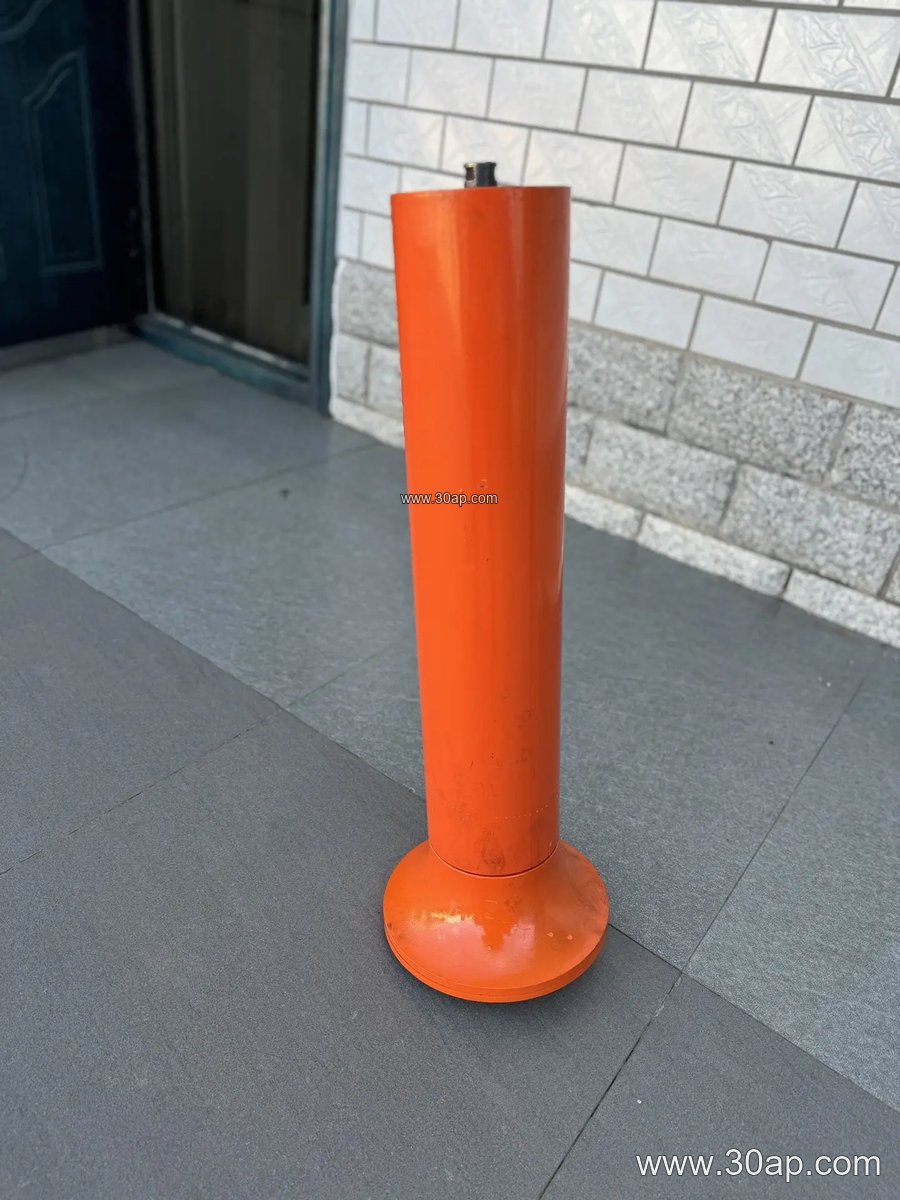
It is different from a troughing idler on the carrying side. A troughing set uses two or three rolls at a 20, 30, 35, or 45 degree trough angle to shape the belt for bulk material. A return training idler is flatter and focuses on tracking. A V-type return idler also supports the belt but does not pivot to correct misalignment in the same way. For a comparison, a friction self-aligning idler uses contact with the belt edge or a friction ring to trigger correction, while a plain return self-aligning idler relies on the skew created by belt drift.
Buyer Checklist
- Confirm belt width, such as B650, B800, B1000, or B1200, and the return frame dimensions.
- Check the required roller diameter and shaft size from the existing conveyor bracket drawing.
- Choose the shell surface for the site: plain steel for dry service, rubber-covered for wet or oily conditions.
- Match the bearing type to the load and speed; 6205, 6305, and 6308 are common but not universal.
- Consider the belt type on the return run, including abrasion resistant conveyor belt, flame retardant conveyor belt, or oil resistant conveyor belt, because cover hardness and friction affect training behavior.
- Ask for the pivot range and mounting hole pattern so the idler fits the conveyor bracket without modification.
A return self-aligning idler is a small component with a large effect on belt life. When selected with the correct roller diameter, bearing, and bracket, it helps keep the belt centered from the tail pulley to the drive pulley and reduces downtime in mining, quarry, and power plant conveyors.