What a Galvanized Conveyor Bracket Does
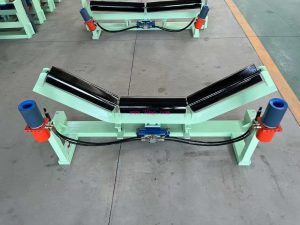
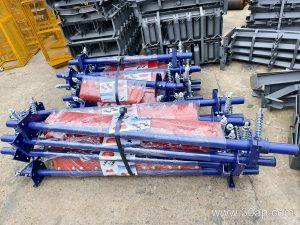
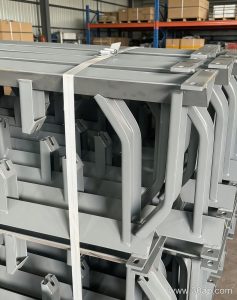
A galvanized conveyor bracket is the structural support that holds idler rollers in place along a belt conveyor. It connects the roller shafts to the conveyor frame and keeps the belt running at the intended trough angle. In a quarry, cement plant, or coal handling system, these brackets carry the weight of the conveyor belt, the material load, and the moving rollers. The galvanized finish is a zinc coating applied to steel, which helps the bracket resist moisture and corrosive dust in environments such as limestone mines, power plant coal yards, and aggregate crushing lines.
How the Bracket Is Built
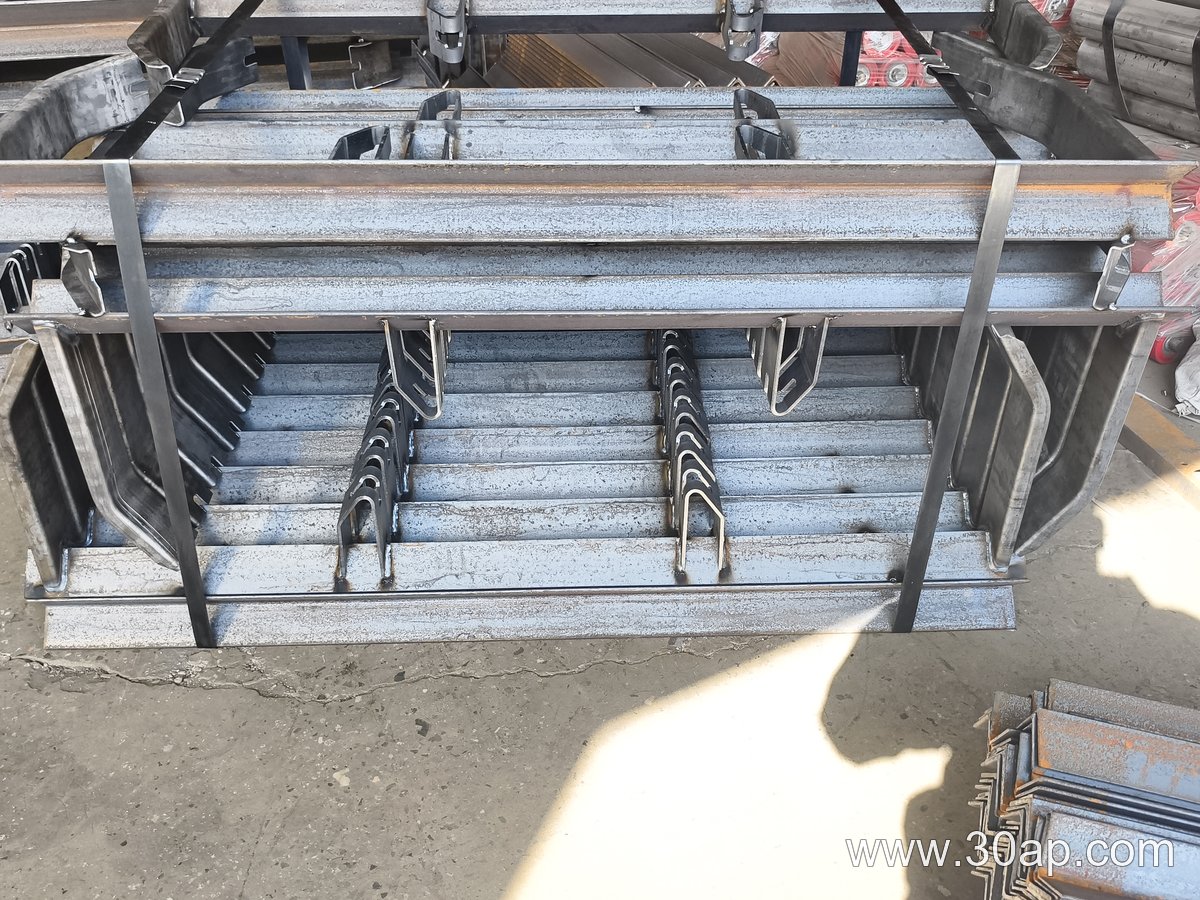
Most galvanized conveyor brackets start as angle steel, channel steel, or folded steel plate. The fabrication process includes cutting, punching holes for roller shafts and frame bolts, bending to the required trough angle, and then hot-dip galvanizing. The coating thickness and uniformity affect service life, but actual performance depends on the specific galvanizing process used by the manufacturer. A typical bracket has mounting holes sized for the roller shaft, a base plate or beam connection, and sometimes an adjustable slot that allows the roller position to be fine-tuned on site.
Common Types and Where They Fit
Different positions on a conveyor call for different bracket designs. The following list shows typical configurations; the right choice depends on belt width, material, and conveyor layout.
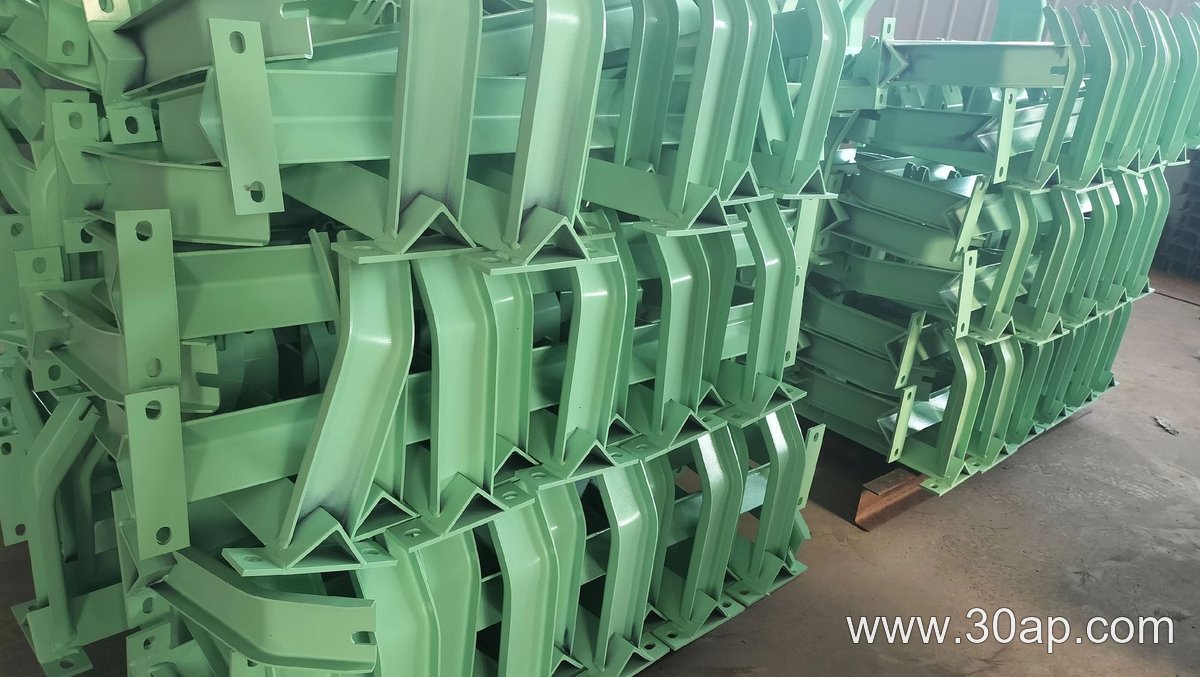
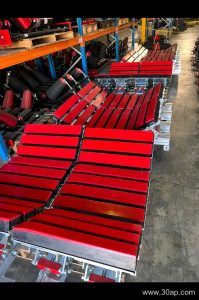
- Troughing bracket – supports three or more rollers to form a trough, common on the carrying side.
- Return bracket – holds return rollers under the belt, often a flat or V-shaped design.
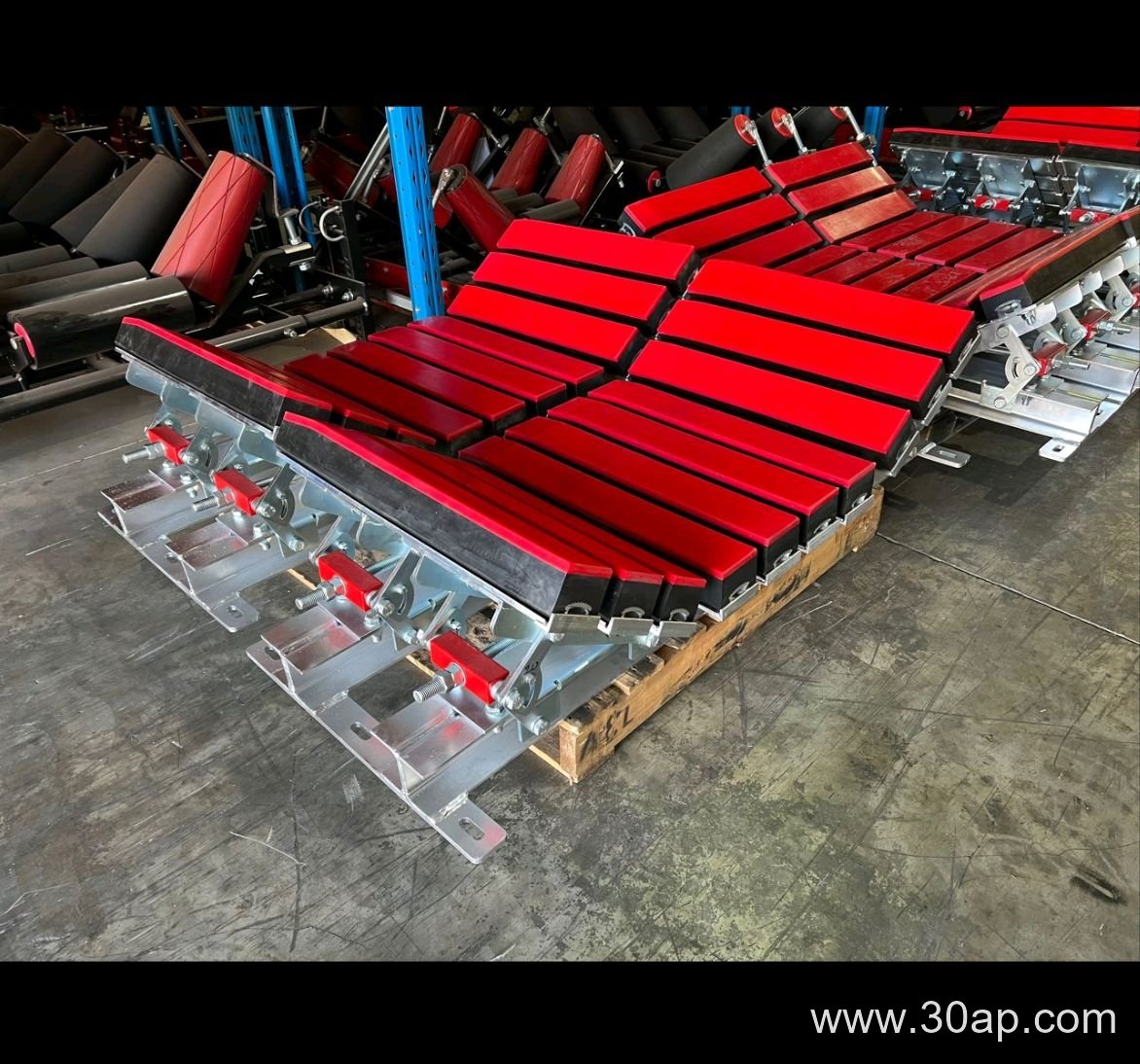
- Impact bracket – used at loading points where material falls onto the belt.
- Self-aligning bracket – helps correct belt tracking when the belt drifts.
- Adjustable bracket – allows the trough angle to be changed between common angles such as 20, 30, 35, or 45 degrees.
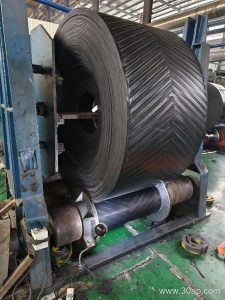
These types are not interchangeable with drive pulleys, tail pulleys, or bend pulleys. A conveyor pulley is a rotating drum that drives or redirects the belt, while a bracket is a stationary support for idler rollers. When specifying a bracket, mention the belt width, roller diameter, and trough angle so the supplier can match the mounting dimensions.
Key Dimensions and Reference Data
Belt width and roller diameter influence bracket size, but they do not lock a single combination. For example, a B800 belt may run with 30-degree troughing and Ø108 rollers, while a B1200 conveyor could use 45-degree troughing with Ø133 rollers. The table below lists common reference values; actual hole spacing and beam length are determined by the conveyor design.
| Parameter | Common Reference Values |
|---|---|
| Belt width | B500, B650, B800, B1000, B1200, B1400, B1600, B1800, B2000, B2200 |
| Trough angle | 20°, 30°, 35°, 45° (adjustable brackets can change between these) |
| Roller diameter | Ø89, Ø108, Ø133, Ø159, Ø194 |
| Material | Angle steel, channel steel, folded steel plate |
| Surface treatment | Hot-dip galvanized |
Forward tilt of about 1.5 to 2 degrees is sometimes used on troughing brackets to help center the belt, but this is a design option, not a universal rule. Do not assume a fixed shaft diameter from belt width alone; the roller manufacturer and conveyor engineer determine that interface.
Where Galvanized Brackets Are Used
You will find these brackets in bulk material handling across many industries. In a sand and gravel plant, they support the conveyor belt that carries crushed stone from the screen to the stockpile. In a coal preparation plant, galvanized brackets resist the damp, abrasive environment. Other common sites include iron ore mines, sintering plants, fertilizer warehouses, grain silos, and tunnel muck removal systems. Because the bracket does not rotate, its main enemies are corrosion, vibration, and mechanical impact from falling material.
What Buyers Should Check
Before ordering, confirm the belt width, the idler roller diameter, and the required trough angle. Ask whether the bracket is fixed or adjustable, and whether it is for the carrying side or return side. Check the mounting hole pattern against the existing conveyor frame. If the conveyor runs outdoors or handles wet material, specify hot-dip galvanizing rather than paint. For impact zones, a heavier folded plate design may last longer than a light angle bracket. Finally, remember that a galvanized conveyor bracket works together with the conveyor belt, idler rollers, and pulleys; a mismatch in any of these can cause tracking problems or premature wear.