What a Mining Conveyor Bracket Does on the Line
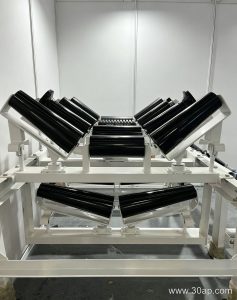
A mining conveyor bracket is the steel support that holds the idler roller in place and keeps the belt profile steady under load. On a quarry conveyor belt or an ore conveyor belt, the bracket carries the idler at the correct trough angle so material stays centered and spillage stays low. The bracket is not the pulley and it is not the roller, but the three work as one assembly. When a conveyor pulley at the head or tail turns the belt, the brackets along the carry side and return side keep every roller aligned so the belt tracks straight.
Because the bracket is a structural part, its job is to resist vibration, impact and constant abrasion from bulk material. A well-matched bracket keeps the idler roller spinning freely and reduces belt edge damage on heavy-duty mining conveyor belt installations.
How the Bracket Is Built
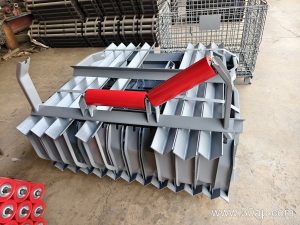
Most brackets are fabricated from angle steel, channel steel or folded steel plate. The frame is drilled for mounting holes, and the hole spacing and crossbeam length are determined by belt width and trough angle rather than being fixed numbers. Surface treatment is usually painting or galvanizing, chosen to suit the site conditions.
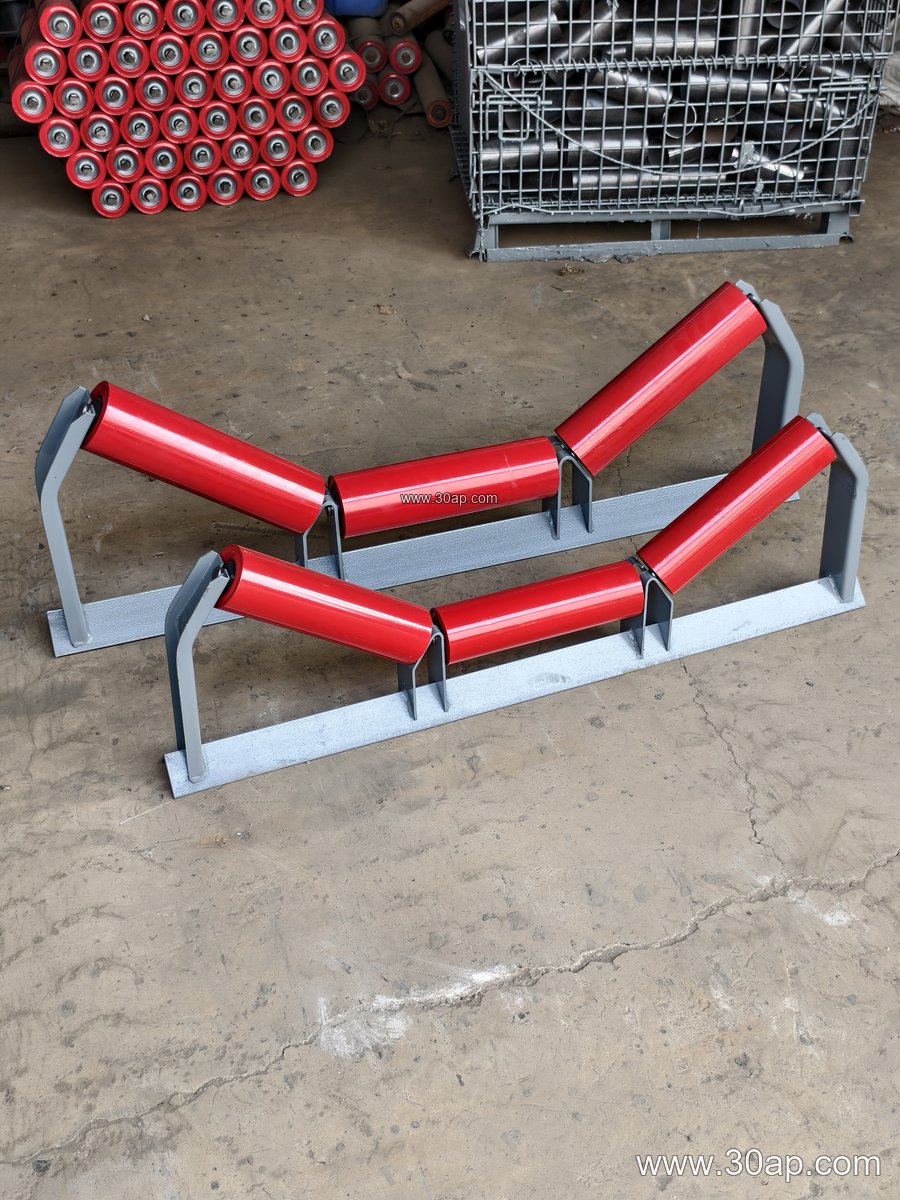
Common bracket forms include:
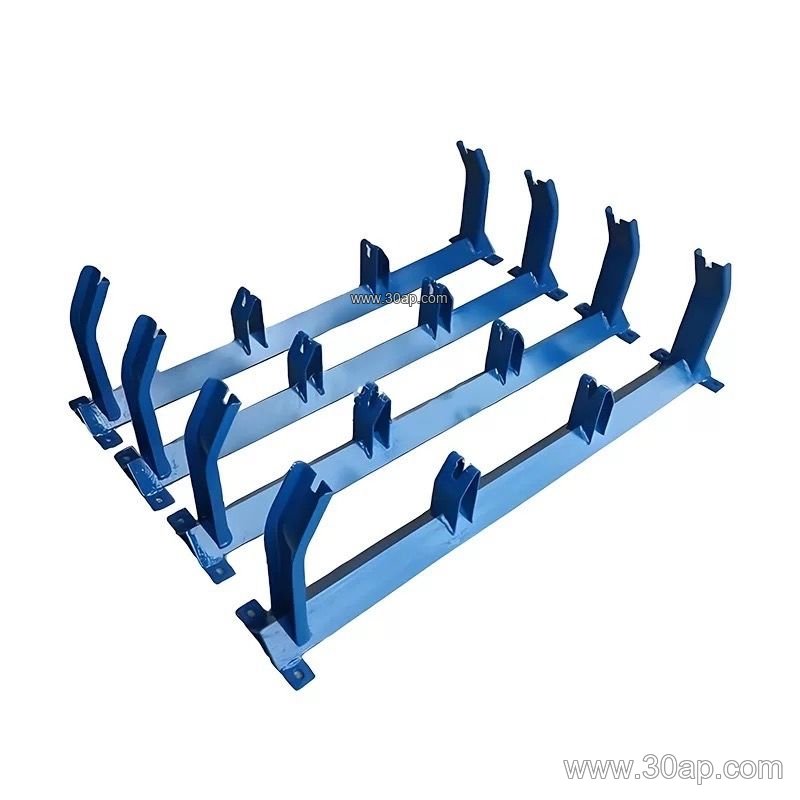
- Trough bracket and upper trough bracket for the carry side
- Transition bracket near the head and tail
- Return bracket and flat return bracket for the lower run
- V-return bracket for belt training on the return side
- Impact bracket under the loading point
- Self-aligning bracket and forward-leaning bracket
- Suspended bracket and adjustable bracket
Adjustable versions let maintenance staff change the trough angle between common values such as 20, 30, 35 and 45 degrees. Forward-leaning brackets typically sit around 1.5 to 2 degrees to help center the belt.
Matching Bracket, Belt Width and Roller Diameter
Belt width and roller diameter should be read together, not in isolation. A B800 line may run with Ø108 rollers, while a B1200 or B1400 line often uses Ø133 or Ø159. Larger widths such as B1800, B2000 and B2200 usually call for heavier frames. The table below shows typical reference combinations; final values are set by design.
| Belt width | Typical trough angle | Common roller diameter |
|---|---|---|
| B500 / B650 | 20–30 degrees | Ø89 |
| B800 / B1000 | 30–35 degrees | Ø108 / Ø133 |
| B1200 / B1400 | 35–45 degrees | Ø133 / Ø159 |
| B1600 / B1800 | 35–45 degrees | Ø159 / Ø194 |
| B2000 / B2200 | 35–45 degrees | Ø194 |
No belt width is locked to a single trough angle or roller size. A B1000 conveyor may run 30 degrees in one transfer and 45 degrees in another, depending on material and belt stiffness.
Where These Brackets Are Used
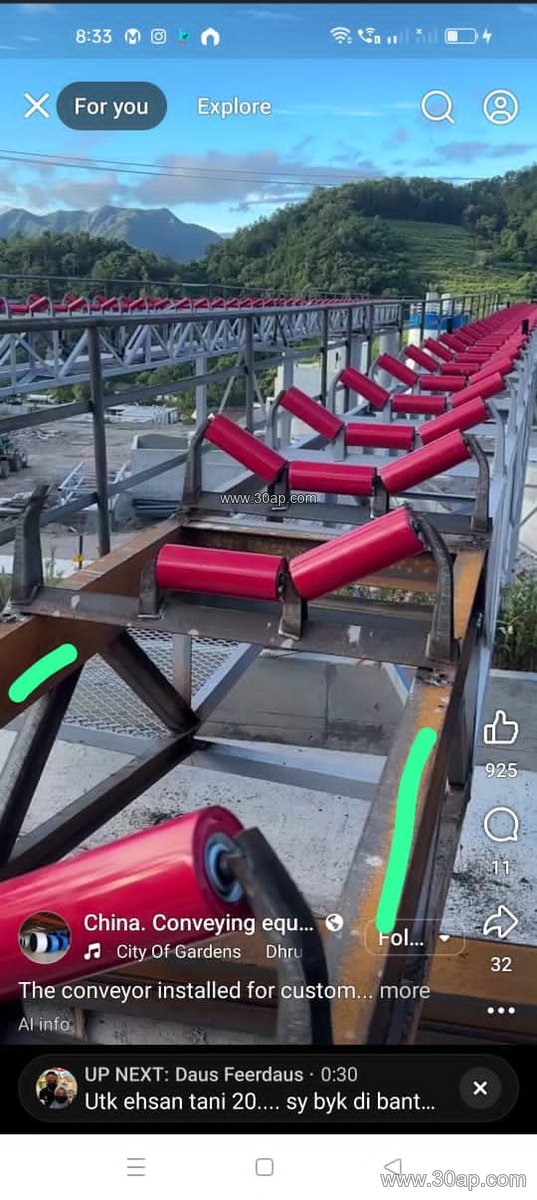
You will find mining conveyor brackets in limestone quarries, iron ore plants, coal washing stations, cement plants and power plant coal handling systems. In a crushing and screening circuit, impact brackets sit under the crusher discharge to absorb shock before the belt carries rock onward. In a port or ship loading line, heavy frames support wide belts moving aggregate at high tonnage. Underground coal mining conveyor belt systems use flame retardant and anti-static belts, and the brackets there are often compact to fit limited gallery space.
The bracket also works alongside related hardware such as the conveyor pulley, the idler roller and the conveyor bracket assembly at transfer points. Choosing a bracket that suits the belt type — whether an EP conveyor belt, an NN conveyor belt, a steel cord conveyor belt or a corrugated sidewall conveyor belt — helps the whole line run smoothly.
Buyer Checklist Before Ordering
- Confirm belt width, trough angle and roller diameter together.
- State whether the bracket is fixed or adjustable.
- Confirm mounting hole spacing and crossbeam length from drawings.
- Match frame material and finish to the site environment.
- Check that the bracket suits the belt construction and load profile.
For more on conveyor brackets and matched components, visit beltconveyorparts.com or check our conveyor bracket range at conveyoraccessories.com. Buyers comparing brackets for a mine, cement plant or power station should always request a drawing review before committing to a batch.