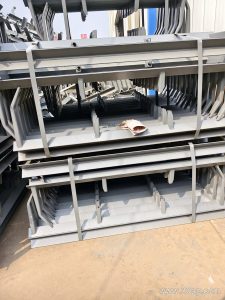
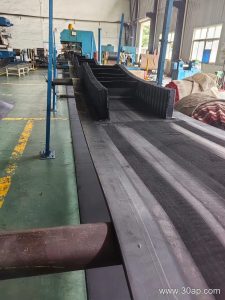
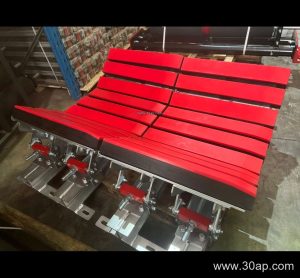
What the Ø89 Rubber Disc Idler Does
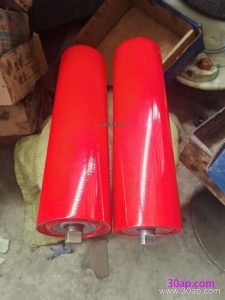
The Ø89 rubber disc idler is a carrying or impact idler built around a 89 mm roller diameter and fitted with a series of rubber discs along the shell. On a conveyor belt system, it supports the loaded strand and absorbs some of the shock from lumpy material at transfer points. In a quarry or a limestone mine, the rubber disc surface helps reduce belt wear when sharp rock fragments land on the belt. This idler is often chosen where standard steel rollers would suffer from impact damage or material buildup.
Rubber disc idlers are not the same as drive pulleys, tail pulleys, or bend pulleys. Those are conveyor pulleys that transmit motion or change belt direction. The Ø89 rubber disc idler is a rotating support component, usually mounted on a conveyor bracket or frame. It works together with the conveyor belt and other idler rollers to keep the belt tracking smoothly.
Construction and Key Features
A typical Ø89 rubber disc idler uses a steel tube body with multiple rubber discs pressed or bonded onto the shell. The discs are spaced to create a flexible, cushioning surface. The roller runs on sealed bearings, commonly 6204 or 6205 for this diameter range, though bearing selection depends on load and speed. The shaft ends are machined for mounting in standard brackets.
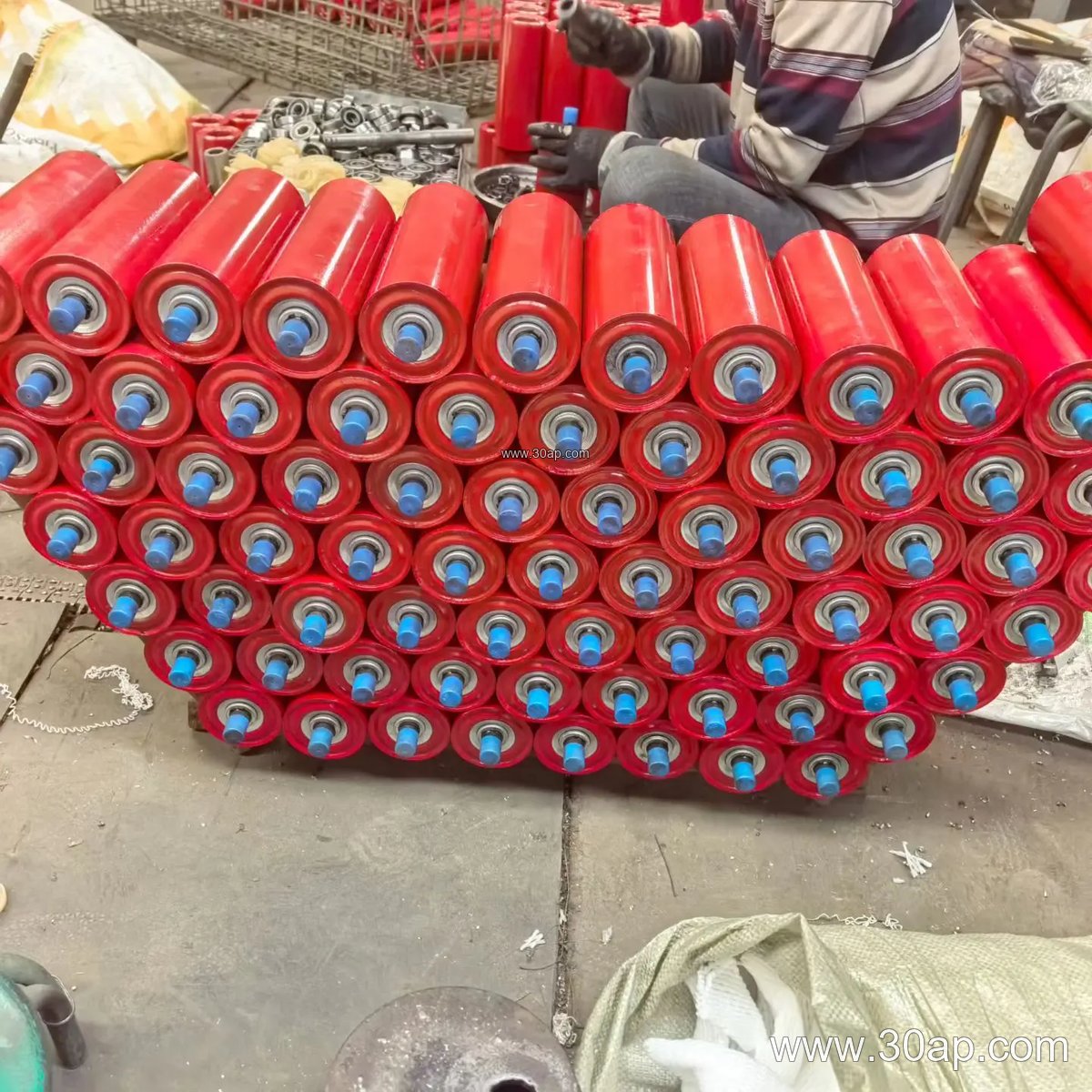
Rubber discs offer several practical benefits. They damp vibration, reduce noise, and provide better grip than bare steel in wet or dusty conditions. In a coal mining conveyor or a cement plant, this can help limit spillage and belt misalignment. The rubber surface also protects the belt cover from abrasion when the material is heavy or angular. The idler is available in common belt width arrangements, and the roller length is determined by belt width, trough angle, and idler set configuration.
Common Reference Dimensions
The table below shows typical reference values for Ø89 idlers. These are examples, not fixed combinations. Actual roller length and bearing size should be confirmed with the conveyor design.
| Belt Width | Typical Roller Length (three-roll trough) | Common Bearing Reference |
|---|---|---|
| B500 | 200 mm | 6204 |
| B650 | 250 mm | 6205 |
| B800 | 315 mm | 6205 |
| B1000 | 380 mm | 6305 |
| B1200 | 465 mm | 6305 |
| B1400 | 530 mm | 6306 |
For wider belts such as B1600 or B1800, longer rollers and heavier bearings are usually required. The Ø89 size is often used on medium-duty conveyors, while larger diameters like Ø108 or Ø133 may appear on higher-capacity lines. The rubber disc idler can also be supplied in a flat return arrangement or as a V-return idler when belt training is needed.
Where It Fits in Bulk Handling
In a sand and gravel plant, the Ø89 rubber disc idler is frequently placed at the loading point under the crusher discharge. The rubber discs absorb the impact of falling stone and protect the belt from gouging. In a coal preparation plant or a power plant coal yard, it helps manage wet, sticky material without the buildup that can occur on plain steel rollers. The same idler may be used on a stacker or a ship loading conveyor where moderate belt widths are common.
When selecting this idler, consider the conveyor belt type and the operating environment. An abrasion resistant conveyor belt may be paired with rubber disc idlers to extend service life in a quarry conveyor belt line. In a coal mining conveyor belt system, a flame retardant conveyor belt is often required, and the idler should be compatible with the belt cover. For long overland runs, an EP conveyor belt or a steel cord conveyor belt may be used, and the idler spacing should follow the conveyor design. The Ø89 rubber disc idler is not a replacement for a drive pulley or a bend pulley; it is a support roller that works with the conveyor pulley and conveyor bracket assembly.
Buyer Checklist
- Confirm the belt width and trough angle before ordering. The roller length changes with the idler set type.
- Check the bearing size and sealing arrangement for dusty or wet conditions. A sealed bearing is common for outdoor use.
- Ask for the rubber disc hardness and spacing if impact absorption is important. Softer discs cushion more but may wear faster.
- Verify the shaft diameter and mounting dimensions against the existing conveyor bracket.
- Consider the belt speed and load. Higher speeds may require a larger roller diameter or a different bearing class.
Rubber disc idlers are available in several roller diameters, and Ø89 is one of the common medium sizes. The correct choice depends on the conveyor layout, the material handled, and the maintenance plan. For a reliable support solution in a quarry, a cement plant, or a coal handling system, the Ø89 rubber disc idler offers a practical balance of cushioning and durability.