What a Conveyor Frame Actually Does
A conveyor frame is the structural backbone that holds every idler roller, pulley and bracket in line so the conveyor belt can travel smoothly from feed point to discharge. In a quarry, cement plant or power plant coal yard, the frame carries the weight of the belt, the material and the rotating parts, and it keeps the trough shape consistent along the whole run. Get the frame right and the belt tracks well; get it wrong and you will fight misalignment, spillage and edge damage for the life of the line.
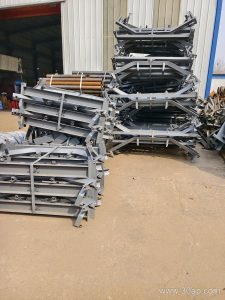
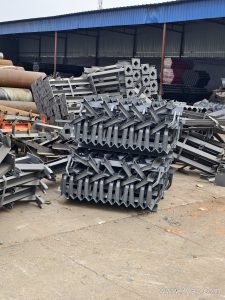
The frame is not a single part. It is a system of stringers, cross beams, legs and mounting plates, usually fabricated from angle steel, channel steel or folded steel plate. Paint finish and bolt hole quality matter as much as steel thickness, because a frame that corrodes or loosens will let the idlers drift out of alignment.
How the Structure Is Built
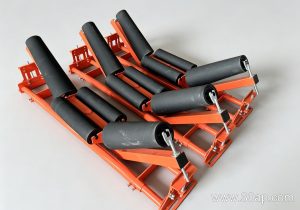
Most frames follow a modular pattern. Two longitudinal stringers run the length of the conveyor, and cross members are bolted or welded between them at intervals matched to the idler spacing. On the carrying side, the cross members support troughing idler frames; on the return side, they hold flat or V-return frames that support the empty belt.
- Stringers and cross beams in angle or channel steel
- Troughing frame brackets set to the design trough angle
- Return frame brackets, flat or V-shaped
- Legs and base plates for floor or trestle mounting
- Bolt holes and slot patterns matched to the idler shaft ends
Frames are usually supplied in sections so they can be transported and assembled on site. Bolted construction is common in plants that expect future modifications, while welded frames suit long, fixed installations where rigidity is the priority.
Trough Angle and Belt Width Go Together
The trough angle is one of the first decisions a buyer faces. Common values are 20, 30, 35 and 45 degrees. A deeper trough holds more material and reduces spillage on a fast belt, but it also increases the bending stress at the belt edges. Adjustable frames let maintenance teams change the angle within that range to suit the material and the belt.
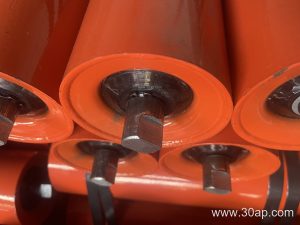
Belt width and roller diameter must be considered together with the frame. Typical combinations include B800 with 35 degrees and Ø108 rollers, or B1200 with 45 degrees and Ø133 rollers, but these are examples, not rules. A given belt width can work with more than one trough angle or roller diameter depending on capacity, speed and material. Frames are commonly built for widths from B500 up to B2000 and beyond, and the cross beam length and hole spacing change with each width and angle.
| Frame Reference | Belt Width | Trough Angle | Roller Diameter |
|---|---|---|---|
| Light duty | B500 to B650 | 20 to 30 degrees | Ø89 |
| Medium duty | B800 to B1000 | 30 to 35 degrees | Ø108 to Ø133 |
| Heavy duty | B1200 to B1600 | 35 to 45 degrees | Ø133 to Ø159 |
| Extra heavy | B1800 to B2200 | 35 to 45 degrees | Ø159 to Ø194 |
These values are reference points only. Final dimensions are determined by the conveyor design, and hole spacing should always be confirmed against the idler drawing before fabrication.
Fixed, Adjustable and Special Frames
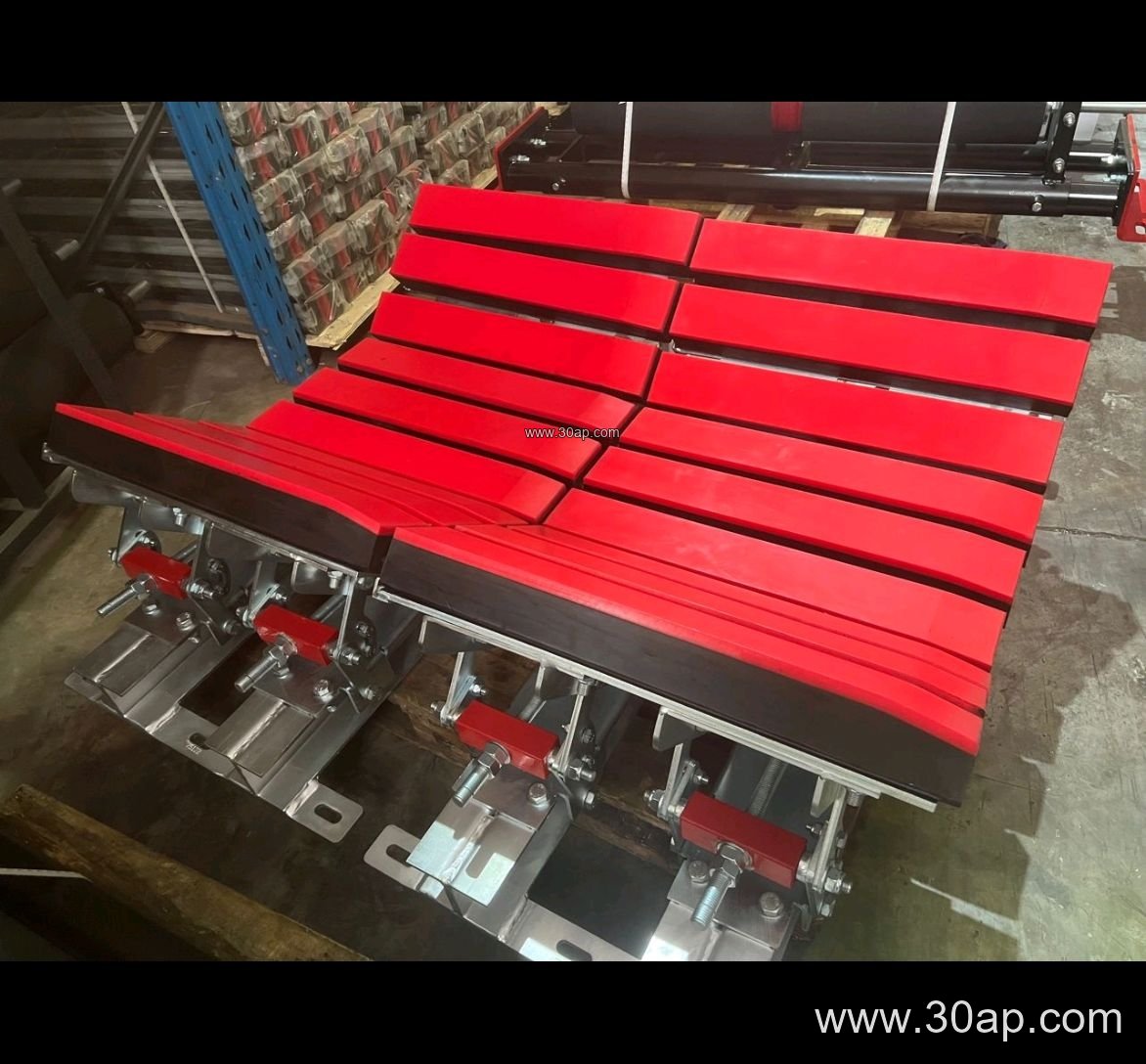
A fixed frame is welded or bolted to a set geometry and is the simplest option for stable, well understood duty. An adjustable frame allows the trough angle and sometimes the idler position to be changed, which helps during commissioning or when the material changes. Transition frames sit near the head and tail and gradually change the belt from trough to flat; they are a distinct subtype and should not be confused with standard troughing frames. Impact frames with rubber cushions are used under crusher discharge points, and self-aligning frames help correct belt wander on long runs.
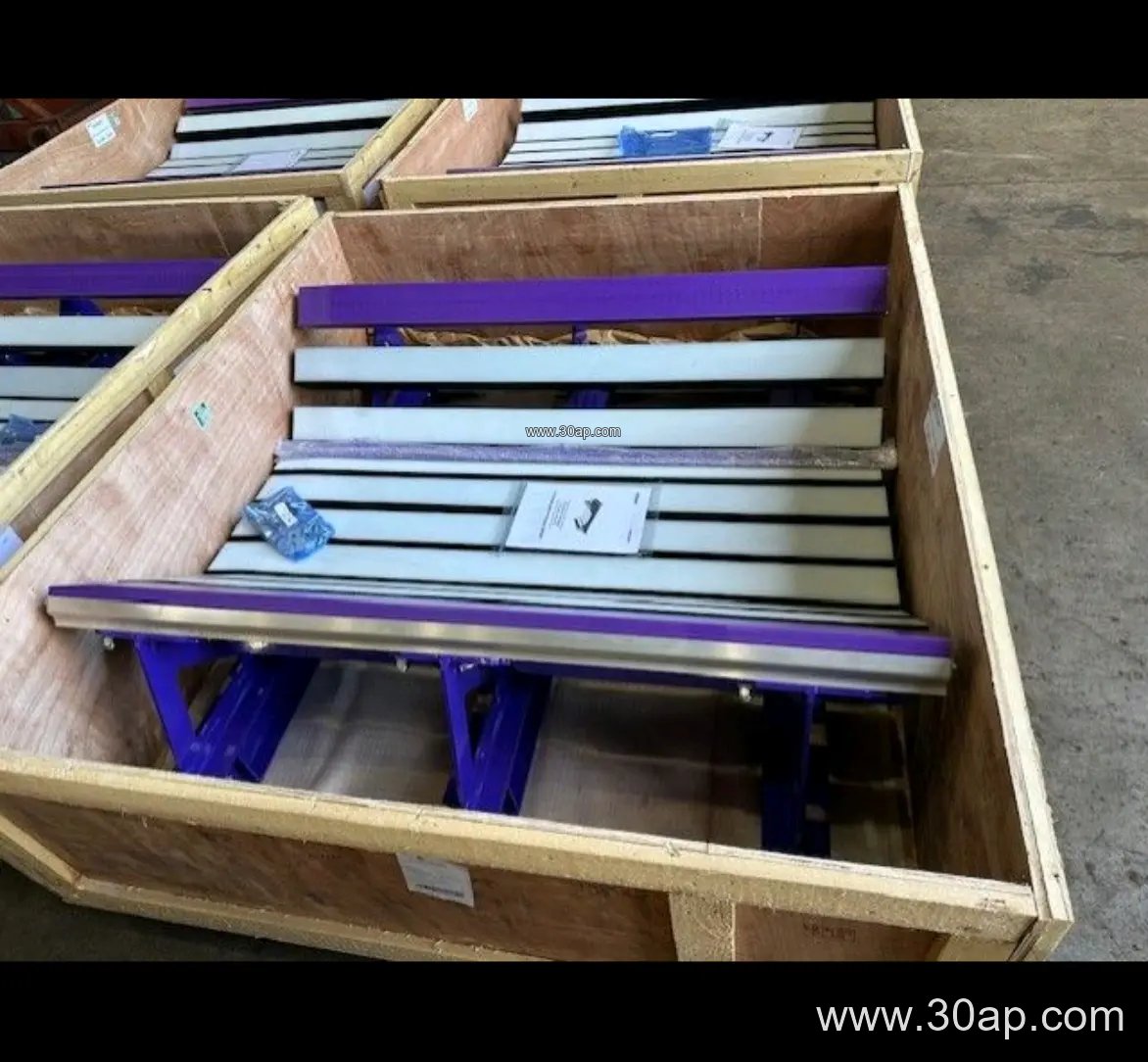
Choosing between fixed and adjustable comes down to how much flexibility the plant needs. A sand and gravel line with steady duty often uses fixed frames, while a port or bulk terminal handling varied cargo may prefer adjustable sections.
Where Frames Are Used
You will find conveyor frames in stone crushing plants, cement kiln feed lines, power station coal handling, iron ore stockyards and fertilizer warehouses. In a crushing circuit, a heavy frame under the crusher discharge protects the belt with impact idlers and keeps the trough stable. In a coal yard, flame retardant and anti-static belt grades are common, and the frame must be robust enough to resist vibration from the drive.
Frames work with a wide range of belts, from an EP conveyor belt or NN conveyor belt in general bulk duty to a steel cord conveyor belt on long overland runs. The frame does not change the belt specification, but it must match the belt width, load and trough profile. A heat resistant conveyor belt in a cement plant still needs a frame that keeps idlers square and aligned.
What Buyers Should Check
- Confirm belt width, trough angle and roller diameter as a set, not separately
- Check hole spacing and cross beam length against the actual idler drawing
- Ask for steel grade and surface treatment, especially in wet or corrosive sites
- Decide whether fixed or adjustable frames suit future changes
- Plan leg height and base plates around the actual floor or trestle
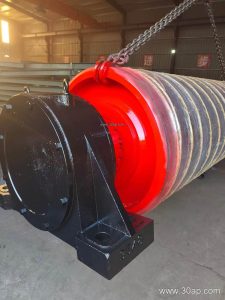
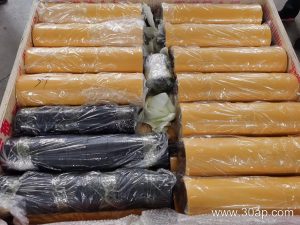
For related components such as conveyor pulleys, conveyor brackets and idler rollers, buy from the same dimensional family so the frame, rollers and belt work as one system. A frame is a long term investment, and small dimensional errors at the drawing stage are expensive to correct after installation.