What a Belt Conveyor Trough Idler Does
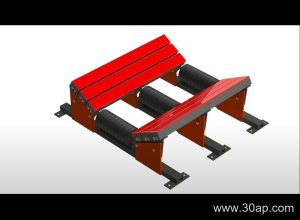
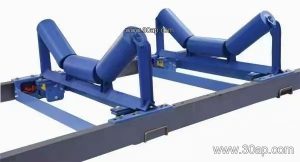
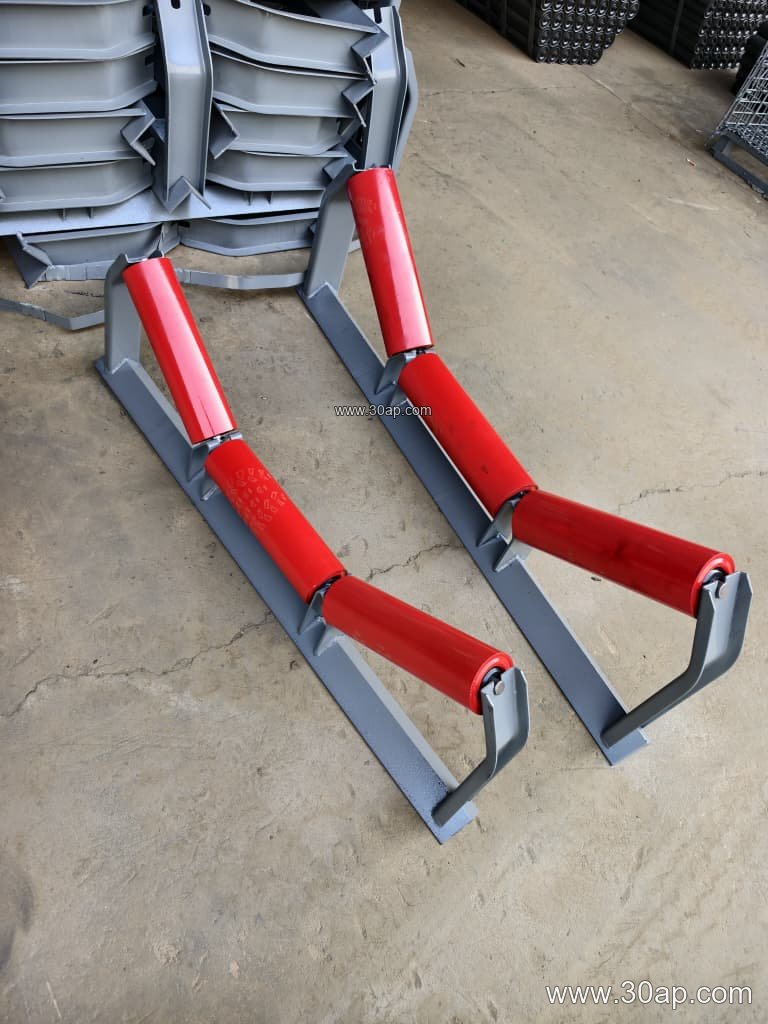
A belt conveyor trough idler is the assembly of rollers that supports the loaded side of a conveyor belt and shapes it into a trough. The three-roll arrangement lifts the belt edges, so crushed rock, clinker, sand, or ore sits in a curved profile instead of spilling over the edges. In a quarry or a cement plant, this carrying idler set is the component that turns a flat belt into a high-capacity bulk material conveyor belt line.
The same assembly is also called a troughing idler or carrying idler set. It is not a drive pulley, a tail pulley, or a bend pulley, and it should not be confused with a return idler that supports the empty strand.
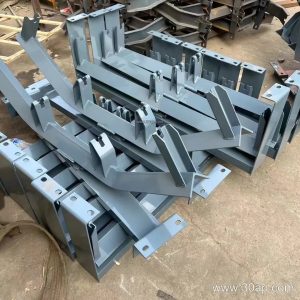
How the Troughing Set Is Built
A typical set has three idler rollers mounted on a common frame or on individual brackets. The center roller sits flat, while the two side rollers are inclined at the trough angle. Common trough angles are 20, 30, 35, and 45 degrees; a steeper angle contains more material but increases belt edge tension.
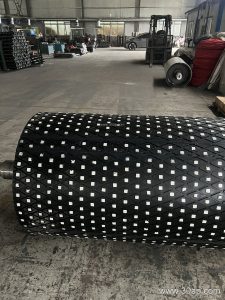
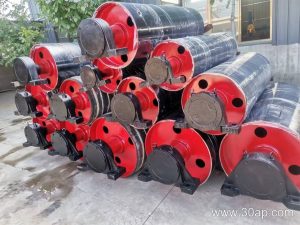
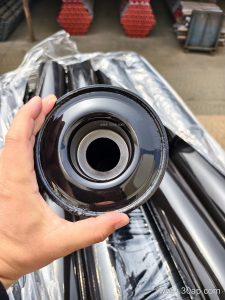
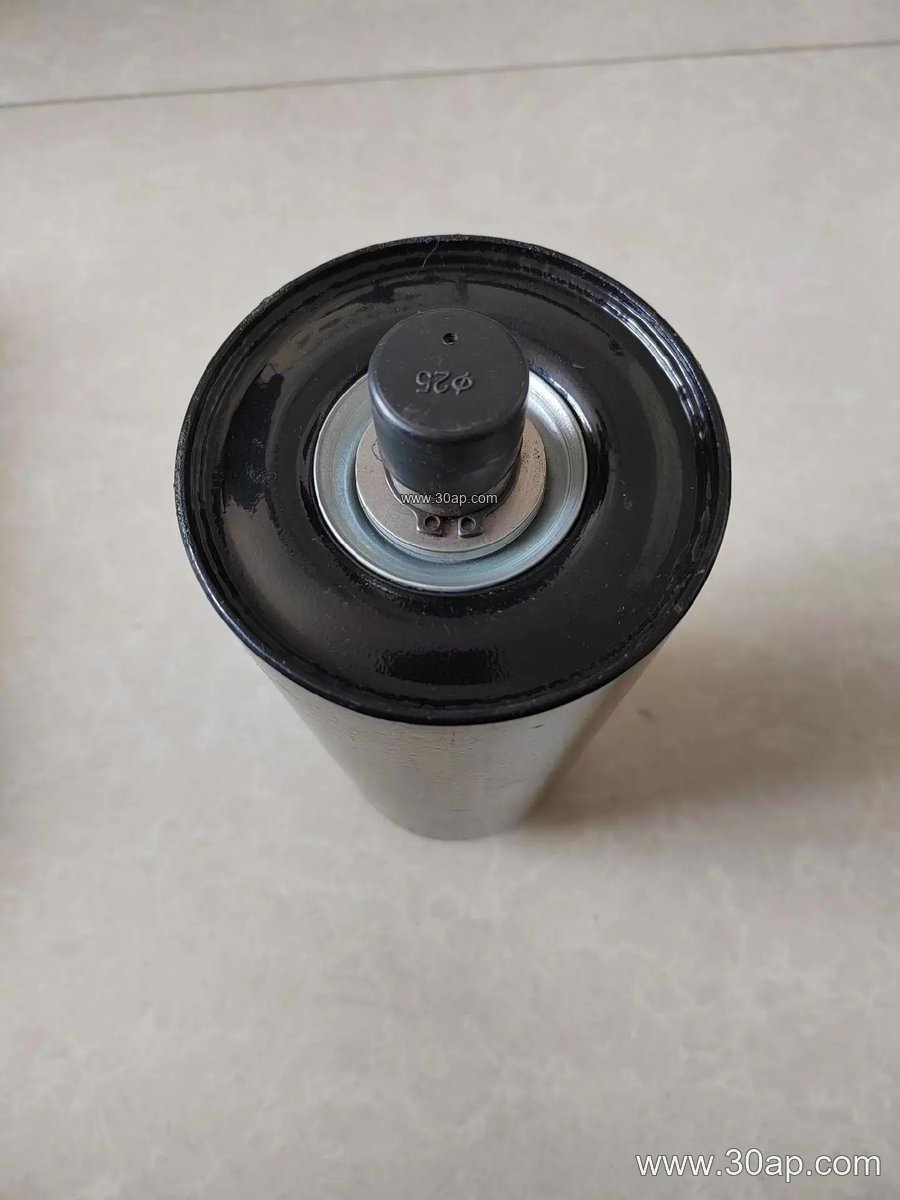
Each roller usually combines a steel tube shell, a shaft, sealed bearings, and a bracket or mounting plate. Shell options include plain steel, nylon, ceramic, and rubber rings. Rubber rings are common on impact idlers at transfer points, where lumpy feed from a crusher conveyor belt hits the belt hard.
Common Reference Dimensions
The table below shows typical reference values. Actual roller length and diameter depend on belt width, trough angle, and frame design, so treat these as examples rather than fixed rules.
| Belt width | Typical center roller length (three-roll set) | Common idler diameters |
|---|---|---|
| B500 | about 200 mm | Ø63, Ø76, Ø89 |
| B650 | about 250 mm | Ø76, Ø89, Ø102 |
| B800 | about 315 mm | Ø89, Ø102, Ø108 |
| B1000 | about 380 mm | Ø102, Ø108, Ø127 |
| B1200 | about 465 mm | Ø108, Ø127, Ø133 |
| B1400 | about 530 mm | Ø127, Ø133, Ø159 |
| B1600 | about 600 mm | Ø133, Ø159, Ø178 |
| B1800 | about 670 mm | Ø159, Ø178, Ø194 |
| B2000 | about 750 mm | Ø178, Ø194, Ø219 |
Bearings such as 6204, 6205, 6305, 6306, 6308, and 6310 appear in different roller sizes. No single bearing number is tied to one diameter. Side rollers and center rollers may also differ in length within the same set.
Where Trough Idlers Are Used
In an aggregate plant, troughing idlers carry stone from the primary crusher to the screening deck. In a cement works, they support clinker and raw meal on long inclined belts. Power plant coal handling, iron ore and copper ore transport, and port ship loading all rely on the same basic troughing principle.
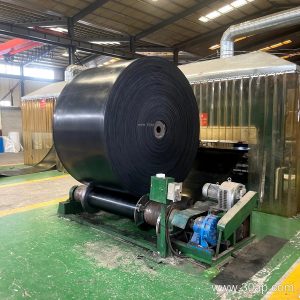
The belt itself matters too. An EP conveyor belt or a multi-ply fabric core belt is common on medium-duty lines, while a steel cord conveyor belt suits long overland runs. Heat resistant conveyor belt grades are chosen near kilns, and flame retardant conveyor belt grades are used in coal mining conveyor belt systems underground.
What Buyers Should Check
- Match roller diameter and length to the actual belt width, trough angle, and frame, not to a catalog guess.
- Confirm the shaft and bearing arrangement with the bracket supplier, since shaft size is not set by belt width alone.
- Choose the shell surface for the duty: steel for general service, rubber rings for impact zones, ceramic or nylon where sticking and wear are concerns.
- Check sealing quality on dusty quarry and cement lines, where fine grit shortens bearing life.
- Review spacing along the conveyor; idler pitch is a design decision based on belt sag and load.
Transition idlers near the head and tail need a shallower angle than the main carrying run, and self-aligning or training idlers help keep a wandering belt centered. These are separate roles within the same trough idler family and should be specified by function.
Maintenance Notes
Seized or worn troughing rollers drag on the belt, raise power draw, and can damage the cover. Inspect for uneven rotation, noise, and material buildup. Replace a roller before the shell wears through, and keep the frame square so the belt trains correctly. Onlines conveying equipment pages at example.com/belt-conveyor-trough-idler list common troughing configurations for reference.