What a Conveyor Frame Does
A conveyor frame is the structural backbone that holds the idlers, pulleys, and belt in working alignment along a conveying line. It carries the weight of the belt and material, keeps the trough shape consistent, and provides the mounting points that let a conveyor pulley and idler roller do their jobs without drift. In a quarry, a cement plant, or a power plant coal yard, the frame is often the first thing an installer levels and the last thing anyone wants to rework, because everything above it depends on that reference line.
How the Frame Is Built
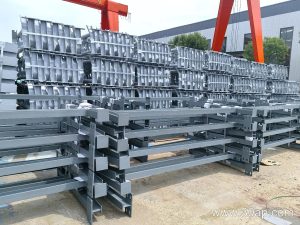
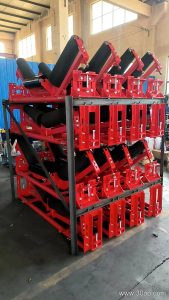
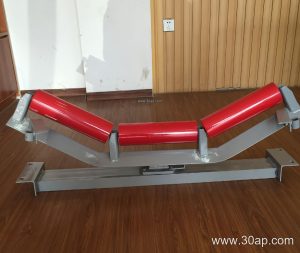
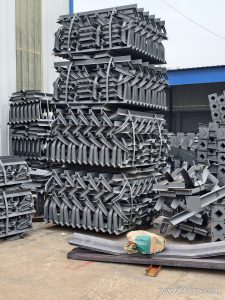
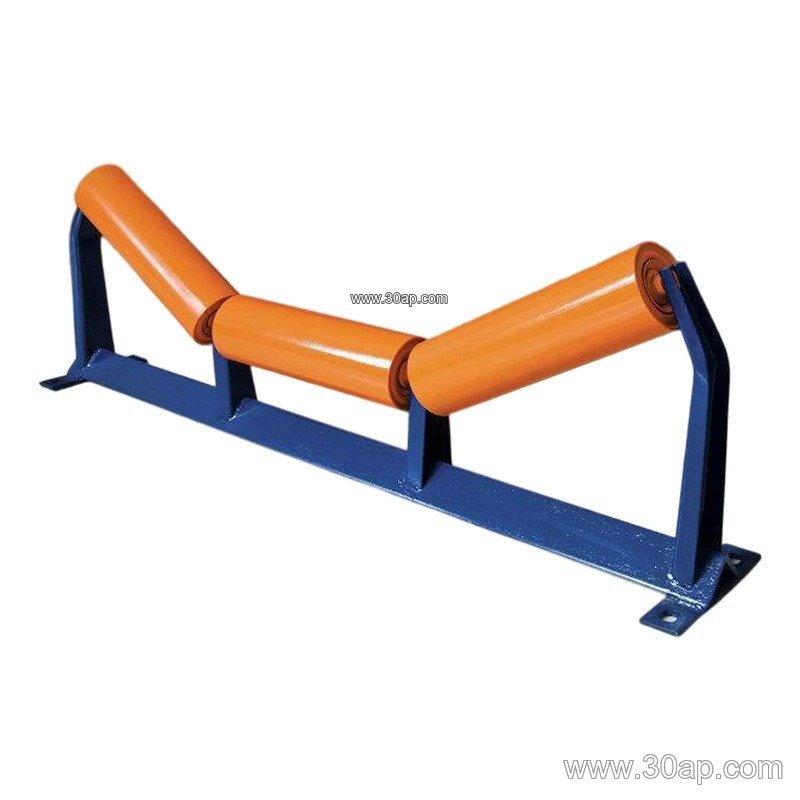
Most frames are fabricated from angle steel, channel steel, or folded steel plate, welded or bolted into stringers, cross beams, and support legs. The stringers run the length of the conveyor and carry the brackets; cross members set the spacing. A conveyor bracket is the interface between the stringer and the idler, and its hole pattern and tilt determine the trough angle. Common trough angles are 20, 30, 35, and 45 degrees, and adjustable frames can move between these positions during commissioning. Forward-leaning brackets are usually set around 1.5 to 2 degrees to help the belt track.
Typical Frame and Bracket Reference Values
These are common reference ranges, not fixed pairings. Final dimensions follow the conveyor design.
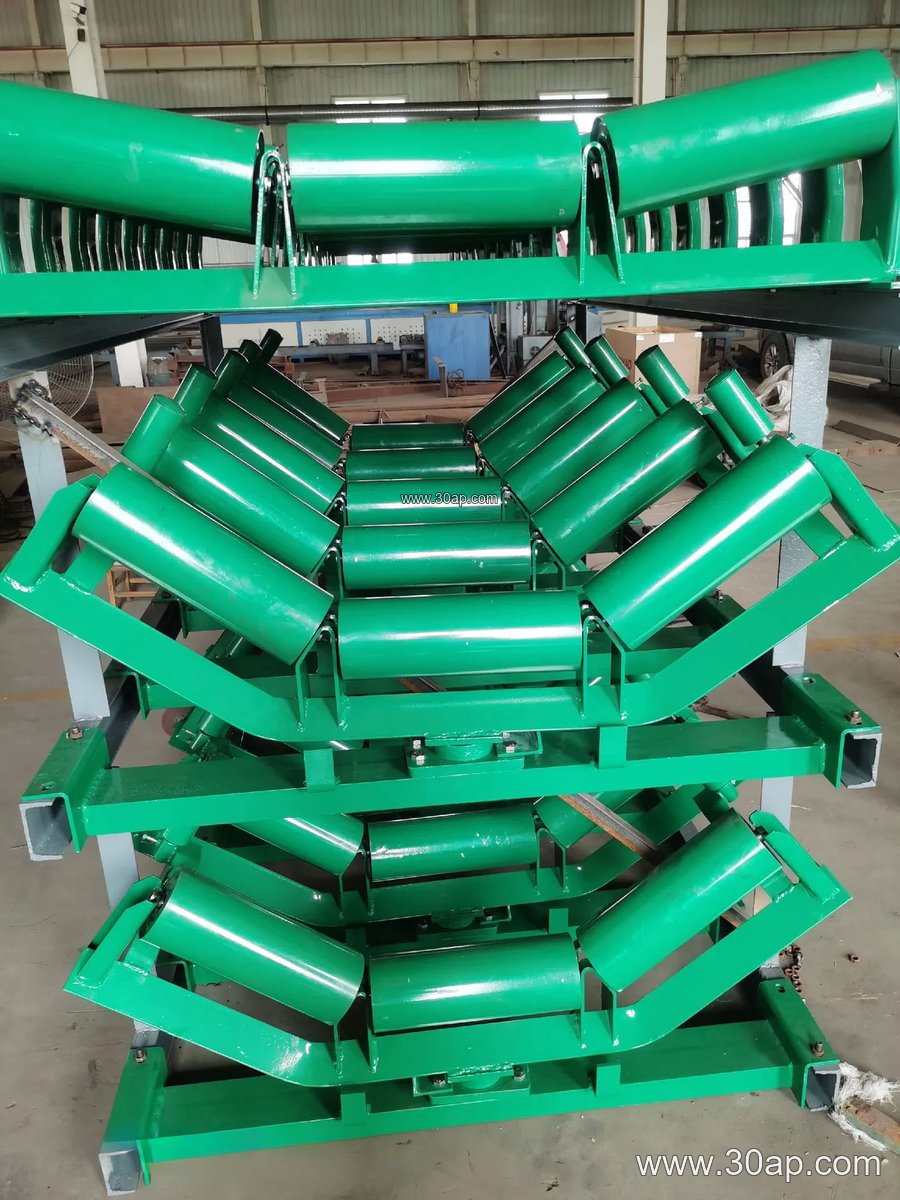
- Belt width: B500, B650, B800, B1000, B1200, B1400, B1600, B1800, B2000, B2200
- Trough angle: 20, 30, 35, 45 degrees
- Idler diameter: Ø89, Ø108, Ø133, Ø159, Ø194
- Bracket types: troughing, transition, return, V-return, impact, self-aligning, forward-leaning, spiral, suspended, adjustable
Mounting hole spacing and cross beam length vary with belt width and trough angle, so they should always be confirmed against the drawing rather than assumed.
Where Frames Are Used
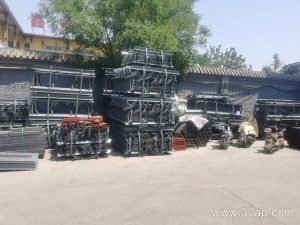
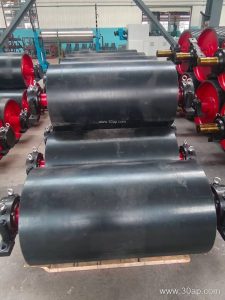
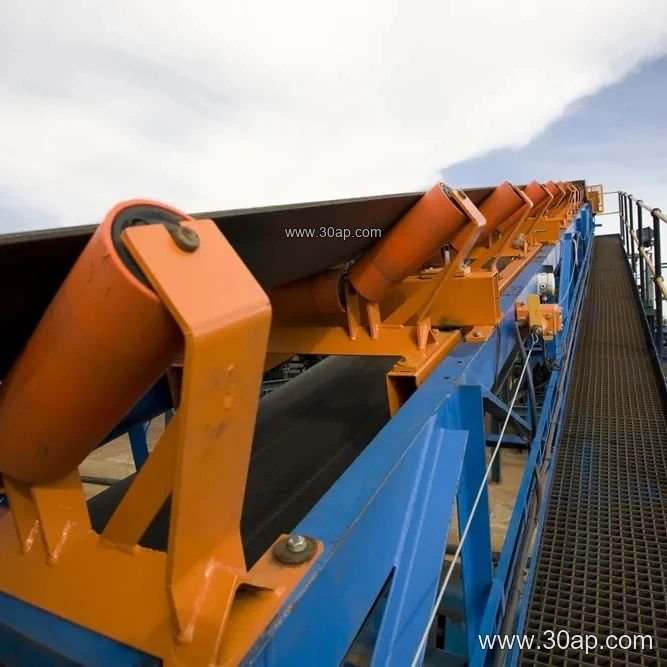
In a limestone mine or a crushing and screening line, the frame is usually fixed and heavily braced to absorb impact from coarse rock. At a port or a ship loading terminal, long overland frames need careful alignment and expansion allowance. In a coal washing plant or a power plant coal handling system, flame retardant conveyor belt and anti-static belt are common, and the frame must be grounded and kept clear of material buildup. Whatever the site, the frame works together with the conveyor belt, idler roller, pulley, and bracket as one mechanical system.
Fixed and Adjustable Designs
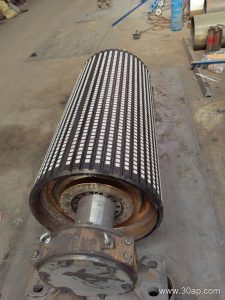
Fixed frames are welded or bolted to a set geometry and are the default for long straight runs. Adjustable frames let maintenance crews change the trough angle or fine-tune idler position, which is useful at transfer points and during belt training. A transition bracket near the head or tail is a separate subtype and should not be confused with a standard troughing bracket, just as a drive pulley is not a tail pulley or a bend pulley. Each has its own role in the line.
Selection Points for Buyers
Start with belt width, expected load, and material lump size. Match idler diameter to the belt and load, but remember that one belt width can accept several idler diameters and trough angles depending on the design. Consider the environment: an abrasion resistant conveyor belt in an iron ore or copper ore operation puts different demands on the frame than a food grade belt in a grain silo. Ask for drawings that show hole spacing, beam length, and bracket type, and confirm whether the frame is bolted or welded. For heavy-duty mining conveyor belt duty, specify thicker stringers and closer idler spacing.
Installation and Maintenance Notes
Level the frame before tightening anything, and check stringer straightness along the full run. Keep the frame clean so material does not build up under the return side, and inspect brackets for wear where the idler sits. A loose bracket can cause belt misalignment, edge damage, and premature pulley wear. During planned shutdowns, check welds, bolts, and paint or galvanizing condition, especially in wet or corrosive plants. A well-maintained conveyor frame keeps the belt centered, extends idler life, and protects the pulley from uneven loading.
For more information on matching frames with conveyor belt, idler roller, and conveyor pulley selections, contact the supplier with your belt width, trough angle, and site conditions.