What a Tail Bend Pulley Does
A tail bend pulley is a direction-changing roller mounted near the tail end of a conveyor. It does not drive the belt and it does not carry the main material load. Instead, it guides the returning belt into the tail pulley at the correct angle, keeping wrap and tracking under control. In many layouts the tail bend pulley works together with a take-up arrangement, so it also helps hold tension and absorb small changes in belt length. This is why engineers treat it as a separate component from the drive pulley and the tail pulley itself, even though all three may sit close together.
Because the belt passes over it with a relatively small arc of contact, the loads are lower than at the head drive, but the position is critical. A poorly aligned bend roller can cause edge wear, mistracking, and premature cover failure on the conveyor belt.
Construction and Surface Options
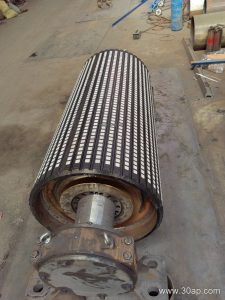
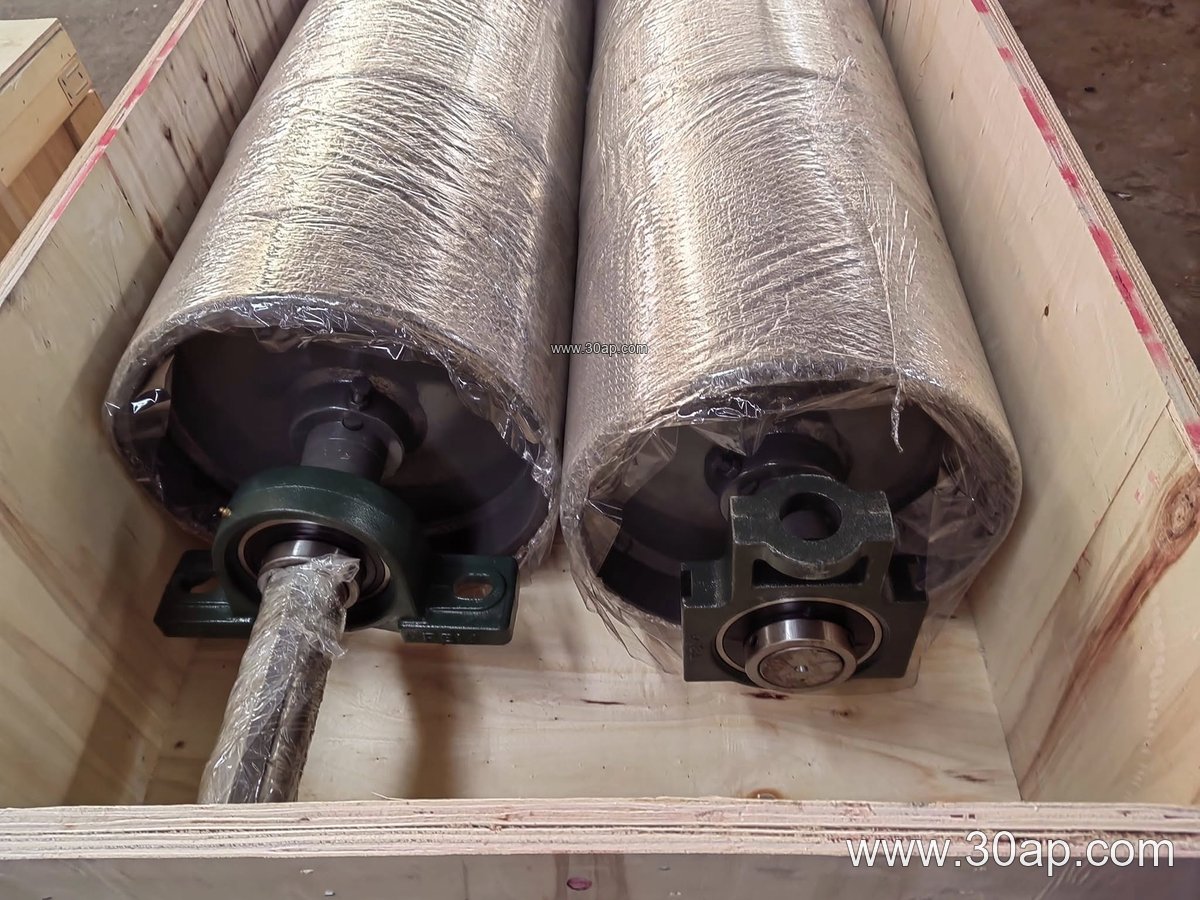
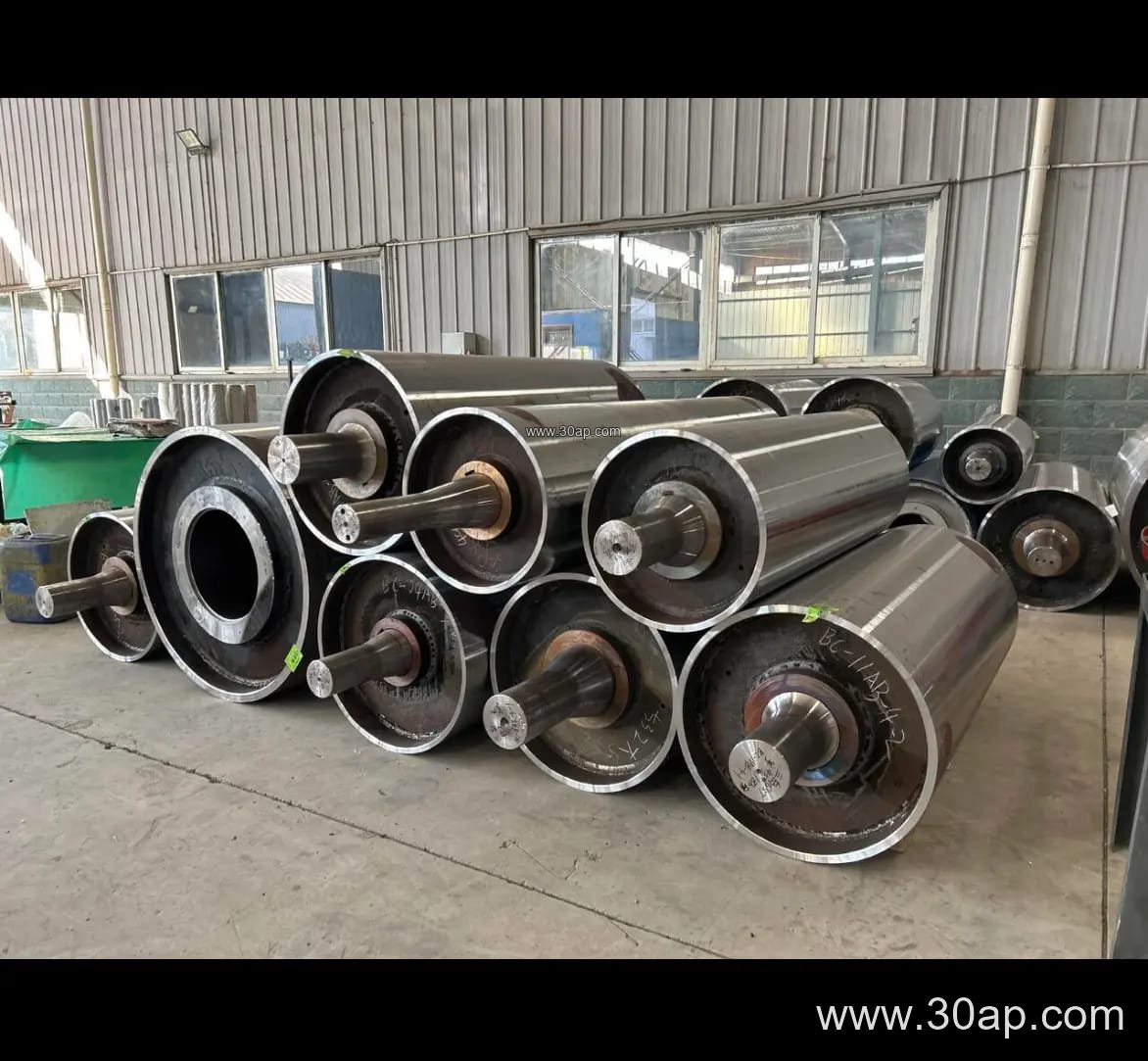
The body is usually a steel shell welded to end discs, with a through shaft supported by bearing housings. Shell thickness, shaft diameter, and bearing size are determined by the belt tension and the resultant load at that point, not by belt width alone. Common shaft sizes include Ø80, Ø100, Ø120, and Ø140, but the final value should come from the conveyor designer.
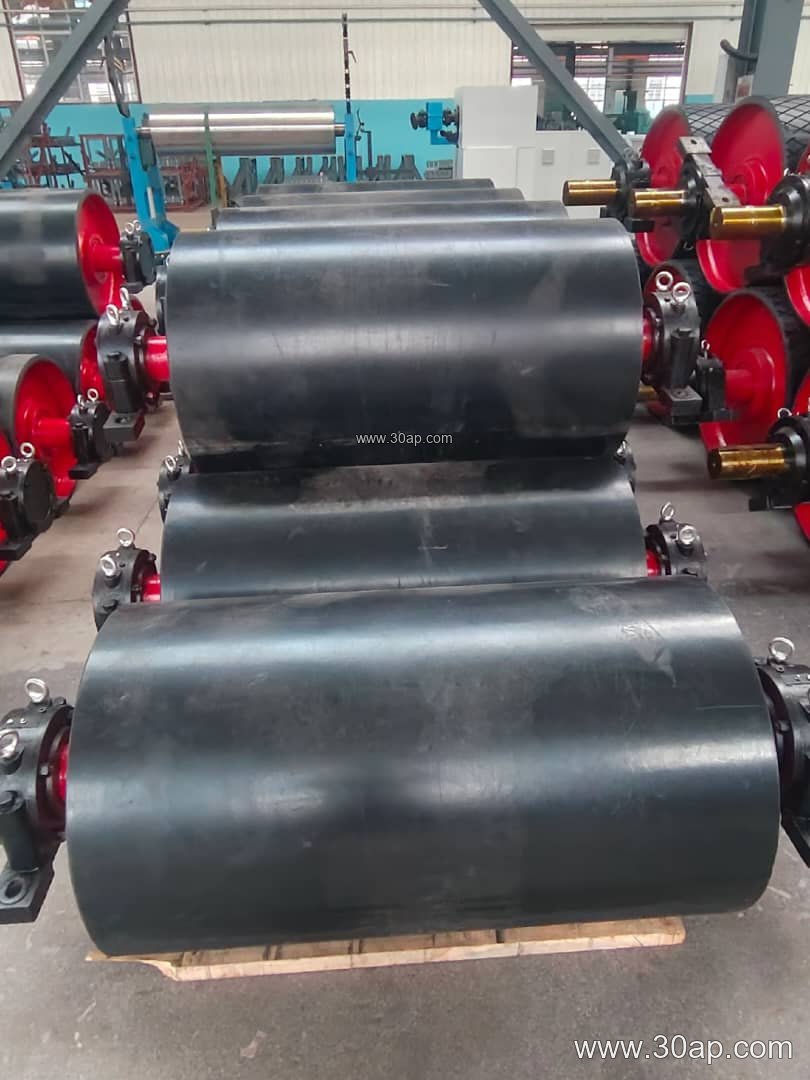
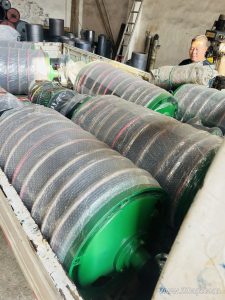
Surface treatment depends on the job. Plain finish is common where the roller only guides a clean return strand. Rubber lagging, either cold-bonded or hot-vulcanized, improves grip and reduces slip when the bend roller also contributes to tension. Diamond grooving helps shed water and fines in washing plants and ports, while plain lagging is often enough in a dry cement plant. Lagging thickness typically ranges from 8 mm to 15 mm on this type of roller.
Typical reference combinations
- B800 with Ø500 shell and 10 mm lagging
- B1000 with Ø630 shell and 12 mm lagging
- B1200 with Ø800 shell and 12 mm lagging
- B1400 with Ø800 shell and 15 mm lagging
These are reference pairings only. A wide belt can run on more than one diameter, and the correct choice depends on wrap angle, tension, and space.
Where It Fits in the Plant
In a quarry or sand and gravel line, the tail bend pulley often sits in a cramped return run behind the tail pulley, where space for a long take-up travel is limited. In a coal washing plant or a power plant coal handling system, it may be combined with a gravity take-up to keep a flame retardant conveyor belt running smoothly through transfers. The same component appears in cement plants on clinker and limestone conveyors, and in iron ore or copper ore terminals where the return strand carries fines and moisture.
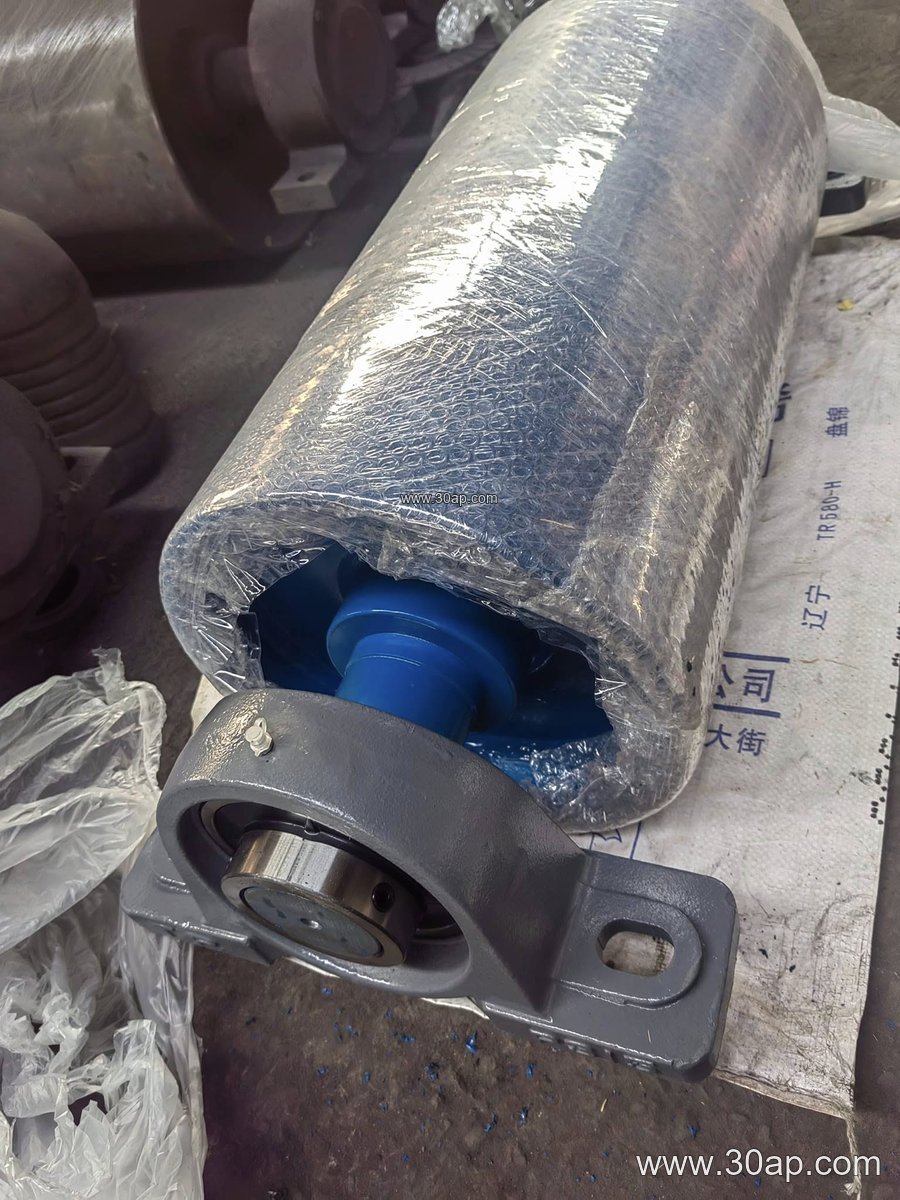
It is not a substitute for a drive pulley, a head pulley, or a snub pulley. Each has a different job, and mixing them up during procurement leads to the wrong lagging, the wrong bearing class, or the wrong shaft.
Buyer Checklist
Before ordering, confirm the belt width, the required shell diameter, the shaft diameter from the conveyor calculation, the lagging type and thickness, and the bearing housing style. Check whether the pulley must fit an existing conveyor bracket and whether the take-up travel allows the chosen position. Ask for the dynamic load rating rather than only the static weight.
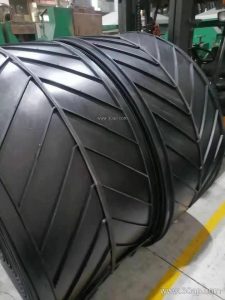
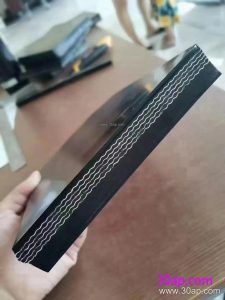
For the belt itself, buyers often pair this roller with an EP conveyor belt or a multi-ply fabric core belt in general bulk handling, and with a steel cord belt or heavy-duty mining belt where tension is high. Abrasion resistant and heat resistant grades may be needed in cement and sinter service. Matching the roller to the belt grade and the environment is more useful than matching it to a single catalogue number.
Finally, plan the maintenance routine. Check lagging wear, bearing temperature, and alignment at each shutdown. A small correction at the tail bend pulley is far cheaper than replacing a damaged belt or a scored tail pulley.