What a Building Materials Conveyor Pulley Does
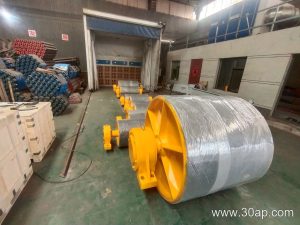
A building materials conveyor pulley is the cylindrical rotating component that transmits motion and tension to the belt in a bulk handling line. In a sand and gravel plant or a cement clinker circuit, it is the part that turns the endless loop, keeps the belt tracking, and carries the load at the discharge point. Buyers often call it a drum pulley or conveyor drum; both names describe the same product, and the term building materials conveyor pulley usually points to the heavy-duty units used in aggregate, cement, and construction material handling.
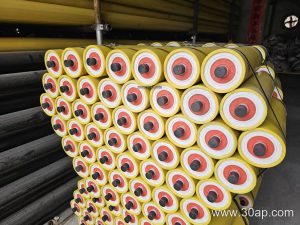
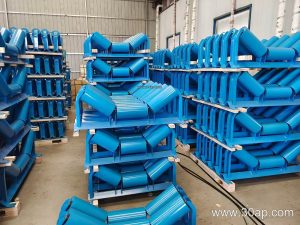
The pulley works together with the conveyor belt, idler roller sets, and conveyor bracket assemblies. A poorly matched pulley shows up quickly as belt wander, slipping, or premature cover wear, so understanding the construction and the selection logic matters more than picking the largest size on a list.
How the Pulley Is Built
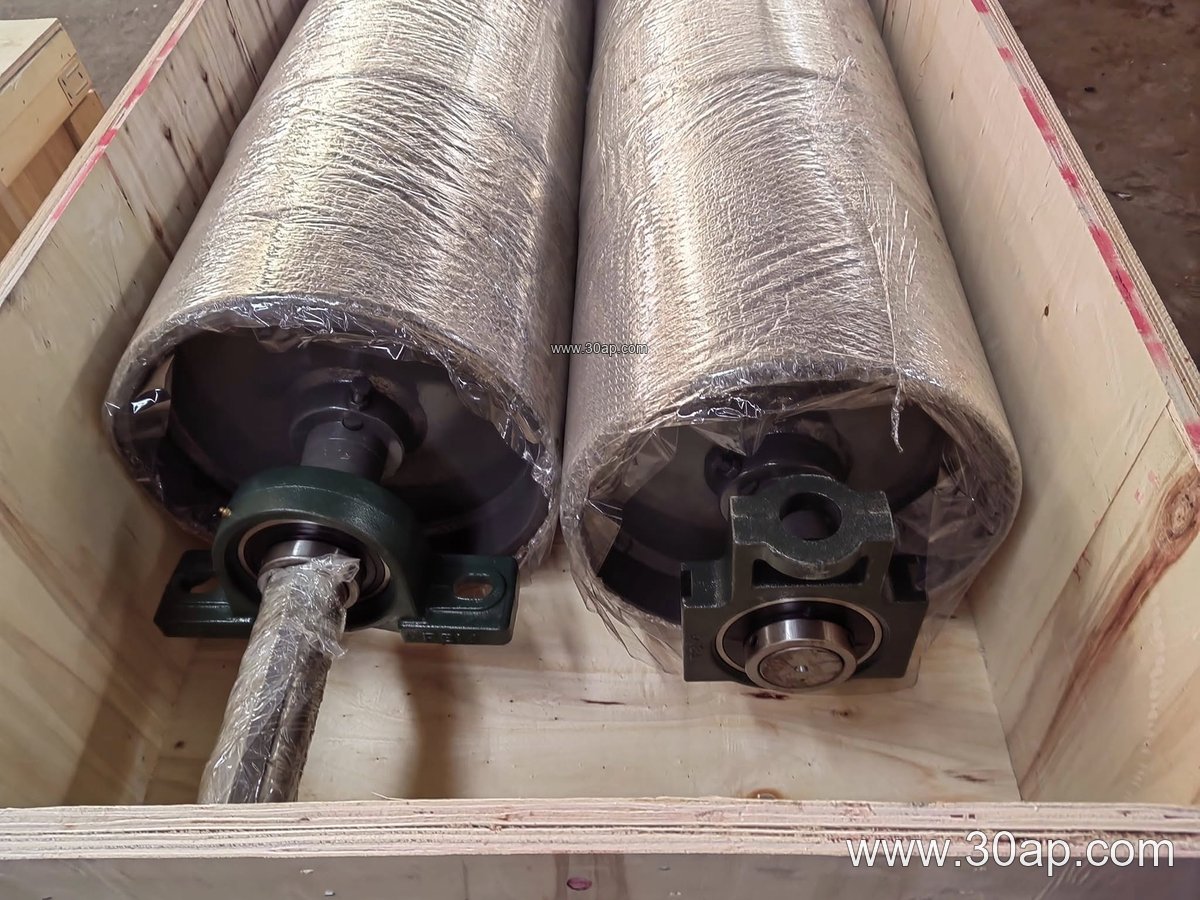
Most units start with a welded steel shell, machined end discs, a shaft, and bearing housings. The shell diameter, face width, and shaft diameter are designed together around the belt pull and the torque the drive must deliver. Surface treatment is a separate decision and is often the most visible difference between two pulleys of the same size.
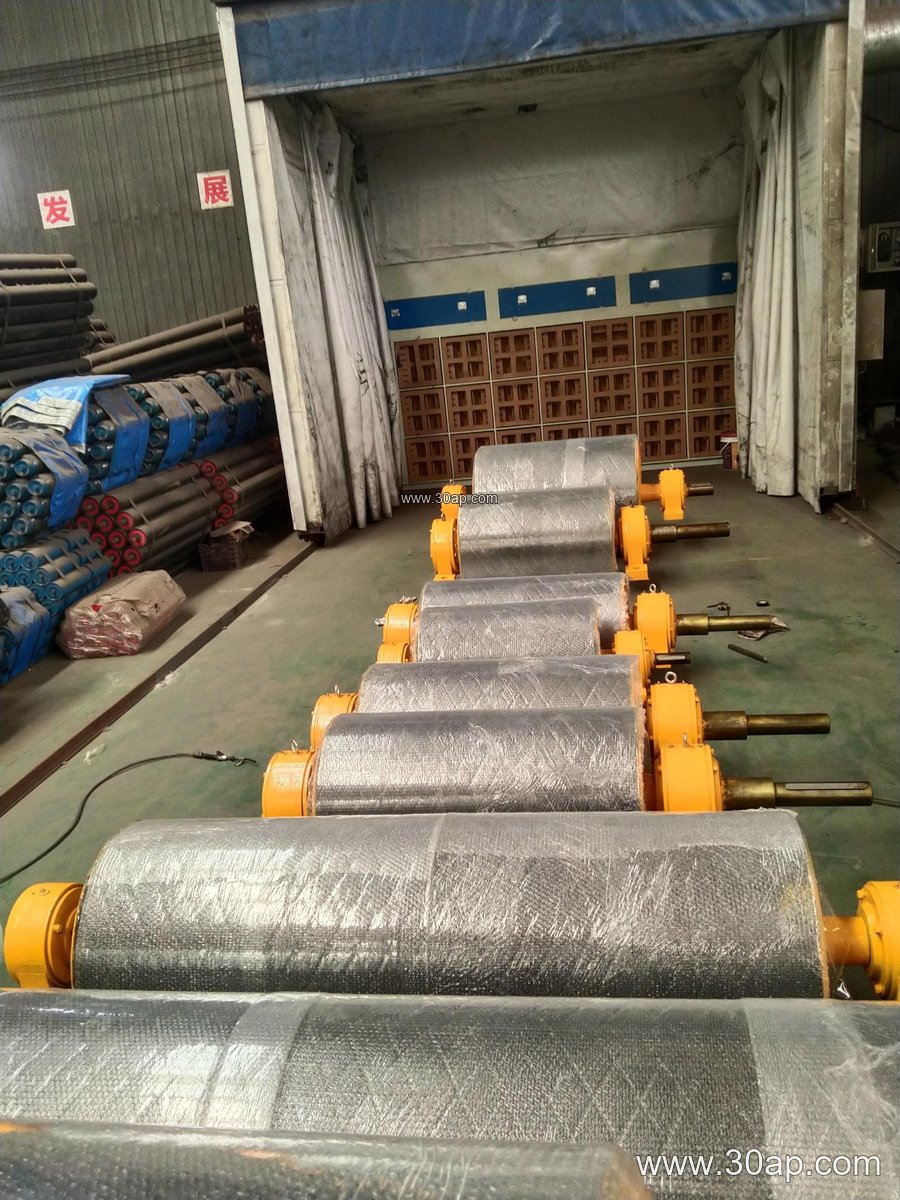
- Plain or smooth face for general carrying and non-drive positions
- Rubber lagging applied cold or hot vulcanized for grip and wear protection
- Diamond or herringbone grooving to improve traction and shed water
- Ceramic lagging tiles for high-abrasion duty
- Lagging thickness commonly 8, 10, 12, 15, or 20 mm depending on duty
The shell face is usually wider than the belt. For example, a B800 belt often runs on a pulley with roughly 950 mm face width, and a B1200 line may use about 1400 mm. These are typical references, not fixed pairings, and the final combination is set by the conveyor designer.
Drive, Tail, and Bend Positions Are Not Interchangeable
The same shell design can appear in several locations, but the duty changes. A drive pulley or head pulley transmits power and needs reliable traction, so lagging is common. A tail pulley at the loading end guides the belt and may include a self-cleaning or wing profile to shed sticky material. A bend pulley changes belt direction and carries lower torque, while a take-up or tension pulley maintains belt slack. These are distinct positions and should be specified by function, not used as synonyms for one another.
Electric drum pulleys integrate the motor inside the shell and suit compact layouts where a separate drive station is difficult to fit. They are an alternative arrangement, not a replacement for a standard head pulley in every plant.
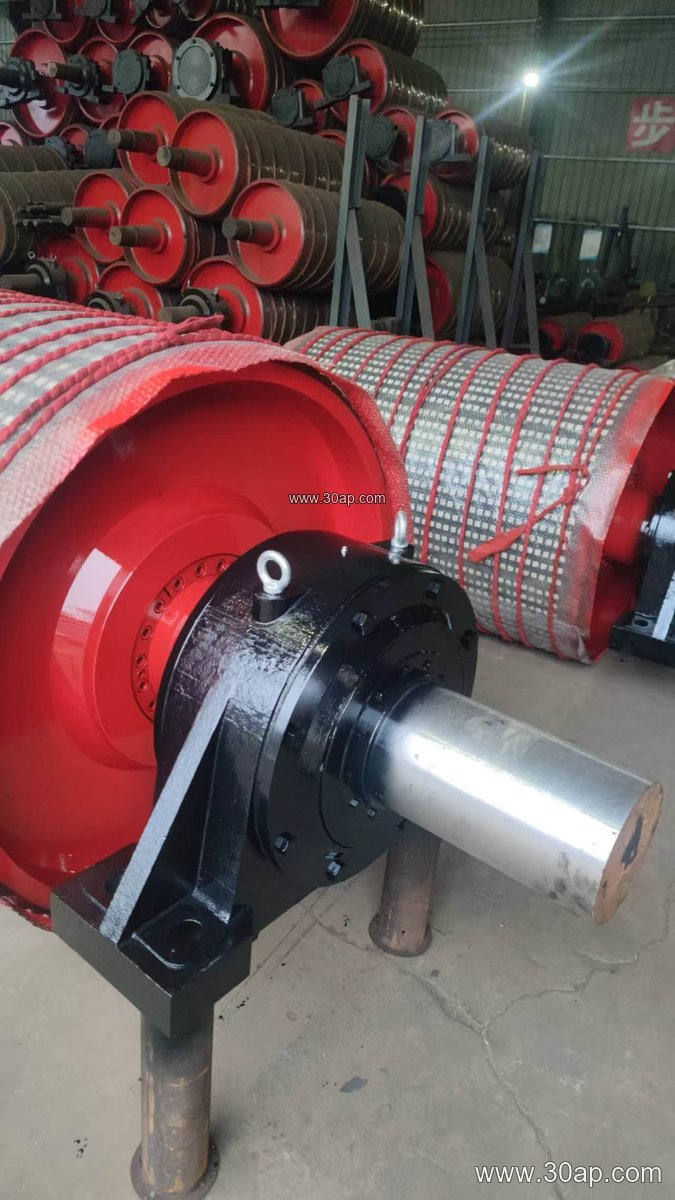
Where These Pulleys Are Used
In a quarry or stone crushing line, the head pulley at the crusher discharge sees abrasive rock dust and intermittent shock loads. In a cement plant, clinker conveyors run hot and abrasive, so heat-resistant belt grades and wear-protected pulleys are often considered together. Power plant coal handling and port bulk terminals place similar demands on traction and bearing reliability. A coal washing plant may need flame retardant conveyor belt and anti-static properties in the same circuit.
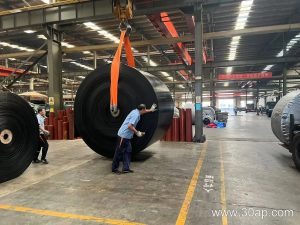
Matching the pulley to the belt is part of the same decision. A steel cord conveyor belt or a heavy-duty mining conveyor belt transmits high tension and needs a robust shaft and bearing selection, while an EP conveyor belt or multi-ply fabric core conveyor belt on a shorter aggregate line may allow a lighter build. Chevron, skirted, corrugated sidewall, and pipe conveyor belt designs each impose their own tracking and clearance requirements on the pulley face.
Specifications Buyers Should Confirm
Dimensions should be confirmed against the actual conveyor design rather than copied from a generic table. The following reference values show the range commonly discussed in building materials duty.
| Parameter | Common reference values |
|---|---|
| Belt width | B400, B500, B650, B800, B1000, B1200, B1400, B1600, B1800, B2000 |
| Pulley diameter | Ø200, Ø250, Ø315, Ø400, Ø500, Ø630, Ø800, Ø1000, Ø1250, Ø1400 |
| Shaft diameter | Ø50, Ø60, Ø70, Ø80, Ø90, Ø100, Ø120, Ø140, Ø160, Ø180, Ø200 |
| Surface form | Plain, cold-bonded rubber, hot vulcanized rubber, diamond, herringbone, ceramic |
| Lagging thickness | 8, 10, 12, 15, 20 mm |
A combination such as B800 × Ø500 or B1200 × Ø1000 is a common starting point in discussion, but no single belt width locks the pulley to one diameter. Shaft size follows torque and bearing load, so it should never be guessed from belt width alone.
Practical Selection and Maintenance Notes
Ask for the belt tension, the absorbed power, the wrap angle, and the loading conditions before finalizing the pulley. Check that the lagging grade suits the material: abrasive ore calls for a tougher cover, oily or chemical exposure calls for a resistant compound, and cold climates may need a cold resistant belt and compatible pulley surface. Confirm bearing type, sealing arrangement, and lubrication access, because dusty aggregate plants punish poor sealing.
During operation, watch for lagging wear, belt misalignment, and abnormal bearing temperature. Re-lagging a worn drive pulley is often more economical than replacing the whole unit, provided the shell and shaft remain sound. Keep spare conveyor bracket and bearing sets available for critical head and tail positions to reduce downtime.
For a reliable building materials conveyor pulley, the right approach is to define the position, the belt, the load, and the environment first, then select diameter, face width, shaft, and surface treatment as one system.