What an Ore Conveyor Pulley Does on a Bulk Handling Line
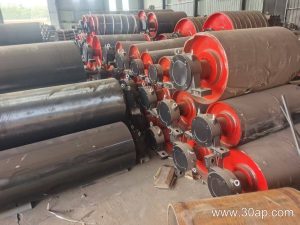
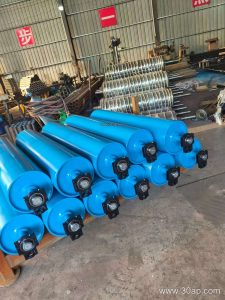
An ore conveyor pulley is the rotating drum that drives, tensions, or redirects the belt on a heavy-duty conveyor. In a crushing circuit, a sinter plant, or a port stockyard, the pulley is the point where motor torque becomes belt motion. Because ore is dense and abrasive, the drum, shaft, bearings, and lagging must be matched to the duty rather than chosen by habit. On a typical line the drive pulley sits at the head end and pulls the loaded belt, while a tail pulley at the feed end keeps the belt tracking and a bend pulley changes direction where space is tight.
Construction Details That Matter
The shell is usually a rolled steel cylinder, machined at the ends to accept the hubs and shaft. Shaft diameter is set by torque and bending load, not by belt width alone, so a B800 line and a B1000 line can carry very different shafts depending on wrap angle, tension, and starting duty. Common shaft sizes include Ø80, Ø100, Ø120, Ø140, and Ø160, with larger journals reserved for high-tension drives.
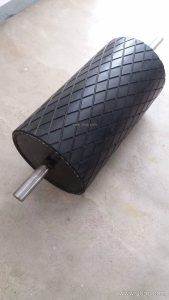
Lagging is the friction surface between drum and belt. Plain shells are used where slip is not a concern; rubber lagging, cold-bonded or hot-vulcanized, raises friction and protects the shell. Diamond grooving helps shed water and fines, while ceramic lagging suits abrasive iron ore and copper ore duty. Lagging thickness is commonly 8, 10, 12, 15, or 20 mm, and the choice depends on belt tension and the amount of carryback reaching the drum.
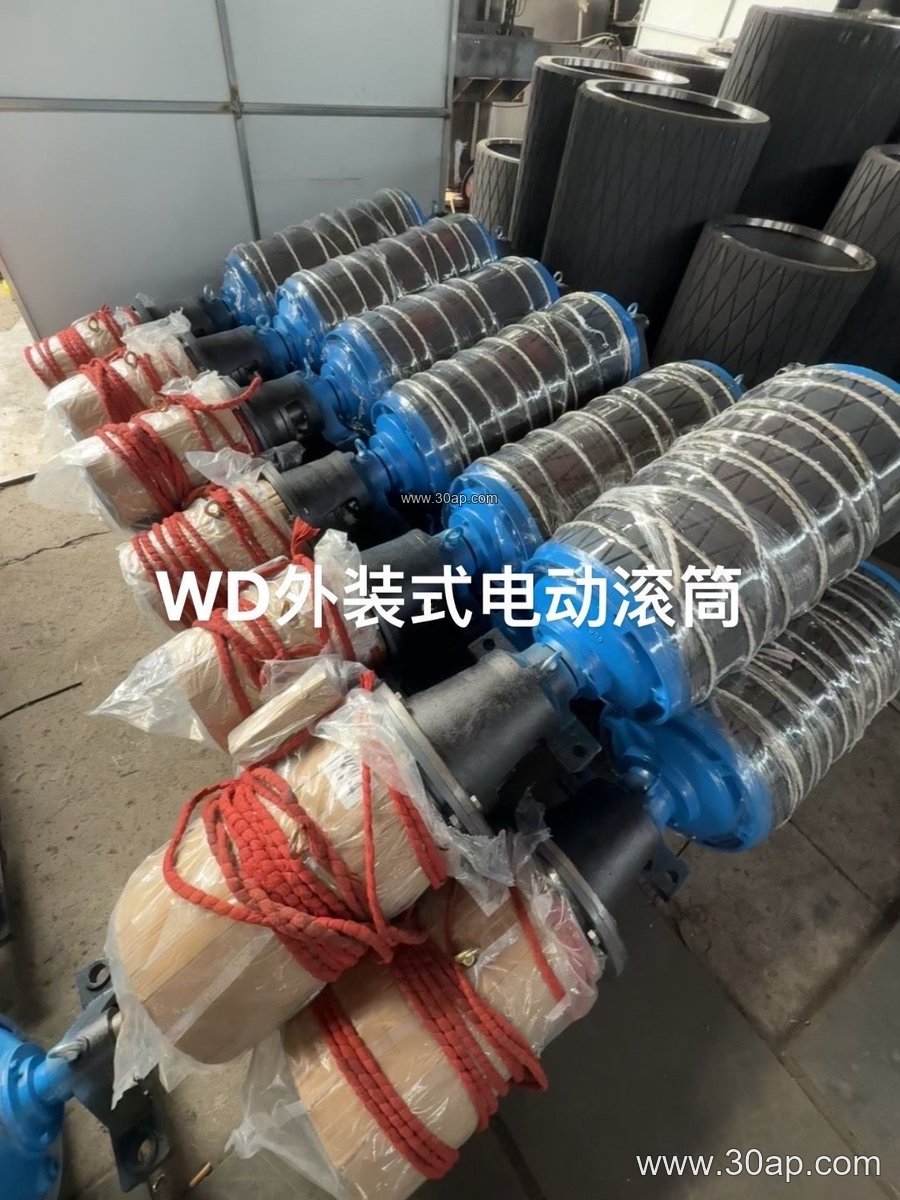
Common Reference Sizes
The table below shows typical combinations of belt width, pulley face width, and shell diameter. These are reference values, not fixed pairings; final sizing follows the conveyor design.
- B500 belt — face about 600 mm — diameter often Ø250 to Ø400
- B650 belt — face about 750 mm — diameter often Ø315 to Ø500
- B800 belt — face about 950 mm — diameter often Ø400 to Ø630
- B1000 belt — face about 1150 mm — diameter often Ø500 to Ø800
- B1200 belt — face about 1400 mm — diameter often Ø630 to Ø1000
- B1400 belt — face about 1600 mm — diameter often Ø800 to Ø1250
Face width is normally slightly greater than belt width so the belt is fully supported. A drum described as B1200 x Ø1000 is a face-width and diameter pairing, not a rule that every B1200 conveyor needs that diameter.
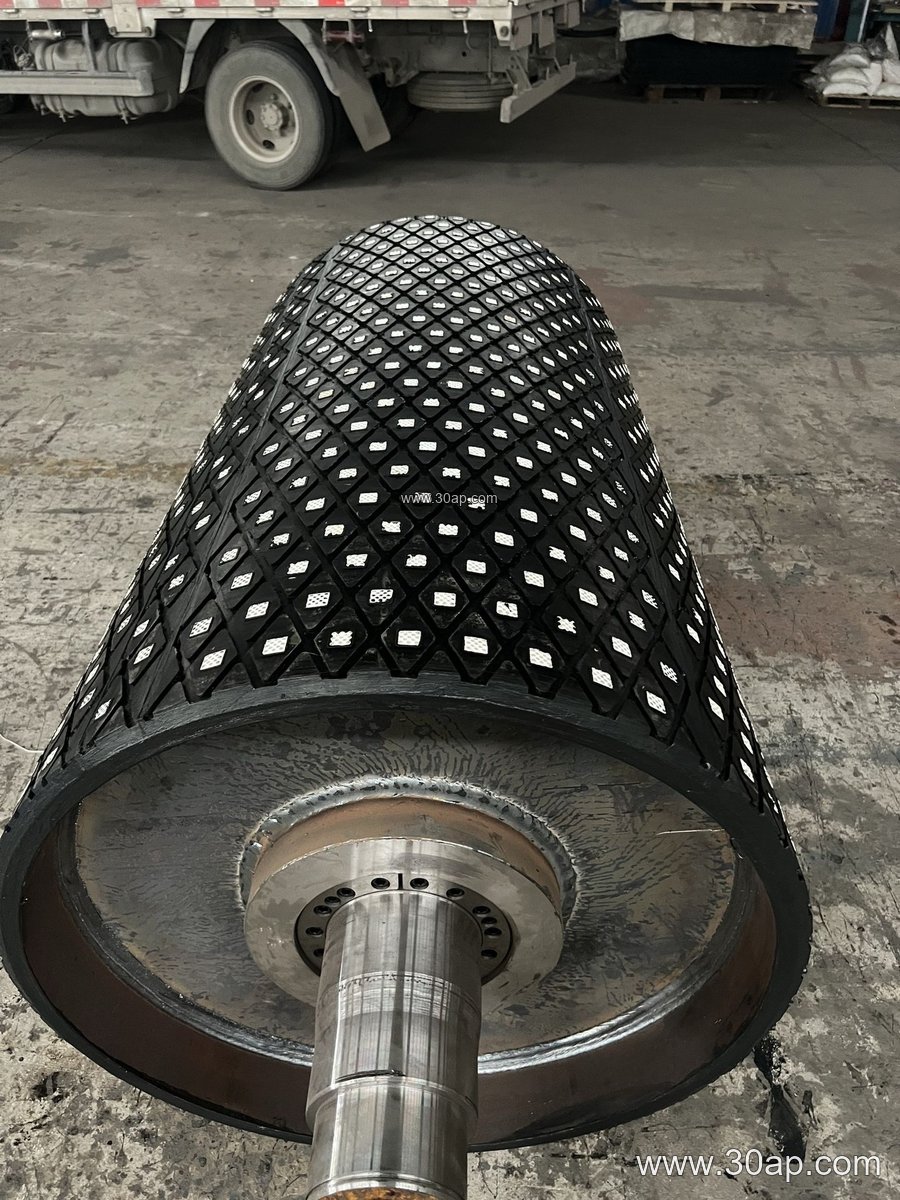
Where Ore Conveyor Pulleys Are Installed
In a limestone quarry or sand and aggregate plant, the head drum often handles a relatively clean product and plain or lightly lagged shells may be enough. In an iron ore or copper ore concentrator, the same position may demand ceramic lagging and a heavier shaft because of wet, abrasive fines. Coal handling at a power plant brings its own concerns, where anti-static and flame retardant belt grades are common and the pulley finish should avoid sharp edges that can damage the belt cover.
Position also changes the job. The head or drive pulley carries the highest tension; the tail pulley sees the feed impact zone; a bend pulley only redirects; a take-up pulley maintains tension as the belt stretches. These are separate functions, so a bend pulley diameter cannot simply be substituted for a drive pulley diameter without recalculating tension and wrap angle.
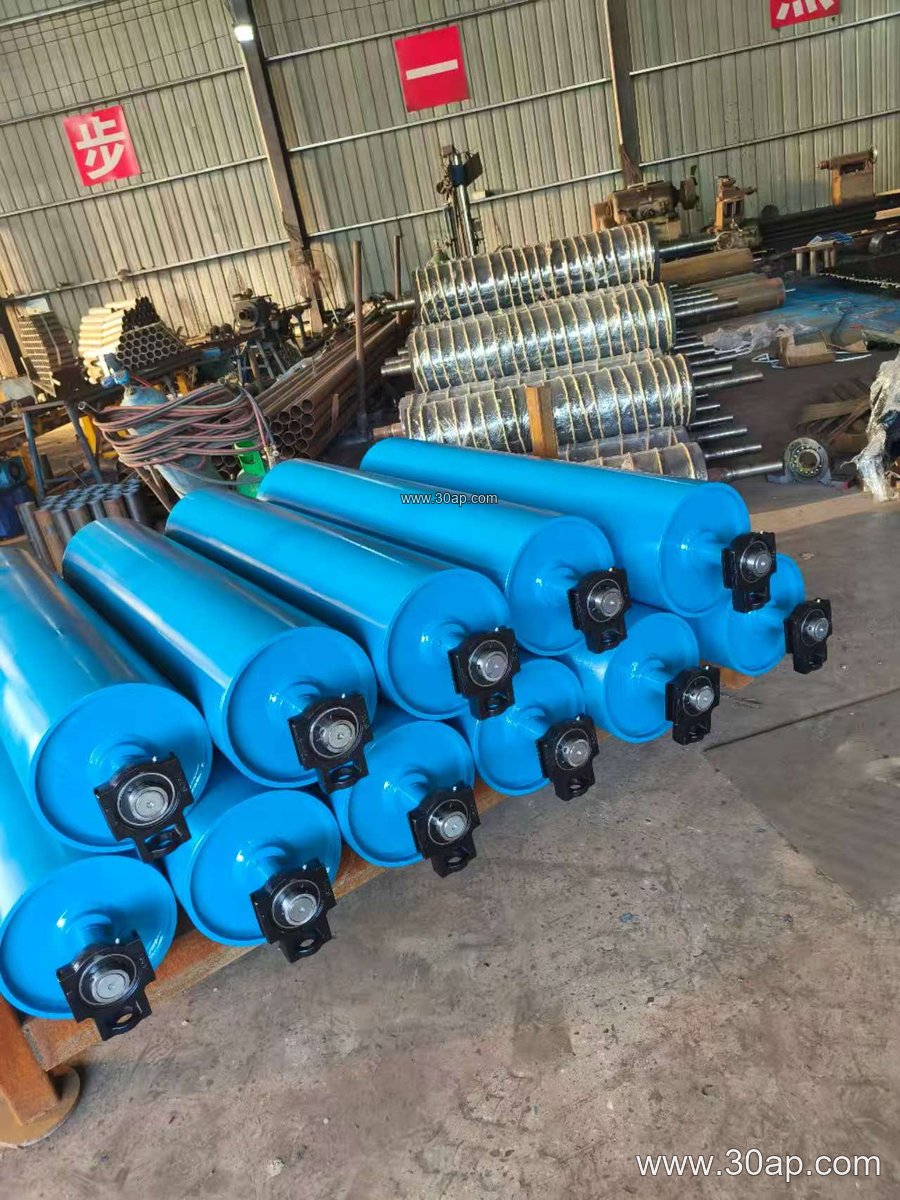
Matching the Pulley to the Belt and the Load
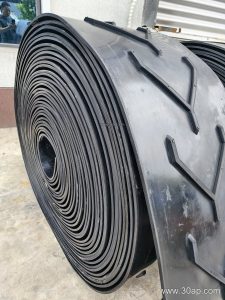
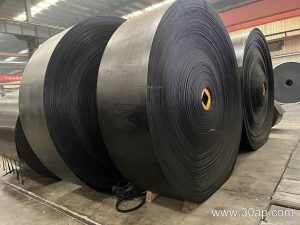
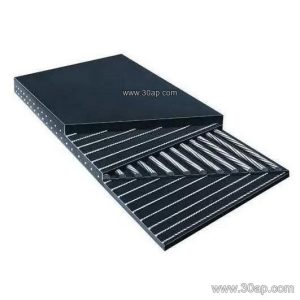
The pulley and belt work as a pair. A steel cord conveyor belt or a high-strength fabric core belt such as EP1000 or EP1250 can carry high tension, and the drum diameter must be large enough to limit bending stress in the carcass. Abrasion resistant conveyor belt covers last longer when the drum surface is smooth and the lagging does not pinch. Where the ore is hot, as in some sinter and clinker duties, a heat resistant conveyor belt needs a drum that will not trap heat against the cover.
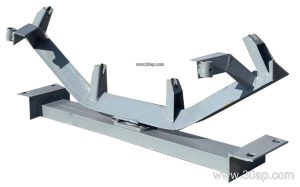
Operators also watch the interface between the pulley and the conveyor belt. Material build-up on the shell changes the effective diameter and can cause tracking drift, so scrapers and skirt rubber should be checked together with lagging wear. The idler roller set on the carry side, the conveyor bracket at each frame, and the pulley bearings all share the same alignment, and a single misaligned bracket can shorten bearing life.
What a Buyer Should Confirm Before Ordering
Request the belt width, belt type and rated tension, the pulley position, the required shaft diameter, and the lagging preference. Ask whether the duty is wet or dry, and whether the ore is fine or lumpy, because that affects lagging pattern and thickness. Confirm face width, shell diameter, bearing type, and whether the pulley will be supplied with a shaft, hubs, and locking assembly.
Finally, ask for the drawing and the calculated load case. A drum that looks adequate on a B650 line may be marginal on a B1000 line with the same belt speed, and only the tension and torque figures settle the question. Spare drums, wear plates, and lagging sheets should be ordered against the same drawing revision to keep the ore conveyor pulley, belt, and frame compatible over the life of the conveyor.