What a 2400mm Conveyor Belt Is
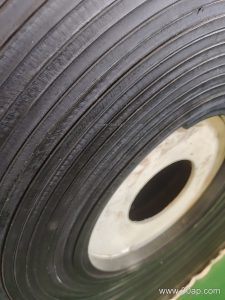
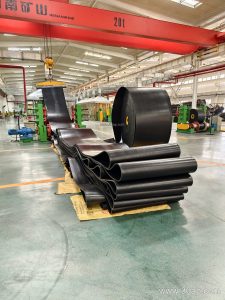
A 2400mm conveyor belt is a wide belt format used where a single stream of bulk material has to be moved in high volume without splitting the flow across two or more narrower belts. It is still an ordinary conveyor belt in construction, but the width changes how the belt behaves, how the conveyor frame is built, and how carefully the belt has to be tracked. In mining, coal preparation, cement plants, power stations, ports and large sand and gravel yards, this width is often chosen when the conveyor is a main trunk line rather than a short transfer.
The same product may be described as a 2400mm wide conveyor belt, a 2.4m conveyor belt, or an extra-wide conveyor belt. These are all accurate ways of naming the same item, provided the underlying construction is unchanged.
How the Belt Is Built
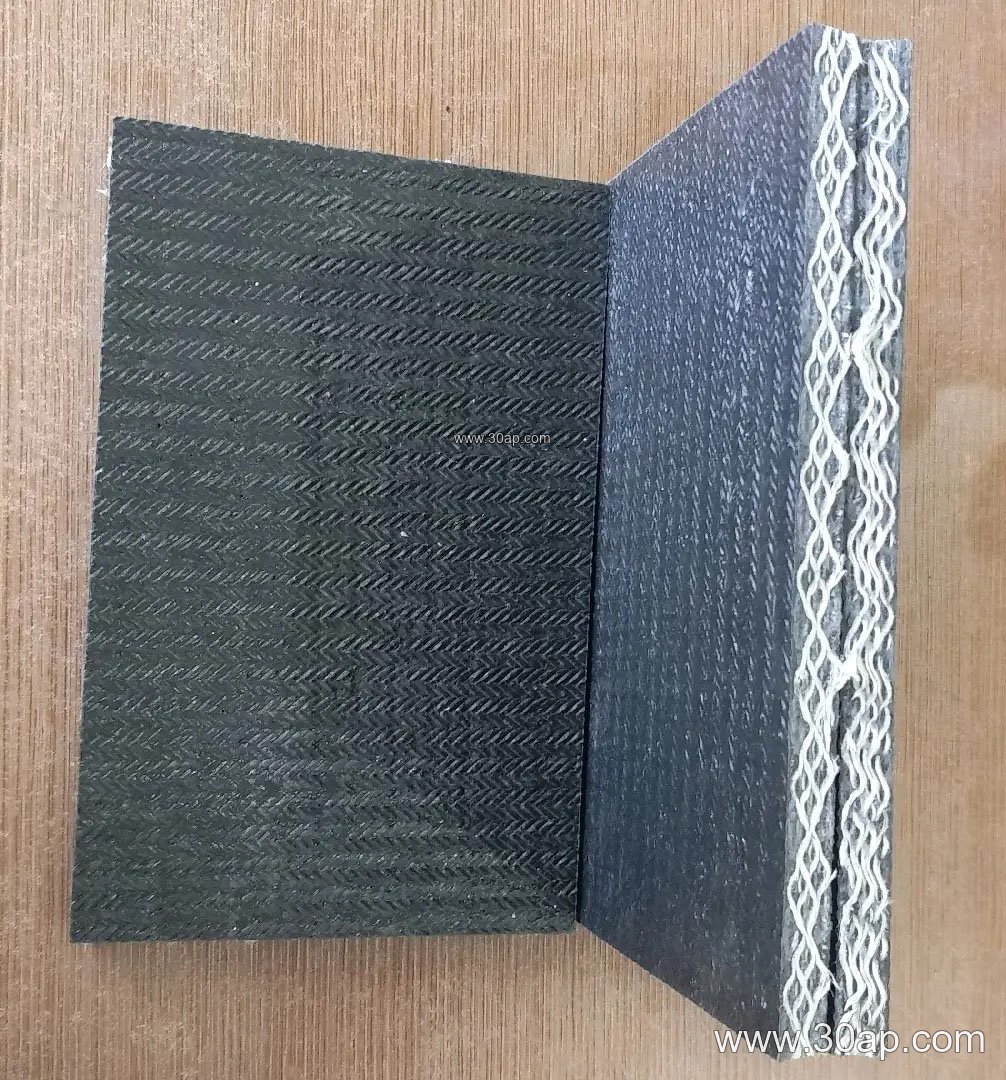
The carcass carries the load and resists elongation, while the covers protect it from the material being carried. For a belt of this width, the carcass is usually a fabric core or a steel cord design, and the choice depends on the center distance, the tonnage and the duty cycle.
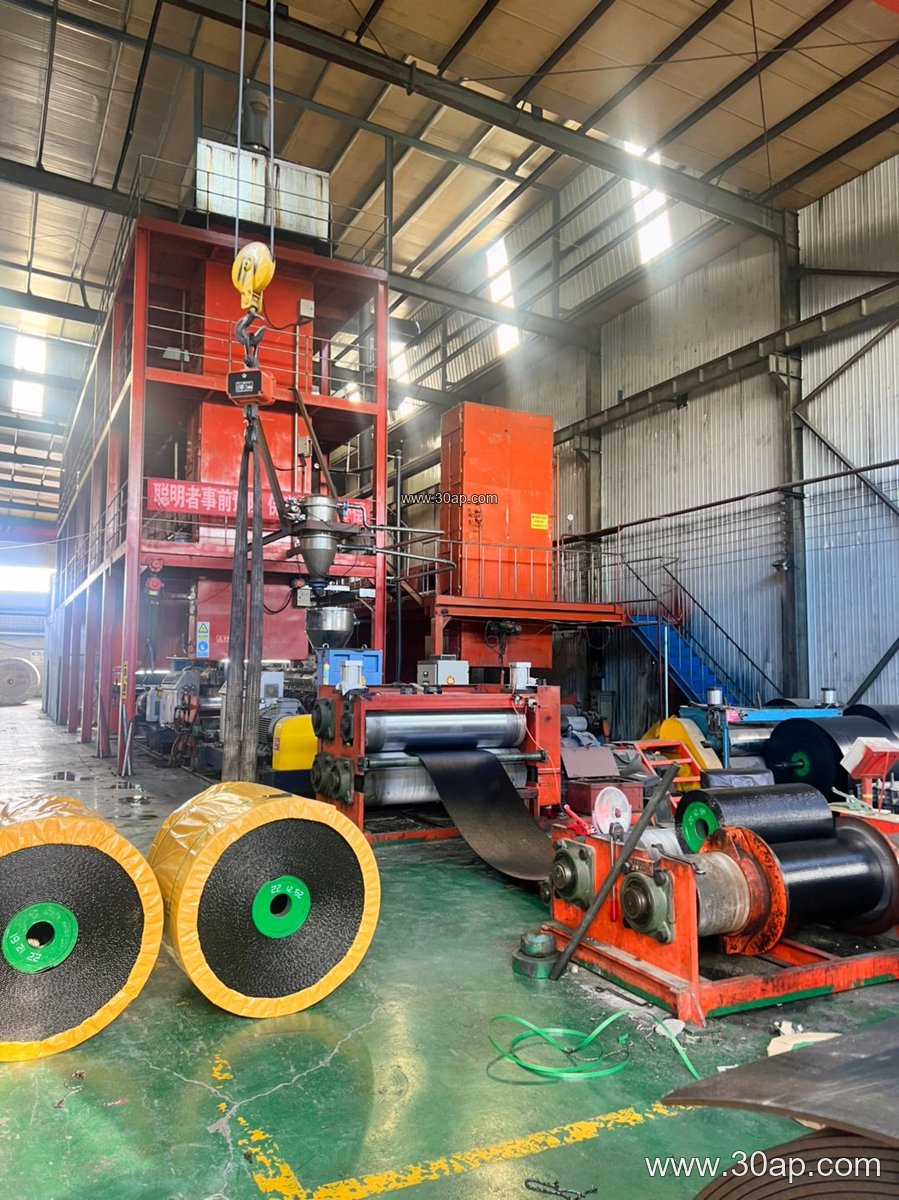
- Fabric core: multi-ply EP or NN constructions are common, with two to six plies. An EP conveyor belt is widely used for general bulk handling, while NN conveyor belts are often found where higher elongation is acceptable.
- Steel cord: a steel cord conveyor belt is preferred on long, heavily loaded main lines where low stretch and high tensile strength matter.
- Covers: top and bottom cover gauges are often quoted as 4+2, 5+2, 6+2 or 8+3 mm. A high abrasion resistant conveyor belt suits crushed rock and ore, a heat resistant conveyor belt suits cement clinker and sinter, and a flame retardant or fire resistant grade is specified for coal and other combustible duties.
- Special forms: a chevron conveyor belt, corrugated sidewall belt or skirted conveyor belt may appear in the same plant, but these are different belt types and should not be treated as substitutes for a flat 2400mm belt.
Because the belt is wide, cover thickness, ply count and splice quality all matter more than on a narrow belt. A poorly made joint on a 2400mm belt can affect tracking across the full width.
Typical Specifications
Values below are common reference ranges, not fixed supply promises. Final figures are set by design.
| Property | Common reference |
|---|---|
| Belt width | 2400 mm |
| Carcass types | EP, NN, steel cord |
| Strength grades (EP) | EP200 to EP2000 |
| Strength grades (steel cord) | ST1000 to ST3150 |
| Cover gauges | 4+2, 5+2, 6+2, 8+3 mm |
| Ply count | 2 to 6 plies (fabric) |
| Surface options | smooth, abrasion resistant, heat resistant, oil resistant, flame retardant |
When ordering, give the strength grade, cover grade, cover thickness, carcass type, splice method and edge condition together with the width.
Where It Fits in the Plant
Wide belts appear on primary crushing discharge lines, stockyard and yard conveyors, ship loading systems and long overland routes. In an iron ore or copper ore terminal, a heavy-duty mining conveyor belt of this width can carry a full crusher output. In a cement plant, a heat resistant grade may run from the kiln area, while a quarry conveyor belt handles limestone and aggregate. Coal mining conveyor belts and underground coal mining conveyor belts need flame retardant and anti-static properties, and those requirements apply to wide belts as well.
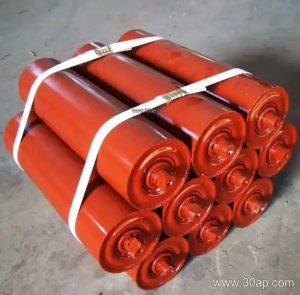
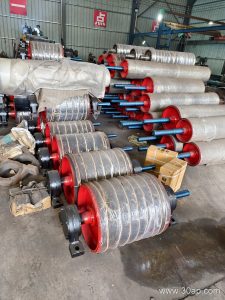
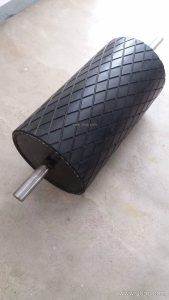
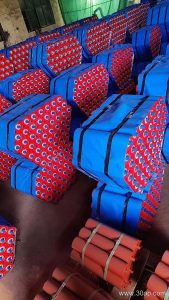
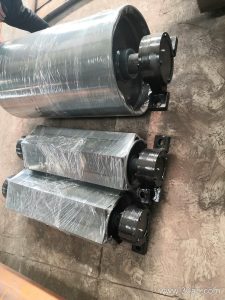
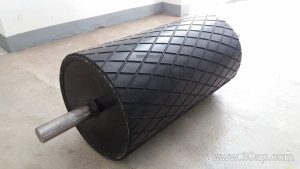
Other equipment on the same conveyor must match the belt. The conveyor pulley, idler roller and conveyor bracket are sized for the load and the belt width, and the pulley face, trough angle and idler spacing are selected as part of the conveyor design rather than from the belt width alone.
Buyer Checklist
- Confirm the actual duty: material, lump size, temperature, oil or chemical exposure, and whether the area is classified for fire risk.
- Check that the quoted strength grade suits the calculated belt tension, not just the tonnage.
- Ask how the belt will be spliced and whether the splice can be made on site.
- Review the pulley and idler arrangement with the belt supplier, since a 2400mm belt needs correct crowning and alignment.
- Plan storage and lifting, as a wide roll is heavy and awkward to handle.
More belt guidance for conveyors, idlers and pulleys is available at belt-tech.example and pulley-tech.example for reference during selection.