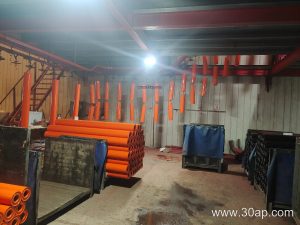
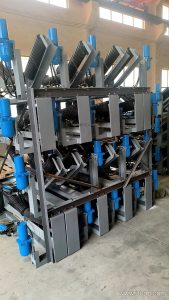
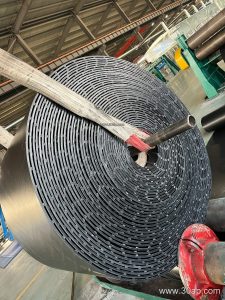
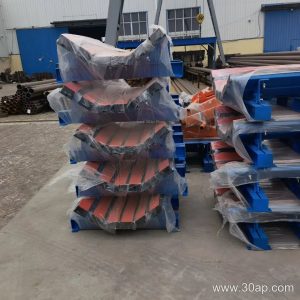
What a Self-Aligning Idler Set Does
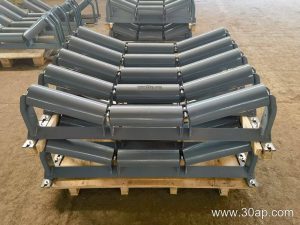
A self-aligning idler set, also called a self-training idler group, is a conveyor idler assembly designed to correct belt drift without manual adjustment. When a conveyor belt begins to wander toward one side of the structure, the angled or pivoting rollers in this set generate a small sideways force that nudges the belt back toward the center line. In a quarry, a coal washing plant, or a cement plant, that behavior keeps material centered and reduces edge damage, spillage, and premature wear on the belt and frame.
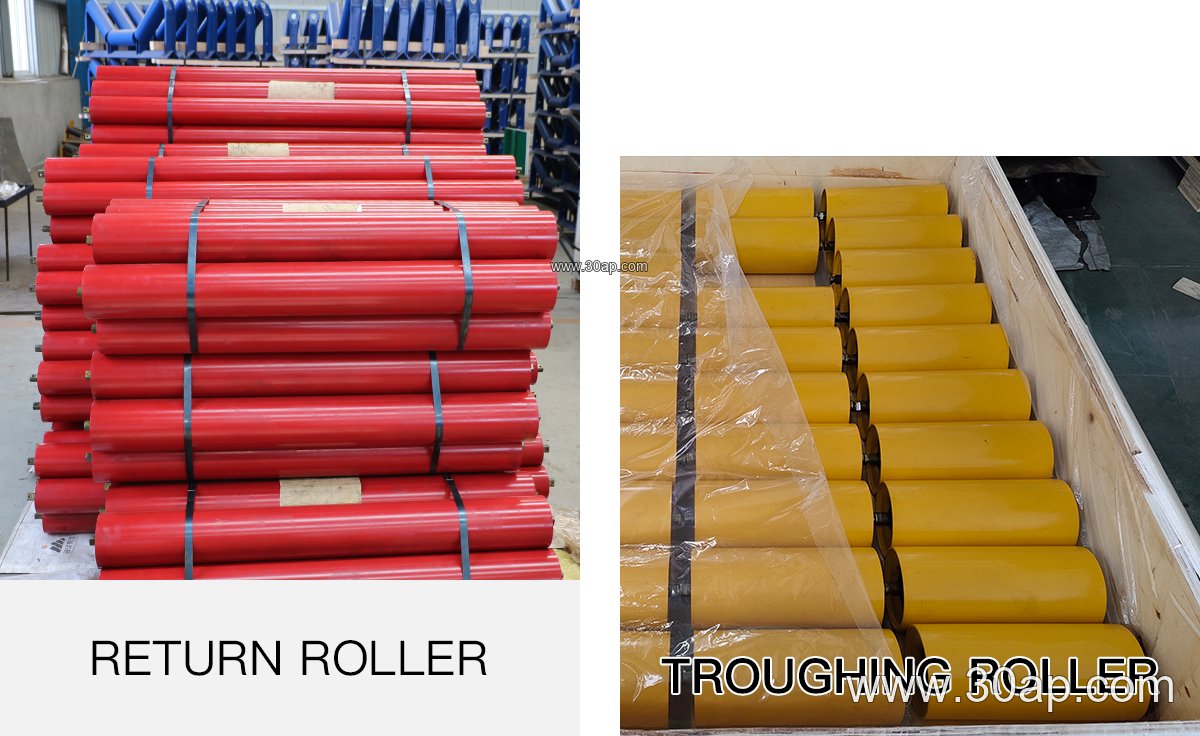
The set is a distinct idler subtype and should not be confused with return rollers, impact rollers, or the drive, tail, and bend pulleys that handle power transmission and direction changes. Each plays a different role along the conveyor.
How the Assembly Is Built
A typical self-aligning idler set combines two or three rollers mounted on a pivoting frame or a central swivel base. The frame is held by a conveyor bracket that allows limited rotation about a vertical axis. When the belt contacts the rollers off-center, friction turns the assembly slightly, and the resulting angle steers the belt back.
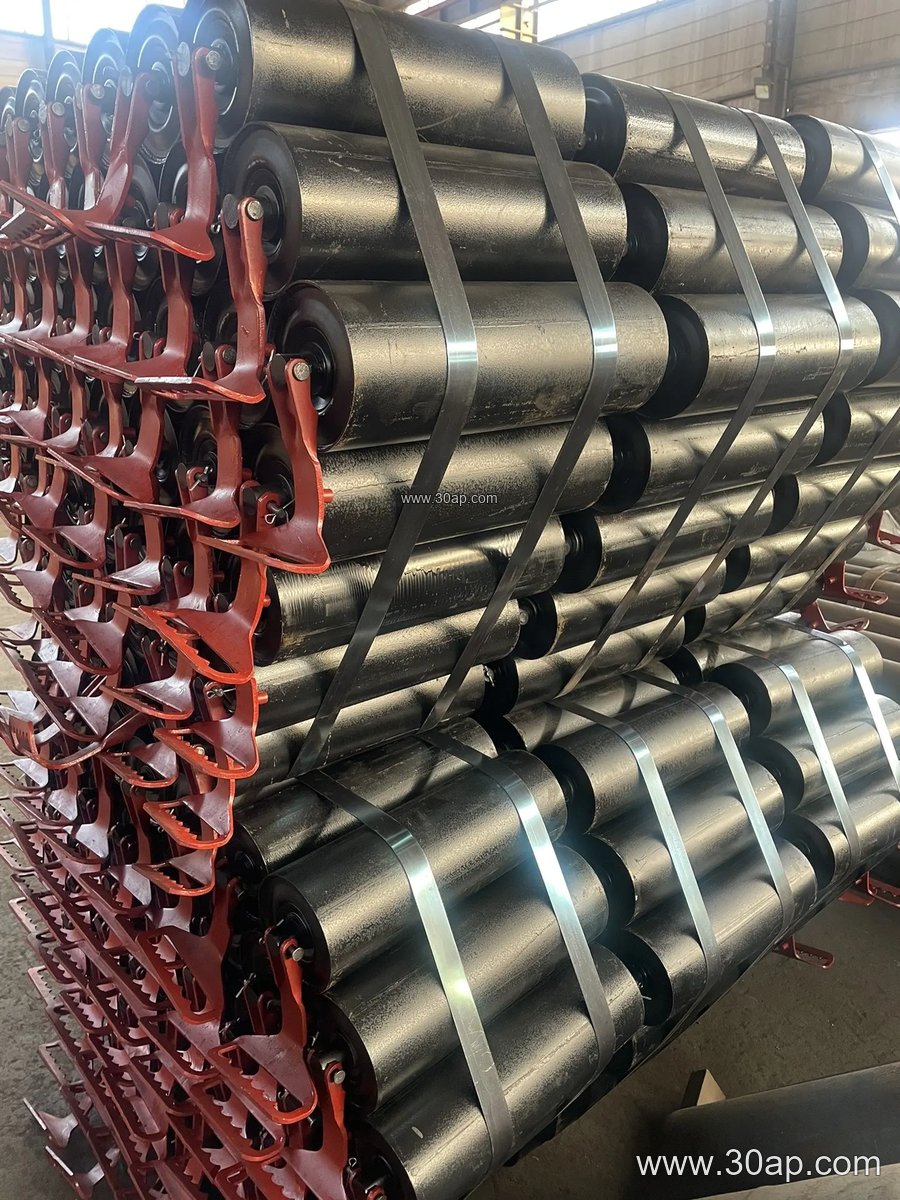
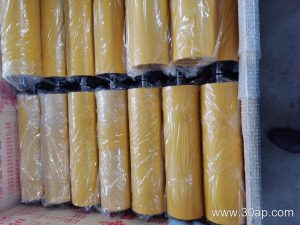
- Roller shells in steel tube, nylon, or rubber-covered form, selected for the duty and material being carried.
- Bearing housings with common bearing sizes such as 6205, 6305, 6306, or 6308, matched to the roller diameter and load rather than to belt width alone.
- Seals that keep dust and fine grit out of the bearings, which matters greatly in crushing and screening circuits.
- Pivot or swivel mechanism that provides the self-correcting movement.
- Mounting brackets compatible with the stringer spacing of the conveyor frame.
Some designs use tapered rollers, and friction-training versions add a small forward lead of about 1.5 to 2 degrees to encourage rotation. The exact geometry is determined by the conveyor designer, not by a single universal rule.
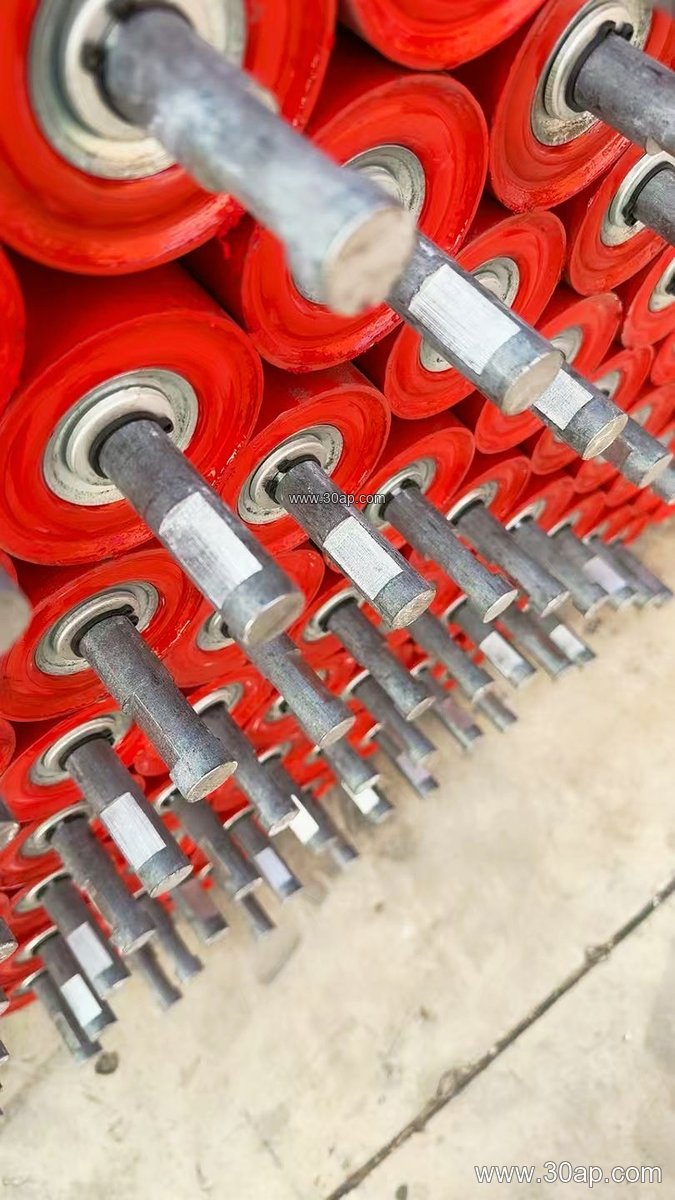
Where It Fits on the Conveyor
Self-aligning sets are usually installed on the carrying side at intervals along long runs, especially downstream of loading points and on curves where drift is most likely. They are also used on the return strand in V-return or flat-return form. Common industries include:
- Iron ore and copper ore handling lines, where heavy loads stress belt tracking.
- Power plant coal conveying and limestone preparation.
- Aggregate and sand making plants feeding crushers and screens.
- Fertilizer and grain bulk handling, where spillage must be minimized.
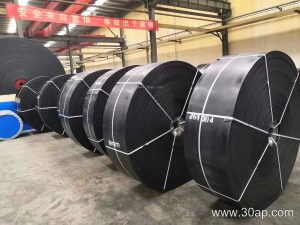
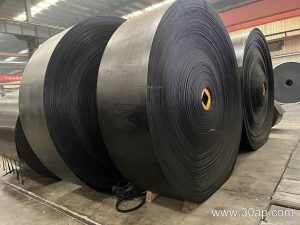
The set works together with the conveyor belt, the conveyor pulley at each end, and the supporting structure. It does not replace any of them; it simply keeps the belt running true between them.
Common Sizes and Reference Data
Roller diameter, belt width, trough angle, and roller length are selected as a group. The following values are common references, not fixed combinations.
| Parameter | Common options |
|---|---|
| Roller diameter | Ø89, Ø102, Ø108, Ø127, Ø133, Ø159 mm |
| Belt width | B500, B650, B800, B1000, B1200, B1400, B1600, B1800 mm |
| Trough angle | 20°, 30°, 35°, 45° |
| Roller surface | Steel tube, nylon, ceramic, rubber ring |
| Bearing | 6204, 6205, 6305, 6306, 6308, 6310 |
As an example of typical three-roll trough geometry, roller length may be around 200 mm for B500, 315 mm for B800, 465 mm for B1200, and 600 mm for B1600. Side rollers and center rollers can differ, and the final dimensions should follow the conveyor design. A 1200mm wide conveyor belt does not dictate a single roller diameter or shaft size.
Buyer Checklist
Before ordering, confirm the belt width, trough angle, mounting bracket pattern, and the material being handled. Abrasive rock calls for wear-resistant shells, while dusty coal lines benefit from strong sealing. Consider the belt type as well: a heavy-duty mining conveyor belt or an abrasion resistant conveyor belt may need sturdier idlers than a light bulk material conveyor belt. Buyers often pair these sets with EP conveyor belt or steel cord conveyor belt constructions on long overland routes, and with flame retardant conveyor belt grades in underground coal mining conveyor belt applications.
Ask about bearing size, seal design, and whether the pivot mechanism can be locked during maintenance. Spare rollers should match the installed set so that tracking behavior stays consistent. Regular inspection of the self-aligning idler set, together with the conveyor pulley and belt condition, keeps a bulk handling line running smoothly.