What an Anti-Slip Lagged Pulley Does
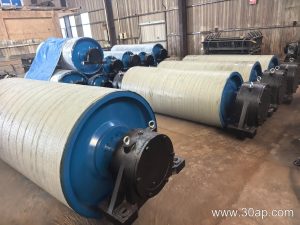
An anti-slip lagged pulley is a conveyor pulley whose shell is covered with a rubber or ceramic lagging designed to increase friction between the pulley and the conveyor belt. This added grip reduces belt slippage, especially under wet, dusty, or high-torque conditions. While the term often refers to a drive pulley, anti-slip lagging can also be applied to other pulley positions where traction matters. In aggregate plants, cement kiln feed lines, and coal handling systems, this pulley helps maintain steady belt speed and reduces wear on both belt and pulley.
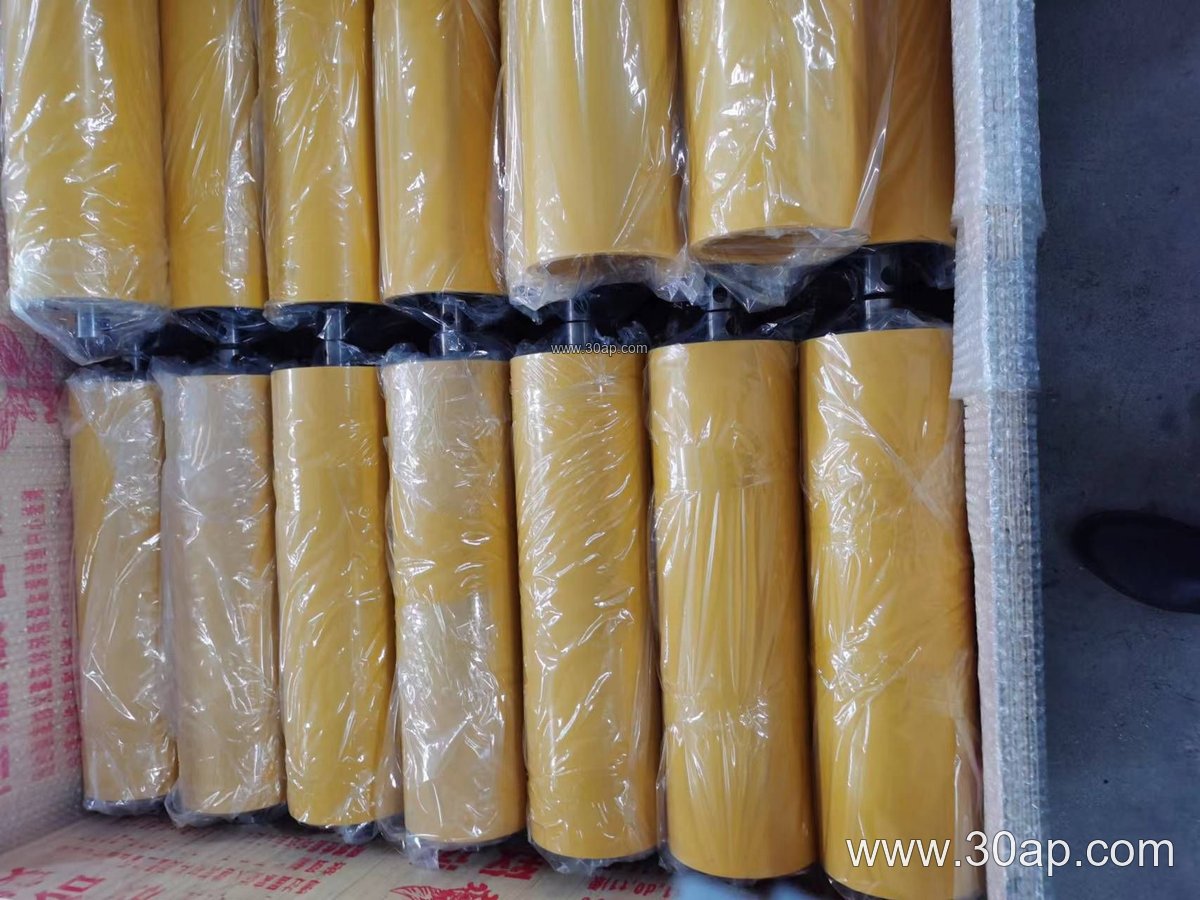
Construction and Lagging Options
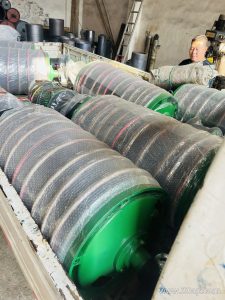
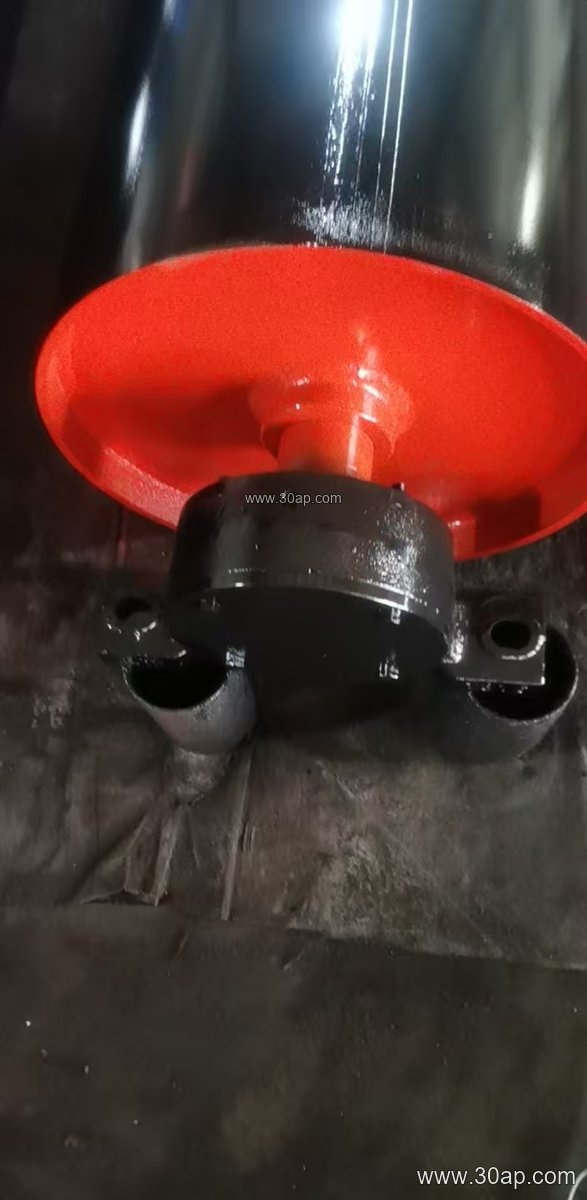
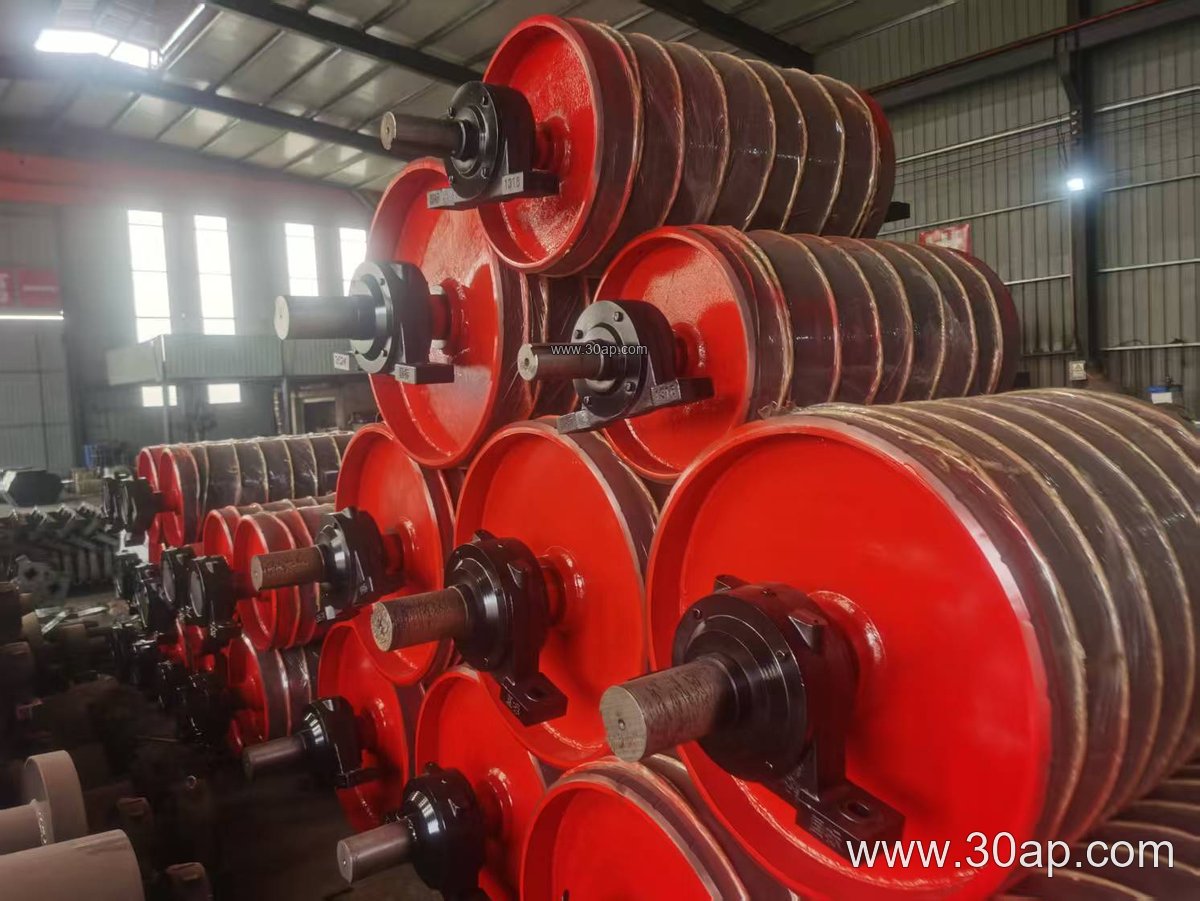
The pulley body is typically a welded steel drum with shafts, hubs, and bearing housings. The lagging is the key anti-slip element. Common surface forms include diamond grooved rubber, herringbone rubber, plain rubber, and ceramic lagging. Rubber lagging is usually applied by hot vulcanization, cold bonding, or casting directly onto the shell. Thickness commonly ranges from 8 mm to 20 mm, selected according to belt tension and environmental conditions. Grooved patterns help channel water and debris away from the contact area, improving grip in dirty or wet service.
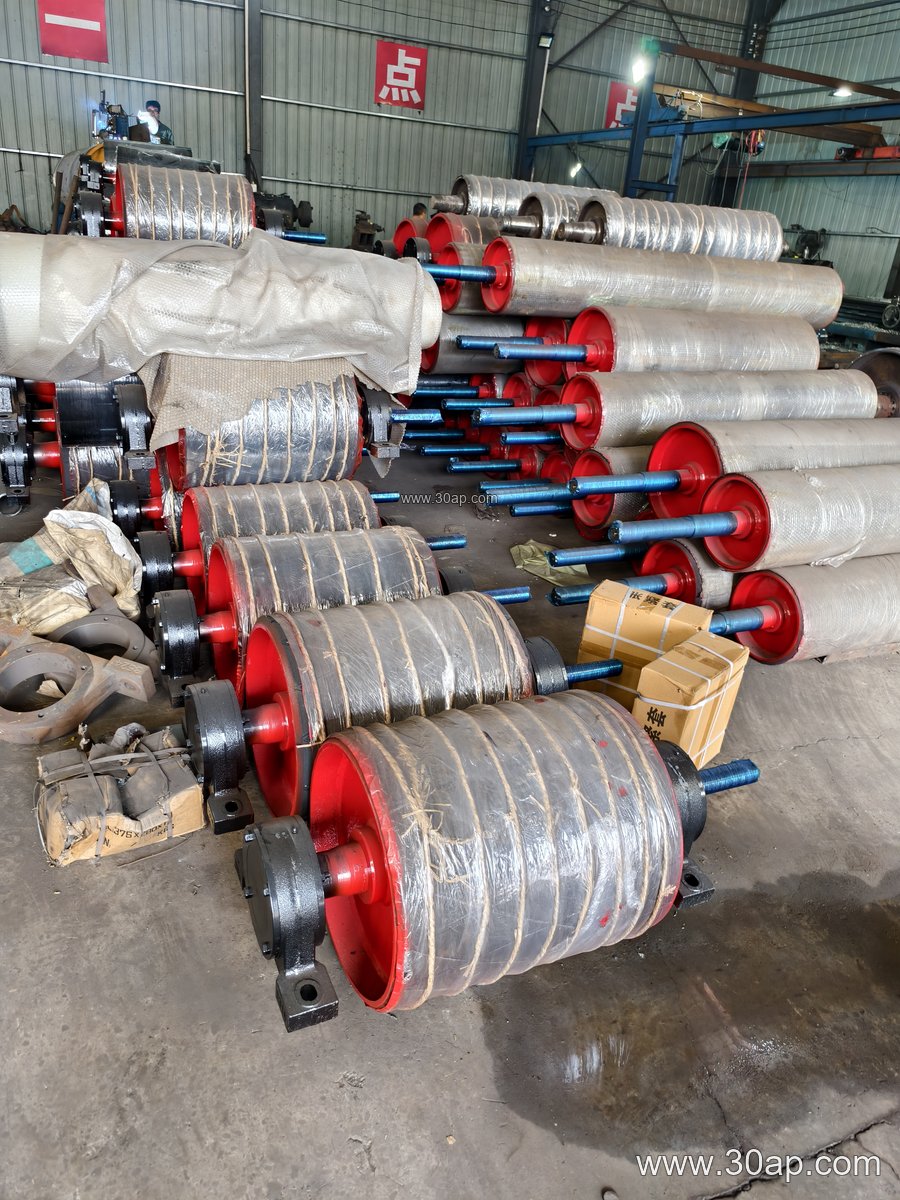
Where It Fits in a Conveyor
Anti-slip lagged pulleys are most often found at the drive position, where the belt must transmit power without slipping. They can also be used on tail pulleys in inclined conveyors or on tension pulleys where extra grip prevents belt wander. In a quarry or limestone mine, a lagged drive pulley on the head end keeps the belt moving under heavy load. In a power plant coal yard, the same pulley type helps counteract moisture and coal dust. Note that drive, tail, and bend pulleys serve different functions and are not interchangeable; an anti-slip lagged pulley is selected for its friction properties, not as a substitute for a bend pulley.
Common Sizes and Combinations
Pulley dimensions are matched to belt width and conveyor design. The table below shows common reference combinations; actual selection depends on torque, belt tension, and shaft load. Shaft diameter is determined by mechanical design, not by belt width alone.
| Belt Width | Typical Pulley Face Width | Example Pulley Diameter |
|---|---|---|
| B400 | ~500 mm | Ø200–Ø315 |
| B650 | ~750 mm | Ø250–Ø400 |
| B800 | ~950 mm | Ø315–Ø500 |
| B1000 | ~1150 mm | Ø400–Ø630 |
| B1200 | ~1400 mm | Ø500–Ø800 |
| B1400 | ~1600 mm | Ø630–Ø1000 |
| B1600 | ~1800 mm | Ø800–Ø1250 |
These are common ranges, not fixed rules. A B1200 belt might use a Ø1000 pulley in one duty and a Ø630 in another. Shaft diameters such as Ø80, Ø100, Ø120, or Ø140 are selected based on torque and bearing load. Always confirm with the conveyor designer.
Selection and Maintenance Tips
- Choose lagging thickness and pattern based on belt speed, load, and presence of water or fines.
- Ensure the pulley face width exceeds belt width to allow proper tracking.
- Check lagging wear periodically; worn grooves reduce anti-slip performance.
- Align the pulley with the conveyor frame and idler rollers to avoid edge loading.
- Use appropriate conveyor brackets and bearing supports to handle radial loads.
An anti-slip lagged pulley is a focused solution for traction problems. By matching lagging type, pulley diameter, and face width to the actual conveyor duty, operators in mining, quarrying, and bulk handling can reduce slippage and extend belt life.