What a Striped Lagged Pulley Does
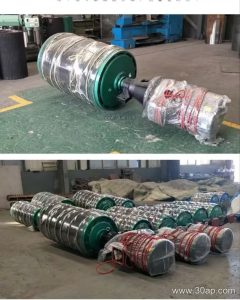
A striped lagged pulley is a conveyor pulley whose shell carries a rubber or elastomer lagging with a grooved or striped surface pattern. The stripes, usually arranged as diagonal or chevron-style grooves, give the pulley two jobs at once. First, the raised rubber between the grooves grips the conveyor belt and raises the friction coefficient at the drive interface. Second, the open grooves create channels that let water, fine dust and mud escape from under the belt instead of being trapped between belt and shell. In a quarry or a wet washing plant, that drainage behavior is often the difference between a belt that tracks straight and one that slips under load.
The product is also described by suppliers as a grooved lagged pulley, a striped rubber lagged drum, or a chevron grooved lagging pulley. All of these refer to the same item. A striped lagged pulley is not a substitute for a tail pulley, a bend pulley or a tension pulley, even though the same shell and bearing housing family may be used across those positions. It is a pulley type in its own right, most often installed where torque transmission and water shedding matter together.
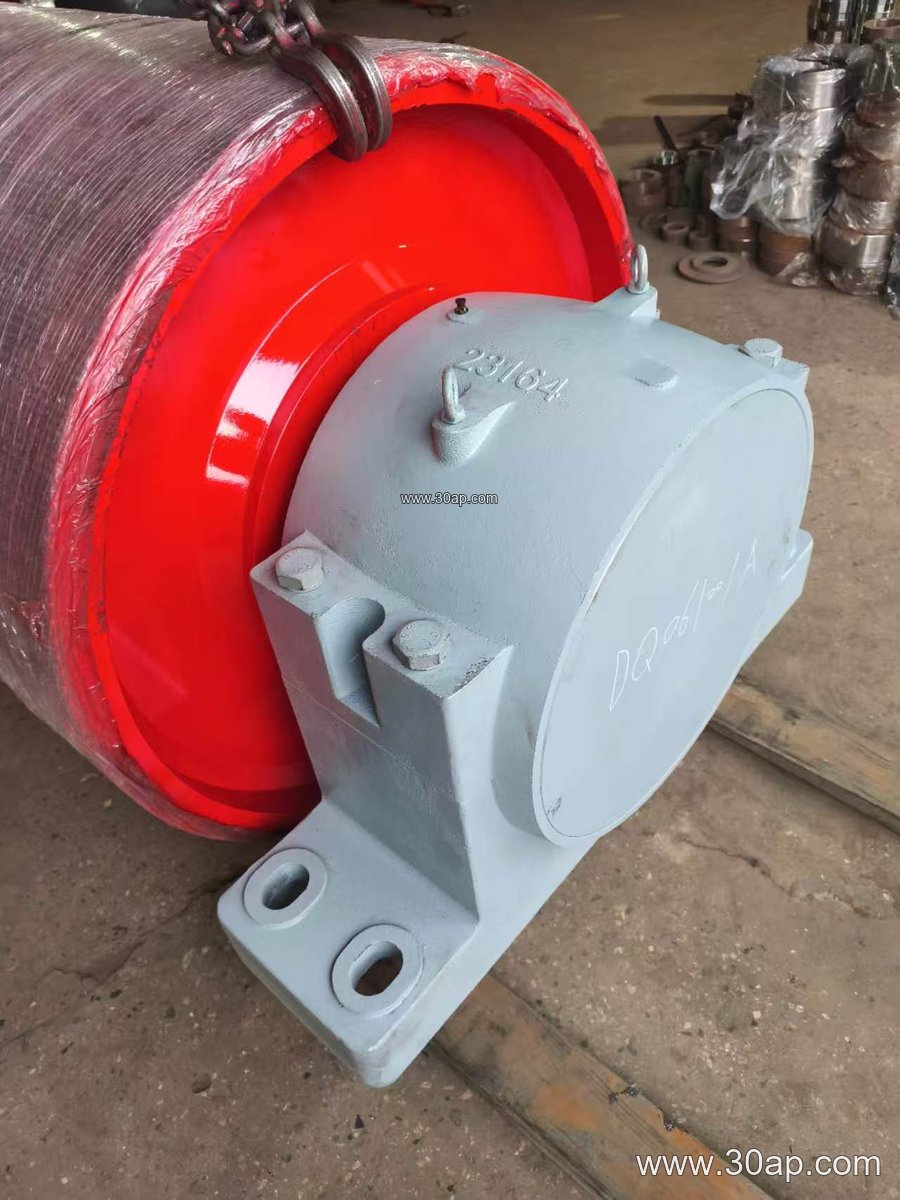
Construction Details
The core is normally a welded steel shell with end discs, a hub and a shaft, machined so the lagging sits true. Lagging is applied in one of three common ways: hot vulcanized rubber bonded under pressure, cold bonded rubber sheet, or cast rubber formed directly onto the shell. Grooving is cut or molded into the rubber afterward, or formed in the mold. Thickness typically ranges from 8 mm to 20 mm, with 10 mm, 12 mm and 15 mm being frequent choices for general duty, and thicker covers used where impact and wear are severe.
Common striped lagging patterns include diagonal stripes and chevron stripes, and the direction of the stripes is usually set to push water toward the pulley edges rather than toward the center. Bearing housings, locking assemblies and keyed or shrink-fitted shaft connections follow the mechanical duty. A conveyor bracket or bearing support must match the pillow block or flange housing used, so the mounting interface should be confirmed at the ordering stage.
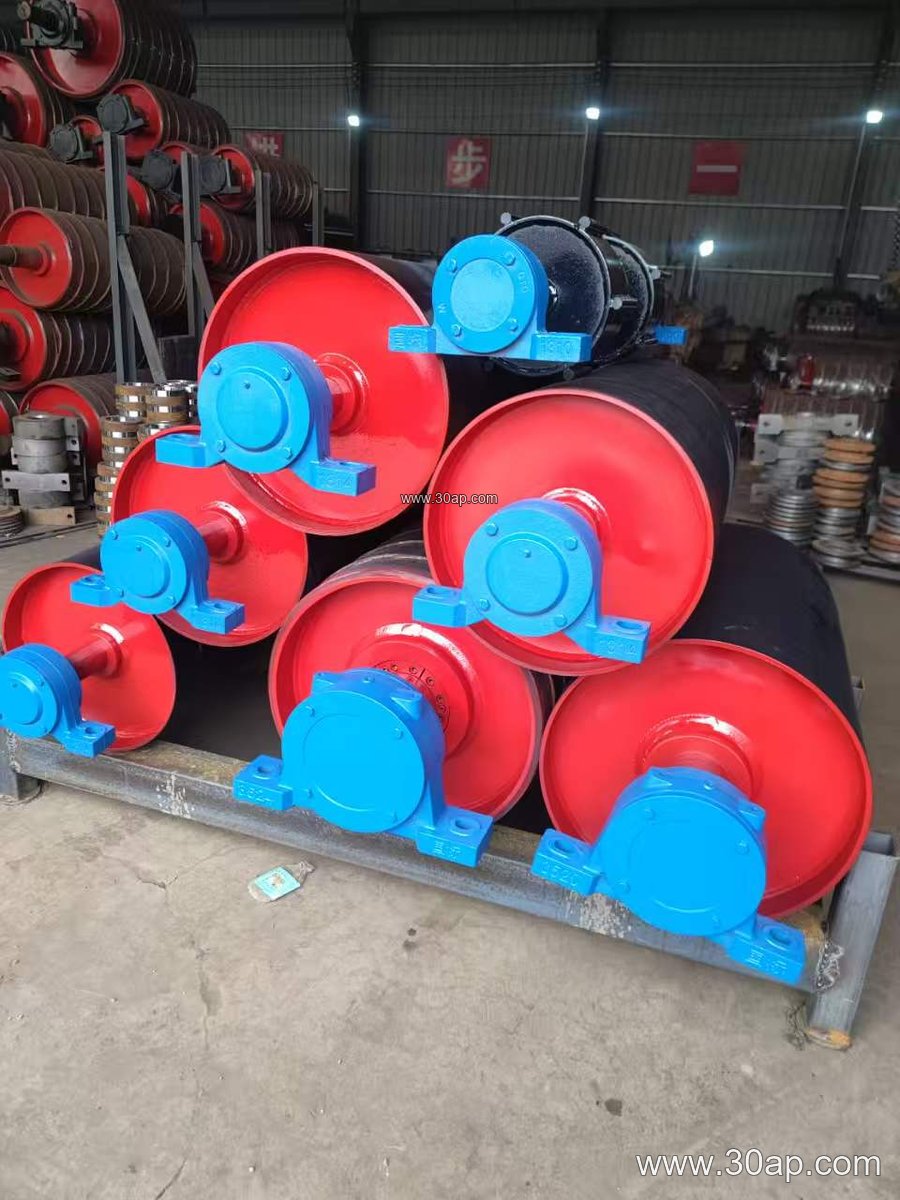
Typical Service Positions and Industries
Striped lagging shows up most on drive pulleys and head pulleys in circuits where the belt can become damp or dusty. In a sand and gravel line, a crusher discharge pulley often runs in a cloud of fines; in a coal preparation plant, spray water and coal slurry are constant. Cement plants use grooved lagging on clinker and raw material conveyors where dust builds up on the shell, and power plant coal handling systems benefit when the belt carries a film of moisture. Iron ore and copper ore operations, port bulk terminals and fertilizer plants are other settings where the drainage feature earns its keep.
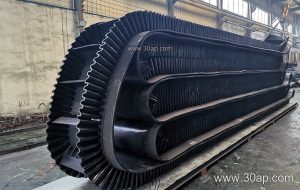
The pulley works with the belt, not in isolation. A heavy-duty mining conveyor belt with a robust cover will tolerate higher contact pressure, while a thin or worn belt may need lower tension. Where the belt itself is a skirted conveyor belt or a corrugated sidewall conveyor belt, the pulley face should be checked for clearance against the cleats and sidewalls so the stripes do not interfere with the profile.
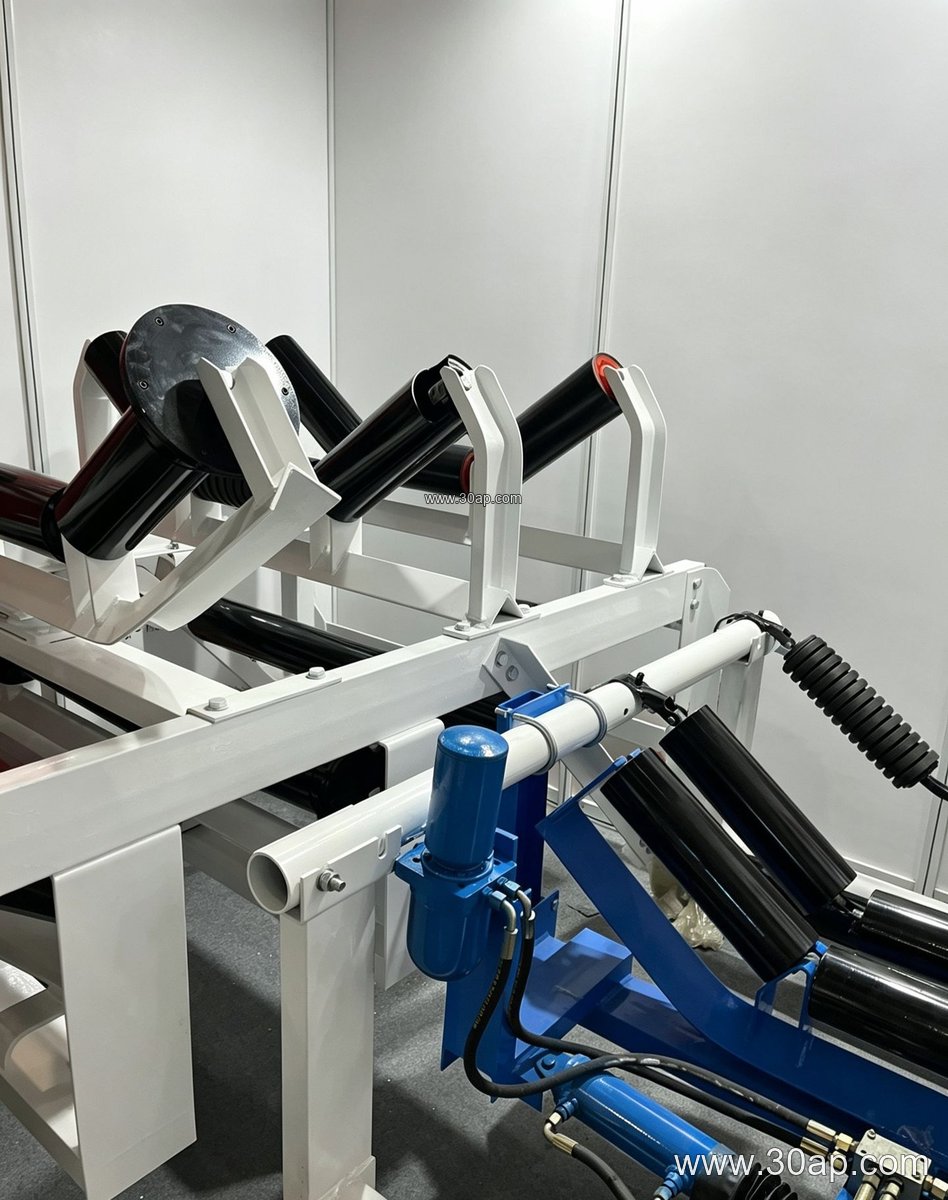
Matching the Pulley to the Belt Line
Diameter and face width are selected from belt width, belt tension, wrap angle and shaft load rather than from any single rule. Face width is normally a little wider than the belt; a B800 belt is commonly run on a pulley with roughly 950 mm face, and a B1200 belt on about 1400 mm face, but these are reference values and final dimensions come from the conveyor design. Diameter choices such as Ø500, Ø630, Ø800 or Ø1000 depend on the required wrap and the belt’s minimum pulley diameter. A B800 x Ø500 or B1200 x Ø1000 combination is a useful starting point for discussion, not a fixed pairing.
Shaft diameter is set by torque and radial load, not by belt width. A Ø100 or Ø120 shaft may appear on a medium-duty pulley, while larger drives move to Ø160 or Ø200. Do not assume a shaft size from the belt width alone.
Buyer Checklist
- Confirm the service position: drive, head or another location, and state the wrap angle.
- Specify lagging pattern, groove direction, rubber grade and thickness, for example 12 mm chevron grooved rubber.
- Give belt width, belt type and belt tension so the supplier can check the minimum pulley diameter.
- State the shaft diameter, hub type and bearing housing, plus the conveyor bracket interface.
- Describe the environment: wet, dusty, oily or abrasive, and whether a flame retardant conveyor belt or heat resistant conveyor belt runs on the pulley.
- Ask about balance, runout, and lagging bond quality, since a loose lagging edge will peel once the stripes flex.
Maintenance Notes
Inspect the striped surface for groove blockage. Packed grooves lose their drainage effect and can cause belt misalignment. Check lagging wear at the edges, where the belt often rides, and confirm that the rubber has not lifted from the shell. Keep the pulley clean and verify that the belt is centered, because a striped lagged pulley grips firmly enough to amplify any existing tracking error. When the lagging wears down to the grooves, re-lagging is usually more economical than replacing the whole pulley.