What a Q355 Conveyor Bracket Does
A Q355 conveyor bracket is the steel support that holds the idler roller in place along a belt conveyor. The bracket carries the load of the belt, the material on it, and the idler itself, and keeps the roller at the correct angle and position. Because Q355 is a low-alloy structural steel with a minimum yield strength of about 355 MPa, the bracket can resist bending and fatigue better than a plain carbon steel part of the same section. That matters in a quarry, a cement plant, or a power plant coal yard where the conveyor runs for long shifts and the frame is never really at rest.
The same item is also described as a Q355 conveyor support bracket or a Q355 idler bracket. These are accurate equivalent names for the same product; they are not a different bracket type.
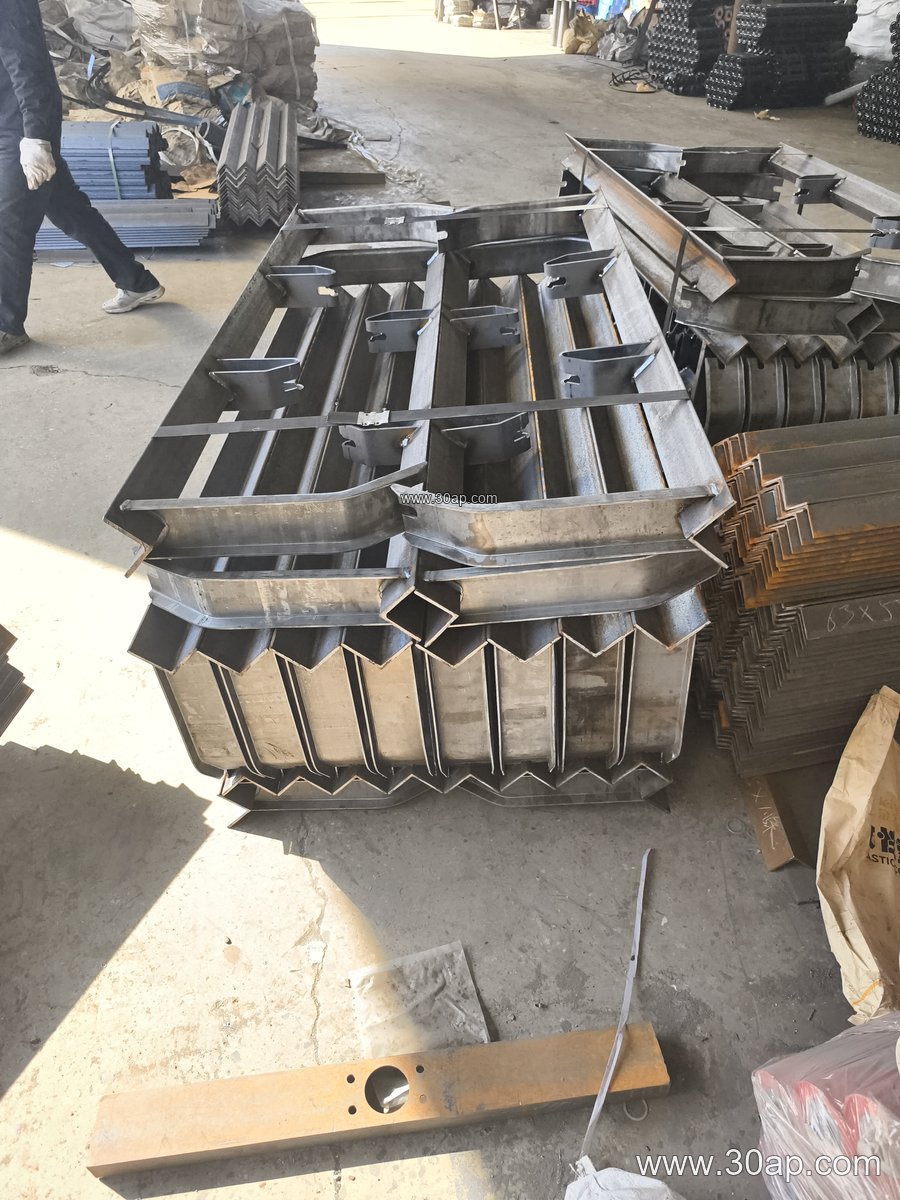
How the Bracket Is Built
Most brackets are formed from angle steel, channel steel, or folded steel plate. The material is cut, punched, and welded into a shape that matches the trough profile of the conveyor. A typical upper bracket is a rigid frame with two or three idler seats, while a return bracket is a simpler flat or V-shaped frame under the belt. The Q355 grade is usually supplied with good weldability, so fabricators can join the crossbeam and the end plates without excessive preheat on normal thicknesses.
Surface treatment is part of the build. Painting, galvanizing, or powder coating helps the bracket survive wet coal, cement dust, and coastal humidity. Bolt holes and mounting slots are drilled to suit the frame, and the hole spacing usually follows the belt width and trough angle rather than a single fixed figure.
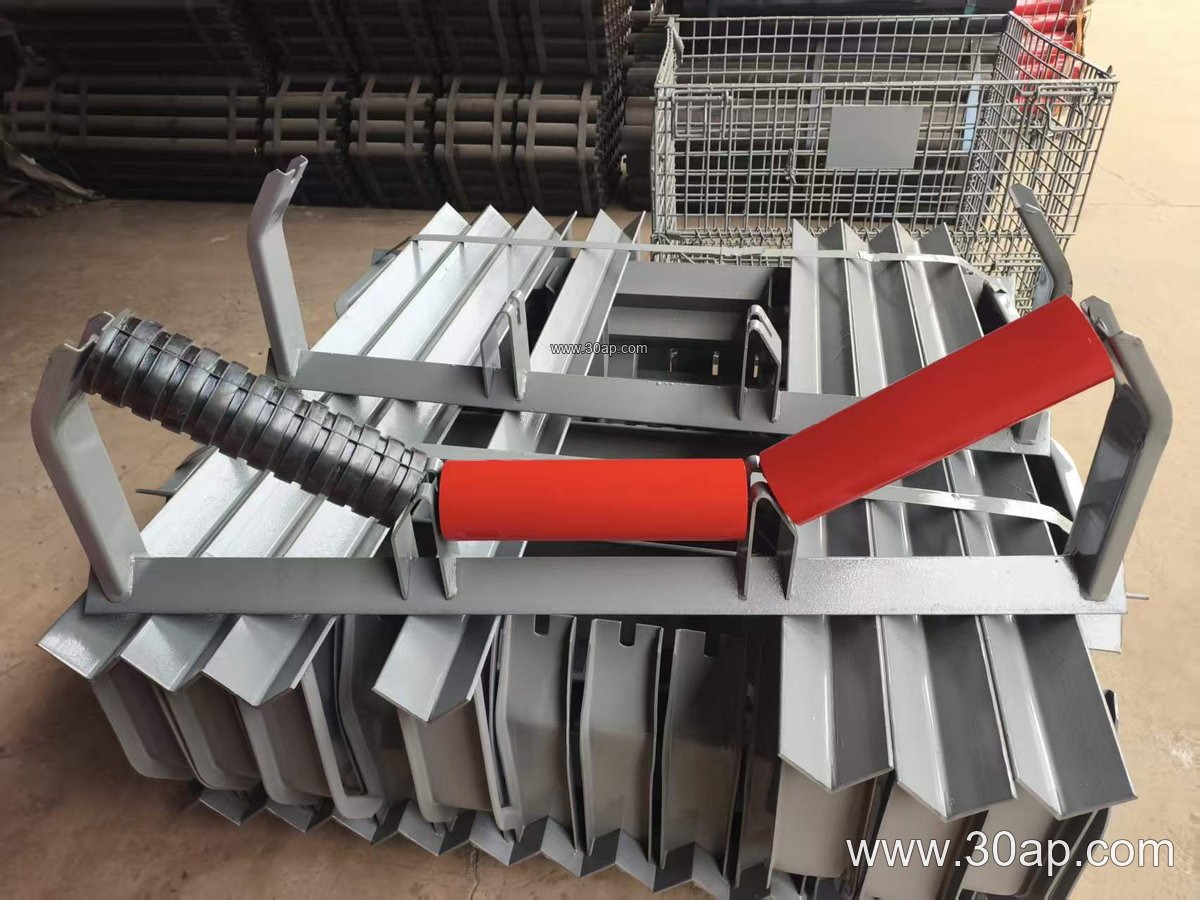
Common Types and Where They Fit
Bracket types are chosen by position and function, not by fashion. A short list helps a buyer read a drawing:
- Trough bracket (upper) — carries the three-roll trough set on the carrying side.
- Transition bracket — supports the belt where it changes from flat to troughed.
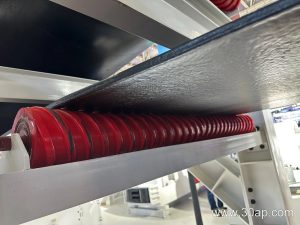
- Return bracket and V-return bracket — hold the return idlers under the belt.
- Impact bracket — sits under a loading point and takes the shock with buffer idlers.
- Self-aligning bracket — allows the idler set to pivot and correct belt tracking.
- Adjustable bracket — lets the trough angle be set on site.
The Q355 conveyor bracket can be supplied as a fixed or an adjustable version. Fixed brackets are simpler and cheaper; adjustable ones let maintenance staff fine-tune the trough angle and belt contact after installation.
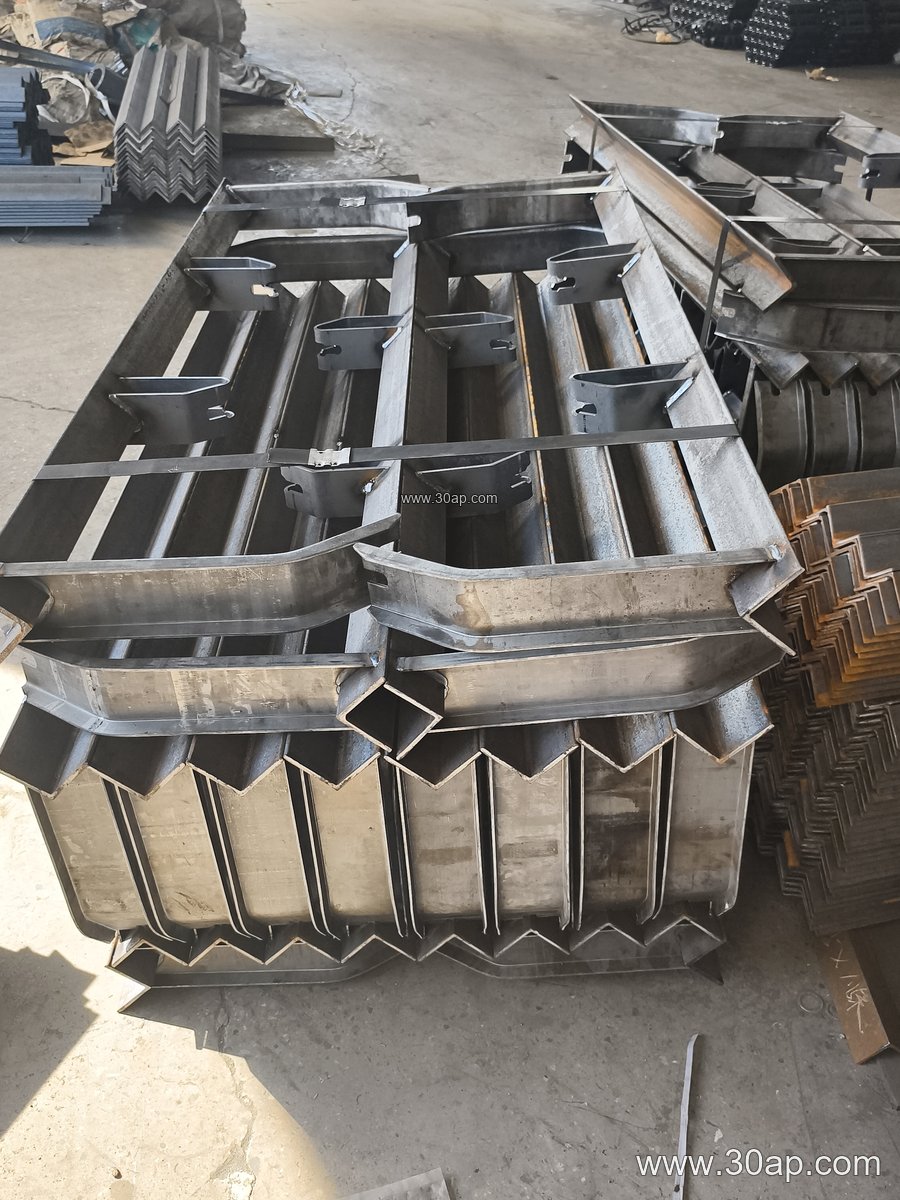
Sizes, Angles, and Roller Diameters
Bracket dimensions follow the conveyor design. Belt width, trough angle, and idler diameter are the three values that shape the frame. Common belt widths run from B500 and B650 up to B1800 and B2000, with B800, B1000, B1200, and B1400 being frequent choices in aggregate and cement duty. Trough angles are usually 20, 30, 35, or 45 degrees, and adjustable brackets can move between these settings. Roller diameters commonly include Ø89, Ø108, Ø133, Ø159, and Ø194.
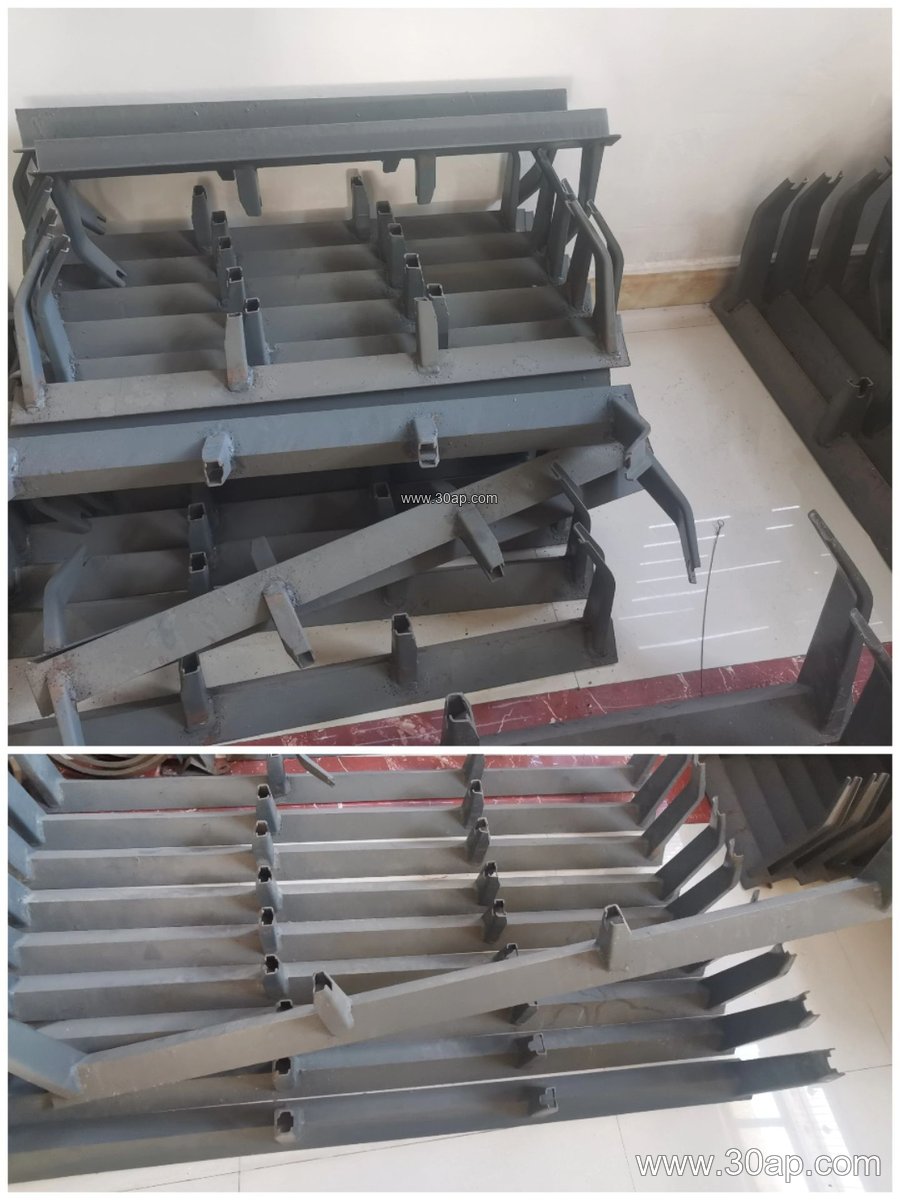
Typical combinations are often written as B800, 35 degrees, Ø108 or B1200, 45 degrees, Ø133. These are reference examples, not fixed rules. A wider belt does not automatically mean a larger roller, and one belt width can work with more than one trough angle. The mounting hole spacing and crossbeam length are determined by the design, so buyers should confirm them against the conveyor drawing.
| Parameter | Common range |
|---|---|
| Belt width | B500 to B2200 |
| Trough angle | 20, 30, 35, 45 degrees |
| Idler diameter | Ø89, Ø108, Ø133, Ø159, Ø194 |
| Material | Q355 angle, channel, or folded plate |
Where It Is Used
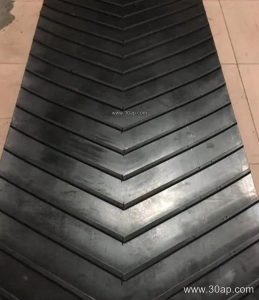
In a limestone quarry or a sand and gravel line, the Q355 conveyor bracket holds the trough idlers that carry crushed rock toward the screen. In a coal-fired power plant, the same bracket type supports the belt that feeds the boiler, often together with a flame retardant conveyor belt for fire safety. In a cement plant, dust and fine material demand brackets that are rigid and easy to clean. The bracket also appears in iron ore handling, port ship loading, and tunnel spoil removal, where heavy-duty mining conveyor belts and impact-resistant belts run over the same frame.
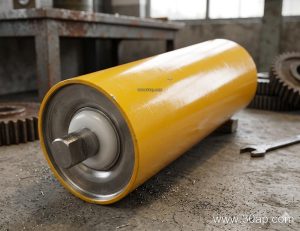
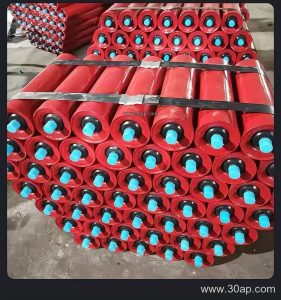
Because the bracket works with the conveyor belt, the idler roller, and the conveyor pulley, alignment at the bracket is important. A bracket that sits too high or too low will wear the belt edge and load the pulley bearings unevenly.
What a Buyer Should Check
- Confirm the belt width, trough angle, and idler diameter on the drawing.
- Check the mounting hole spacing and crossbeam length against the existing frame.
- Ask for the steel grade and surface treatment, since Q355 is not the only option.
- Match the bracket style to the duty: impact brackets at load points, self-aligning brackets on long runs.
- Keep spare brackets for high-wear positions rather than ordering one universal size.
For bulk material conveyor systems, selecting the right Q355 conveyor bracket is a small decision with a long effect on belt life and maintenance cost. Buyers who compare the bracket with the idler set and the belt specification together usually get a smoother running line.