What a Rubber Idler Is and Where It Fits
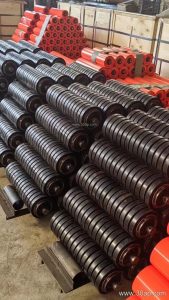
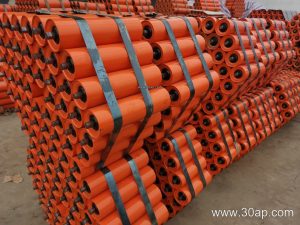
A rubber idler is a belt conveyor carrying or return roller whose outer surface is covered with a rubber layer, usually bonded to a steel tube body. It sits under the conveyor belt at the load zone or along the return run, supporting the belt and the material on it while letting the belt travel with low friction. In a quarry or a cement plant, the difference between a plain steel roller and a rubber-covered one is often felt first at the transfer point, where lumps of rock drop onto the belt and hammer the rollers below.
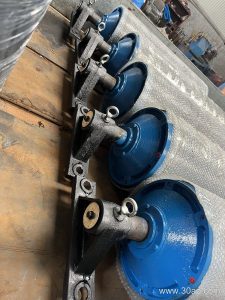
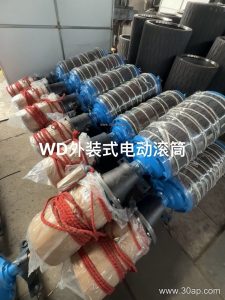
The rubber idler should not be confused with a conveyor pulley. Drive pulleys, tail pulleys and bend pulleys transmit power or change belt direction, while idlers only support the belt. They are separate components with separate duties, and one cannot replace the other.
Construction of the Roller Body
A typical rubber-covered idler combines a steel tube, a shaft, bearing housings and a rubber shell. The rubber may be a smooth sleeve, a set of rubber rings, or a profiled disc stack. Rubber rings are common on impact idlers because each ring can deflect independently when a lump lands on the belt.
- Tube: welded steel pipe, machined at the ends for bearing seats
- Shaft: through shaft or stub shaft, sized to the bracket and load
- Bearing: deep groove ball bearings such as 6204, 6205, 6305, 6306, 6308 or 6310, chosen by load and speed rather than by roller diameter alone
- Seal: labyrinth or contact seal to keep out dust and water
- Rubber layer: natural or synthetic rubber, bonded or slipped over the tube
Bearing selection and seal quality decide service life more than the rubber itself. A roller that loses its grease to grit will seize long before the rubber wears through.
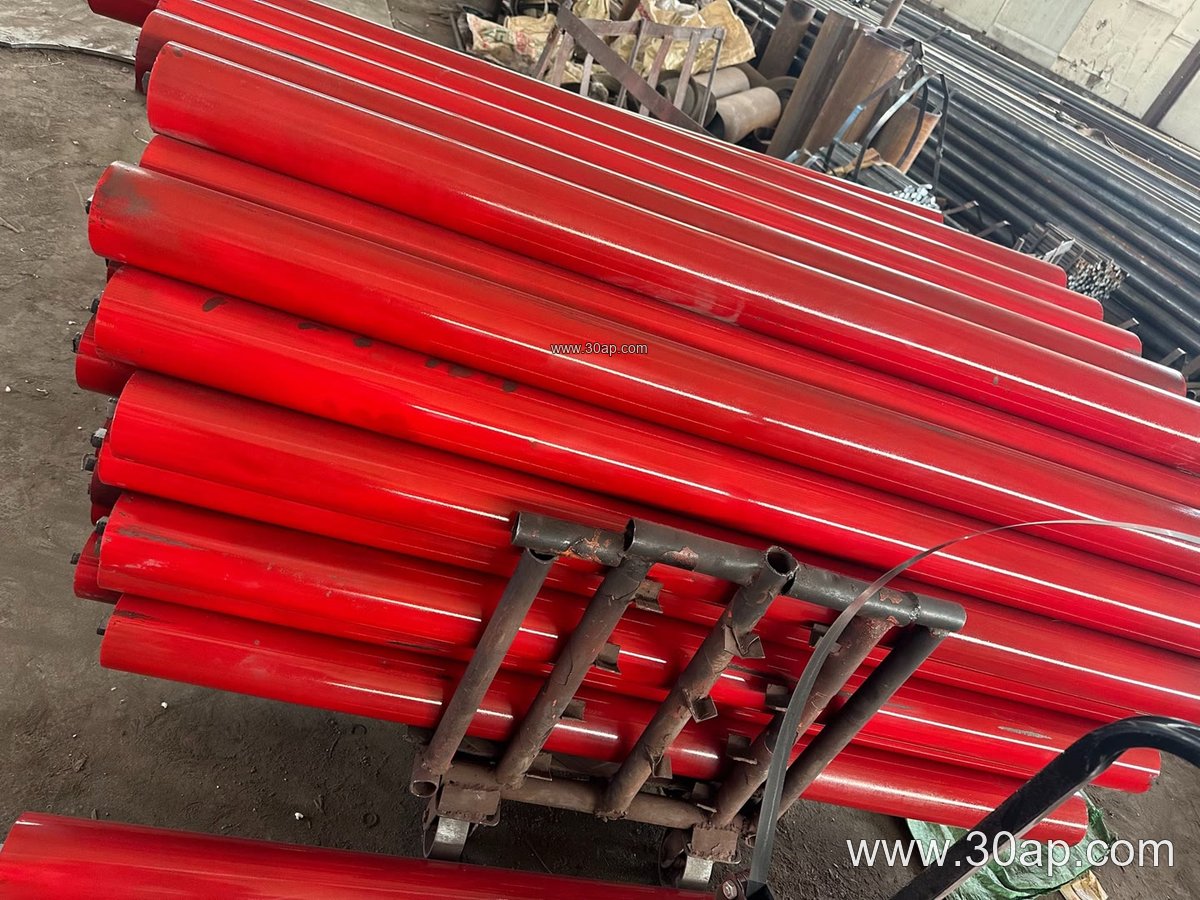
Common Sizes and Arrangements
Roller diameter and belt width are related through the conveyor design, not through a single fixed rule. A 500 mm belt and a 2000 mm belt can both use rubber-covered rollers, but the roll length, shaft and bracket change. The table below gives common reference values; actual values are set by the conveyor designer.
| Belt width | Typical roll length, three-roll troughing set | Common roller diameters |
|---|---|---|
| B500 | about 200 mm | Ø63, Ø76, Ø89 |
| B650 | about 250 mm | Ø76, Ø89, Ø102 |
| B800 | about 315 mm | Ø89, Ø102, Ø108 |
| B1000 | about 380 mm | Ø108, Ø127, Ø133 |
| B1200 | about 465 mm | Ø127, Ø133, Ø159 |
| B1400 | about 530 mm | Ø133, Ø159, Ø178 |
| B1600 | about 600 mm | Ø159, Ø178, Ø194 |
| B1800 | about 670 mm | Ø178, Ø194, Ø219 |
| B2000 | about 750 mm | Ø194, Ø219 |
Trough angles of 20, 30, 35 and 45 degrees are common. A 35 degree set is widely used for bulk material, while 45 degrees suits fine, free-flowing loads. Side rollers and the centre roller can differ in length, so the figures above are only a starting reference.
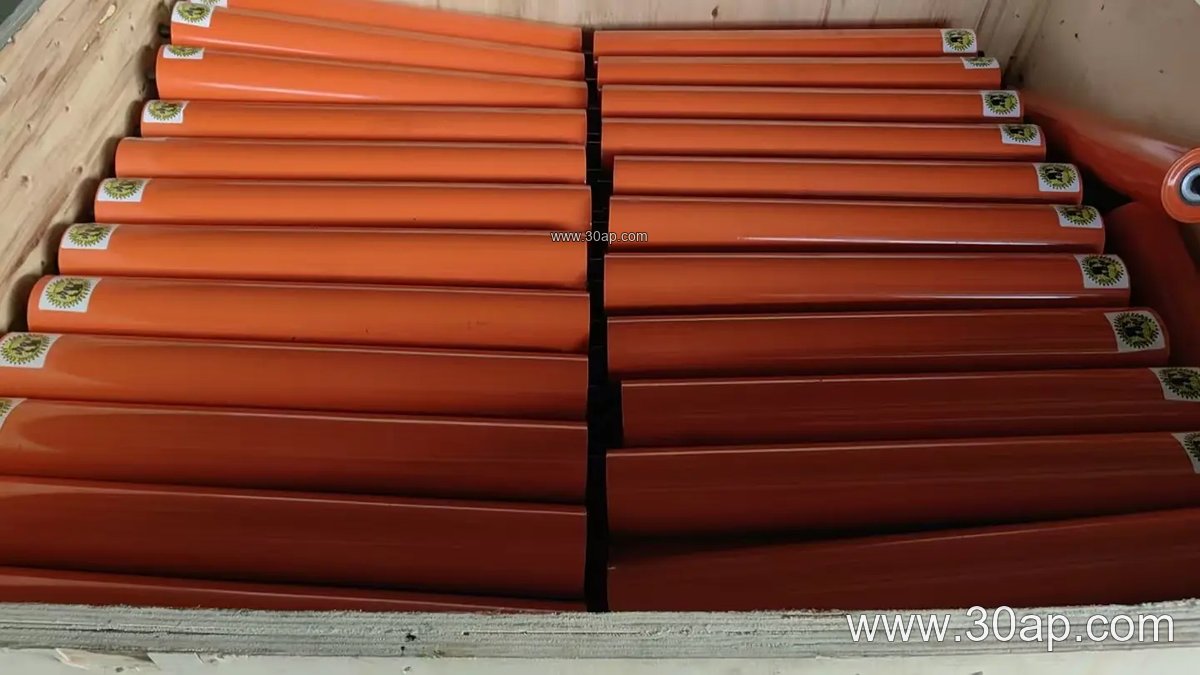
Where Rubber Idlers Earn Their Place
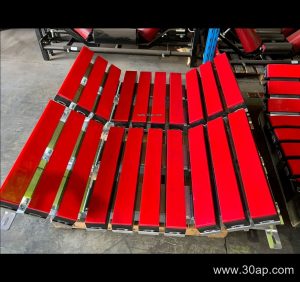
Impact zones are the classic application. At a crusher discharge or a transfer chute in a stone crushing line, a rubber ring impact idler absorbs the shock that would dent a steel shell. The same logic applies at a truck dump hopper in an iron ore or copper ore operation.
Return runs also benefit. A rubber-covered return roller can reduce build-up of sticky fines and lower noise along the belt. In a cement plant handling clinker dust, or a power plant coal yard, that quieter run matters to operators working nearby.
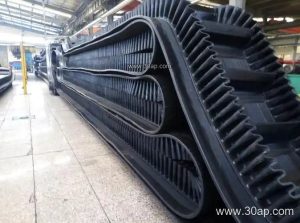
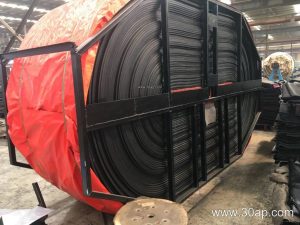
Rubber idlers work alongside many belt types, from an abrasion resistant conveyor belt carrying sharp aggregate to a heat resistant conveyor belt in a clinker line, though rubber covers have temperature limits and should be checked against the belt surface temperature. Where a flame retardant conveyor belt is required underground, the rubber idler cover should also suit the same environment.
Buyer Checklist
- Confirm the belt width and the troughing or return arrangement before ordering.
- State the load, belt speed and any impact energy at the transfer point.
- Check the shaft end and bracket fit; a conveyor bracket pattern varies between manufacturers.
- Ask about the rubber compound and hardness, especially for oil or heat exposure.
- Review the bearing and seal specification, not only the roller diameter.
- Keep spare rings or complete rollers for the highest-wear positions.
For a large project, the rubber idler is a small line item, but it controls how smoothly a conveyor belt runs. Matching the roller to the belt, the material and the environment is the practical way to keep a quarry, cement plant or coal handling line running without repeated stoppages.