What a Self-Aligning Idler Bracket Does
A self-aligning idler bracket is the mounting component that lets a carrying or return idler assembly pivot slightly so the conveyor belt stays centered on the structure. Instead of bolting every idler rigidly to the frame, this bracket sits on a pivot or linkage and reacts when the belt drifts to one side. The resulting small rotation of the idler produces a steering effect that nudges the belt back toward the middle of the trough. In a quarry, a coal washing plant or a cement kiln feed line, that correction can mean the difference between a clean running belt and constant edge damage.
The bracket is not a pulley and should not be confused with a drive pulley, tail pulley or bend pulley. Those components transmit power or change belt direction. A self-aligning bracket works with the idler roller itself, guiding the belt rather than driving it.
How the Bracket Is Built
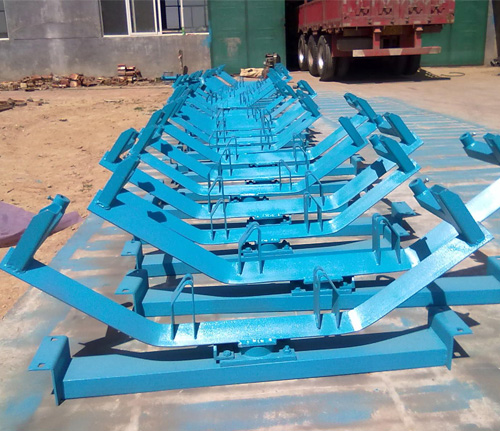
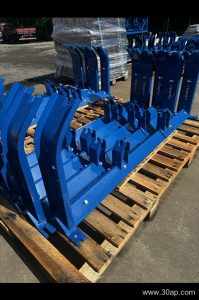
Most units are fabricated from angle steel, channel steel or folded steel plate, then welded into a frame that carries the idler shaft. A central pivot, often with a bearing seat or a bush, allows the assembly to swing horizontally. Some designs add a vertical pivot so the bracket can also follow minor frame misalignment. Stop lugs or limit plates prevent over-travel, and the mounting feet are drilled to suit the conveyor stringer spacing.
Common configurations include:
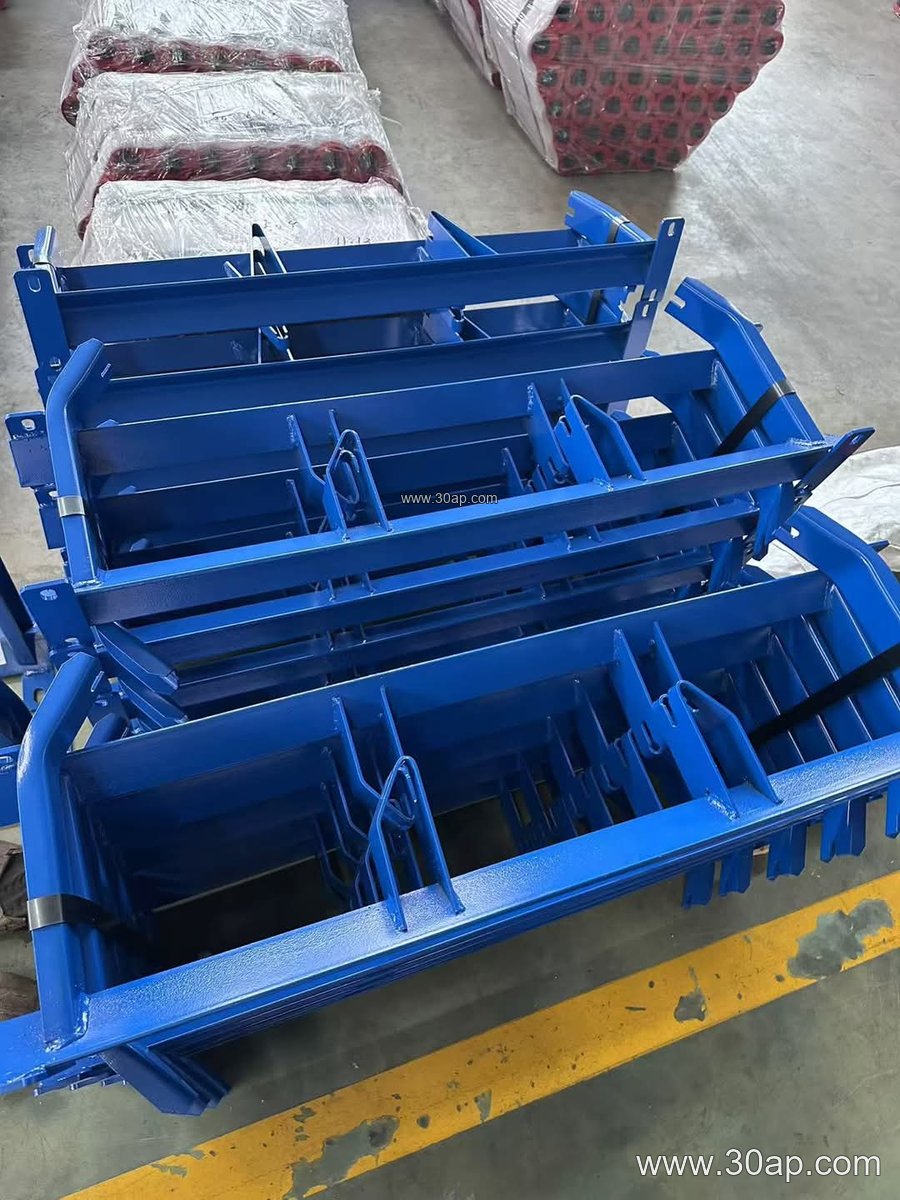
- Pivoting trough brackets for 20, 30, 35 or 45 degree trough angles
- Return-side self-aligning brackets for flat or V-return idlers
- Adjustable brackets that allow the trough angle to be set on site
- Heavy fabricated versions for wide belts and high tonnage
The frame length and hole spacing usually follow the belt width and trough angle, so they are determined by design rather than fixed for every conveyor.
Where It Fits on the Conveyor
Self-aligning brackets are typically installed at intervals along the carrying run, especially after a loading point where the belt is most likely to shift. In a limestone mine or an iron ore transfer house, a pair of these brackets just downstream of the chute can settle the belt before it reaches the next idler set. They are also used on the return side, where a V-return or flat return idler needs lateral control.
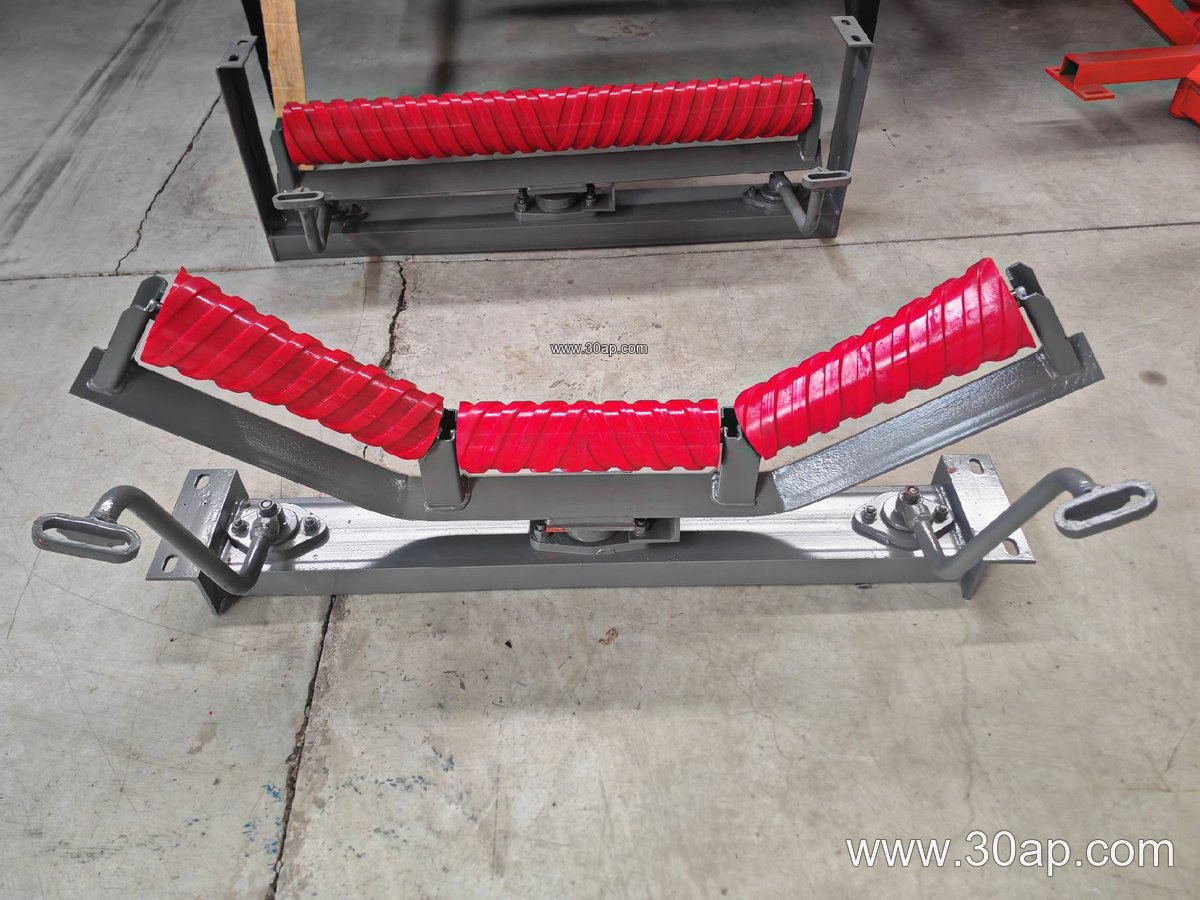
On a long overland conveyor carrying bulk material, engineers may combine self-aligning brackets with fixed trough brackets. The fixed brackets hold the normal trough profile, while the self-aligning units act as correction stations. The same logic applies in a power plant coal yard or a sand and gravel line, where belt wander is common after curve sections or uneven loading. A self-aligning bracket is not a substitute for a training idler on every meter of the run; it is a targeted correction device.
Matching Bracket, Idler and Belt
Selection starts with the belt width and the idler diameter. Typical references include B650 with 30 degrees and Ø89, B800 with 35 degrees and Ø108, or B1200 with 45 degrees and Ø133. These are common combinations, not mandatory pairings. Wider belts such as B1400 or B1600 often use larger rollers and heavier bracket frames, while narrow belts may use lighter folded plate construction.
Belt type also matters. A heavy-duty mining conveyor belt or an abrasion resistant conveyor belt carrying sharp rock puts more side load on the idler, so the bracket pivot and frame should be sized for that duty. A flame retardant conveyor belt used in an underground coal mining conveyor may require bracket materials and clearances suited to the mine environment. Where a pipe conveyor belt or a corrugated sidewall conveyor belt is used, the self-aligning function is usually handled differently, so the bracket choice should follow the conveyor designer’s layout.
Buyer Checklist
- Confirm belt width, trough angle and idler diameter before ordering.
- Ask whether the bracket is fixed or adjustable, and confirm the pivot range.
- Check mounting hole spacing against the existing stringer or frame.
- Match the frame material and finish to the site conditions, such as dust, moisture or washdown.
- Plan inspection of pivot wear, since a stiff pivot reduces correction effect.
For a coal handling plant or a tunnel spoil line, a well-chosen self-aligning idler bracket is a small component with a direct effect on belt life and downtime. Buyers should treat it as part of the whole idler station, not as an accessory selected by belt width alone. More conveyor component references are available at zhihuigu.com, and related hardware such as conveyor bracket assemblies can be reviewed together with the idler and belt specification.